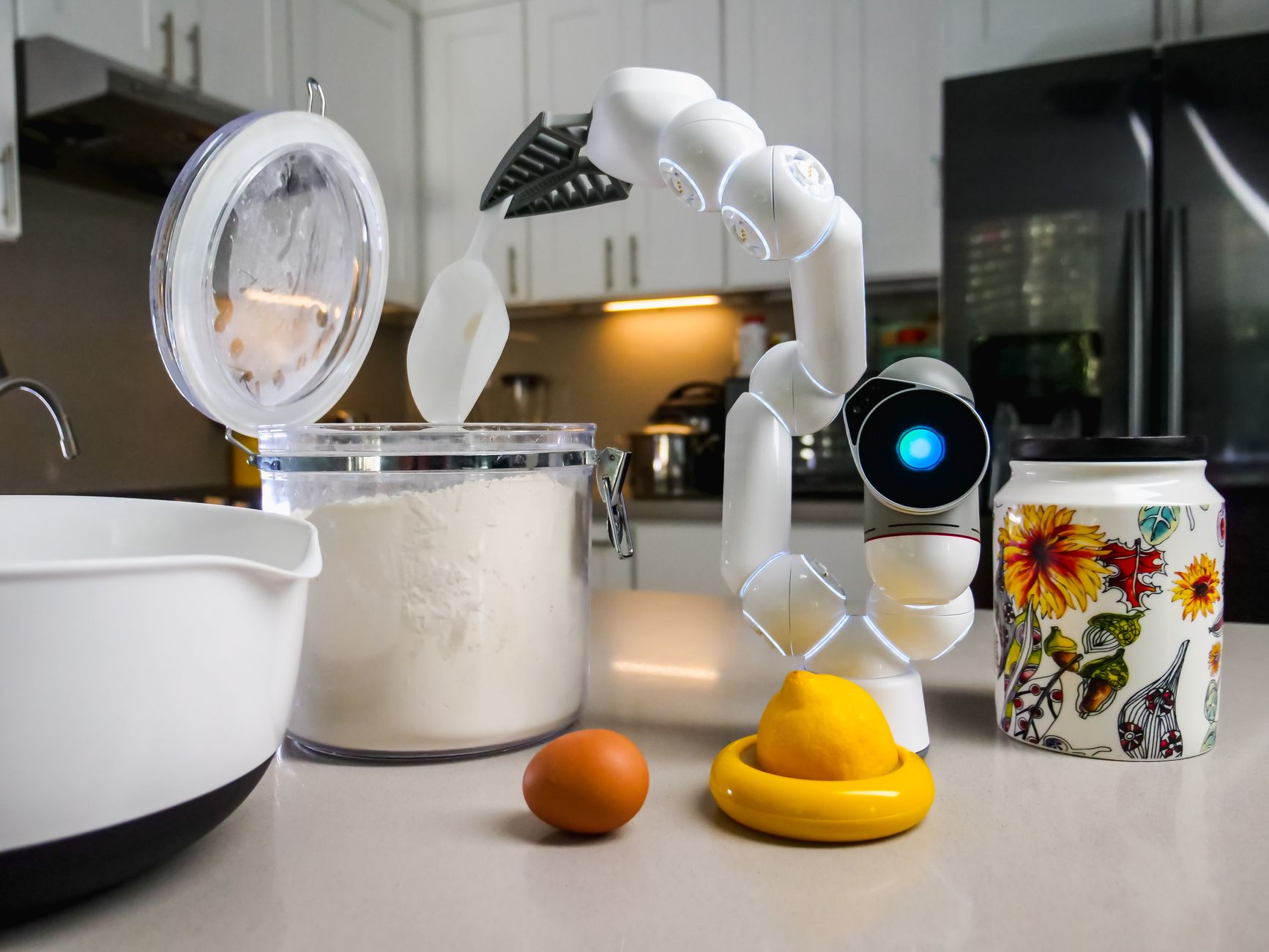
In the modern kitchen, the allure of ‘smart’ appliances is undeniable, promising convenience and efficiency with a tap of a screen or a voice command. However, the reality is that not all connected gadgets live up to the hype, especially when budget is a consideration. It’s crucial to discern which affordable smart cooking appliances genuinely earn their keep by simplifying tasks, improving results, or saving energy, and which represent a fleeting trend without lasting value.
⚡ In a Rush? Key Takeaways
- Wi-Fi enabled slow cookers offer remote monitoring for ~$50–100, a worthwhile buy for busy households.
- Smart air fryers often add $50+ for app control with minimal cooking benefit over manual models.
- Connected ovens can cost $1000+; affordable smart features are best found in countertop models.
- Smart scales priced $20–50 offer nutritional data; manual measurement is accurate enough for most.
- ✅ Verdict: Focus on smart features that automate tasks or provide clear energy/time savings; skip gadgets with redundant or app-centric functions at inflated prices.
Should You Invest in a Smart Slow Cooker?
Affordable smart slow cookers offer remote monitoring and scheduling, proving valuable for busy cooks needing meal prep flexibility.
The humble slow cooker has been a kitchen workhorse for decades, and the ‘smart’ iteration takes convenience a step further. For those who appreciate the set-it-and-forget-it nature of slow cooking but also juggle demanding schedules, a smart slow cooker can be a genuinely useful addition. These models typically connect to your home Wi-Fi, allowing you to monitor cooking progress, adjust temperatures, and set timers via a smartphone app.
The primary benefit is peace of mind. If your workday unexpectedly runs long, you can adjust the cooking time remotely without worrying about overcooked meals. Some models even allow you to switch from ‘cook’ to ‘warm’ mode from afar, ensuring dinner is ready precisely when you arrive home, at the ideal temperature. This level of control, especially for affordable models ranging from $50 to $100, offers a tangible return on investment for time-strapped families or individuals.
What Benefits Does a Smart Slow Cooker Offer Over a Manual One?
Remote monitoring and precise temperature control are key advantages, offering enhanced convenience and food safety compared to basic models.
A manual slow cooker is wonderfully simple: plug it in, set the timer and temperature, and walk away. However, its limitations become apparent when life intervenes. If your commute is unexpectedly delayed or a meeting extends, you have no way to check on or adjust the food. A smart slow cooker addresses this directly.
The app interface typically provides real-time updates on the cooker’s status. You might receive notifications when the cooking cycle is nearing completion or when it automatically switches to a ‘warm’ setting. This proactive communication reduces anxiety and ensures meals are ready when you are, preventing them from sitting on ‘warm’ for hours, which can sometimes dry out food or affect texture.
Furthermore, the app often provides access to recipe suggestions tailored for the specific cooker, and some even offer pre-programmed settings for common dishes like pot roast or chili, ensuring optimal results with minimal user input beyond selecting the program.
Are Smart Slow Cookers Truly Necessary for Everyday Cooking?
For most cooks, a high-quality manual slow cooker is sufficient; smart features are a luxury for those who value remote control and advanced scheduling.
Let’s be clear: a well-made manual slow cooker, costing $30–$60, is perfectly capable of producing delicious, tender stews, pulled pork, and soups. If your schedule is generally predictable, and you’re comfortable setting the timer before you leave for work, the added expense and complexity of a Wi-Fi connection might not be justified. The core cooking function remains the same.
The decision hinges on your lifestyle. If you frequently find yourself needing to deviate from your planned cooking schedule, or if you simply enjoy the convenience of managing your kitchen remotely, then the additional $20–$50 premium for a smart model is a sound investment. Think of it as paying for an always-on kitchen assistant that you can control from your phone. For those without these specific needs, a reliable manual model will serve just as effectively.
| Feature | Manual Slow Cooker | Smart Slow Cooker |
|---|---|---|
| Price Range | $30–$60 | $50–$100+ |
| Core Functionality | Set & Forget (local) | Set & Forget (remote) |
| Monitoring | None (requires physical presence) | App-based real-time tracking |
| Scheduling | Pre-set timer | Remote adjustment, advanced programming |
| Ideal User | Predictable schedule, budget-conscious | Busy, unpredictable schedule, tech-savvy |
Evaluating Smart Air Fryers and Countertop Ovens
Most affordable smart air fryers add minimal cooking value; focus on smart ovens with advanced features for true kitchen automation.
Air fryers have become ubiquitous, lauded for their speed and crisping capabilities. The addition of ‘smart’ features—usually app connectivity—can be tempting, but often comes with a significant price bump for benefits that are, for many, marginal. When considering smart countertop ovens, however, the value proposition can be stronger, especially if the ‘smart’ features extend beyond basic app control to genuinely innovative cooking modes.
For air fryers, the intelligence is often limited to pre-programmed settings accessible via an app, or remote start for simple functions. While convenient, the actual cooking process of air frying involves setting a temperature and time, functions easily managed on the manual controls of most quality air fryers. The additional $50–$100 often commanded by smart air fryers typically buys you an app that replicates the buttons you already have, plus perhaps some recipe ideas.
Integrated smart ovens, which are typically full-size appliances, can offer more substantial benefits. Features like remote preheating, internal cameras to monitor cooking progress, and sophisticated multi-stage cooking programs are where smart technology can truly elevate the cooking experience and justify a higher price point. However, truly affordable smart ovens are rare; most start in the $1000+ range. This guide focuses on appliances typically found at more accessible price points, making the case for many smart air fryers a ‘skip’ for the budget-conscious chef.
Is the App Control on Smart Air Fryers Worth the Extra Cost?
App control for smart air fryers often duplicates manual functions, offering little cooking enhancement to justify the typical $50+ premium.
The primary ‘smart’ feature in many affordable air fryers is smartphone app integration. This allows you to preheat the device, adjust temperature and time, and receive notifications—all from your phone. While this offers a degree of convenience, it’s worth assessing if it solves a problem you actually have. For many users, the time spent opening an app, finding the right device, and making adjustments is not significantly less than walking over to the air fryer and pressing a few buttons.
Consider the air fryer’s typical usage. It’s often used for quick snacks or smaller portions that don’t necessarily require the same level of remote oversight as a slow-cooked stew or a baked roast. If you’re cooking for one or two, or rapidly preparing sides, the novelty of app control might wear off quickly, leaving you with a more expensive appliance that performs the same core function as a much cheaper manual model. When shopping, look for smart air fryers that offer genuinely unique cooking programs or integrations beyond basic remote operation.
When Does a Smart Countertop Oven Make Sense?
Smart countertop ovens with advanced features like internal cameras or multi-stage cooking can offer substantial value for dedicated home cooks.
While most budget-friendly smart additions are found in smaller appliances, some countertop ovens are bridging the gap. These devices often go beyond simple app control, incorporating features like internal cameras that allow you to check on your food’s browning without opening the door—preserving heat and ensuring even results. Others boast sophisticated multi-stage cooking programs that can be set entirely through an app, guiding you through complex recipes.
For the home cook who enjoys experimenting with different techniques or frequently bakes, a smart countertop oven can be a worthwhile investment. It offers the flexibility and precision that can elevate home cooking, much like dedicated sous vide machines do for protein preparation. However, these models tend to be at the higher end of the countertop oven price spectrum, often exceeding $200–$300. If your needs are more basic—toasting, reheating, or simple convection baking—a smart feature set likely won’t justify the added cost.
- Smart Air Fryer (Skip): Most models offer app control that duplicates manual functions. Save $50–$100.
- Wi-Fi Toaster (Skip): App-controlled toasting offers minimal benefit over manual settings.
- Smart Blender (Consider): Some offer pre-programmed recipes and precise blending cycles, useful for specific dietary needs
- Smart Pressure Cooker/Multi-Cooker (Buy/Consider): If it offers remote monitoring and advanced safety features beyond basic pressure cooking.
The Role of Smart Scales and Other Kitchen Gadgets
Affordable smart scales offer nutritional insights; however, for general cooking, their added value over manual scales is often limited.
The world of kitchen gadgets is vast, and ‘smart’ versions are constantly emerging. Smart scales, for instance, connect to apps to log nutritional information for ingredients and meals, which can be incredibly useful for individuals tracking their diet closely for health or fitness reasons. These typically cost between $20 and $50, making them relatively affordable.
However, for the average home cook preparing everyday meals, the benefit might be less pronounced. Measuring ingredients by weight is indeed more accurate than by volume, and a good digital kitchen scale is invaluable for baking. If your primary goal is precise recipe execution, a good quality manual digital scale, costing $15–$25, will serve you well. The ‘smart’ aspect is primarily for data tracking, not the cooking process itself.
Other ‘smart’ gadgets, like Wi-Fi enabled coffee makers or kettles, often fall into the ‘skip’ category unless they solve a very specific problem. A coffee maker that brews your coffee before you wake up is convenient, but manually starting it a few minutes earlier achieves the same result. Similarly, a smart kettle that can be programmed to heat water to a precise temperature is excellent for tea enthusiasts, but a manual model with variable temperature settings is often sufficient and significantly cheaper.
Are Smart Kitchen Scales Worth the Investment for Home Cooks?
For meticulous health trackers, smart scales offer valued nutritional data; for general cooking, manual scales provide comparable accuracy at a lower cost.
If you are dedicated to tracking macronutrients, calories, or specific vitamin and mineral intake, a smart kitchen scale can be a compelling tool. These devices typically sync with fitness or nutrition apps, automatically logging the weight and, in many cases, providing nutritional breakdowns for hundreds of ingredients. This can streamline the process of logging food intake considerably.
However, if your cooking goals are focused on taste, efficiency, and delicious results rather than precise nutritional accounting, a standard digital kitchen scale will do the job. A good one, costing around $20–$30, offers accurate weight measurements to the gram, which is essential for baking and many savory recipes. The ‘smart’ functionality primarily serves the data-logging aspect, and for many, manual logging or estimation is perfectly adequate for their cooking and dietary needs. The primary difference is the convenience of automated data entry versus the cost savings of a simpler device.
Which Smart Gadgets Are Purely Novelty at This Stage?
Wi-Fi enabled toasters, coffee makers, and kettles often represent novelty over necessity, with manual counterparts offering equivalent functionality.
The market is now saturated with connected devices that, upon closer inspection, offer little practical advantage over their non-connected counterparts. Take, for example, a Wi-Fi enabled toaster. While it might boast features like precise toasting profiles controlled via an app, the fundamental act of toasting bread is well-managed by traditional controls. The benefit of remotely starting your toast is negligible, and the added complexity could even introduce potential points of failure.
Similarly, smart kettles that allow you to schedule water heating or select specific temperatures are appealing. Yet, many modern manual kettles offer variable temperature controls and speed heating, providing much of the same utility without the Wi-Fi connectivity. When evaluating these smaller gadgets, ask yourself if the ‘smart’ feature genuinely saves time, improves the outcome of the cooking process, or enhances safety in a way that a simple manual control cannot. If the answer is no, it’s likely a gadget best skipped.
- Smart Fridge (Skip): At current price points, the value added by screens and inventory tracking rarely justifies the significant extra cost.
- Smart Microwave (Skip): Most smart microwaves offer pre-set cooking modes via an app, which are often no more accurate than manual button presses.
- Smart Induction Cooktop (Buy/Consider): For serious home cooks, integrated smart induction offers precise temperature control and advanced functions, but is a higher-end investment.
- Smart Cutting Board (Skip): Novelty items that offer recipe guidance or nutritional info often lack durability and practical cooking benefits.
Are Smart Ovens and Ranges a Good Investment?
While expensive, smart ovens and ranges offer significant cooking advancements, but affordable options are limited to specific features.
When we move beyond countertop appliances to the larger, more significant investments in a kitchen—the oven and range—the ‘smart’ features begin to offer more substantial benefits. These appliances, often costing well over $1,000, leverage connectivity for sophisticated cooking modes, internal cameras, and integration with home ecosystems. For the dedicated home chef, these can represent a serious upgrade to their culinary capabilities.
Features like precise temperature probes that connect to your phone, allowing you to monitor roasts from another room, or convection modes that automatically adjust airflow and temperature for optimal baking, are where smart technology truly shines. Some ovens even use AI to identify food and suggest cooking settings. These are not mere novelties; they are tools that can genuinely improve cooking outcomes and reduce guesswork.
However, the definition of ‘affordable’ becomes relative here. Truly smart ovens and ranges are generally not budget-friendly. The focus for this guide remains on discerning value for the average homeowner. Look for core ‘smart’ features that translate directly to better cooking or significant energy savings, rather than simply app-enabled convenience. A model offering remote preheating and a reliable internal temperature probe might be a wise investment in the $1,500–$2,500 range, whereas a model with extensive recipe libraries and basic Wi-Fi is likely overpriced.
What are the Most Valuable Smart Features in Ovens and Ranges?
Remote preheating, internal temperature probes, and automated cooking modes