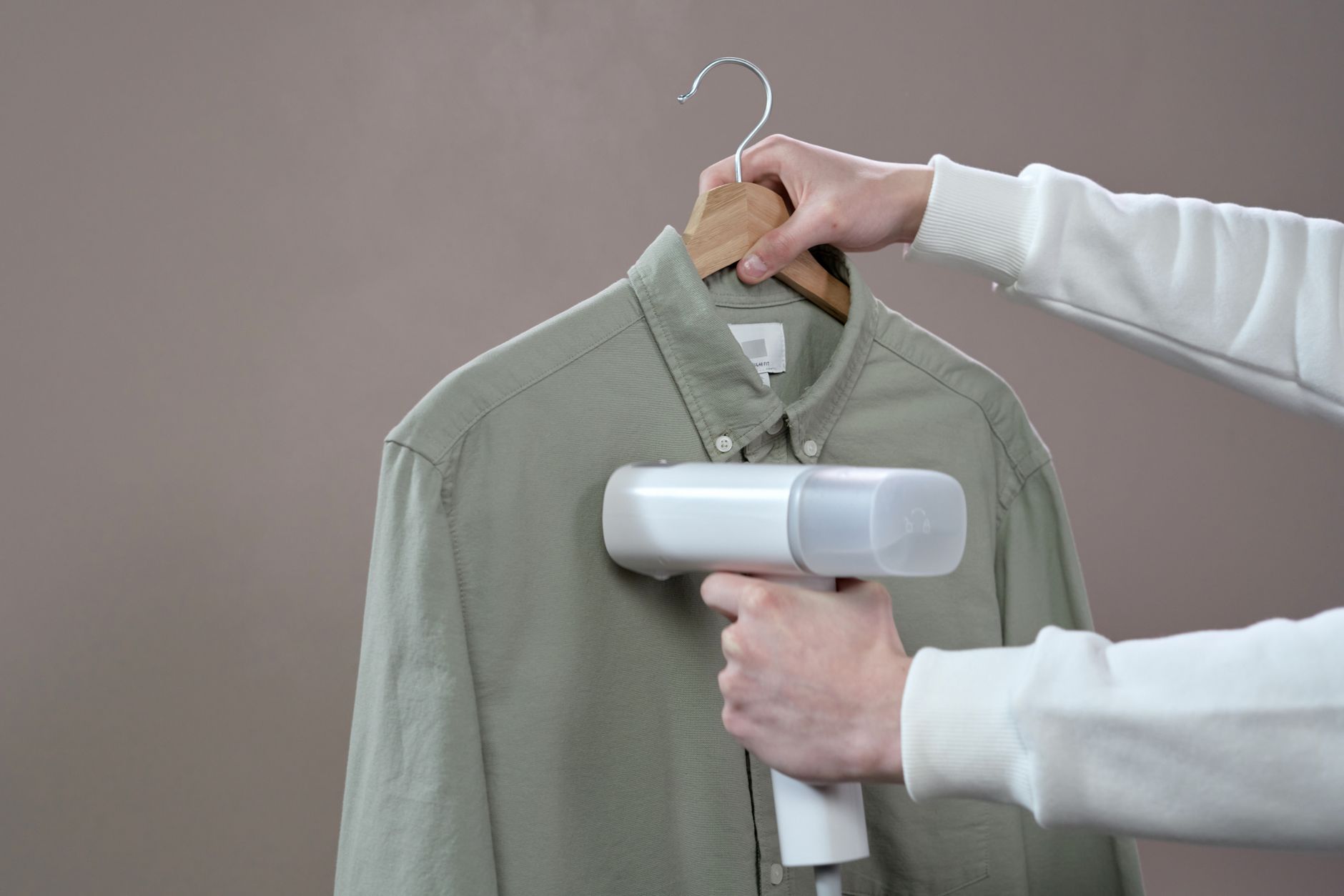
The best garment steamers are those with a high steam output of at least 25 grams per minute, which ensures they can handle cottons and linens without needing multiple passes. While many entry-level models struggle to maintain pressure, the most efficient units allow you to refresh a full wardrobe in under ten minutes without the setup time of an ironing board.
⚡ In a Rush? Key Takeaways
- Models with 25g/min steam output save roughly 4 minutes per garment versus weaker units.
- Handheld units consume 1,000–1,500W, costing approximately $0.02 per ten-minute session.
- Water tank capacity under 200ml requires a refill after every two average shirts.
- ✅ For the best performance-to-cost ratio, look for a 1,500W unit with a stable base.
How Do You Choose Between Handheld and Upright Steamers?
Handheld steamers offer portability for quick touch-ups, while upright units provide higher capacity and power for heavy fabrics and curtains.
Which Is Better for Daily Use in a Small Apartment?
Handheld steamers are superior for small spaces because they store easily in a drawer and eliminate the need for a bulky ironing board setup.
In my own home, I found that an upright steamer is often a commitment I’m not prepared to make on a Tuesday morning. A handheld model is ready in under 45 seconds, making it a utility-driven choice for streamlined home maintenance. If you lack floor space, a compact handheld unit is the only logical path.
Why Do Upright Steamers Cost More to Operate?
Upright steamers consume more energy due to larger heating elements and longer hose systems, often using 20% more power than handheld units.
The energy difference is significant when you calculate the total lifetime cost. An upright unit is excellent for heavy-duty work like thick curtains, but for clothing, the energy wasted keeping a large tank of water at temperature is rarely justified by the results.
- Handheld: 1,000W to 1,500W average power draw.
- Upright: 1,800W to 2,200W average power draw.
- Refill frequency: Handheld (every 1-2 items) vs. Upright (every 5+ items).
Are Budget Garment Steamers Actually Effective?
Budget garment steamers under $40 often lack the consistent steam pressure needed to smooth heavy natural fibers like thick linen or denim.
What Happens When You Buy a Low-Wattage Steamer?
Low-wattage units below 1,000W struggle with temperature stability, leading to water spitting and damp, uneven results on your clothing.
I learned this the hard way with a $25 model I tested last year; it left my silk blouse damp and wrinkled, rather than crisp. Investing a bit more in high-performance household appliances is usually the smarter long-term financial decision.
Is It Worth Buying a Steamer for Travel Purposes?
Travel steamers are worth the investment if you travel frequently, but choose a dual-voltage model to ensure it works globally without damage.
| Feature | Standard Steamer | Travel Steamer |
|---|---|---|
| Weight | 1.5 lbs | 0.8 lbs |
| Voltage | 120V only | Dual (120V/240V) |
| Tank Size | 250ml | 100ml |
What Are the Hidden Costs of Steamers?
The true cost of a steamer includes distilled water purchases and potential scale removal products needed to maintain the heating element.
How Much Does Distilled Water Add to the Monthly Cost?
Using distilled water costs roughly $1.00–$1.50 per gallon, adding approximately $0.15 to each steaming session if you use half a liter.
While tap water is tempting, the minerals will ruin the heating element in under a year. I treat water costs as a fixed part of my monthly energy and maintenance budget to keep my appliances running well.
Does Regular Maintenance Extend the Life of Your Steamer?
Yes, descaling your steamer every three months prevents calcium buildup and ensures the heating element operates at maximum efficiency.
- Drain the tank fully after each use.
- Use a vinegar-water mix for descaling monthly.
- Never leave standing water in the unit while in storage.
Frequently Asked Questions
-
Can a garment steamer replace an iron entirely?
For casual wear and synthetics, yes; however, an iron is still superior for achieving sharp creases in formal trousers or dress shirts.
-
Is it safe to use a steamer on all fabric types?
Most fabrics are safe, but avoid steaming delicate plastic-based sequins or heat-sensitive synthetics that could melt under high pressure.
-
How do I stop my steamer from spitting water?
Water spitting occurs when the unit isn’t hot enough; wait for the steam light to stop flashing before you begin your first pass.
-
Can a garment steamer sanitize and deodorize fabrics?
Yes, steam at 100°C or higher kills most bacteria, viruses, and dust mites, and neutralizes odors without chemicals.
To sanitize, hold the steamer nozzle about 2–3 inches from the fabric and move slowly, allowing the steam to penetrate for a few seconds per area. This works well on bedding, pillowcases, baby clothes, and upholstery where washing isn’t practical.
For deodorizing, the same process lifts smoke, cooking, or perspiration smells; the heat breaks down odor‑causing molecules, leaving clothes fresh. Always let the item air‑dry completely before storing to prevent mildew.
— Greta Michaud, Home Appliance Efficiency Researcher