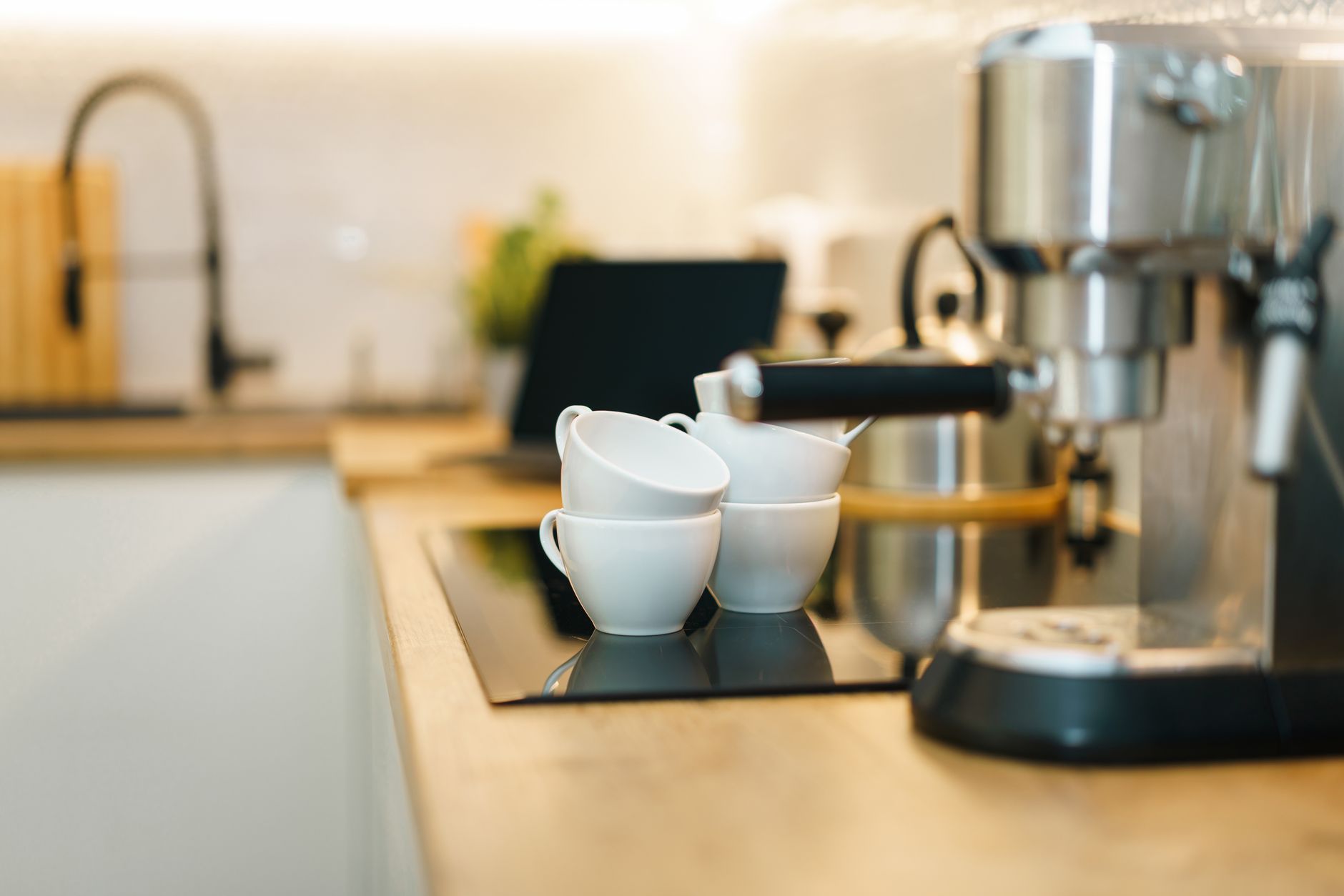
The integration of smart technology into everyday home appliances promises convenience and efficiency. Coffee makers are no exception, with models now featuring Wi-Fi connectivity, app control, and even voice assistant integration. This article examines whether these connected features truly enhance the coffee-making experience and if they justify the investment for homeowners and renters seeking to run a more efficient kitchen in 2026.
⚡ In a Rush? Key Takeaways
- Smart coffee makers typically cost 20-50% more than traditional programmable models.
- App connectivity allows remote brewing and scheduling, saving 5-10 minutes of morning prep time.
- Features like brew strength customization and coffee playlists enhance user experience, not strictly efficiency.
- Built-in grinders, like in the iCoffee Remote Brew, offer significant value, potentially saving $100-$200 on separate equipment.
- ✅ The added cost is justified if remote operation and precise control align with your daily routine.
What Smart Features Do Connected Coffee Makers Offer in 2026?
Connected coffee makers primarily offer remote control via smartphone apps, customized brewing parameters, and integration with other smart home systems.
The core appeal of a smart coffee maker lies in its ability to connect to your home network. This connectivity unlocks a range of features designed to simplify and enhance the morning ritual. Understanding these capabilities is the first step in determining their value.
How Does App Connectivity Improve the Coffee Experience?
App connectivity allows users to start brewing remotely, schedule future brews, and customize settings like strength and temperature from their smartphone.
The most immediate benefit of app connectivity is remote control. Imagine waking up and, before even leaving your bed, starting your coffee maker. This allows the machine to brew while you get ready, having fresh coffee waiting by the time you reach the kitchen. For many, this small saving of time and effort each morning is compelling.
Beyond simple remote brewing, apps often provide deeper control over the brewing process. Users can typically adjust brew strength, temperature, and even the size of the serving. Some advanced apps, like those with the Home Connect feature, even allow you to discover and prepare specialty coffees from around the world or create ‘coffee playlists’ for guests, remembering their preferences for future visits.
For individuals who appreciate precise control over their coffee or have irregular morning schedules, this level of customisation and remote access can translate into a significantly better experience. It removes the need to physically interact with the machine until it’s time to pour.
Can Smart Coffee Makers Integrate with Voice Assistants?
Many smart coffee makers integrate with popular voice assistants like Alexa and Google Assistant, allowing hands-free control for brewing.
Voice assistant integration takes the hands-free convenience a step further. Instead of opening an app, users can simply command their coffee maker to start brewing using devices like Amazon Echo or Google Home. This can be particularly useful when your hands are full in the morning or if you’re multitasking while getting ready.
While voice commands typically cover basic functions like starting and stopping a brew, some advanced integrations might allow for adjustments to brew strength or other settings. This feature adds another layer of smooth interaction within a smart home ecosystem, contributing to overall household convenience and efficiency.
Are There Energy Efficiency Benefits to Smart Coffee Makers?
While direct energy savings are minimal, smart coffee makers can reduce waste by brewing only when needed and integrating with energy-saving routines.
Do Smart Coffee Makers Use More or Less Power?
The power consumption during brewing is largely the same as traditional models, though standby power might be slightly higher for Wi-Fi connectivity.
The energy consumption during the actual brewing cycle of a smart coffee maker is comparable to its non-smart counterparts. The heating elements and pumps used to brew coffee require a certain amount of electricity, which doesn’t change significantly with added smart features. For an average machine, a brewing cycle might consume 0.08 kWh to 0.15 kWh for a full pot.
However, the primary difference lies in standby power. Smart devices often maintain a Wi-Fi connection, consuming a small amount of power continuously. This ‘vampire drain’ is typically very low, often under 2-3 watts, but it is constant. Over a year, this might add a few dollars to your electricity bill, which is usually negligible compared to the brewing costs themselves. The biggest energy cost impact comes from how often and how much coffee you brew rather than the ‘smart’ component.
| Activity | Power Usage (Approx.) | Cost per Hour (US Ave. $0.16/kWh) |
|---|---|---|
| Brewing (full pot) | 0.8-1.2 kW | $0.13 – $0.19 (for 10-15 min brew) |
| Warming Plate | 50-100 W | $0.008 – $0.016 |
| Smart Standby | 2-5 W | $0.0003 – $0.0008 |
Can Smart Features Help Reduce Coffee Waste?
Smart scheduling and precise portion control can minimise wasted coffee by ensuring you brew only what you need, when you need it.
One potential efficiency benefit of smart coffee makers is reducing waste. With remote operation and precise scheduling, you can ensure coffee is brewed exactly when you’re ready to drink it, rather than brewing a full pot that might sit on a warming plate for hours or get poured down the drain. This is particularly relevant for households with varied schedules or for single individuals who only need one or two cups at a time.
Additionally, some smart machines offer enhanced portion control, allowing you to select the exact number of cups you want. This contrasts with older pour-over or single-serve machines that might offer less precise control over the final volume. Reducing waste not only saves money on coffee beans but also lowers the energy consumption associated with heating water for unnecessary brews.
Which Smart Coffee Maker Brands Offer Reliable Connected Tech in 2026?
Keurig, Cuisinart, and brands integrated with Home Connect (like Bosch and Thermador) are known for reliable smart coffee maker features in 2026.
How Does the Keurig K-Supreme Plus Smart Enhance Single-Serve Brewing?
The Keurig K-Supreme Plus Smart offers Wi-Fi connectivity for custom brew settings, scheduled brewing, and precise temperature and strength adjustments.
Keurig, a dominant player in the single-serve market, has invested heavily in smart features. The Keurig K-Supreme Plus Smart, for instance, stands out with its Wi-Fi capabilities. This allows users to control the machine via an app, customising brew settings like strength and temperature, and even scheduling brews.
While some argue that single-serving coffee pod machines are losing their luster, their convenience remains. The K-Supreme Plus Smart aims to elevate this convenience further by combining easy pod brewing with modern smart controls. The K-Café Smart model even includes a hot and cold milk frother and six temperature settings, allowing for a wider range of specialty drinks.
- **Remote Brewing & Scheduling:** Start your morning coffee from bed.
- **Custom Brew Settings:** Adjust strength and temperature precisely.
- **MultiStream Technology:** Extracts more flavor from every K-Cup pod.
- **Specialty Drink Options:** K-Café Smart adds frothing for lattes and cappuccinos.
What Advantages Do Cuisinart and iCoffee Remote Brew Offer?
Cuisinart’s smart models offer on-demand brewing and programmable features, while the iCoffee Remote Brew includes a built-in grinder for fresh beans.
The Cuisinart Coffee on Demand Programmable Coffeemaker presents a more traditional approach to smart brewing, focusing on providing coffee throughout the day without managing a separate carafe. Its programmable features can be integrated with smart home routines, ensuring brewed coffee is always available when needed.
The iCoffee Remote Brew, while perhaps lesser-known, offers a compelling feature set, especially for those prioritising fresh coffee. Its integrated grinder means you can grind beans just before brewing, a significant factor for coffee aficionados. This built-in grinder adds considerable value, as a quality burr grinder can cost upwards of $100-$200 on its own. The iCoffee Remote Brew also connects to the Smarter app, Alexa, and Google Assistant, offering complete remote control.
When Do Smart Coffee Features Truly Justify the Added Cost?
Smart features justify their cost when remote operation, precise customisation, and integration into existing smart home routines provide meaningful daily convenience to the user.
The question of ‘worth’ is subjective, but for smart coffee makers, it boils down to how much you value convenience and control over your daily routine. Smart models often carry a premium, costing 20-50% more than comparable non-smart programmable coffee makers. For a basic drip coffee maker, this might be an extra $50-$100.
Are Connected Features More Than Just Gimmicks?
For users who regularly leverage remote control, scheduling, and customisation, connected features offer genuine value beyond simple novelty.
If you’re someone who often rushes in the morning, the ability to start your coffee from another room can be a genuine time-saver. If you have a specific coffee preference that requires precise temperature or strength adjustments, the app control can ensure consistency. Furthermore, for those already invested in a smart home ecosystem, the smooth integration with voice assistants can make the coffee-making process feel more fluid and effortless.
However, if your routine involves manually preparing coffee and you do not foresee yourself regularly utilising app controls or voice commands, the added cost may not be justified. For such users, a high-quality programmable coffee maker often offers sufficient convenience without the ‘smart’ premium. Consider your own habits and preferences before deciding if these features are essential for your daily cup.
What is the Lifespan and Repairability of Smart Coffee Makers?
The lifespan of smart coffee makers is comparable to traditional models, typically 5-10 years, but repairability can be hindered by integrated electronics and proprietary components.
The lifespan of a smart coffee maker generally mirrors that of its traditional counterparts, with many models lasting between 5 to 10 years depending on use and maintenance. However, the added electronic components for Wi-Fi and app connectivity can introduce new points of failure. While the core brewing components are largely similar, issues with software, connectivity modules, or proprietary circuits for smart features can sometimes be more complex to diagnose and repair.
Some brands are better than others in terms of repairability and long-term support. Before investing in a smart appliance, it’s always wise to research the manufacturer’s warranty and customer service for electronic issues. Prioritising brands with a reputation for durable electronics, like some European manufacturers with Home Connect systems, can be a sensible approach to ensure long-term value from your appliance investment.
FAQ: Decoding Smart Coffee Maker Value
Is a smart coffee maker significantly more expensive than a regular one?
Yes, smart coffee makers typically cost 20-50% more than non-smart programmable models with similar brewing capabilities due to added tech.
Can I control a smart coffee maker without a smartphone?
Most smart coffee makers retain physical buttons for basic operations like brewing, even if advanced settings require the app.
Do smart coffee makers work with all types of coffee beans?
Yes, smart coffee makers are compatible with all standard ground coffee or pods, unless they have a built-in grinder for whole beans.
What happens if my Wi-Fi goes down with a smart coffee maker?
If Wi-Fi is down, you typically revert to manual control using the physical buttons on the coffee maker itself.
Are smart coffee makers more difficult to clean than traditional models?
Generally no, cleaning processes are similar; the smart components usually do not affect the physical cleaning of internal parts.
— Greta Michaud, Home Appliance Efficiency Researcher