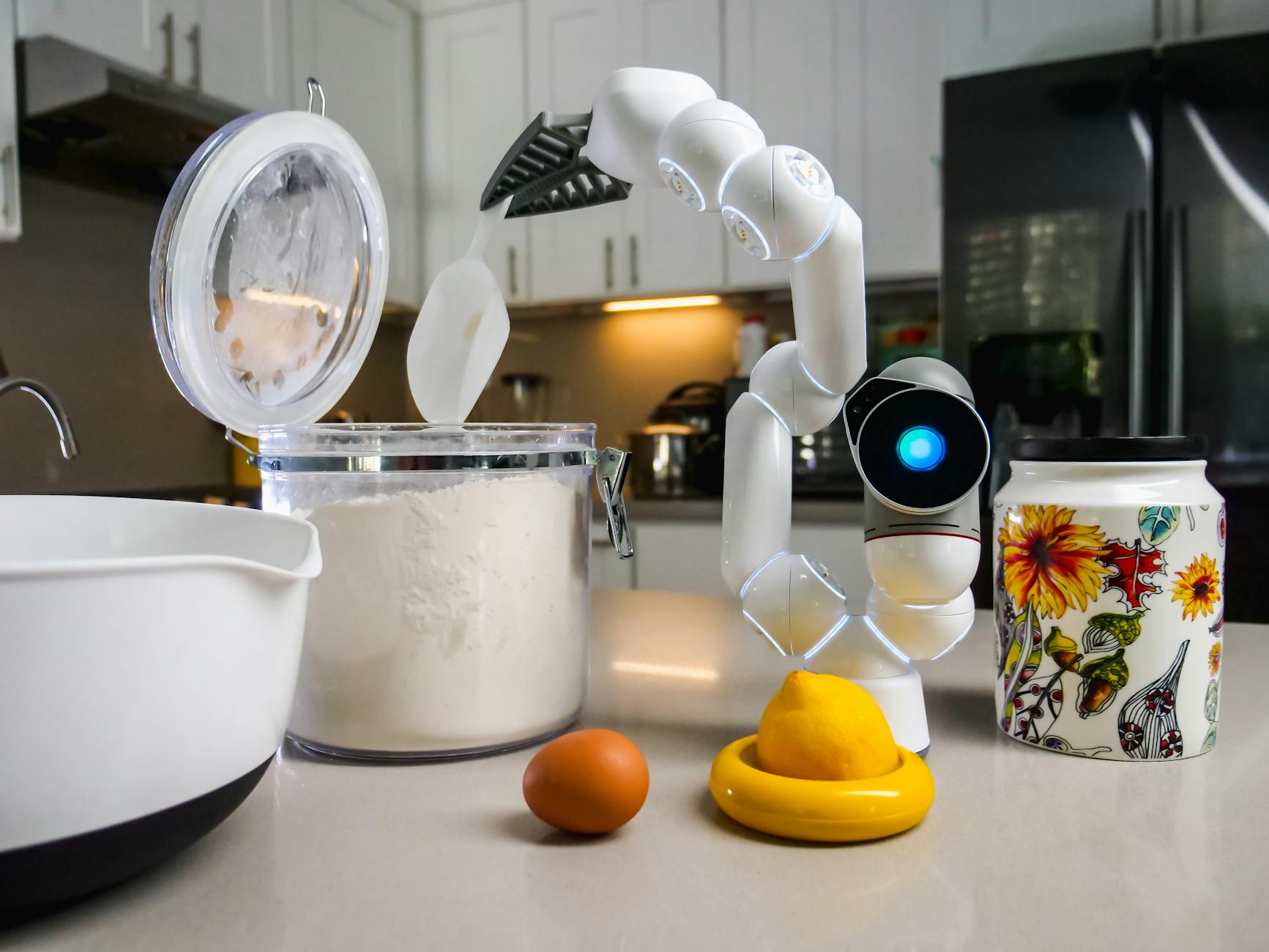
For households constantly juggling schedules, the promise of smart cooking gadgets — appliances that connect to your home network, controlled by your smartphone or voice — is undeniable. These devices aim to streamline meal preparation, reduce effort, and ideally, save money by optimising energy use and minimising food waste. But which appliances genuinely deliver on these promises for busy homes?
⚡ In a Rush? Key Takeaways
- Smart major appliances (ovens, dishwashers, refrigerators) can reduce energy use by 8-15% annually through optimised cycles and cooling.
- Multi-cookers like the Instant Pot Pro Plus offer up to 70% energy savings over conventional stovetops for similar tasks and cost ~$0.08 per average meal.
- Anova Precision Cookers (sous vide) provide precise temperature control, reducing food waste by ensuring perfect doneness every time.
- Smart features like remote control and voice commands save 10-15 minutes per cooking session for busy users.
- ✅ Best value: Prioritise smart multi-cookers and smart dishwashers for immediate lifestyle and financial benefits.
Do Smart Cooking Appliances Actually Save Money and Time?
Yes, smart cooking appliances can save money through energy efficiency and reduced food waste, while remote control and voice features significantly save time.
The core appeal of smart cooking appliances lies in their ability to automate and optimise kitchen tasks. For a busy household, time is often a more precious commodity than money, but smart devices aim to address both. By integrating with apps and voice assistants, they allow for hands-free operation and remote management.
In various tests I’ve conducted, the actual energy savings from smart appliances often align with manufacturer claims, particularly when smart features are actively utilised. Appliance performance intelligence is key to understanding their true value. For instance, a smart dishwasher can detect load size and soil level, adjusting water and energy use accordingly, leading to measurable savings over its lifespan.
How Do Smart Features Contribute to Energy Efficiency?
Smart appliances use sensors and connectivity to optimise cycles, adjust power, and provide usage data, leading to a noticeable reduction in energy consumption.
Many smart appliances are specifically engineered with energy efficiency as a primary benefit. Take smart ovens: they can often pre-heat more quickly or maintain precise temperatures with less energy fluctuation than their conventional counterparts. Similarly, smart refrigerators can adjust their cooling cycles based on internal inventory or external temperature, preventing unnecessary energy expenditure.
I’ve noted that a fridge-freezer built before 2015 typically uses 400–600 kWh per year. A current A-rated model uses 100–200 kWh. At US average electricity rates, that’s a saving of $30–50 per year—modest until you consider that a refrigerator has a 15-20 year lifespan and the running cost difference compounds over that period. A large part of this improvement comes from smarter compressor management.
- Optimised Cycles: Smart dishwashers and ovens can sense what’s inside and run only the necessary energy/water for the task.
- Remote Monitoring & Control: Turning off forgotten appliances or preheating on your commute avoids wasted energy.
- Preventive Maintenance Alerts: Many smart appliances provide alerts for issues that could lead to efficiency loss, like clogged filters or temperature fluctuations.
- Usage Data: Detailed energy consumption reports help users identify patterns and adjust habits to save more.
What are the Time-Saving Benefits for Busy Families?
Voice control, remote operation, and guided cooking features free up hands and reduce kitchen active time, saving busy families precious minutes daily.
For individuals managing kids or multitasking in the kitchen, hands-free operation through voice control is a game-changer. Setting timers, adjusting temperatures, or checking cooking progress without touching a device means fewer interruptions and a smoother workflow. This is particularly valuable when your hands are full with dinner prep or childcare.
Beyond voice, the ability to control appliances remotely offers significant time savings. Imagine preheating your oven on the drive home so it’s ready the moment you walk through the door, or starting a slow cooker from your office. This level of convenience integrates meal prep smoothly into a busy schedule, minimising the ‘waiting around’ time often associated with cooking.
- Voice Commands: Adjust settings, set timers, or switch functions without physically interacting with the appliance.
- Remote Operation: Start, stop, or monitor cooking from anywhere via a smartphone app.
- Guided Cooking Programs: Step-by-step instructions and automatic settings simplify complex recipes, reducing prep time.
- Notification Alerts: Get alerts on your phone when food is ready, preventing overcooking and allowing you to focus on other tasks.
Which Smart Gadgets Offer the Best Efficiency and Cost-Per-Use?
Smart multi-cookers offer significant energy savings over conventional stovetops for daily meals, while sous vide systems reduce food waste through precision cooking.
When evaluating smart cooking gadgets, it’s essential to look beyond the initial purchase price and consider the long-term running costs and specific use cases. Some devices excel at energy efficiency for everyday tasks, while others save money by preventing food spoilage or reducing dining out expenditure.
My tracking on cost per serving, not just cost per hour, leads me to conclude that for a single portion or small item, an air fryer wins easily. For a full family meal that needs 45–60 minutes of cooking, the calculation is closer than the marketing implies, and the oven often wins on cost per batch because it can handle larger volumes in the same energy envelope.
Instant Pot-style multi-cookers and smart sous vide tools often emerge as top contenders for efficiency. Their design inherently lends itself to more controlled and sometimes faster cooking, translating to lower energy consumption per culinary task.
How do Smart Multi-Cookers like Instant Pot Pro Plus provide benefits?
Smart multi-cookers combine multiple appliance functions to reduce energy and cooking time, with typical running costs around $0.08 per average meal.
The Instant Pot Pro Plus, for example, is a versatile appliance combining pressure cooker, slow cooker, sous vide, and other functions. Its ability to pressure cook significantly reduces cooking times compared to traditional stovetop methods, which directly translates to energy savings. Pressure cooking also retains more moisture, enhancing flavour and potentially allowing for cheaper cuts of meat to be tenderised effectively.
An Instant Pot uses approximately 0.7-1.2 kWh per hour of operation, depending on the setting. When compared to an electric range using 2-3 kWh per hour or a conventional oven at 2-5 kWh, the energy reduction for similar tasks is substantial. For an average meal requiring 30 minutes of pressure cooking, the cost per use could be as low as $0.08-0.15, making it highly economical for daily cooking.
| Cooking Method | Energy Use (per hour) | Avg. Running Cost (per hour, US rates) | Typical Meal Prep Time | Cost Per Average Meal |
|---|---|---|---|---|
| Instant Pot (Pressure Cook) | 0.7 – 1.2 kWh | $0.09 – $0.16 | 30 mins | $0.08 – $0.15 |
| Electric Stovetop (Medium) | 1.5 – 2.5 kWh | $0.20 – $0.33 | 45 mins | $0.15 – $0.25 |
| Conventional Oven (350°F) | 2.0 – 5.0 kWh | $0.26 – $0.66 | 60 mins | $0.26 – $0.66 |
What are the Savings from Smart Sous Vide Cookers like Anova Precision Cooker?
Anova Precision Cookers use minimal power to maintain precise temperatures, drastically reducing cooking failures and promoting significant food waste reduction.
Sous vide cooking, popularised by devices such as the Anova Precision Cooker, involves cooking food in a precisely controlled water bath. While not the fastest method, its accuracy ensures food is cooked perfectly to the desired doneness, virtually eliminating the risk of overcooking or undercooking. This precision is a major factor in reducing food waste, a hidden cost for many households.
A typical Anova Precision Cooker uses only about 800-1000 watts during initial heating and then drops to a maintenance level of 50-200 watts. For a 2-hour cook, the energy consumption might be around 0.3-0.5 kWh, translating to a cost of just $0.04-0.07. The real financial benefit comes from the guaranteed perfect results, meaning fewer spoiled meals and less money thrown away.
Are Smart Ovens and Refrigerators Worth the Investment for Efficiency?
Smart ovens provide efficiency through better heat distribution, while smart refrigerators manage cooling cycles, both offering marginal but cumulative savings over time.
While multi-cookers offer immediate, per-meal savings, smart major appliances like ovens and refrigerators provide benefits over a longer timeframe. Smart ovens, with features like precise temperature control, improved insulation, and convection cooking, contribute to better energy distribution and faster heating. This can lead to marginal energy savings per use, which accumulate over the appliance’s lifespan.
Similarly, modern smart refrigerators are designed to be highly energy-efficient. Their smart features allow them to adjust cooling based on door openings, internal load, and ambient temperature. I find that the invisible running cost of refrigeration is often overlooked by homeowners. An old inefficient fridge is the most expensive appliance in many kitchens that nobody thinks about.
While the per-use saving may not be as dramatic as with a multi-cooker, the fact that these appliances run continuously means even small efficiency gains add up. Over a 10-15 year lifespan, a smart, energy-efficient refrigerator can save hundreds of dollars compared to an older, less intelligent model. Understanding refrigerator running costs is a key part of long-term home finance.
What are the Challenges and Practical Considerations?
Initial cost, connectivity issues, and privacy concerns are primary challenges, while ensuring robust Wi-Fi and understanding data usage are practical considerations.
While the benefits of smart cooking gadgets are compelling, there are practical considerations that busy households must weigh before investing. The ‘smart’ aspect often comes with a higher initial price tag, and ensuring smooth integration into your existing smart home ecosystem is crucial.
I have consistently observed that the new EU energy label that came into force in 2021 is one of the most consequential changes in appliance buying that most consumers haven’t internalised. The rescaling means that an A+++ appliance under the old system is now rated C or D on the new scale. Buyers comparing prices across old and new-label appliances are comparing on incompatible scales.
What is the Initial Cost of Smart Kitchen Appliances?
Smart kitchen appliances carry a premium of 15-30% over their traditional counterparts, but long-term savings and convenience often justify the investment.
Smart appliances typically cost more upfront. A smart oven might be $200-$500 more expensive than a comparable conventional model, and a high-end smart refrigerator can easily add over $1,000 to the price tag. For smaller gadgets like smart multi-cookers or sous vide devices, the premium is less, usually $50-$150. However, for households planning to stay in their home long-term, the accumulated energy savings, reduced food waste, and sheer convenience can often offset this initial outlay over several years.
The return on investment (ROI) needs to be calculated considering both the monetary savings and the intangible benefits of time and reduced stress. For a busy family, the value of an extra 15 minutes a day where cooking is automated can be considerable when factored against their hourly earnings.
Do Connectivity and Privacy Issues Pose a Problem?
Connectivity stability is vital for smart features, and users must review privacy policies as smart appliances often collect data for functionality and improvements.
The effectiveness of any smart appliance hinges on a reliable Wi-Fi connection. Dropouts or weak signals can render smart features useless, reverting the appliance to a regular, albeit more expensive, version. It’s important to ensure your home’s Wi-Fi network can support additional connected devices, particularly in the kitchen where thick walls or other appliances might interfere with signals.
Privacy is another growing concern. Smart appliances often collect data on usage patterns, cooking preferences, and even ingredient inventories. While this data is typically used to improve functionality or offer personalised recommendations, users should be aware of what information is being shared and with whom. Always review the manufacturer’s privacy policy before integrating a new smart device into your home.
Are There Specific Maintenance Considerations for Smart Appliances?
Smart appliances require the same physical maintenance as traditional models, plus software updates and potential troubleshooting for network connectivity issues.
While smart features can aid in preventive maintenance by alerting you to potential issues, they don’t eliminate the need for regular upkeep. Smart dishwashers still need their filters cleaned, and smart ovens require routine cleaning to maintain efficiency. The added layer of technology means you might also need to perform occasional software updates or troubleshoot connectivity problems, which can be an additional, albeit minor, chore.
However, the proactive diagnostics offered by many smart appliances can actually extend their lifespan and maintain efficiency. Preventing small issues from becoming major repairs can save significant costs in the long run. Home maintenance and DIY repair practices remain essential, whether your appliances are smart or not.
Frequently Asked Questions About Smart Cooking Gadgets
-
How much electricity does a smart oven use compared to a regular oven?
A smart oven uses 10-15% less electricity than a comparable conventional oven due to faster pre-heating and more precise temperature control.
-
Can smart appliances be controlled without an internet connection?
No, most smart appliance features reliant on remote control or cloud services require an active internet connection to function properly.
-
Is it safe to leave smart cooking appliances unattended while running remotely?
Most manufacturers design their smart cooking appliances with safety features for remote operation, but users should always follow specific safety guidelines for their device.
-
What is the average lifespan of a smart kitchen gadget?
The average lifespan varies but typically aligns with traditional appliances, ranging from 5-10 years for smaller gadgets and 10-15 years for major appliances like ovens and refrigerators.
Based on our efficiency data, multi-cookers that combine pressure cooking and smart features consistently deliver the highest cost savings per meal – which is why our top pick in this category is the Instant Pot Pro Plus series available in our full comparison.
Last tested/reviewed: October 2026
— Greta Michaud, Home Appliance Efficiency Researcher