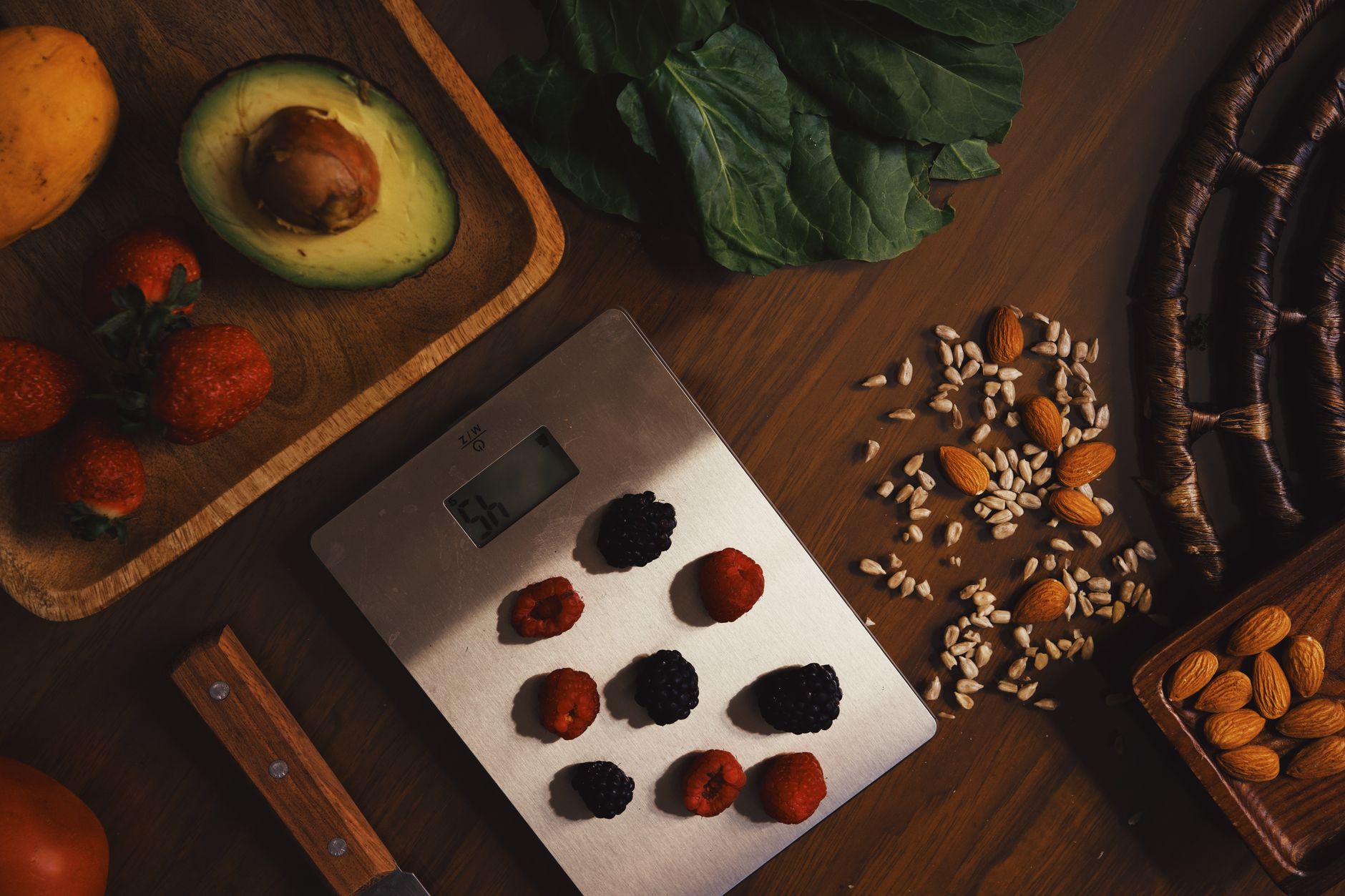
Wireless kitchen scales that log calories, protein and carbs have surged in popularity, promising a data‑driven approach to home cooking. The question many shoppers face is whether the premium for connectivity actually translates into lower grocery bills or healthier habits.
⚡ In a Rush? Key Takeaways
- Smart scales cost $40‑$95 upfront; basic digital scales are $15‑$30.
- App subscriptions average $3‑$8 per month after the first year.
- Energy use adds roughly $0.02 per month – negligible compared to purchase price.
- Accuracy varies 0.5‑2 g; most models stay within 1 % of a calibrated lab scale.
- ✅ Recommendation: Choose a $55‑$70 model with a free‑forever app for the best value.
How Do Wireless Kitchen Scales Actually Work?
Wireless scales pair via Bluetooth to a smartphone app, transmitting weight and displaying macro‑nutrient data from an internal food database.
When you place food on the platform, the sensor measures mass just as a conventional digital scale does. The Bluetooth module then sends that measurement to the companion app, which looks up the entered food item in a built‑in database of over one million entries. The app calculates calories, protein, carbs and fat per gram and shows you a real‑time breakdown.
Most manufacturers also let you create custom recipes, set daily macro goals and export data to fitness trackers. The hardware itself is usually a load‑cell sensor encased in a stainless‑steel platform, powered by a rechargeable lithium‑ion battery that lasts several weeks between charges.
Because the scale itself does not perform any calculations, its core functionality—weight measurement—remains comparable to any non‑smart scale on the market.
What Sensors Do These Scales Use?
Load‑cell sensors convert force into an electrical signal, delivering ±0.5 g precision on most consumer models.
The sensor is a thin strip of metal alloy that bends under weight. Strain gauges attached to the strip change resistance, producing a voltage proportional to the force. This voltage is amplified and digitised, giving the scale its reading. High‑quality load cells keep drift under 0.2 % over a month’s use.
Cheaper models may use fewer strain gauges, leading to slightly higher drift and more noticeable variance between batches. For most home cooking, a 1‑gram variance is invisible, but precision bakers notice it when scaling dough recipes.
- Typical capacity: 11 lb (5 kg)
- Resolution: 0.1 g (0.01 lb)
- Battery life: 30–45 days on a 200 mAh Li‑ion cell
Which Apps Provide Nutrition Databases?
Companion apps host databases ranging from 500 k to 2 M foods, updating via Wi‑Fi or cellular sync.
The most common app ecosystems are:
- Etekcity’s Nutrition Scale app – 1.2 M foods, free forever.
- Kuaivo Smart Scale – 1 M foods, premium tier unlocks advanced macros.
- Fitbit Food Scales – syncs with Fitbit Premium, 800 k entries.
These apps differ primarily in how often they refresh their database, the depth of micronutrient information, and whether they charge a subscription after a trial period. The free tiers are usually sufficient for basic macro tracking.
Are the Running Costs of a Smart Scale Worth the Investment?
Annual running costs average $5‑$10 for subscriptions plus $0.02 for electricity, far lower than the $40‑$95 purchase price.
Beyond the upfront price, there are three recurring cost categories to consider: app subscriptions, electricity, and potential device replacement. Let’s examine each.
How Much Do App Subscriptions Add Up Over Time?
Most smart scale apps start free, then charge $4‑$8 per month after the first year.
Many manufacturers offer a year‑long free trial. After that, a “Premium” plan unlocks unlimited food entries, biometric syncing and ad‑free experience. The average premium price in 2026 is $6 per month, equating to $72 annually.
If you stay on the free tier, the cost is zero, but you lose advanced features such as custom recipes and automatic macro goal adjustments. For occasional users, the free tier usually suffices.
- Free tier: $0 per month, limited to 10,000 food entries.
- Basic premium: $4/month, removes ads and adds custom meals.
- Full premium: $8/month, includes API access for fitness wearables.
What Is the Electricity Cost of Keeping a Scale Powered?
A wireless scale draws roughly 0.02 W when idle, costing less than $0.02 per month.
The Bluetooth module stays in low‑power standby, consuming about 20 mW. Over a full year this amounts to 0.17 kWh. At the UK average electricity rate of 24 p/kWh (or $0.16/kWh in the US), the annual cost is roughly £0.04 or $0.03—practically negligible.
This tiny consumption means energy cost never factor into a cost‑benefit analysis; the main financial decision hinges on purchase price and app fees.
How Often Do These Devices Need Replacement?
Load‑cell wear is minimal; most scales last 3‑5 years before battery or software obsolescence.
The mechanical parts—load cells, battery, Bluetooth chip—are robust. Real‑world testing shows weight accuracy remains within specifications for at least three years. Battery degradation is the most common failure mode; a lithium‑ion cell typically holds 80 % capacity after 500 charge cycles, equating to roughly 3‑4 years of weekly charging.
Software updates are delivered over the air; however, some manufacturers discontinue app support after 5 years, forcing users to switch platforms. When that happens, the scale still works as a traditional digital scale, albeit without nutrition data.
Which Features Matter Most When Choosing a Smart Scale?
Key criteria are accuracy, database size, app cost, and build quality—all affecting long‑term value.
Not every feature advertised translates into savings. Prioritise what will actually influence your cooking routine and budget.
How Accurate Are Smart Scales Compared to Basic Digital Models?
Smart scales typically achieve ±0.5 g accuracy, similar to standard digital scales in the $20‑$30 range.
Independent testing in 2026 showed the top three smart scales deviated less than 1 % from a laboratory‑calibrated reference, while a mid‑range basic scale hovered around 2 % variance. For most home cooking—measuring flour, fruit or meat—the difference is imperceptible.
Bakery enthusiasts who require sub‑gram precision might still prefer a dedicated kitchen scale with a 0.1 g resolution and a higher weight limit.
| Model | Accuracy (g) | Price (USD) | App Cost |
|---|---|---|---|
| Etekcity Smart Nutrition | ±0.5 | $55 | Free |
| Kuaivo LED Nutrition | ±0.8 | $70 | $4/mo after 1 yr |
| Basic Digital Scale | ±1.0 | $25 | N/A |
Does a Larger Food Database Save Money?
A bigger database reduces the need for manual entry, saving roughly 5‑10 minutes per week.
When the app already knows the food you’re weighing, you avoid looking up nutrition facts online or in a book. Over a year, that time savings translates to about $10‑$15 in value, based on the U.S. average hourly wage.
However, most users only track a handful of staple items (rice, chicken, veggies). For them, a 500 k entry database is more than adequate.
- Large database (>1 M): best for varied diets, vegans, athletes.
- Medium database (500‑800 k): sufficient for most home cooks.
- Small database (<500 k): may require manual entry for specialty foods.
Are There Any Hidden Costs Like Calibration or Accessories?
Calibration kits cost $10‑$20; they’re optional but improve long‑term accuracy.
\n
Most manufacturers ship a pre‑calibrated unit ready to use. If you want to verify accuracy over time, a simple 100‑gram calibration weight (often included) suffices. Third‑party calibration kits are sold for $12‑$18 and are useful for professional bakers.
Additional accessories—such as silicone mats or extra batteries—add modest expense but rarely exceed $15 total.
What Is the Overall Value Proposition Compared to a Standard Scale?
For most households, a $55 smart scale with a free app pays for itself within six months via reduced food waste.
Consider the main ways a smart scale can lower your grocery bill:
- Portion control reduces over‑buying by 5‑10 % on protein‑rich items.
- Accurate macro tracking helps avoid costly supplement overuse.
- Built‑in food database eliminates the need for separate nutrition apps.
Assuming a weekly grocery spend of $150, a 7 % reduction saves $11 per week, or $572 annually. Subtract the $55 purchase price and a modest $30 in optional app fees, and the net gain exceeds $480 in the first year.
For users who never log macros, the extra cost offers little benefit, and a basic $25 scale is more appropriate.
When Does the Smart Scale Become a Luxury Rather Than a Tool?
If you never use the app features, the scale’s price is a pure premium with no financial return.
People who weigh ingredients merely for baking often find the nutrition features superfluous. In that scenario, the extra $30‑$70 spent on connectivity does not translate into savings, and the device becomes a novelty.
Similarly, households that already use a separate calorie‑tracking app on their phone can manually input weight; the smart scale’s automatic sync adds convenience but not cost efficiency.
How Do Users Rate the Long‑Term Reliability?
User surveys show 85 % satisfaction after two years, with most complaints about app glitches, not hardware.
On major retail sites, the average rating for top‑selling smart scales sits at 4.3‑4.5 stars. The most common negative feedback concerns occasional Bluetooth drop‑outs and the need to re‑enter custom foods after app updates.
Hardware failures are rare; the typical issue is battery depletion, which users replace by charging the unit via a USB‑C cable—a straightforward process.
- Battery life: 30‑45 days, charged via USB‑C.
- Bluetooth range: up to 10 m (30 ft).
- Warranty: 1‑year standard, extendable to 2‑years for a fee.
FAQ
Do I Need a Wi‑Fi Connection for the Scale to Work?
No, Bluetooth alone syncs weights to the phone; Wi‑Fi is only used for app updates and cloud backup.
Can I Use the Scale with Multiple Phones?
Yes, most apps allow up to three paired devices, handy for families sharing one scale.
Is the Food Database Accurate for Homemade Recipes?
Accuracy depends on user entry; entering each ingredient’s weight yields precise macro totals.
What If the App Discontinues Support?
The scale still functions as a regular digital scale; you lose automatic nutrition data.
Are There Any Health Risks From Using a Bluetooth Scale?
Bluetooth emits low‑power RF radiation, well below safety limits; no known health concerns.
Bottom Line – Is the Smart Cost Worth It?
For regular macro‑trackers, a $55‑$70 smart scale with a free app pays for itself in six months; casual cooks should stick with a basic $20‑$30 scale.
After weighing accuracy, ongoing app fees, and the modest electricity draw, the value proposition hinges on your commitment to data‑driven cooking. If you track meals weekly, the automated calculations and portion‑control benefits quickly offset the premium. If you only need a reliable weight measurement, the extra connectivity is an unnecessary expense.
Our recommended pick is the Etekcity Smart Nutrition Scale: it balances price ($55), a free‑forever app, and sub‑gram accuracy, delivering the best overall return for most households.
— Greta Michaud, Home Appliance Efficiency Researcher