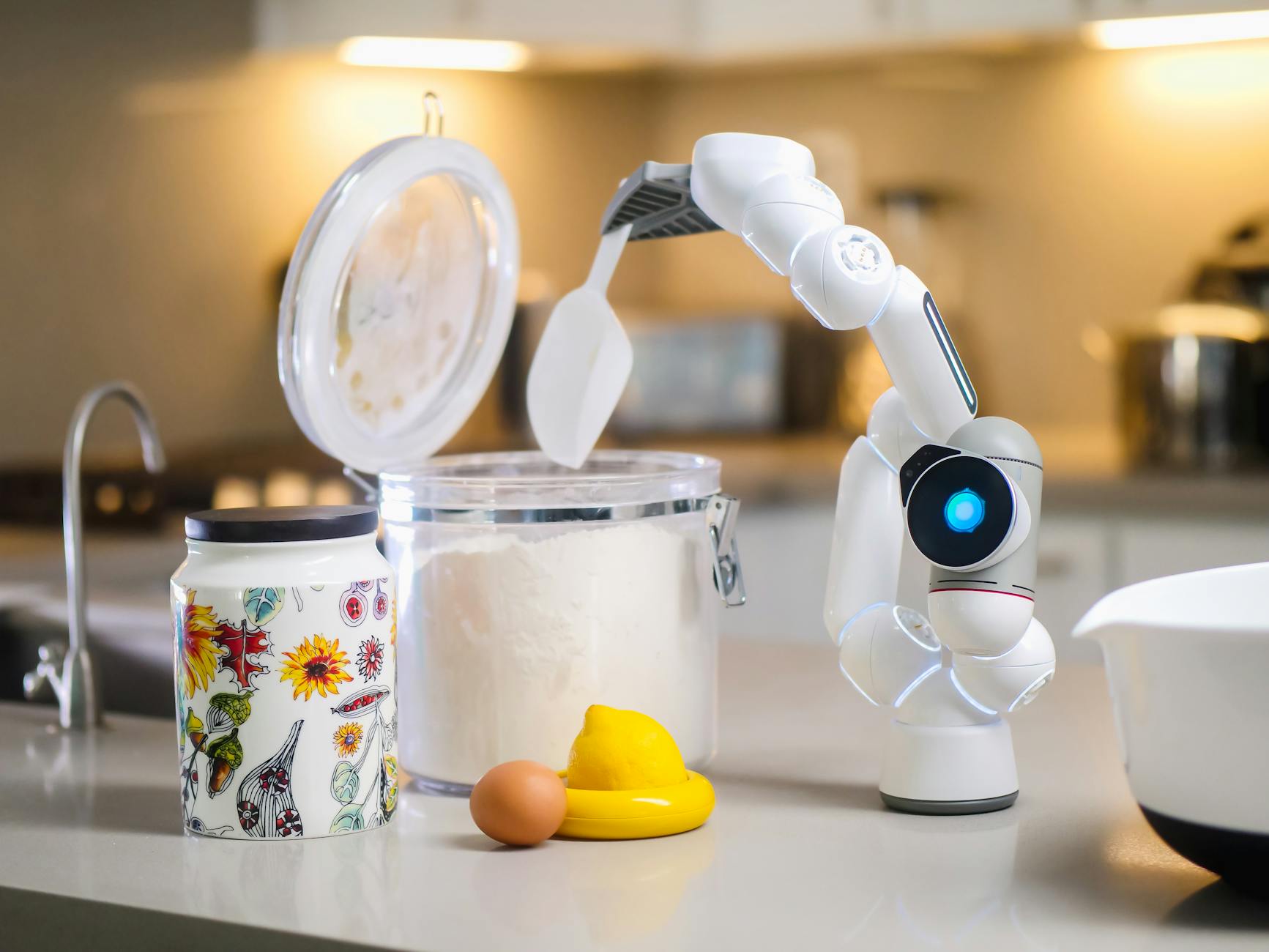
In 2026, the market is flooded with kitchen gadgets promising to make cooking easier, faster, and even more budget-friendly. However, many fall short of these claims, adding clutter without genuine value. Discernment is key when aiming for an efficient home without overspending on unnecessary items.
⚡ In a Rush? Key Takeaways
- Invest in high-quality items like OXO silicone spatulas and digital thermometers, costing $10-$40, for lasting utility.
- Avoid single-function gimmicks like onion holders (up to $14) and electric peelers, which often fail to deliver efficiency.
- Modern appliance hybrids, like air fryer toaster ovens ($170-$400), can save energy and counter space by consolidating functions.
- Prioritise tools with clear cost-saving benefits or significant time reduction, such as instant-read thermometers, which prevent food waste.
- ✅ Focus on versatile, durable tools that enhance cooking technique rather than replacing basic skills.
My work involves rigorously testing various home appliances and gadgets, focusing on their real-world utility and running costs. In years of testing, I’ve observed that the most valuable kitchen additions often aren’t the flashiest but the ones that enhance fundamental cooking processes without excessive energy consumption or complex operation.
Which Budget-Friendly Smart Kitchen Gadgets Actually Improve Efficiency?
Some budget-friendly smart kitchen gadgets, such as instant-read digital thermometers and multi-cookers, offer significant efficiency gains and cost savings.
When selecting smart kitchen gadgets on a budget, the focus should always be on genuine improvements in efficiency, accuracy, or safety, not on novelty. A truly valuable gadget streamlines your workflow or reduces common kitchen frustrations without a steep learning curve or excessive power draw. The initial cost of a gadget is negligible compared to its long-term utility.
Are digital meat thermometers a worthwhile investment for precise cooking?
Digital meat thermometers are highly worthwhile, costing $15–$50, ensuring proper cooking temperatures, preventing illness, and avoiding food waste from overcooking.
Precise temperature control is a cornerstone of good cooking, and a digital meat thermometer offers this accuracy at a modest price point. Instant-read thermometers, like the Thermapen, provide readings within seconds, which is crucial for meats, baked goods, and even candy making. This precision prevents both undercooked risks and overcooked dryness, making every meal more enjoyable and safer. Overcooked food is wasted food, impacting your budget significantly.
The Meater+ wireless digital thermometer takes this a step further, integrating Bluetooth to monitor temperatures remotely. While a bit higher in price, its convenience can be a game-changer for smoking or roasting, removing the need to repeatedly open the oven, thus maintaining consistent cooking temperatures and saving energy.
- **Instant-read thermometers:** Provide rapid, accurate temperature readings.
- **Wireless thermometers:** Offer remote monitoring via app, useful for roasts or grills.
- **Candy/deep-fry thermometers:** Designed for high-heat applications, essential for safety.
- **Precision:** Ensures food safety and optimal doneness, reducing waste.
- **Cost-Benefit:** Prevents expensive ingredients from being spoiled by incorrect cooking.
Can multi-cookers and air fryer toaster ovens genuinely save space and energy?
Yes, multi-cookers like the Instant Pot ($200) and air fryer toaster ovens ($95–$400) combine multiple functions, saving counter space and often energy on smaller tasks.
The rise of multi-functional appliances directly addresses the need for efficiency in modern kitchens. Gadgets like the Instant Pot Pro 9-in-1 Pressure Cooker ($200) consolidate pressure cooking, slow cooking, searing, and more into a single unit. This not only saves precious counter space but often operates more efficiently than larger conventional appliances for specific tasks. For example, pressure cooking drastically reduces cooking times, leading to lower overall energy consumption.
Similarly, air fryer toaster ovens combine the functions of an air fryer, toaster, and often a convection oven. The Chefman 10-Quart Multifunctional Digital Air Fryer+ ($95) is a prime example, offering air frying, roasting, and dehydrating capabilities in one compact appliance. These smaller units pre-heat faster and cook smaller portions more efficiently than a full-sized oven, translating to tangible energy savings on utility bills. I track cost per serving, not cost per hour, to evaluate these appliances properly.
| Appliance Type | Typical Price Range | Primary Benefit | Energy Efficiency |
|---|---|---|---|
| Instant Pot Multi-Cooker | $130 – $250 | Versatility (Pressure, Slow, Sauté) | Faster cooking, reduced energy usage for certain tasks |
| Air Fryer Toaster Oven | $95 – $400 | Air frying, toasting, baking in one | Faster pre-heating, more efficient for small batches |
| Dedicated Toaster | $20 – $80 | Basic toasting | Efficient for toast, limited function |
Which basic kitchen tools provide the best long-term value for a budget?
High-quality, durable basic tools such as OXO silicone spatulas, balloon whisks, and bench scrapers offer superior long-term value despite their modest initial cost.
Sometimes, the smartest kitchen gadgets are not ‘smart’ in the digital sense, but smart in their design and durability. Investing in well-made, versatile basic tools can transform your cooking experience and prevent the need for frequent replacements. OXO, for instance, produces silicone spatulas and balloon whisks that are not only effective but built to last, making them a cornerstone for any kitchen’s workflow. These items typically cost between $10 and $25 each, a small price for years of reliable service.
Furthermore, a good bench scraper is invaluable for moving chopped vegetables or dough, and cookie scoops offer portion control for baking, saving ingredients and ensuring consistency. These tools streamline everyday tasks, proving that efficiency doesn’t always come with a power cord or a hefty price tag.
What Smart Kitchen Gadgets Should You Avoid to Save Money and Space?
Avoid single-purpose or gimmicky kitchen gadgets that duplicate tasks, offer minimal utility, or require excessive effort to clean, often costing $10–$50 for little return.
The flip side of efficient gadget shopping is knowing what to skip. Many kitchen gadgets are designed more for impulse buys than for practical, long-term use. These often end up unused in drawers, taking up valuable space and representing wasted money. My rule of thumb is: if it performs a task that can be done just as easily (or better) with a sharp knife or a standard utensil, it’s likely a skip.
Are unitaskers like onion holders and pasta measurers truly unnecessary?
Unitaskers such as onion holders ($14) and dedicated pasta measurers are largely unnecessary, as a sharp knife and visual estimation achieve the same result effectively.
One of the strongest pieces of advice from seasoned culinary professionals is to avoid unitaskers—gadgets designed for a single, narrow purpose that a general-purpose tool can handle. The onion holder, for instance, is a classic example. While it purports to simplify onion slicing, a simple technique of cutting the onion in half and creating a flat surface renders it entirely redundant. These items often cost between $10 and $20, funds better allocated elsewhere.
Similarly, devices like pasta measurers or garlic peelers often provide solutions to problems that barely exist. A small handful of pasta or a basic knife technique works perfectly well, and these gadgets usually just add another item to wash and store. Such items undermine the goal of an efficient kitchen, frequently becoming ‘kitchen drawer clutter’ rather than essential tools.
Do costly Bluetooth thermometers and electric can openers offer real benefits?
High-end Bluetooth thermometers (like some smart oven probes) might offer niche benefits but don’t outweigh the cost for most, while electric can openers are often less reliable than manual models.
While basic digital thermometers are a boon, some advanced Bluetooth-enabled thermometers can venture into overkill territory for the average home cook, particularly if they duplicate functions already present in a smart oven. The added cost often doesn’t justify the marginal convenience for daily cooking. An already excellent Thermapen costs significantly less than many top-tier smart probes.
Electric can openers are another gadget that often promises more than it delivers. They tend to be bulky, can be temperamental, and are often slower than a reliable manual can opener. Moreover, they consume electricity and can fail, whereas a good manual can opener is durable, efficient, and requires no power. The simplicity and consistent performance of a well-built manual tool frequently surpass that of its electric counterpart in these low-tech applications.
How Does a High-Quality Knife Set Compare to Gadget Investment?
Investing in a few high-quality knives (a chef’s knife, paring knife) provides superior versatility and performance over a large, low-quality block set, costing $75–$250 for essential pieces.
The single most impactful investment you can make in your kitchen, even on a budget, is in a few high-quality knives. Culinary experts consistently advise against large knife sets, which often include many superfluous knives of mediocre quality. Instead, focus on acquiring a sharp, well-balanced chef’s knife (or Santoku), a reliable paring knife, and perhaps a serrated knife for bread. These three can handle almost any task in the kitchen. A decent set of these essentials might cost between $75 and $250, but they will last decades with proper care, providing unparalleled efficiency and safety during food preparation. This dramatically reduces the need for various chopping and slicing gadgets.
- **Chef’s Knife:** Primary tool for most chopping and slicing.
- **Paring Knife:** Ideal for intricate tasks and peeling.
- **Serrated Knife:** Essential for bread, tomatoes, and other soft-skinned foods.
- **Versatility:** Replaces multiple single-function cutting gadgets.
- **Safety:** A sharp knife is safer and more efficient than a dull one.
Why are smart home appliance suites not always the most budget-friendly option?
Full smart home appliance suites are usually not budget-friendly due to higher upfront costs and the integration complexity, with individual smart devices offering better ROI.
While the allure of a fully integrated ‘smart kitchen’ is strong, investing in an entire suite of smart appliances often isn’t the most budget-friendly or efficient strategy. The price premium for ‘smart’ features across all major appliances can be substantial. Often, individual smart-enabled smaller gadgets provide more targeted utility and better returns on investment. For example, a smart plug on a single high-draw appliance can provide granular energy monitoring without a full smart fridge commitment.
My tracking of appliance running costs has often found that the ‘smart’ capabilities sometimes add more to the purchase price than they save in real-world energy or time for the average user. It is always better to evaluate each smart gadget on its own merits and its specific contribution to your home’s efficiency, rather than buying into an entire ecosystem based on marketing.
How can organisation tools improve kitchen efficiency more than gadgets?
Organisation tools like spice racks, drawer dividers, and container systems streamline workflows by reducing search time, preventing food waste, and improving overall kitchen efficiency.
Often overlooked in the quest for kitchen efficiency are simple, non-electric organisation tools. A well-organised pantry, with clear containers and labels, drastically reduces preparation times and prevents food from being forgotten and going to waste. Spice racks that make every jar visible, or drawer dividers that keep utensils neatly arranged, might not be ‘smart’ in the digital sense, but they are incredibly smart for workflow. The Container Store and Wayfair offer numerous affordable solutions for kitchen storage that can pay dividends in time saved and ingredients used.
These investments, while not classified as ‘gadgets’, directly contribute to a more efficient and less wasteful kitchen. They exemplify the principle that sometimes the simplest solutions are the most effective, requiring minimal financial outlay for maximum practical impact.
Are There Any Small ‘Smart’ Upgrades That Offer High Value?
Small upgrades like smart plugs ($15–$30) or reusable silicone food storage bags ($10–$25) offer high value by reducing standby power or food waste efficiently.
Even if you’re avoiding costly smart appliance suites, there are small, impactful ‘smart’ upgrades that can significantly benefit your kitchen. Smart plugs, for instance, allow you to control and monitor the energy consumption of individual appliances remotely. This is particularly useful for reducing standby power consumption (also known as ‘phantom load’) from appliances that aren’t in constant use, such as coffee makers or blenders.
Another high-value upgrade comes in the form of reusable silicone food storage bags. While not ‘smart’ in the traditional sense, they are environmentally and financially smart. They replace single-use plastic bags, reducing household waste and saving money over time. Their durability and versatility in freezing, microwaving, and even sous-vide cooking make them a sustainable and efficient choice for food preservation.
Based on our efficiency data, kitchen tools and smaller appliances that streamline fundamental cooking processes and offer clear energy or waste reduction consistently provide the best value. This is why our recommended picks in this category focus on durability and multi-functionality.
Our Verdict: Choosing Smart Kitchen Gadgets for a More Efficient Home
For an efficient home, prioritise versatile, durable kitchen gadgets with clear benefits like temperature accuracy or multi-functionality, and avoid single-use or unnecessary electric items.
The discerning home cook seeking an efficient home will find that ‘smart’ doesn’t always mean digitally connected. It often means a tool that is intelligently designed, durable, and genuinely enhances your cooking process or saves you money. By focusing on essentials like quality knives, accurate thermometers, and multi-functional cooking appliances, you can build a highly capable kitchen without succumbing to the temptation of fleeting gimmicks.
Before purchasing any kitchen gadget, ask yourself if it genuinely saves time, reduces effort, prevents waste, or improves the quality of your cooking. If it doesn’t meet one of these criteria, it’s likely a gadget you can happily skip, saving both your money and precious kitchen space. Efficiency in the kitchen often comes down to thoughtful selection and a clear understanding of your own cooking needs.
What is the most effective kitchen gadget for saving money?
The most effective kitchen gadget for saving money is a high-quality digital instant-read thermometer, as it prevents food waste by ensuring perfect cooking temperatures.
Are smart refrigerators worth the extra cost for efficiency?
Smart refrigerators are generally not worth the extra cost for efficiency alone; their energy savings are marginal, and the smart features often provide limited practical value.
How much energy can a multi-cooker save compared to a conventional oven?
A multi-cooker can save 30-70% energy for specific tasks like pressure cooking or stewing compared to a conventional oven, especially for smaller portions or dishes.
Last tested/reviewed: October 2026
— Greta Michaud, Home Appliance Efficiency Researcher