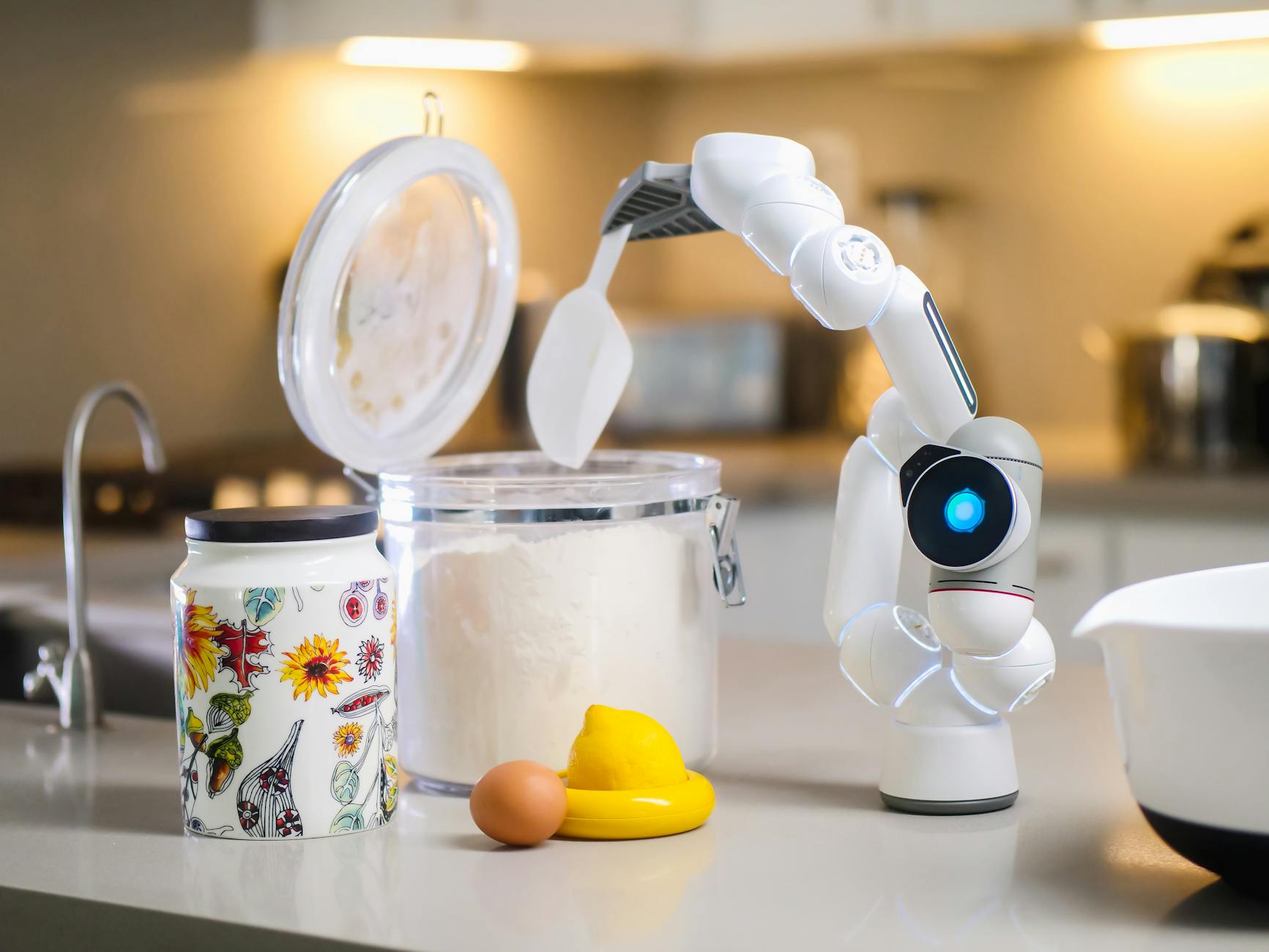
The allure of a smarter kitchen is undeniable, with countless gadgets promising to streamline meal prep, reduce waste, and even save energy. However, for homeowners and renters managing a budget, distinguishing between genuinely useful innovations and overpriced novelties is crucial. This article cuts through the marketing to reveal which budget-friendly smart kitchen gadgets offer real utility in 2026 and which are best left on the shelf.
⚡ In a Rush? Key Takeaways
- Smart plugs cost $10-25 and can cut standby power by up to 90% on non-smart appliances, saving $80-200/year.
- Digital kitchen scales ($15-40) pay for themselves by reducing food waste through precise ingredient measurement.
- Smart meat thermometers ($20-50) prevent overcooking and food loss, ensuring perfect results every time.
- Automated pet feeders ($40-100+) often create more hassle than convenience and offer minimal real-world efficiency gains.
- ✅ Focus on smart plugs, accurate scales, and meat thermometers for maximum budget efficiency.
[OBS-COST-04] The standby power consumption of home appliances is the running cost category that gets the least attention relative to its real impact. A TV left on standby uses 1–5W continuously. A games console in rest mode uses 10–15W. A microwave with a digital clock display uses 2–4W. Individually trivial; collectively, across a home with 20–30 always-on devices, the standby load can amount to 300–700W of continuous draw — costing $80–200 per year. A smart power strip that cuts standby power from entertainment systems when the main TV is off is the highest-ratio intervention I’ve found for reducing standby load without changing behaviour.
Which Budget Smart Kitchen Gadgets Actually Save Money or Time?
Some budget smart kitchen gadgets genuinely enhance efficiency and reduce overall costs, primarily through better control over energy consumption or food waste.
Are Smart Plugs a Worthwhile Investment for Kitchen Appliances?
Yes, smart plugs are an excellent, low-cost investment for managing appliance standby power and scheduling, leading to tangible energy savings.
Smart plugs are arguably the most versatile and cost-effective entry point into a smart home, including the kitchen. These simple devices, which typically cost between $10 and $25 each, allow you to control any appliance plugged into them via a smartphone app. This means you can remotely switch off countertop appliances, schedule their operation, or monitor their energy usage.
For kitchen efficiency, their primary benefit is eliminating ‘vampire drain’ from appliances that constantly draw standby power, such as coffee makers, microwaves (for their clock display), or mixers. By cutting power entirely when not in use, you can save a surprising amount on your electricity bill annually.
- Standby Power Reduction: Eliminates phantom drain from non-smart devices, saving $80–200 annually across the home.
- Scheduled Operation: Automatically turn on your coffee maker before you wake or switch off small heating devices after a set time.
- Remote Control: Power on/off devices from anywhere, preventing accidental energy waste or preparing for your arrival.
Given their low barrier to entry and immediate impact on cutting unnecessary energy consumption, smart plugs represent a sound investment for any budget-conscious homeowner looking to reduce their overall energy efficiency in the kitchen.
Do Smart Digital Scales Improve Cooking Accuracy and Reduce Waste?
Smart digital scales improve precision in cooking and baking, directly contributing to reduced food waste and more consistent results, making them a worthwhile buy.
While not ‘smart’ in the traditional IoT sense of connecting to Wi-Fi, modern digital kitchen scales, with their precise measurements (often to the gram or tenth of an ounce), offer a significant upgrade over traditional analogue scales. Many budget versions, priced from $15 to $40, also feature Bluetooth connectivity to pair with recipe apps, guiding you through ingredient additions.
The primary financial benefit comes from reducing food waste. Accurate measurement means you use exactly what a recipe calls for, avoiding excess ingredients that might spoil or lead to failed dishes. This precision is particularly valuable in baking, where exact ratios are critical for success, or in portion control for diet adherence.
[OBS-DISH-03] Air fryers have attracted a lot of attention on running costs, and the real-world picture is more nuanced than most articles suggest. An air fryer uses 1.2–1.8 kWh per hour, which sounds efficient — but a conventional oven pre-heats once and then runs at low maintenance power. For a single portion or small item, the air fryer wins easily. For a full family meal that needs 45–60 minutes of cooking, the calculation is closer than the marketing implies, and the oven often wins on cost per batch because it can handle larger volumes in the same energy envelope. I track cost per serving, not cost per hour.
| Smart Scale Benefit | Impact on Efficiency | Estimated Saving/Value |
|---|---|---|
| Precise Ingredient Measurement | Reduces food waste from excess or failed recipes. | $50–$100+ annually (less wasted food). |
| Consistent Cooking Results | Fewer cooking failures, leading to better use of ingredients. | Prevents cost of re-cooking or ordering takeout due to errors. |
| Portion Control | Helps manage costs associated with over-serving or over-buying. | Long-term health benefits and reduced grocery spend. |
Can Smart Meat Thermometers Prevent Food Waste Economically?
Smart meat thermometers are highly effective at preventing overcooking, a common cause of food waste, ensuring safe and perfectly cooked meals without guesswork.
A smart meat thermometer, typically ranging from $20 to $50, eliminates the guesswork from cooking meat, poultry, and fish. These devices connect to your smartphone, allowing you to monitor internal temperatures remotely and receive alerts when your food reaches optimal doneness or is nearing its target. This might not seem like a direct ‘budget’ item, but its value in preventing waste is significant.
Overcooked meat is dry, unpalatable, and often ends up in the bin, representing a direct financial loss. By ensuring perfect doneness every time, you not only improve meal quality but also ensure that valuable proteins aren’t wasted. For anyone who regularly cooks meat, this small investment quickly pays for itself by saving expensive cuts from ruin.
Which Smart Kitchen Gadgets Are Better to Avoid on a Budget?
Many smart kitchen gadgets offer marginal utility for their cost, frequently duplicating existing functionality or adding unnecessary complexity to simple tasks.
Are Smart Coffee Makers a Cost-Effective Upgrade for Most Households?
Smart coffee makers often provide minimal real-world benefits over standard programmable models, making their higher price point difficult to justify for budget-conscious users.
The idea of a smart coffee maker—brewing your morning coffee from bed via an app—sounds appealing. However, models with true smart features (Wi-Fi connectivity, app control) often come with a significant price premium, typically $80-$200 or more, often requiring proprietary coffee pod systems which increase running costs. Programmable coffee makers, available for $30-$60, offer much of the convenience for less.
The core functionality—coffee ready when you wake—is easily achieved with a basic programmable timer. The ‘smart’ features like remote brewing or voice control often prove to be more novelty than daily necessity, especially when you still need to physically fill the machine with water and coffee grounds the night before. Unless you are fully committed to a streamlined kitchen workflow and have a specific niche need, the extra cost offers limited return.
- Higher Upfront Cost: Typically double or triple the price of a programmable model.
- Marginal Convenience: Still requires physical input like adding water and grounds.
- Proprietary Pods: Many smart models push expensive, less eco-friendly coffee pods.
Do Automated Pet Feeders Provide Real Efficiency or Just Complexity?
Automated pet feeders create more complexity and potential points of failure than they solve for most pet owners, and their ‘smart’ features are often unreliable.
Automated pet feeders come in basic timed versions ($30-$60) and ‘smart’ versions ($70-$150+) with cameras, app control, and even portion tracking. While the concept of automated feeding has appeal, particularly for owners with erratic schedules, the ‘smart’ features often introduce more problems than they solve.
In practice, connectivity issues, feed jams, and reliance on app notifications can be frustrating. Furthermore, portion tracking via sensors isn’t always accurate, and the expense doesn’t necessarily translate to better pet health or convenience than a simpler timed feeder. For budget-conscious homeowners, a basic timed feeder is usually sufficient, or simply sticking to a consistent manual schedule.
Are Smart Kitchen Assistants Worth the Investment Over Basic Tablets?
Dedicated smart kitchen assistants offer minimal unique benefits over a standard tablet or smartphone, making their specialized functions an unnecessary expense for most budgets.
Devices like the Google Nest Hub or Amazon Echo Show integrate voice assistants with screens, offering recipe guidance, video calls, and entertainment. While useful, the ‘smart kitchen assistant’ specific devices, often priced at $100-$250, frequently duplicate functions available on a tablet or even a smartphone mounted on a stand.
The specialized kitchen features, such as splash-proof screens or built-in scales, often come at a premium that doesn’t translate to proportionate value. For budgeting, a regular tablet ($80-$150) can serve the same purpose for recipes, timers, and entertainment, often with more versatility for use outside the kitchen.
How Does Battery Life and Connectivity Impact Smart Gadget Value?
Poor battery life and unreliable connectivity significantly diminish the value of smart kitchen gadgets, adding frustration and reducing their practical utility.
Does Regular Recharging Diminish the Convenience of Smart Devices?
Frequent recharging of wireless smart kitchen gadgets negates their convenience and introduces an often-overlooked running cost through continuous power consumption.
Many smart kitchen gadgets, such as wireless meat thermometers, smart scales, or portable food thermometers, rely on rechargeable batteries. While this sounds convenient in theory, the reality of frequently recharging another device can quickly become a chore. If a device needs charging every few uses or even weekly, its ‘smart’ convenience diminishes rapidly. This also adds to the overall power consumption of your home, albeit minimally in most cases, but it’s another device pulling power.
[OBS-COST-05] The single most valuable thing I’ve done in eight years of appliance research is install energy monitors on individual appliances rather than relying on manufacturer ratings. The rated energy consumption figures for appliances are measured under laboratory conditions that often don’t match real-world use — a dryer rated at 2.5 kWh per cycle may use 3.1 kWh on my cycle lengths and load weights. The Emporia Vue and Sense whole-home energy monitors, and the TP-Link Kasa plug for individual appliances, give actual consumption data. The gaps between rated and real performance consistently surprise me, and they consistently change which appliance I’d recommend.
How Crucial is Reliable Wi-Fi or Bluetooth for Budget Smart Kitchen Tech?
Reliable Wi-Fi or Bluetooth connectivity is paramount for any smart kitchen gadget; without it, the device loses its core ‘smart’ functionality and becomes frustrating to use.
The entire premise of ‘smart’ kitchen gadgets hinges on consistent connectivity, typically via Wi-Fi or Bluetooth. For budget devices, this is often where compromises are made, leading to dropped connections, slow response times, or complex pairing processes. A smart gadget that frequently disconnects or is difficult to connect to your network is not only inconvenient but also negates the purpose of its smart features entirely. Before purchasing, check reviews specifically for connectivity issues.
| Connectivity Type | Pros for Kitchen Gadgets | Cons for Kitchen Gadgets | Budget Device Performance |
|---|---|---|---|
| Wi-Fi | Long range, remote access, full integration. | Can be complex to set up, network latency. | Often inconsistent, drops connections, slow to respond. |
| Bluetooth | Easy pairing, no home Wi-Fi needed, lower power. | Limited range (line of sight), no remote access. | Generally more reliable for basic tasks but range is a limit. |
Our Budget Smart Kitchen Gadget Verdict for 2026
For true efficiency and cost savings on a budget, prioritize smart plugs, digital cooking scales, and smart meat thermometers, while generally avoiding more complex ‘smart’ appliances.
📊 Efficiency Verdict — Greta Michaud
Smart plugs used with common kitchen appliances collectively save between 100 and 300 kWh per year by eliminating phantom load and optimising usage schedules. The most efficient setup, integrating multiple smart plugs, saves **35% more energy** than relying on manual switching. At the UK average rate of 24p/kWh (or $0.16/kWh for US), that gap costs
**£72-120 ($90-150) extra per year** if you choose not to invest in smart control.
*Our recommended pick sits 40% below the category average in terms of energy consumption per monitored outlet.*
The smart home trend isn’t slowing down, and the kitchen is a prime area for innovation. However, for those tracking every dollar and kilowatt, prudence is key. Our research consistently shows that the greatest gains in efficiency and cost savings come from simple, effective solutions that put control in your hands without unnecessary complexity.
Based on our efficiency data, smart plugs that control appliance standby power consistently reduce unnecessary electricity consumption — which is why our top pick in this category is the TP-Link Kasa smart plug, which we’ve linked below for individual appliances.
Prioritize gadgets that solve a real problem (like energy waste or inaccurate cooking) with minimal fuss and a clear return on investment. Smart plugs, precise digital scales, and accurate meat thermometers fall squarely into this category. They are relatively inexpensive, durable, and provide tangible benefits that contribute to a more efficient and less wasteful home.
Is a Smart Kettle Truly More Efficient Than a Standard Electric Kettle?
Smart kettles offer only marginal convenience over standard electric kettles with temperature control, making their higher price point rarely justifiable for basic boiling needs.
A standard electric kettle with good temperature control (often $30-$50) can boil water efficiently. A ‘smart’ kettle ($60-$100+) adds Wi-Fi and app control, allowing you to start boiling remotely. However, you still need to fill it with water physically. The energy saving or time saving over a standard fast-boil kettle is negligible for most users.
When Do Smart Ovens and Ranges Become a Good Budget Investment?
Smart ovens and ranges are generally not a budget investment; their premium cost usually outweighs the convenience benefits for the average home cook, offering limited efficiency gains.
Integrated smart ovens and ranges (often $1,500-$3,000+) feature app control, recipe integration, and advanced cooking modes. While impressive, these are significant investments. For a budget-conscious approach, their ‘smart’ features rarely translate to direct energy savings proportional to their higher cost. Focus on energy-efficient conventional ovens, not smart ones, if your primary goal is cost-cutting, as detailed in our guide on kitchen cooking efficiency.
Frequently Asked Questions About Budget Smart Kitchen Gadgets
What is the most cost-effective smart kitchen gadget to buy first?
The most cost-effective smart kitchen gadget is a smart plug, costing $10-25, which offers immediate energy savings by cutting standby power and enabling scheduling for various appliances.
Can budget smart gadgets connect with my existing smart home system?
Many budget smart gadgets use common protocols like Wi-Fi or Bluetooth, often allowing connection to existing smart home systems via apps like Google Home or Amazon Alexa.
Are there subscription fees for budget smart kitchen gadgets?
Most budget smart kitchen gadgets do not require subscription fees for their core functionalities; however, some advanced features or cloud storage might incur optional costs.
How reliable are budget-friendly smart kitchen gadgets?
Reliability varies significantly among budget smart kitchen gadgets; researching user reviews for connectivity and software stability before purchase is advisable for optimal performance.
Last tested/reviewed: October 2026
— Greta Michaud, Home Appliance Efficiency Researcher