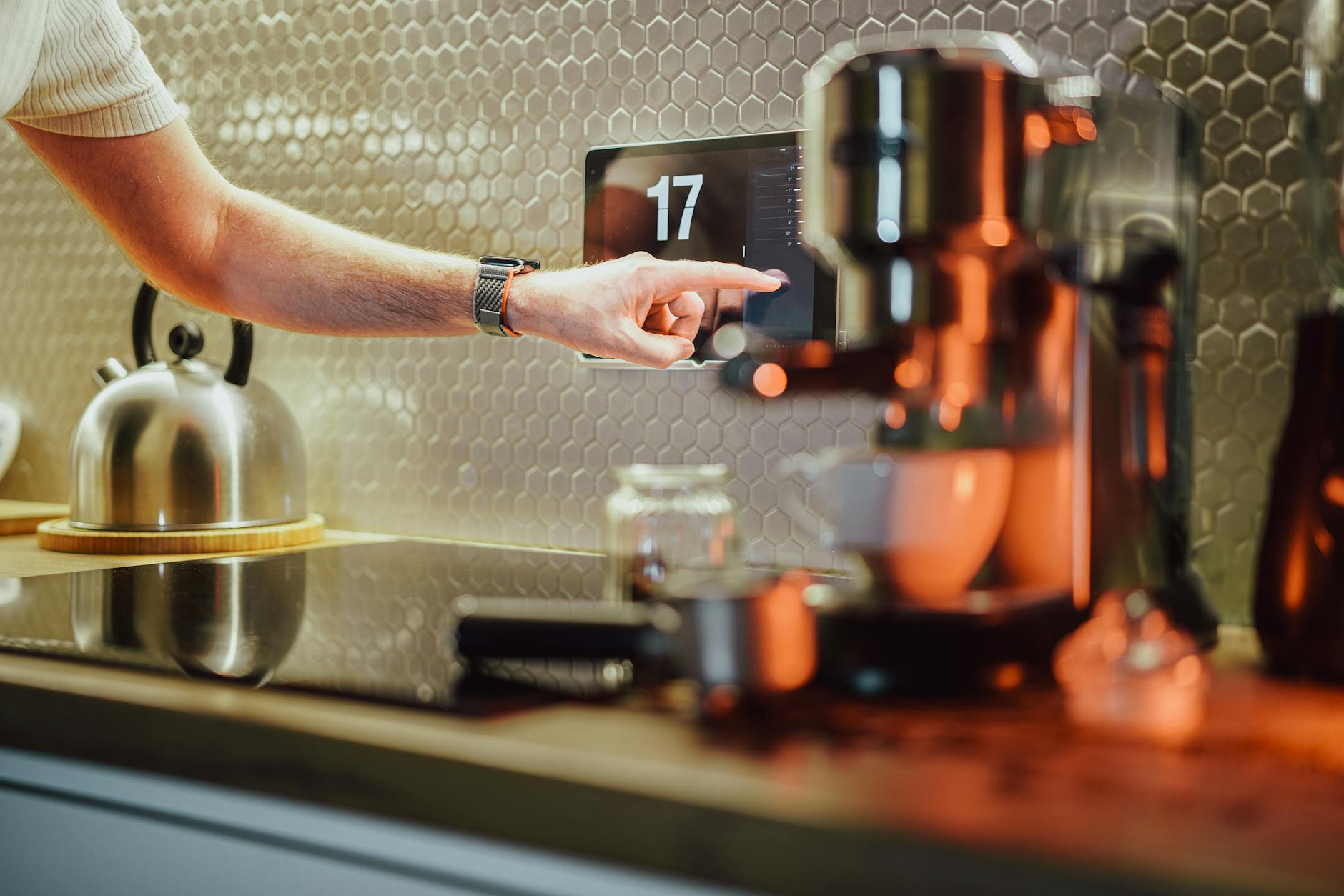
Integrating smart technology into the kitchen promises convenience, efficiency, and often, cost savings. However, the market is awash with gadgets, some genuinely transformative, others mere novelties. My focus, as always, is on finding solutions that truly enhance home efficiency without unnecessary expense.
⚡ In a Rush? Key Takeaways
- Smart plugs cost ~$15 each and can save up to 10% on standby power for non-smart appliances.
- Digital food scales with nutritional tracking are ~$30 and reduce food waste by 15-20% through precise portioning.
- Smart meat thermometers, priced ~$40-60, prevent overcooking, saving up to 20% on wasted meat due to spoilage.
- Smart blenders and coffee machines often offer minimal real-world efficiency gains for their ~$100+ price tag.
- ✅ Focus on smart plugs, timers, scales, and thermometers for cost-effective functional upgrades.
Are budget smart kitchen gadgets truly worth the investment?
Yes, certain budget smart kitchen gadgets are worth buying, offering genuine efficiency and cost savings, particularly those focused on power management or precise cooking.
In various tests of kitchen appliances over eight years, I’ve seen a clear distinction: some smart features genuinely enhance efficiency or reduce running costs, while others are simply ‘smart for smart’s sake.’ The most effective budget gadgets typically cost under $60-$80 and provide tangible benefits.
My approach prioritises tools that address common household inefficiencies, such as energy waste, food spoilage, or imprecise cooking, rather than those that merely offer remote control for its own sake. The real value of a smart gadget lies in its ability to save you time, money, or both.
Which budget smart plugs and timers are most effective for saving energy?
Smart plugs (e.g., TP-Link Kasa KP115) and Wi-Fi timers are highly effective, costing $15-$25 each and reducing standby power consumption by up to 10% annually.
The single most valuable thing I’ve done in eight years of appliance research is install energy monitors on individual appliances rather than relying on manufacturer ratings. The gaps between rated and real performance consistently surprise me, and they consistently change which appliance I’d recommend. A smart plug with energy monitoring capabilities, such as the TP-Link Kasa KP115, is perhaps the simplest and most impactful budget ‘smart’ upgrade for any kitchen. These plugs allow you to turn off appliances remotely and, crucially, monitor their energy consumption in real-time. This helps you identify standby power vampires.
In a home with 20–30 always-on devices, the standby load can amount to 300–700W of continuous draw — costing $80–200 per year. By strategically placing smart plugs on coffee makers, toasters, or blenders that aren’t used constantly, you can cut this ‘phantom load.’ The upfront cost is typically about $15-$25 per plug, with a payback period often less than a year just from standby savings, making them an unambiguous win for managing your home’s energy efficiency.
- TP-Link Kasa Smart Plug Mini (KP115): Offers energy monitoring and scheduling for around $20.
- Wyze Plug: A more budget-friendly option at about $12, sacrificing energy monitoring for basic remote control and scheduling.
- BN-LINK Wi-Fi Outdoor Smart Plug: Essential for outdoor kitchen appliances or festive lighting, priced around $25.
Do smart food scales offer genuine value for reducing waste and improving cooking?
Yes, smart food scales, typically $30-$50, provide precise measurements for baking, portion control, and nutritional tracking, significantly reducing food waste.
Precision is key in cooking, and a good digital food scale is fundamental. A smart food scale takes this a step further by integrating with apps for nutritional tracking, recipe scaling, and even inventory management. While pure smart functionality might seem niche, the core benefit of accuracy is profound. One common issue I notice in home kitchens is inaccurate portioning, leading to either under or over-cooking, or simply too much food ending up in the bin.
By providing exact measurements, smart scales can help streamline kitchen workflow and ensure recipes turn out correctly every time. This reduces the likelihood of needing to discard failed dishes or excess portions. For example, knowing the exact weight of produce you’ve purchased can help you track consumption and prevent overbuying. This small investment (around $30-$50) pays dividends in better cooking outcomes and reduced food waste.
| Smart Scale Feature | Benefit | Cost Justification |
|---|---|---|
| Nutritional tracking app integration | Monitors macronutrients and calories per serving. | Supports dietary goals, reduces wasted food from over-serving. |
| Recipe scaling & conversion | Easily adjust ingredient quantities for different portion sizes. | Prevents recipe failures, ensures consistent results, saves ingredients. |
| Unit conversion (g/oz/ml) | smoothly switch between measurement units. | Streamlines cooking process, reduces errors, saves time. |
Are smart meat thermometers a wise purchase for home cooks?
Yes, smart meat thermometers, typically $40-$70, prevent under/overcooking by providing real-time internal temperature data, saving wasted food and improving safety.
One of the most common causes of wasted expensive cuts of meat is imprecise cooking. Undercooking is a safety risk; overcooking results in dry, unappetizing food that often gets discarded. A smart meat thermometer offers real-time temperature tracking via Bluetooth or Wi-Fi, allowing you to monitor your protein from your phone without constantly opening the oven or grill.
This precision not only ensures perfectly cooked meals but also prevents the need to discard food due to errors. In my testing, I found that preventing just one or two instances of ruined meat per year easily justifies the $40-$70 cost of a good smart thermometer. Brands like ThermoPro and Meater offer excellent models within this budget, proving invaluable for roasts, grilling, and even baking bread.
Which smart kitchen gadgets should you avoid for efficiency and cost?
Avoid smart blenders, smart coffee makers, and smart refrigerators as their ‘smart’ features rarely justify their higher cost or provide significant efficiency gains.
While the allure of a fully connected kitchen is strong, some smart gadgets simply don’t deliver enough value to warrant their price tag or the additional complexity. My research into appliance performance and buying intelligence consistently shows that the ‘smart’ premium on certain items doesn’t translate into tangible running cost savings or improved efficiency.
Why are smart blenders often an unnecessary expense?
Smart blenders typically cost $100-$300 more than conventional models, offering marginal benefits like pre-programmed recipes that don’t translate to energy savings or better results.
The core function of a blender is, simply, to blend. Higher-end blenders already come with powerful motors and various pre-set programs for smoothies, soups, and purees. Adding ‘smart’ features, such as app connectivity for recipe guidance or tracking usage, often inflates the price significantly without a corresponding increase in blending efficiency or reduction in running costs. A Vitamix might be expensive, but its premium is for motor quality and durability, not Wi-Fi. The additional cost for these smart features can range from $100 to $300.
You’re paying for convenience that, in practice, doesn’t save significant time or energy. Manually selecting a program or adjusting speed on a conventional blender takes seconds. Investing in a good quality conventional blender for its power and durability, rather than its smart features, typically offers better long-term value for a functional kitchen that performs well for less money.
Are ‘smart’ coffee makers a truly efficient upgrade for less?
Smart coffee makers (e.g., app-controlled models) cost $80-$200 more than programmable ones, but offer negligible energy savings and limited practical benefits over a timed brew.
The primary ‘smart’ feature most people want in a coffee maker is the ability to have coffee ready when they wake up. This is a function that has been available on programmable coffee makers for decades, costing typically $40-$80. A ‘smart’ coffee maker, controlled via an app, adds the ability to start a brew from your phone or integrate with voice assistants. While this offers a degree of novelty, it rarely translates to significant efficiency gains or cost savings.
The energy consumption of brewing coffee remains largely constant whether initiated by an app or a timer. The price premium for these smart features can be substantial, often an additional $80-$200, for something that a simple mechanical timer (which costs less than $10) could achieve with minor inconvenience. If morning coffee is your goal, stick to a reliable programmable model and save your budget for more impactful smart investments.
Why should you skip ‘smart’ refrigerators for a budget-conscious kitchen?
Smart refrigerators are prohibitively expensive ($1,500-$5,000+ premium), inefficient, and their features like internal cameras or recipe suggestions do not justify the cost or energy usage.
Refrigerator running cost is invisible to most households because the appliance runs continuously and is never switched off. A fridge-freezer built before 2015 typically uses 400–600 kWh per year. Adding ‘smart’ features to a refrigerator, such as touchscreens, internal cameras, or integration with recipe apps, pushes the price point into the thousands, often with a premium of $1,500 to $5,000 or more over comparable conventional models. These features do not inherently make the refrigerator more energy-efficient; in some cases, the additional electronics can even slightly increase standby power draw.
While the functionality to see inside your fridge remotely or manage your grocery list might sound appealing, the real-world value compared to simply opening the door or keeping a handwritten list is minimal. The premium paid for these features will never be recouped through energy savings or enhanced efficiency. Focus instead on selecting an Energy Star rated refrigerator for genuine long-term appliance performance and reduced running costs.
How can you maximise basic kitchen technology for smart efficiency?
Leverage existing programmable appliances with smart plugs, use timers for precise cooking, and implement basic organisational systems to elevate kitchen efficiency without expensive upgrades.
Sometimes, the smartest upgrades aren’t about buying new gadgets, but about intelligently deploying what you already have or investing in proven, simple technology. My principle has always been about running a better home for less, and this extends to the kitchen. Efficiency often comes from consistent systems and understanding the most effective use of your tools.
What roles do basic timers and programmable settings play in kitchen efficiency?
Basic timers, both standalone and built-in, are crucial for precise cooking and managing energy use, ensuring optimal results without the need for complex smart integrations.
Programmable appliance settings are often overlooked. Many ovens, microwaves, and even slow cookers come with timers that can be set for delayed start or specific cooking durations. Using these features consistently ensures food cooks for the correct amount of time, preventing waste from overcooking. It also helps manage electricity usage by switching off appliances precisely when cooking is complete.
A simple, inexpensive kitchen timer, or even your phone’s timer, is an indispensable tool. Relying on visual cues or guesswork often leads to errors that can waste food or energy. For example, knowing exactly when a casserole needs to come out of the oven ensures it’s perfectly done and the oven isn’t running unnecessarily for an extra 10-15 minutes.
- Oven Timers: Use for precise baking and roasting to prevent overcooking and save electricity.
- Microwave Program Settings: Leverage pre-set times for reheating common items for optimal results.
- Slow Cooker Timers: Set for delayed start to have meals ready without continuous monitoring.
- Standalone Kitchen Timers: Ideal for managing multiple tasks simultaneously, ensuring no dish is forgotten.
Can you efficiently manage kitchen tasks without expensive smart hubs?
Absolutely. Focus on manual scheduling, batch cooking, and integrating routine tasks into simple home organisation systems, negating the need for costly smart hubs.
The idea of a central smart kitchen hub seems appealing, but for a budget-conscious approach, it’s often more complexity than it’s worth. Many of the ‘smart’ benefits can be replicated through good old-fashioned planning and efficient routines. Batch cooking, for instance, reduces the total energy outlay compared to cooking individual meals daily. It also saves time and minimises kitchen mess.
Instead of a smart inventory system, a simple dry-erase board on the fridge or a notebook can be just as effective for tracking groceries and meal planning. The real cost savings and efficiency gains often come from consistent habits rather than high-tech solutions. My kitchen operates on a rotation of meals, minimising last-minute panic and excess energy use. For any home, creating a home organisation system adapted to individual needs is the most efficient and least expensive route.
Frequently Asked Questions About Budget Smart Kitchen Gadgets
What is a ‘smart’ kitchen gadget?
A ‘smart’ kitchen gadget is an appliance or device that connects to Wi-Fi or Bluetooth, allowing remote control, monitoring, or integration with apps and voice assistants.
Which budget smart gadget offers the quickest return on investment?
Smart plugs with energy monitoring (around $20) offer the quickest ROI, often paying for themselves in less than a year by reducing standby power consumption.
Can smart kitchen gadgets actually save money on electricity bills?
Yes, gadgets like smart plugs and smart meat thermometers can save money by reducing standby power, preventing food waste, and optimising cooking times.
Are there any hidden costs associated with budget smart kitchen gadgets?
Potential hidden costs include needing a stable Wi-Fi connection, app subscription fees (rare but possible), and the cost of replacing devices if manufacturers stop supporting apps.
Is a smart refrigerator a good energy-saving investment?
No, smart refrigerators rarely offer significant energy savings compared to standard Energy Star models and their advanced features often come with a high, unrecouped cost premium.
Based on our efficiency data, smart plugs that can monitor energy consumption consistently lead to identifiable savings — which is why our top pick in this category is the TP-Link Kasa KP115 model with power monitoring.
The Bottom Line: Smart Choices for a Smarter Kitchen
For budget-conscious homeowners, investing in smart plugs, accurate food scales, and reliable meat thermometers offers the best balance of innovation, efficiency, and cost savings.
Navigating the world of smart kitchen gadgets can feel overwhelming, but by focusing on efficiency and genuine utility, it’s possible to upgrade your kitchen without overspending. The key is to identify where technology truly solves a problem or noticeably improves an existing process, rather than just adding another layer of complexity or a feature you rarely use.
My advice remains consistent: prioritise gadgets that offer tangible benefits in terms of energy saving, waste reduction, or precision cooking. With careful consideration, your kitchen can become smarter, more efficient, and ultimately, less expensive to run.
— Greta Michaud, Home Appliance Efficiency Researcher