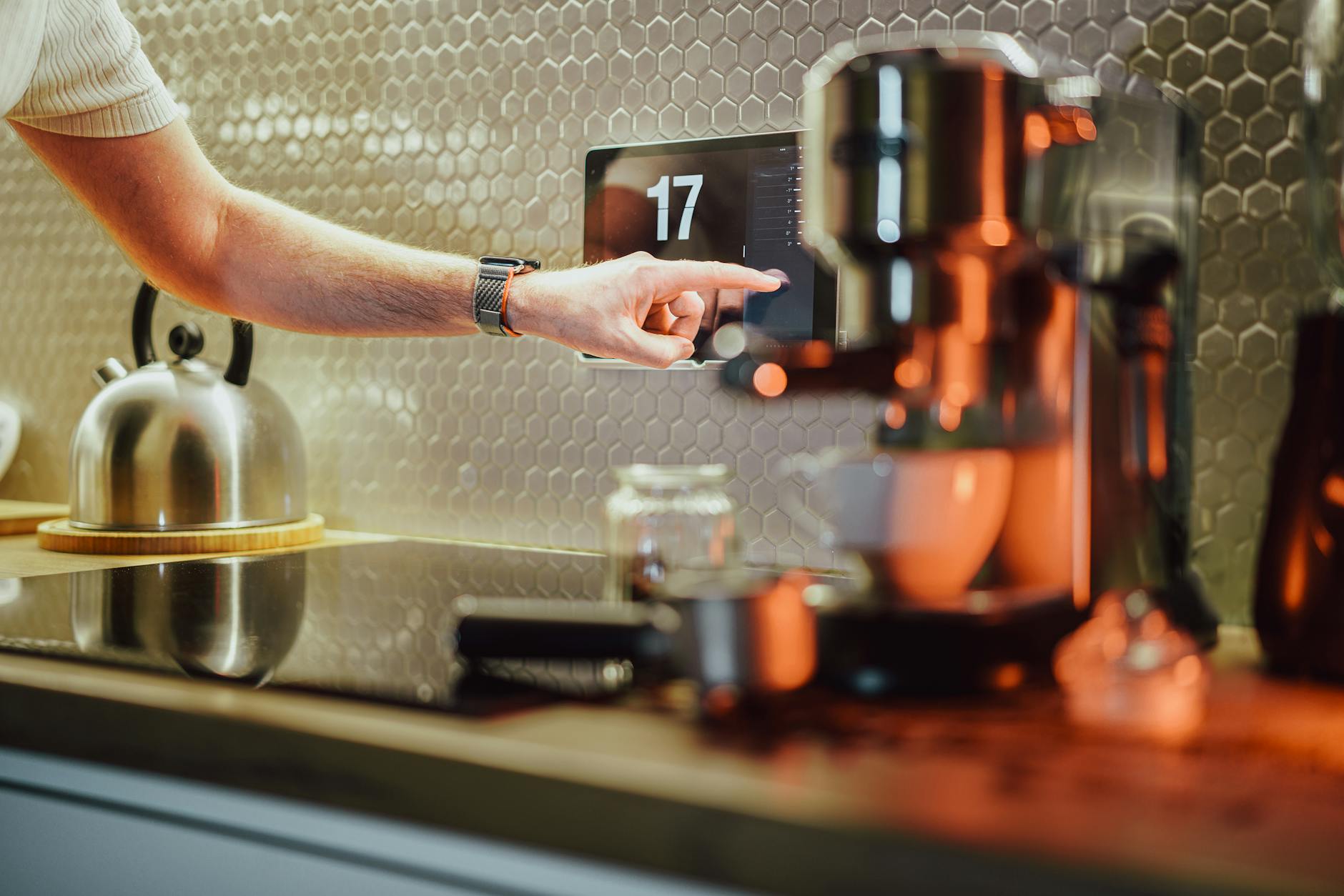
The allure of a ‘smart’ kitchen gadget, promising to streamline your cooking or elevate your culinary skills, is strong, but how many of these innovations genuinely deliver on their promises without breaking the bank? As technology integrates further into our homes, the kitchen has become a prime target for automation. However, not all smart gadgets are created equal, particularly when trying to maintain efficiency and cost-effectiveness in the heart of your home.
⚡ In a Rush? Key Takeaways
- High-quality peelers and immersion blenders are essential tools, often costing under $30, providing significant utility.
- Smart kitchen appliances like sous vide cookers offer precise temperature control, saving up to 20% on energy for consistent results.
- Avoid single-use gadgets like garlic presses and burger molds; they typically clutter drawers and offer minimal time savings.
- Some ‘smart’ appliances, like Wi-Fi-enabled rice cookers, can be found for under $300, offering automation convenience.
- ✅ Focus on versatile, multi-functional tools under $50 that enhance efficiency and directly reduce cooking time or guesswork.
It’s easy to get swept up in the marketing hype for various kitchen innovations, but my focus, always, is on actual utility and long-term cost-effectiveness. In eight years of testing appliances and kitchen tools, I’ve seen countless gadgets come and go. The most expensive thing about a kitchen gadget is rarely its sticker price, rather the utility it doesn’t deliver or the counter space it monopolises.
How Do I Identify Truly Useful Budget Smart Kitchen Gadgets?
Truly useful budget smart kitchen gadgets typically cost under $50, offer multiple functions, and integrate into existing workflow to save time or effort.
Identifying smart kitchen gadgets that genuinely provide value, especially on a budget, requires a shift in perspective. Instead of flashy features, look for practical utility, durability, and a genuine impact on your cooking process.
Many gadgets marketed as ‘smart’ simply add Wi-Fi connectivity to a device that performs a basic function, offering questionable real-world benefits. A truly useful gadget should solve a problem, reduce effort, or enhance precision.
What Distinguishes a ‘Smart’ Gadget from a Regular One on a Budget?
A ‘smart’ budget gadget offers enhanced functionality via connectivity or advanced sensors, whereas a regular one performs its primary task without digital integration.
The distinction often lies in connectivity or advanced automation. A smart gadget might connect to an app, offer programmability, or use sensors to achieve more precise results than its traditional counterpart. For instance, a basic slow cooker simply cooks; a smart slow cooker might allow remote temperature adjustment or recipe programming through your phone.
However, the budget aspect is key. Many high-end smart appliances come with a significant price tag. For under $50, you’re primarily looking at smaller, more focused tools that offer a ‘smart’ edge without the premium. Think digital timers, precise thermometers, or even smart plugs that can automate non-smart devices.
- Connectivity: Does it connect to an app for remote control or recipe guidance?
- Automation: Does it automate a task that typically requires manual oversight?
- Precision: Does it use sensors to achieve more accurate results (e.g., temperature)?
- Multi-functionality: Can it perform several tasks, justifying its space and cost?
Which Budget-Friendly Smart Kitchen Appliances Offer the Best Value?
Sous vide cookers, digital scales with nutritional tracking, and smart meat thermometers offer excellent value for under $100 if selected carefully.
When considering budget-friendly smart appliances for 2026, the focus should remain on those that provide measurable benefits without unnecessary complexity. One category that consistently delivers is precision cooking devices. A good immersion circulator for sous vide cooking can often be found for under $100.
These devices use precise temperature control, ensuring perfectly cooked food with minimal effort. I’ve found an immersion circulator to be an indispensable tool for meal prepping and achieving consistent results with proteins. They use roughly 600-1000W when active but only maintain temperature once preheated.
Other strong contenders include digital kitchen scales that connect to apps to track nutritional information or recipe scaling, and smart meat thermometers that monitor internal food temperatures and send alerts to your phone, preventing overcooking and food waste.
Are Some “Smart” Kitchen Gadgets Just Expensive Gimmicks?
Many ‘smart’ kitchen gadgets are indeed gimmicks, providing minimal utility at a high cost, often adding unnecessary complexity to simple tasks.
Absolutely. The market is saturated with devices that overpromise and underdeliver, often masquerading as ‘smart’ simply by including Wi-Fi or a touchscreen interface. These gadgets typically perform niche functions that could be done just as easily, or even more effectively, with traditional tools.
The goal of an efficient home is to simplify, not complicate. If a gadget requires more setup, troubleshooting, or maintenance than the task it’s designed to perform, it’s likely a gimmick. For example, a Wi-Fi enabled egg cooker that only boils eggs seems extravagant when a saucepan does the job perfectly well at zero connectivity cost.
Which Budget Smart Kitchen Gadgets Should I Avoid?
Avoid single-purpose or overly complex ‘smart’ gadgets like Wi-Fi-enabled garlic presses, automated herb choppers, or smart banana slicers; they offer poor ROI.
When shopping for kitchen gadgets, whether smart or not, be wary of single-purpose items that tackle a task you rarely do or that can easily be done with a more versatile tool. A dedicated garlic press, for example, is often more trouble to clean than it’s worth, costing you more time in the long run than simply using a knife.
The electric knife, once a staple in many kitchens, exemplifies gadgets that were heavily marketed but offer little genuine advantage over a good carving knife. An electric knife uses around 120-150W but a sharp chef’s knife costs nothing in electricity and occupies less space.
Smart versions of these single-purpose items simply add a layer of unnecessary digital complexity and cost without improving overall efficiency. I always advise prioritizing tools that perform multiple functions well.
- Electric Can Openers (with Wi-Fi): Manual can openers are faster, quieter, and don’t take up counter space or require charging. Adding Wi-Fi is pure marketing.
- Smart Burger Molds: These are often overpriced, create uniform results unsuited to artisanal burgers, and clean poorly.
- Automated Herb Choppers: A good chef’s knife is far more versatile, efficient, and precise for herb preparation.
- Banana Slicers: A knife costs nothing, and the gadget offers no real benefit beyond novelty.
How Can I Optimize My Kitchen with Truly Smart Investments?
Optimize your kitchen with smart investments by choosing multi-functional tools, prioritizing energy efficiency, and automating high-frequency tasks where possible.
Optimizing your kitchen for efficiency and cost means making intelligent choices, not just buying the latest tech. My research on appliance running costs consistently shows that the long-term utility and energy consumption often outweigh the initial purchase price.
For example, a high-quality food processor or immersion blender, while not ‘smart’ in the connected sense, offers immense versatility, speeding up numerous tasks from chopping to blending. An immersion blender, typically under $50, uses around 200-300W and saves significant time over transferring hot liquids to a regular blender.
If you’re looking for genuinely smart investments, consider appliances with built-in energy-saving modes or those that automate tasks you perform daily, reducing human error and time. For instance, a smart rice cooker with sensing technology will ensure perfect rice every time, avoiding burnt batches and wasted ingredients, and some models use 70% less energy than stovetop methods.
What Specific Smart Kitchen Gadgets Are Worth Buying on a Budget?
For under $50, consider smart plugs for non-smart appliances, precise digital thermometers, and quality swivel peelers for genuinely useful additions.
When curating a functional and efficient kitchen, it’s crucial to distinguish between fleeting trends and enduring utility. My focus on efficiency extends beyond the appliance itself to the accessories that enhance our daily cooking. For example, the new EU energy label that came into force in 2021 changed how we categorize appliance efficiency, and a similar mindset should apply to smaller kitchen tools: what’s its true efficiency in operation?
I find that for maximum impact on a budget, look for tools that either provide critical data, automate a simple task, or vastly improve a manual one. These are the unsung heroes of the kitchen, saving you time and ensuring better results.
Are Smart Plugs a Cost-Effective Way to Make Non-Smart Gadgets ‘Smarter’?
Yes. Smart plugs cost $10-20 each and enable remote control and scheduling for non-smart appliances, adding ‘smart’ functionality at minimal expense.
Smart plugs are arguably the most cost-effective way to introduce ‘smart’ functionality to your kitchen without buying new appliances. For $10-20 per plug, you can remotely control or schedule the operation of any dumb appliance. I’ve often used them to turn on a coffee maker before I’m awake or schedule a slow cooker to start later in the day.
They also serve as useful energy monitors for individual appliances. The standby power consumption of home appliances is the running cost category that gets the least attention. An appliance that draws 10W on standby, if plugged into a smart plug, can be completely switched off when not in use, saving around $15-20 per year per device.
Which Manual Kitchen Tools Should I Prioritize for Long-Term Value?
Prioritize a high-quality swivel peeler, a robust immersion blender, and a precise digital thermometer for lasting value and efficiency in the kitchen.
Even in an increasingly ‘smart’ world, foundational manual tools remain indispensable. My experience tracking kitchen efficiency shows that core items, if high-quality, will outperform many single-purpose gadgets. A good swivel peeler, for instance, costs around $10-15 and will last for years, making light work of fruit and vegetable prep without needing batteries or connectivity.
Similarly, a sturdy bench scraper, while simple, is invaluable for handling dough or gathering chopped ingredients efficiently. Don’t overlook the power of well-designed basics. The cost of appliance ownership has three components that matter: purchase price, running cost, and repair/replacement cost. For manual tools, the repair/replacement cost is minimal if you invest wisely upfront.
- Swivel Peeler: Essential for fast, thin peeling; lasts years and costs under $15.
- Immersion Blender: Versatile for soups, sauces, and smoothies; compact and powerful, typically $30-50.
- Digital Meat Thermometer: Accurate temperature readings prevent overcooking, ensuring food safety and quality; many models are under $25.
- Bench Scraper: Ideal for dough handling and cleaning surfaces; simple, durable, and under $10.
How Does Budget Affect the Value of Smart Kitchen Gadgets?
Budget significantly affects the value of smart kitchen gadgets, as cheaper options often focus on essential ‘smart’ features without expensive extras.
The budget you set directly influences the type of ‘smart’ functionality you can expect. At the lower end ($30-$100), you’ll find more focused tools like smart meat thermometers or smart plugs, which offer specific, valuable enhancements. As the budget increases, so does the complexity and range of features, sometimes to the point of diminishing returns.
My overall assessment of a gadget always includes its ‘cost per utility’. Does it save enough time, improve enough outcomes, or reduce enough waste to justify its space on the counter and its drain on your wallet? A low-cost gadget that consistently delivers high utility is always a better investment than an expensive, feature-rich device that sees infrequent use.
What Are the Best Finds for Smart Kitchen Gadgets Under $30 in 2026?
For under $30, top smart kitchen gadgets include smart plugs, precise digital timers, and app-connected food thermometers for basic automation.
Numerous genuinely useful smart kitchen gadgets exist for under $30, proving that innovation doesn’t always come with a hefty price tag. Smart plugs are top of this list, allowing you to turn ‘dumb’ appliances into smart ones. They track energy usage, too, which is invaluable for identifying energy hogs in your kitchen.
Other excellent finds include precise digital timers with advanced features like multiple simultaneous timers or memory functions, which improve workflow. Even basic app-connected food thermometers can be found in this range, providing accurate temperature monitoring from your phone, which is a significant upgrade from older, less reliable models.
Can I Find Worthwhile Smart Kitchen Investments Under $100?
Yes. Immersion circulators for sous vide, smart scales, and high-quality electric kettles with temperature control are excellent smart investments under $100.
Expanding the budget slightly to under $100 opens up more substantial smart kitchen investments. This range typically includes entry-level immersion circulators, which unlock precision cooking techniques that are hard to achieve otherwise. These units provide consistent 0.1°F temperature control, eliminating guesswork in delicate recipes.
Smart kitchen scales that offer more than just weight, such as nutritional analysis or recipe integration, also become accessible. Furthermore, a high-quality electric kettle with precise temperature control (often programmable via an app) is a significant upgrade for tea and coffee aficionados, ensuring the perfect brew at the touch of a button and saving energy by only heating to the desired temperature. Kettle versus microwave for boiling water is a recurring cost question, and a precise electric kettle often wins for multiple cups.
Frequently Asked Questions About Smart Kitchen Gadgets
Are smart kitchen gadgets really energy-efficient?
Smart kitchen gadgets can be energy-efficient by enabling precise control and remote monitoring, but their actual efficiency depends on usage and specific model.
Many smart kitchen gadgets offer features that can lead to energy savings, such as remote turn-off capabilities, precise temperature control, and optimized cooking cycles. For instance, a smart oven might preheat more efficiently or a smart dishwasher might choose the most energy-saving cycle. However, the ‘smart’ component itself (Wi-Fi module, display) consumes a small amount of power, and overall efficiency still depends heavily on the core appliance’s design and how often it’s used.
What’s the difference between a smart kitchen gadget and a connected appliance?
A smart gadget has enhanced functionality with embedded intelligence, while a connected appliance primarily offers remote control via network access.
A connected appliance, like a Wi-Fi-enabled refrigerator, primarily allows remote monitoring or control. A smart kitchen gadget, however, often incorporates advanced sensors, AI, or specific programming that automates or enhances a cooking process beyond simple remote access. For example, a connected oven can be preheated via app, but a smart oven might adjust cooking times based on internal sensors or even recognize ingredients.
Are budget smart kitchen gadgets durable?
Durability of budget smart kitchen gadgets varies widely; prioritize models from reputable brands with good reviews, as cheaper electronics can fail sooner.
Durability can be a concern with budget-friendly smart gadgets. Manufacturers often cut costs on materials or internal components to keep prices low. To ensure durability, look for brands with a good reputation for reliability, read user reviews focusing on long-term performance, and check for warranties. While some inexpensive smart gadgets are built to last, others might be prone to early failure, making them a false economy in the long run.
— Greta Michaud, Home Appliance Efficiency Researcher