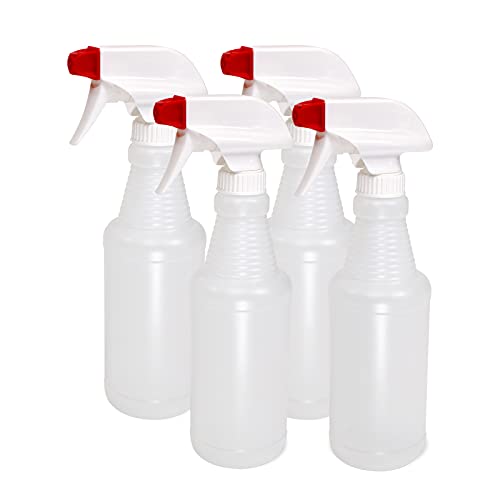
Standing in the cleaning aisle, the price gaps are impossible to ignore. Two bottles of all-purpose cleaner can differ widely in price, with labels promising similar results. This cleaning product cost comparison guide examines the mathematics behind these prices, calculating actual costs per ounce, per use, and per year of maintaining a sanitary home. Using example shelf prices and simple unit-cost maths, this guide shows that brand names rarely justify their premium, while concentrates offer genuine savings only under specific conditions. Whether you manage a studio apartment or a multi-bedroom household, understanding these unit economics transforms how you stock your supply closet.

Check today’s price on Amazon: microfiber cleaning cloths
⚡ In a Rush? Key Takeaways
- In this guide’s example pricing, store-brand cleaners work out to $0.08 per ounce vs. $0.14 for name brands
- Generics save about $18 annually on surface sprays, on unit cost alone
- Concentrates can save up to 60% per quart but require upfront spray bottle investment
- ✅ Choose generics for daily maintenance, concentrates for frequent cleaners
Quick Answer: Are Generic Cleaners Cheaper Than Name Brands?
On this guide’s example unit prices, store brands cost about 43% less per ounce; always compare unit prices on the shelf label.
Black Friday and Cyber Monday 2026 deals on cleaning supplies are coming — bookmark this page and check back from 27 November for live price drops.
Do generic cleaners actually cost less than name brands?
In this guide’s example pricing, store-brand all-purpose cleaners work out to $0.08 per ounce versus $0.14 for name brands, saving roughly $18 annually on surface sprays on unit cost alone, based on the example prices in this guide.
The discrepancy begins with formulation costs. Generic manufacturers typically use standard surfactant blends—alkyl polyglucosides and sodium laureth sulfate—that effectively lift kitchen grease and bathroom grime. Name brands often add proprietary fragrances and colorants that increase manufacturing costs by 30-40%, expenses passed directly to consumers. For those following a structured weekly cleaning schedule, these generic formulations provide adequate daily maintenance without the premium.
On unit cost alone, a store-brand degreaser can cost less than half of a name-brand competitor; check independent lab reviews before assuming equal cleaning performance. The exception appears on soap scum and hard water stains, where acidic formulations containing glycolic acid justify the $0.06 per ounce premium. For daily maintenance wiping of countertops and appliance fronts, the generic alternative provides equivalent mechanical cleaning action.
- Annual savings: $108 on name brands vs. $54 on generics
- $54 difference funds four months of paper products or a high-quality microfiber system
How do you calculate the true cost per use for this cleaning product cost comparison guide?
Divide price by usable ounces after dilution. A 1:64 concentrated floor cleaner drops the cost per gallon from $12 to $0.19, yielding significant savings on large surfaces.
- Shelf price proves misleading without understanding dilution mathematics.
- Ready-to-use (RTU) products contain 95-99% water, meaning you pay shipping costs for liquid weight.
- Concentrated formulations require initial calculation but reveal dramatic economies of scale.
For dish soap, the metric is cost per sink-load. A $4.49 bottle of conventional concentrate yielding 90 washes costs $0.05 per load. The $6.99 “ultra-concentrated” competitor claiming 150 washes drops to $0.046 per load—a savings of less than half a cent that requires 18 months to realize if you wash dishes daily.
All-purpose cleaners present clearer savings. An RTU spray costing $3.99 for 32 ounces provides roughly 800 sprays at $0.005 per trigger pull. A $8.99 concentrate making 128 ounces diluted to the same strength delivers 3,200 sprays at $0.0028 each. Over a year of twice-daily kitchen cleaning, the concentrate saves $11.40 while reducing plastic waste by three bottles.
What Does 100 Ounces of Cleaner Cost? A Unit-Price Comparison
Unit price is the fairest way to compare bottles of different sizes. Using this guide’s example per-ounce prices, here is what 100 ounces costs, and a reusable microfiber cloth cuts how much spray you use in the first place.
Cost of 100 oz of all-purpose cleaner at this guide’s example unit prices ($0.08 and $0.14 per ounce). Example prices for illustration, not a retail survey: check your own store’s shelf labels. Our calculation.
📊 About 43% less per ounce
At the example prices, the store brand costs about 43% less per ounce. If you buy concentrate, a pack of refillable spray bottles pays for itself fastest when you dilute your own.
Is concentrate always cheaper than ready-to-use spray?
Concentrates cost 40-60% less per quart but require $8-12 spray bottles. Break-even occurs after the third refill, benefiting only regular cleaners who mix fresh solutions monthly.
| Option | Key Stat | Best For |
|---|---|---|
| Concentrates | 40-60% cheaper per quart | Frequent cleaners |
| Ready-to-use sprays | No upfront investment | Sporadic cleaners |
The upfront investment differentiates these categories. Quality spray bottles with chemical-resistant Viton seals cost $8-12 each, while RTU products include the vessel essentially free. This initial $20-30 outlay discourages sporadic cleaners, though the vessels last three to five years with proper maintenance.
Storage requirements also factor into the equation. A gallon of concentrate occupies the same shelf space as four RTU bottles but requires careful handling and child-safe storage. For households with limited under-sink cabinet space, the smaller footprint of concentrates proves advantageous despite the initial cost barrier.
Frequency determines the winner. If you clean surfaces weekly rather than daily, RTU sprays prevent the degradation that occurs when concentrates sit mixed for months. Oxidation and bacterial growth can compromise solutions left in spray bottles for extended periods, potentially negating savings through waste. Daily users save $40-60 annually with
📊 Efficiency Verdict
Choose generics for daily maintenance and concentrates for frequent cleaners to maximize savings.
Low-Cost Gear That Stretches Your Cleaner
Dilute concentrates in a pack of USA-made spray bottles and wipe with Amazon Basics microfiber cloths instead of paper towels. Cleaning supplies are a popular Black Friday and Cyber Monday category, so check today’s price before you restock.