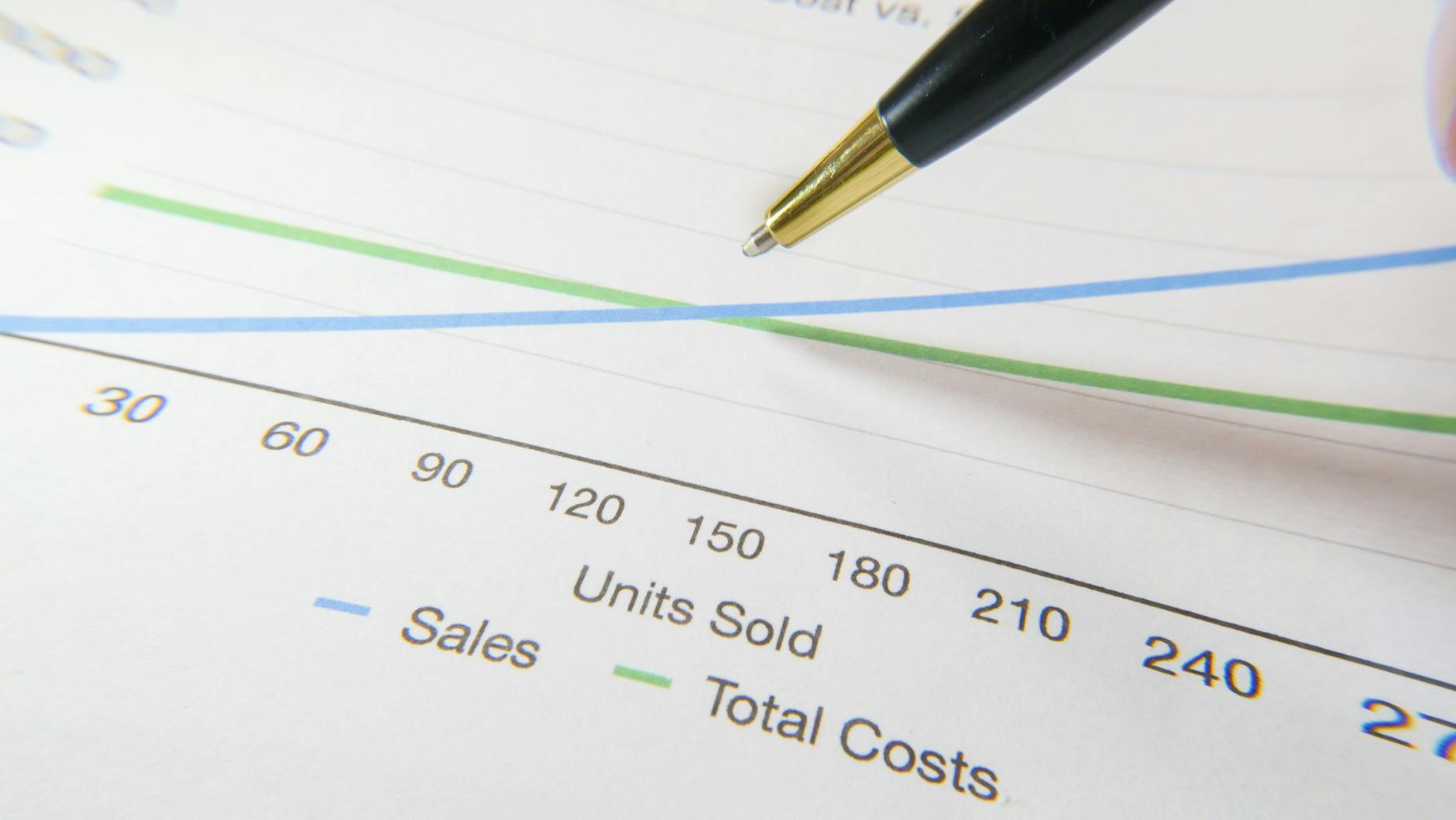
The air fryer has migrated from novelty appliance to essential kitchen infrastructure in British households, yet the question of its daily operational expense remains surprisingly opaque. While manufacturers emphasize speed and crisping capabilities, the economic reality of leaving that 1,500-watt heating element running twice daily deserves precise calculation. Understanding the cost to run an air fryer per day in the UK requires more than glancing at the wattage label; it demands context about your specific tariff, cooking habits, and how those minutes translate into pounds and pence amid fluctuating energy markets. As of early 2026, with the energy price cap settling around the 30 pence per kilowatt-hour mark for electricity, households need concrete figures to determine whether this countertop device genuinely reduces their monthly bills or merely redistributes energy consumption into a more convenient format. This guide examines the actual daily expenditure, comparing wattage classes, usage scenarios, and efficiency variables that determine whether your air fryer saves money or quietly erodes your budget.
What is the cost to run an air fryer per day in the UK?
Expect to pay between 23p and 45p per day for typical 30–60 minute usage, depending on wattage and current electricity rates near the 30p/kWh price cap.
⚡ In a Rush? Key Takeaways
- At 30p/kWh, a 1,500W air fryer costs 22.5p per day for 30 mins.
- Real-world usage ranges 23-28p due to preheating and cycling.
- Larger 2,000W models double daily costs to 60p.
- ✅ Air fryers save money vs. ovens for small households.
At the standard variable tariff prevailing in early 2026, approximately 30 pence per kilowatt-hour, the mathematics of air fryer operation becomes straightforward. A mid-sized 1,500-watt model—the most common capacity for three to four-person households—consumes 1.5 kilowatts of power. If you operate this appliance for thirty minutes daily (sufficient for most evening meals involving protein and vegetables), you utilize 0.75 kilowatt-hours. Multiplied by the unit rate, this yields 22.5 pence per day. However, real-world usage rarely adheres to laboratory conditions. The heating element cycles on and off to maintain temperature, and initial preheating—while faster than conventional ovens—still draws full power for three to four minutes. Consequently, most users experience daily costs between 23 and 28 pence for single-session cooking. Larger dual-zone models rated at 2,000 watts, increasingly popular for families requiring synchronous preparation of proteins and sides, naturally consume more. An hour of daily operation at this capacity generates 2 kilowatt-hours, translating to 60 pence. Thus, your specific daily cost hinges primarily on whether you own a compact 2-litre single-drawer unit or a substantial 7.5-litre dual-zone system, with the latter potentially doubling your expenditure despite the cooking convenience.
How do wattage and capacity affect daily costs?
Compact 1,200W models cost roughly 6p per 15 minutes, while large 2,000W dual-zone units consume 10p for the same duration at standard rates.
- Small air fryers (1,200W) cost 6p/15 mins.
- Large dual-zone models (2,000W) cost 10p/15 mins.
- Larger units have greater thermal mass, requiring longer preheating.
The relationship between physical capacity and electrical consumption follows predictable physics, though marketing materials often obscure these distinctions. Small air fryers—those between 2 and 3.5 litres—typically employ 1,200 to 1,400 watt heating elements. These units suit single-person households or couples preparing modest portions. At 1,200 watts, each quarter-hour of operation consumes 0.3 kilowatt-hours, costing approximately 9 pence under current tariffs. Conversely, the market dominance of models like the Ninja Foodi Dual Zone (7.6 litres) or Instant Vortex Plus reflects demand for parallel cooking, yet these appliances draw 1,700 to 2,000 watts. The cost differential accumulates quickly: preparing chickpeas for twenty minutes in a compact model versus a dual-zone unit represents a difference of 8 pence versus 13 pence for that specific task alone. Moreover, larger units possess greater thermal mass in their cooking chambers, requiring slightly longer preheating periods despite marketing claims of instantaneous readiness. When calculating your personal cost to run an air fryer per day, consult the rating plate on your specific model—usually found on the underside or rear—rather than relying on generalised manufacturer specifications, as regional variants often differ by 100 to 200 watts.
Air fryer versus oven: daily cost comparison
A standard air fryer costs approximately 50–70% less per day than a conventional electric oven when preparing two-person meals, due to reduced preheating and cooking time.
The legitimate comparison extends beyond simple wattage to encompass cooking duration and thermal efficiency. A standard electric oven in the UK operates at 2,000 to 2,500 watts but requires fifteen to twenty minutes of preheating before food introduction, during which it consumes energy while empty. For a typical meal requiring forty minutes of cooking time, total electricity consumption reaches 1.5 to 2 kilowatt-hours, costing 45 to 60 pence. The air fryer, by contrast, achieves operating temperature within two to three minutes and circulates heated air sufficiently rapidly to reduce cooking durations by 30 to 50 percent. That same meal might require only twenty-five minutes in the drawer, consuming 0.6 to 0.75 kilowatt-hours for a 1,500-watt model. The daily saving, therefore, ranges between 15 and 25 pence for single-meal preparation, assuming comparable ingredients. Over a month, this differential accumulates to £4.50 to £7.50, or £55 to £90 annually. However, this calculation assumes the air fryer replaces oven usage entirely. Households using both appliances simultaneously—perhaps roasting potatoes in the oven while air-frying chicken—eliminate these savings. For genuine cost reduction, the air fryer must serve as substitute rather than supplement to your primary cooking appliance.
Calculating your precise daily expenditure
Multiply your appliance’s kilowatt rating by daily hours used, then multiply by your unit electricity rate—typically 29–31 pence per kWh under current UK caps.
Accurate budgeting requires moving beyond estimates to personalised calculation. First, locate your air fryer’s wattage, typically embossed on the base or listed as “1,500W” on the specification label. Convert this to kilowatts by dividing by 1,000, yielding 1.5 kW for our example. Next, determine your actual daily usage pattern. If you cook breakfast pastries for ten minutes and evening salmon for twenty minutes, your total daily operation equals thirty minutes, or 0.5 hours. Multiply your kilowatts by hours: 1.5 kW × 0.5 hours = 0.75 kilowatt-hours. Finally, multiply this consumption by your electricity unit rate, found on your utility statement or smart meter display. At 30 pence per kilowatt-hour, your daily cost equals 22.5 pence. For those on time-of-use tariffs such as Octopus Agile or Economy 7, the calculation requires additional variables. Peak and off-peak rates differ substantially—sometimes ranging from 12 pence to 35 pence within the same twenty-four-hour period. If you confine air fryer usage to off-peak windows, your daily cost drops proportionally. I recommend consulting an Appliance Cost Calculator to factor these variables precisely, particularly if your tariff includes standing charges or regional variations that complicate manual mathematics.
Weekly and monthly cost projections
Daily use of 40 minutes averages £1.75 weekly or £7.50 monthly, making the air fryer one of the most economical primary cooking appliances for small households.
Extrapolating daily figures reveals the appliance’s position within your household budget. Assuming the middle-ground scenario of 25 pence daily—representing a 1,500-watt model operated for thirty-three minutes across one or two cooking cycles—you encounter weekly costs of £1.75 and monthly expenditures of £7.58. Annual operation, therefore, consumes approximately £91 of electricity. This positions the air fryer as significantly cheaper than conventional electric oven reliance, which typically costs £180 to £240 annually for equivalent meal preparation. However, context matters regarding household composition. A single professional using the device for ten minutes daily spends merely £18 annually, while a family of four running a 2,000-watt dual-zone model for ninety minutes daily (three separate cycles for different components) faces daily costs approaching 90 pence, or £27 monthly. At that consumption level, the appliance rivals electric oven economics, particularly when factoring in the limited capacity necessitating multiple cycles. For cost-conscious households, the air fryer delivers maximum economic advantage when serving one to three people with compatible eating schedules, allowing single-session meal preparation rather than sequential batch cooking that doubles or triples the kilowatt-hour consumption.
Hidden factors that inflate daily running costs
Opening the basket mid-cycle, cooking frozen items without defrosting, and using accessory parchment liners that block airflow can extend cooking time by 25–40%.
Several user habits inadvertently escalate electricity consumption beyond theoretical calculations. Frequent basket checking—opening the drawer to toss chips or inspect browning—releases heated air and drops the internal temperature by 20 to 30 degrees Celsius. The heating element then activates at full power to restore thermal equilibrium, consuming 400 to 500 additional watts for two to three minutes per interruption. Three such interruptions during a thirty-minute cycle effectively add nine minutes of full-power operation. Similarly, loading frozen items directly from the freezer compartment increases thermal load significantly. A block of frozen fish requires substantially more energy to bring to cooking temperature than refrigerated or defrosted equivalents, extending cycle duration by five to eight minutes. The accessory market has introduced parchment liners and disposable paper baskets marketed for convenience, yet these often obstruct the circulation fan’s airflow patterns, forcing the unit to run longer to achieve equivalent results. Finally, neglecting accumulated grease in the heating element chamber reduces thermal efficiency over time, requiring 10 to 15 percent longer cooking durations after six months of ownership. Maintaining optimal efficiency demands regular cleaning and resisting the temptation to check progress repeatedly—patience directly correlates with lower electricity bills.
When daily costs outweigh the benefits
Running multiple cycles for large families or using oversized models for single portions can make daily costs exceed those of a conventional oven or hob.
Despite the economic advantages for small households, specific scenarios render the air fryer an expensive cooking method. Large families requiring five or six portions often find themselves executing two or three sequential batches, as overcrowding the basket prevents proper air circulation and produces soggy results. Three twenty-minute cycles in an 1,800-watt unit consume 1.8 kilowatt-hours—54 pence—whereas a conventional oven handling all portions simultaneously might use 1.2 kilowatt-hours for forty minutes (36 pence), despite higher wattage. The sequential batch penalty eliminates any economic advantage. Similarly, households primarily using the air fryer for novelty items—warming croissants or reheating pizza—face disproportionate costs compared to microwave ovens, which accomplish these tasks using 700 to 1,000 watts for two minutes rather than ten. The microwave’s daily cost for such tasks remains under 2 pence, while the air fryer demands 8 to 10 pence for equivalent warming. Furthermore, those with modern induction hobs and appropriate cookware discover that boiling pasta or steaming vegetables costs 3 to 5 pence daily, compared to 12 to 15 pence for air-frying 200 grams of fries.
📊 Efficiency Verdict
Air fryers save money vs. ovens for small households but can be expensive for large families or single-portion use.