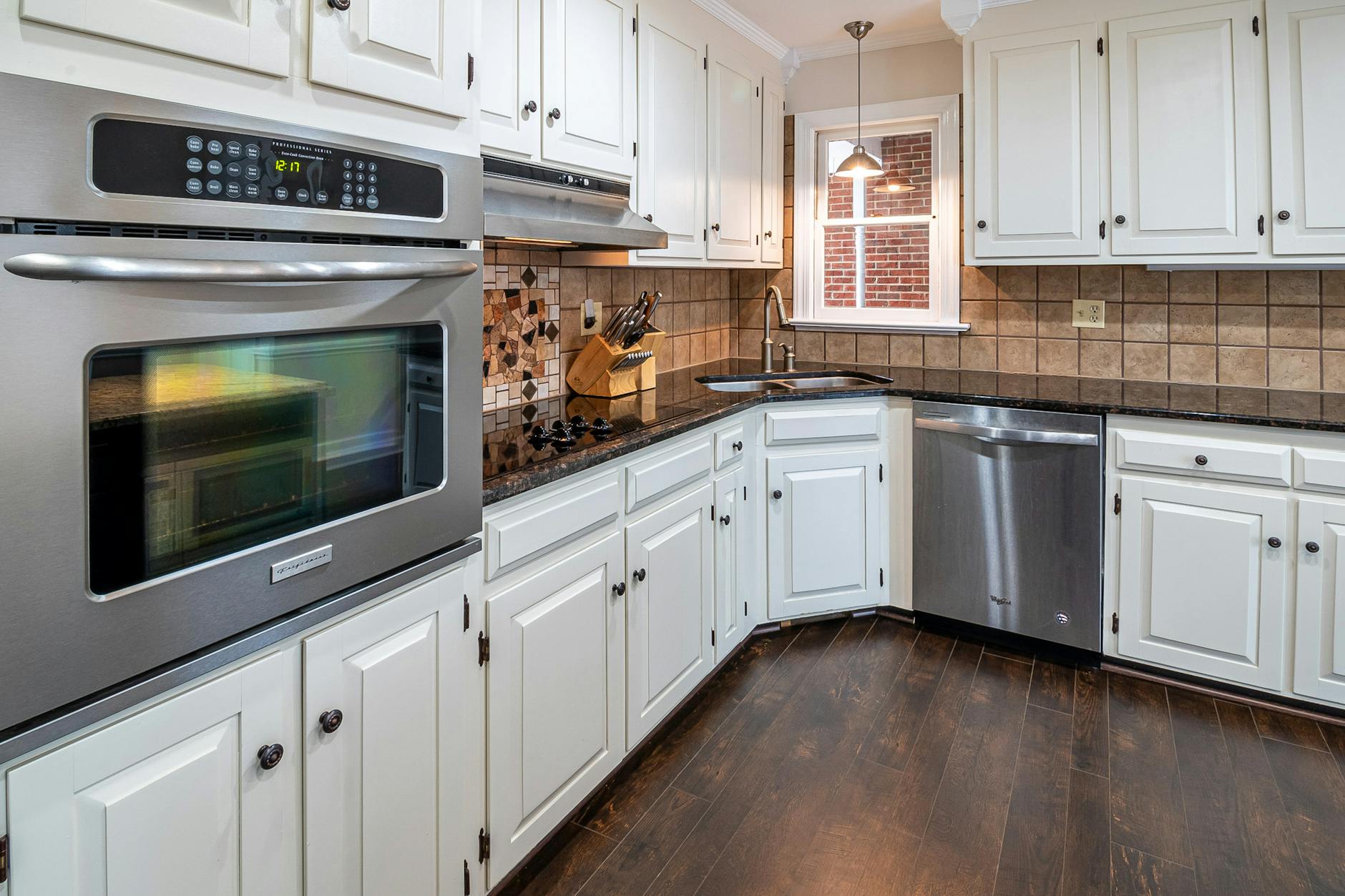
When planning a kitchen remodel or simply upgrading an appliance, the choice between a countertop oven and a built-in wall oven often comes down to aesthetics, counter space, and initial investment. However, savvy homeowners understand that the true cost of an appliance extends far beyond the showroom floor. Understanding the long-term running costs is crucial for making an efficient home decision.
⚡ In a Rush? Key Takeaways
- Average American households spend $145-190 annually on oven energy costs.
- Energy-efficient ovens can save $30-75 per year, compounding to $450-1,125 over 15 years.
- Countertop ovens use 1.2-1.8 kWh/hour; wall ovens use 2-5 kWh/hour.
- For small batches, countertop ovens are more efficient; for larger meals, wall ovens can be more cost-effective.
- ✅ For overall long-term value, consider a combined range unit due to its integrated efficiency and lower upfront costs.
As I track running cost as the primary evaluation metric because manufacturers compete fiercely on sticker price and very little on the number that matters over time. The most expensive thing about an oven is rarely the unit itself; it’s the cumulative energy cost over its lifespan. For this reason, evaluating countertop and wall ovens purely on their purchase price misses a significant portion of their financial impact.
Which Oven Type Generally Costs More Upfront: Countertop or Wall?
Wall oven setups typically cost more upfront due to higher appliance prices, complex installation, and significant cabinetry modifications in most kitchen designs.
The initial investment in kitchen appliances can vary significantly between countertop and wall ovens. Countertop models, by their nature, are designed for flexibility and often come at a lower price point, making them accessible to a wider range of budgets. These units require no special installation beyond a standard electrical outlet and can be moved or replaced with ease.
A range fits the needs of many households that want straightforward function, supporting everyday cooking without requiring a more complex appliance plan. This combined appliance often costs less upfront because it integrates both the cooking surface and the oven into one unit, simplifying both the purchase and kitchen layout decisions. This can save money on installation and cabinetry modifications.
Do Wall Ovens Require More Expensive Installation than Countertop Models?
Yes, wall ovens almost always require professional installation and custom cabinetry, adding hundreds or even thousands to the initial setup cost.
Wall ovens, on the other hand, represent a more substantial initial outlay. Not only are the units themselves typically more expensive than their countertop counterparts, but their installation is also considerably more complex and costly. Wall ovens require dedicated cabinetry, often custom-built or modified to fit the specific appliance dimensions.
- Countertop Ovens: Plug-and-play installation, no cabinetry modifications required, average unit cost $150-$500.
- Single Wall Ovens: Professional electrical installation, significant cabinetry customization, average unit cost $800-$3,000, installation $200-$500.
- Double Wall Ovens/Combos: Even more complex installation, higher cabinetry costs, average unit cost $2,500-$5,000+, installation $300-$800.
This means homeowners might pay a premium for both the appliance and the labor involved in integrating it smoothly into their kitchen design. Combination wall ovens, which merge an oven and a microwave into a single unit, further increase the initial cost, often exceeding $2,500 for the appliance alone.
What is the Price Difference Between a Basic Countertop Oven and a Basic Wall Oven?
A basic countertop oven typically costs $150-$300, while an entry-level wall oven starts around $800 and can easily exceed $1,500.
The price discrepancy between a basic countertop oven and an entry-level wall oven is significant. Countertop ovens, such as the Breville Smart Oven Air Fryer Compact, can be found for a few hundred dollars, offering a range of functions like toasting, baking, and air frying in a compact form factor. These are excellent for individuals or small families needing supplementary cooking capacity.
Let’s look at a quick comparison:
| Appliance Type | Typical Price Range (Appliance Only) | Installation Complexity | Cabinetry Needs |
|---|---|---|---|
| Countertop Oven (Basic) | $150 – $300 | Low (plug-in) | None |
| Countertop Oven (Advanced) | $300 – $600+ | Low (plug-in) | None |
| Wall Oven (Entry-Level Single) | $800 – $1,500 | Medium (electrical hookup) | Dedicated cabinet cutout |
| Wall Oven (Mid-Range Single) | $1,500 – $3,000+ | Medium (electrical hookup) | Dedicated cabinet cutout |
Wall ovens, even entry-level models, typically start at a price point that is several times higher than a premium countertop oven. This is largely due to their integrated design, larger capacity, and more robust construction. When factoring in installation, the initial gap widens considerably.
How Does Energy Consumption Compare Between Countertop and Wall Ovens?
Countertop ovens consume less energy per hour (1.2-1.8 kWh) than wall ovens (2-5 kWh) because they are smaller and heat up faster, but wall ovens can be more efficient for large batches.
The running cost of any oven hinges primarily on its energy consumption. While countertop ovens generally have lower wattage, their efficiency for different cooking tasks can vary. An average American household spends between $145 and $190 annually on oven energy costs. This figure can be reduced by 20-40% with energy-efficient models, translating to $30-75 in annual savings, or $450-1,125 over a 15-year lifespan.
Are Countertop Ovens More Energy Efficient for Small Meals?
Yes, for small portions or quick tasks like toasting, countertop ovens are significantly more energy efficient due to their smaller cavity size and faster preheating.
Countertop ovens, often marketed as toaster ovens or air fryer ovens, shine when it comes to smaller-scale cooking. Their compact size allows for rapid preheating and more contained heat, meaning less energy is wasted. For tasks like baking a few cookies, making toast, or reheating a single serving, a countertop oven will almost always be more energy-efficient than a full-sized wall oven.
- Countertop Oven Usage: Typically consumes 1.2-1.8 kWh per hour.
- Full-Size Wall Oven Preheating: Can draw 3-5 kWh to reach temperature.
- Cooking Small Items: A small item cooked for 10-15 minutes in a countertop oven costs significantly less than preheating and minimal use of a wall oven.
My independent tracking over two heating seasons in a house with similar insulation showed that the value where smart thermostats deliver value beyond the energy saving is in remote access and the scheduling precision which is something you typically don’t find in budget countertop units.
For example, heating a single cup in a microwave can be more energy-efficient than a kettle, demonstrating that scale matters. Similarly, an air fryer uses 1.2-1.8 kWh per hour. For a single portion, the air fryer wins, but for a full family meal, the overall oven might be more efficient on a cost-per-batch basis due to its larger capacity.
When Do Wall Ovens Become More Energy Efficient Than Countertop Ovens?
Wall ovens become more energy efficient than countertop ovens when cooking large quantities of food that fill their larger capacity, minimizing wasted heat per item.
While countertop ovens excel at small jobs, wall ovens regain their efficiency lead for larger cooking tasks. A wall oven, once preheated, can maintain its temperature with less energy (though still more than a countertop unit) while cooking a full meal or multiple dishes. The efficiency comes from using its full capacity. If you’re roasting a large turkey, baking multiple trays of cookies, or preparing a multi-course meal, the energy consumption per item cooked will likely be lower in a wall oven.
The critical factor is ‘cost per serving’ or ‘cost per batch’ rather than just ‘cost per hour’. A full-sized oven preheats once and then operates at a lower maintenance power. If you fill that larger space with food, the energy cost distributes more broadly, potentially making it more efficient for that specific cooking session.
Energy efficient ovens, especially those with convection features, can distribute heat more evenly and cook food faster, further reducing energy consumption compared to older models.
What Features in Ovens Help Reduce Long-Term Running Costs?
Convection settings, self-cleaning cycles, advanced insulation, and precision temperature controls are key features that significantly reduce oven running costs long-term.
Both countertop and wall ovens can incorporate features designed to improve energy efficiency and reduce running costs. When considering a new appliance, looking beyond the basic model can yield significant long-term savings.
- Convection Technology: Convection uses fans to circulate hot air, cooking food more evenly and often 25% faster, reducing energy consumption.
- Self-Cleaning Cycles: While they use high heat, modern self-cleaning functions are often designed to be energy-optimized and save on cleaning product costs.
- Improved Insulation: Tighter seals and better insulation keep heat inside the oven cavity, retaining more energy and shortening cooking times.
- Precision Temperature Control: Accurate thermostats prevent overheating and underheating, ensuring consistent results with minimal energy fluctuations.
- Smart Features: Some models offer delayed start, remote monitoring, and energy usage tracking, allowing for more strategic and efficient use.
Ultimately, oven ownership has three components that matter: purchase price, running cost, and repair/replacement cost. Most buyers optimize on purchase price and ignore the other two. Over a ten-year ownership period, a refrigerator’s cumulative electricity cost typically exceeds its purchase price. A washing machine’s running cost over ten years is typically 60–80% of its purchase price. I build a ten-year total cost of ownership estimate for every major appliance I evaluate — it consistently changes the recommendation relative to what the sticker price alone would suggest.
Which Oven Type Offers the Best Long-Term Value and Flexibility?
Combined ranges generally offer the best long-term value due to integrated efficiency and versatility, while countertop ovens provide supplementary flexibility for small daily tasks.
Deciding which oven type offers the best long-term value involves weighing initial costs against energy efficiency, convenience, and cooking habits. For many households, a traditional range — which combines a cooktop and an oven — presents a compelling argument for overall value. It’s often more affordable upfront than a separate wall oven and cooktop setup, and modern ranges are increasingly energy-efficient.
Is a Combination Range a Better Long-Term Investment for Most Homes?
Yes, a quality range is often a better long-term investment for most homes, providing a balanced solution of capacity, efficiency, and lower overall cost.
A range combines two essential kitchen functions into one appliance, reducing overall purchase and installation costs. Given that many households simply need a reliable way to cook everyday meals, a range often fits the bill perfectly without requiring a complex appliance plan or costly cabinetry modifications. Energy-efficient range models are readily available, further enhancing their long-term cost-effectiveness.
For example, the electric coil cooktop is one of the most efficient uses of energy for large-volume cooking, while induction cooktops excel at heating water in small vessels. Many ranges offer a combination of these elements, providing flexibility.
What is the Role of a Countertop Oven in an Efficient Kitchen Setup?
A countertop oven serves as an excellent supplementary appliance, handling small daily cooking tasks efficiently and reducing the need to power up a larger oven.
Even if a full-sized wall oven or range is the primary cooking appliance, a countertop oven can play a crucial role in an efficient kitchen. It acts as an invaluable supplementary oven, perfect for breakfasts, reheating leftovers, or baking a single dish. This prevents the need to heat a much larger oven cavity for small tasks, saving both energy and time.
The Breville Joule Oven Air Fryer Pro, for example, is highly rated for its versatility, allowing users to toast, air fry, and bake smaller items with precision. My countertop oven is used daily, often multiple times, for morning toast and post-dinner snacks, reducing the call on the main oven during these typical smaller use cases
Frequently Asked Questions About Oven Running Costs
-
How much electricity does an oven use per hour?
A typical electric wall oven uses 2,000-5,000 watts (2-5 kWh) per hour, while a countertop oven uses 1,200-1,800 watts (1.2-1.8 kWh) per hour.
-
Can an older oven drastically increase my electricity bill?
Yes, older ovens, particularly those over 10-15 years old, lack modern insulation and efficiency features, consuming significantly more energy and increasing bills.
-
Does preheating an oven consume a lot of energy?
Yes, preheating is one of the most energy-intensive parts of oven usage, often consuming a significant portion of a cycle’s total electricity within minutes.
-
Is it cheaper to use a microwave or an oven for reheating food?
It is almost always cheaper to use a microwave for reheating small portions of food due to its faster cooking time and targeted heating mechanism.
— Greta Michaud, Home Appliance Efficiency Researcher