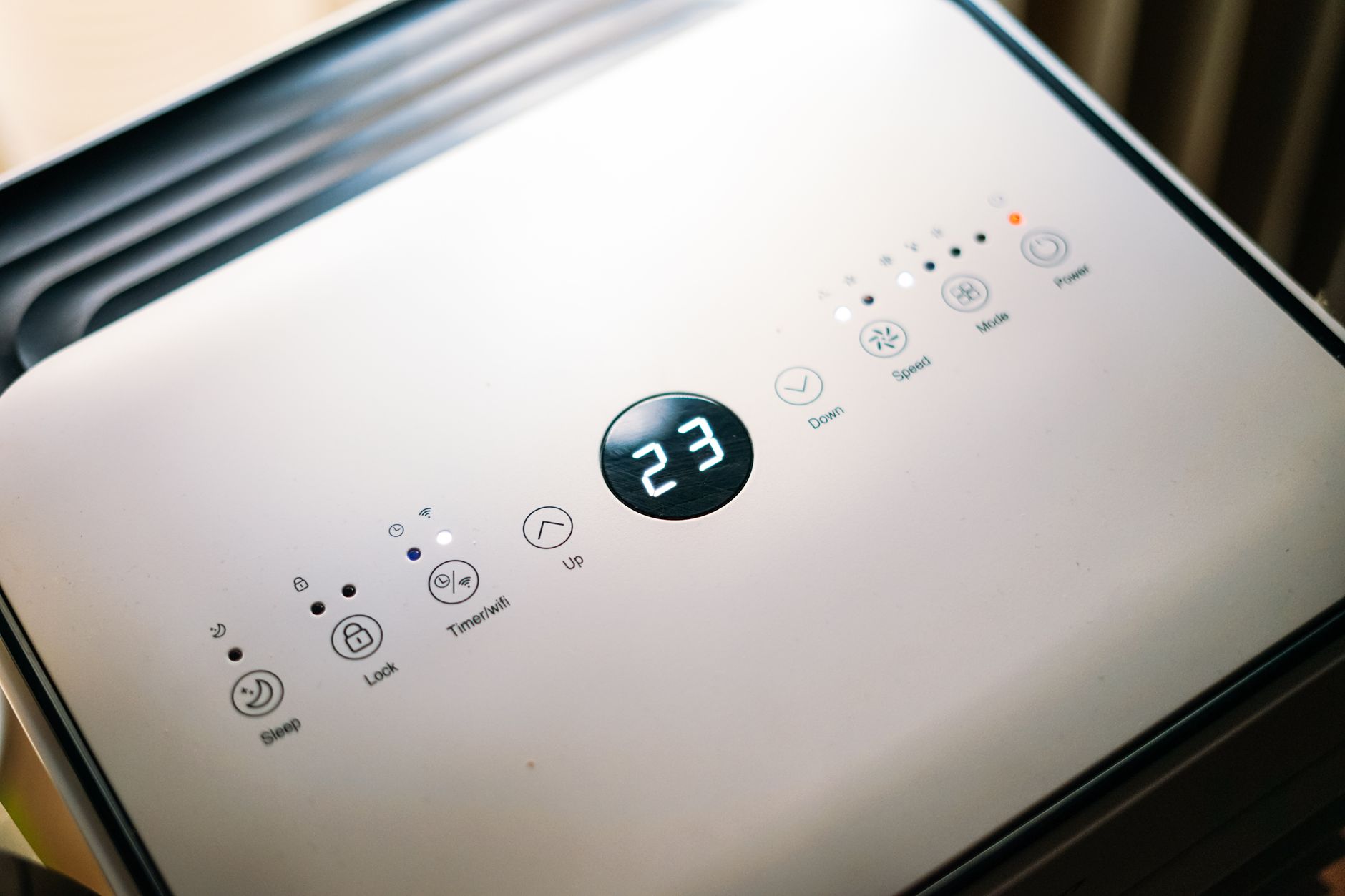
Dehumidifiers are energy-efficient tools for controlling indoor humidity, typically costing between $0.05 and $0.15 per hour to operate depending on your local electricity rate and the machine’s capacity. While they add to your monthly utility bill, they often prevent far more expensive issues like mould remediation and structural damp damage that can cost thousands to resolve.
⚡ In a Rush? Key Takeaways
- Most residential dehumidifiers draw between 200W and 700W during active operation.
- Running a unit 12 hours daily at average US rates costs roughly $15–$30 monthly.
- Maintaining indoor humidity between 40-50% prevents most mould and structural issues.
- ✅ Use a compressor-based model in warmer climates for maximum energy efficiency.
How Much Does It Actually Cost to Run a Dehumidifier?
Running a standard 30-pint dehumidifier costs roughly $0.08 per hour, totalling about $20 to $40 per month for moderate daily usage.
What Determines the Hourly Energy Consumption?
Energy draw depends on the compressor type, current humidity level, and target settings chosen by the user in the control panel.
The power consumption of a dehumidifier is heavily influenced by the technology inside. Compressor-based models function much like a refrigerator, cooling coils to condense moisture, which is highly efficient in rooms warmer than 65°F.
Desiccant models, by contrast, use a chemical moisture-absorbing wheel. These are more efficient in cold basements but generally have higher peak electricity usage when the heating element is active.
- Compressor models: Use 200W–500W per hour
- Desiccant models: Use 300W–700W per hour
- Standby mode: Uses less than 1W per hour
How Do Seasonal Changes Affect Monthly Bills?
Electricity costs spike during humid summer months when the unit runs continuously to maintain a set humidity point of 45 percent.
In the peak of summer, your dehumidifier works harder to pull moisture from the air, meaning the compressor stays on longer. If your home has poor ventilation or you are drying laundry indoors, expect higher usage.
Conversely, in winter, moisture levels often drop naturally. Using a home energy efficiency monitor can help you track if your unit is running excessively during dry winter months.
Is a Dehumidifier Necessary for Your Specific Home Environment?
A dehumidifier is necessary if indoor humidity consistently exceeds 60 percent, which creates an ideal breeding ground for mould.
What Are the Signs of Excessive Household Humidity?
Visible condensation on window panes, musty odours in cupboards, and peeling wallpaper are primary indicators of a damp problem.
High humidity isn’t just uncomfortable; it damages your home’s structure. If you find yourself frequently using home maintenance and repair techniques to fix peeling paint, you likely have an air quality issue.
- Condensation on glass surfaces
- Musty, damp smells in basements
- Slow-drying wet laundry
- Frequent mould growth in corners
How Does Humidity Affect Your Overall Heating Costs?
Damp air requires more energy to heat because water molecules hold onto heat, making your furnace work harder in the winter months.
Drier air is physically easier to heat than damp air. By removing excess moisture, you may find that your home feels warmer at a lower thermostat setting, potentially offsetting the electricity used by the dehumidifier.
Frequently Asked Questions About Dehumidifiers
-
Can I use a dehumidifier instead of air conditioning?
A dehumidifier removes moisture but does not cool the air, meaning it will not replace the function of an air conditioner unit.
-
How often should I clean the air filter?
Filters should be vacuumed or washed every two weeks to maintain airflow and prevent the motor from overworking and consuming more.
-
Does the size of the dehumidifier matter?
A unit that is too small for your room size will run constantly without lowering humidity, significantly increasing your energy bill.
-
Is it cheaper to run a dehumidifier in eco mode?
Eco mode cycles the fan on and off intermittently to test humidity, which reduces energy usage compared to continuous operation modes.
-
How do I set up a continuous drain to avoid manual tank emptying?
Using a continuous drain hose lets the unit empty water directly into a floor drain or sump, removing the need to check and empty the tank.
Most dehumidifiers have a drain port on the back or side; attach a standard garden‑hose or the supplied drain tube, ensuring the hose slopes downward without kinks so water flows by gravity. If your model includes a built‑in pump, you can pump water vertically to a sink or window, but you must prime the pump and check for leaks periodically.
Before relying on continuous drainage, run the unit for a short cycle to confirm that water exits freely and that no moisture leaks around the connection. Empty the internal tank occasionally as a backup, especially during high‑humidity periods when the drain could become clogged.
Bottom Line: Is the Investment Worthwhile?
If your home consistently suffers from dampness, a dehumidifier is an investment that saves you from expensive structural repairs. While the monthly energy cost is real, it is a fraction of the cost of fixing mould damage or replacing water-damaged flooring. For those struggling with laundry drying or basement humidity, the daily utility cost is a reasonable price for the protection it provides to your most valuable asset.