Here’s the enhanced HTML:
“`html
Choosing between insulation materials requires understanding thermal resistance, air sealing capabilities, and lifecycle costs rather than focusing solely on the lowest upfront price. This home insulation types comparison guide examines the four primary categories—blanket batts and rolls, loose-fill, rigid foam boards, and spray foam—analyzing their performance in real-world conditions. Whether you are retrofitting an attic or insulating new construction, the specific R-values per inch, installation requirements, and total cost of ownership vary significantly between materials. The right choice depends on your climate zone, budget constraints, and whether the project involves new walls or existing cavities.
What does a comprehensive home insulation types comparison guide cover?
Material R-values, installed costs per square foot, longevity characteristics, and suitability for specific climate zones and cavity types.
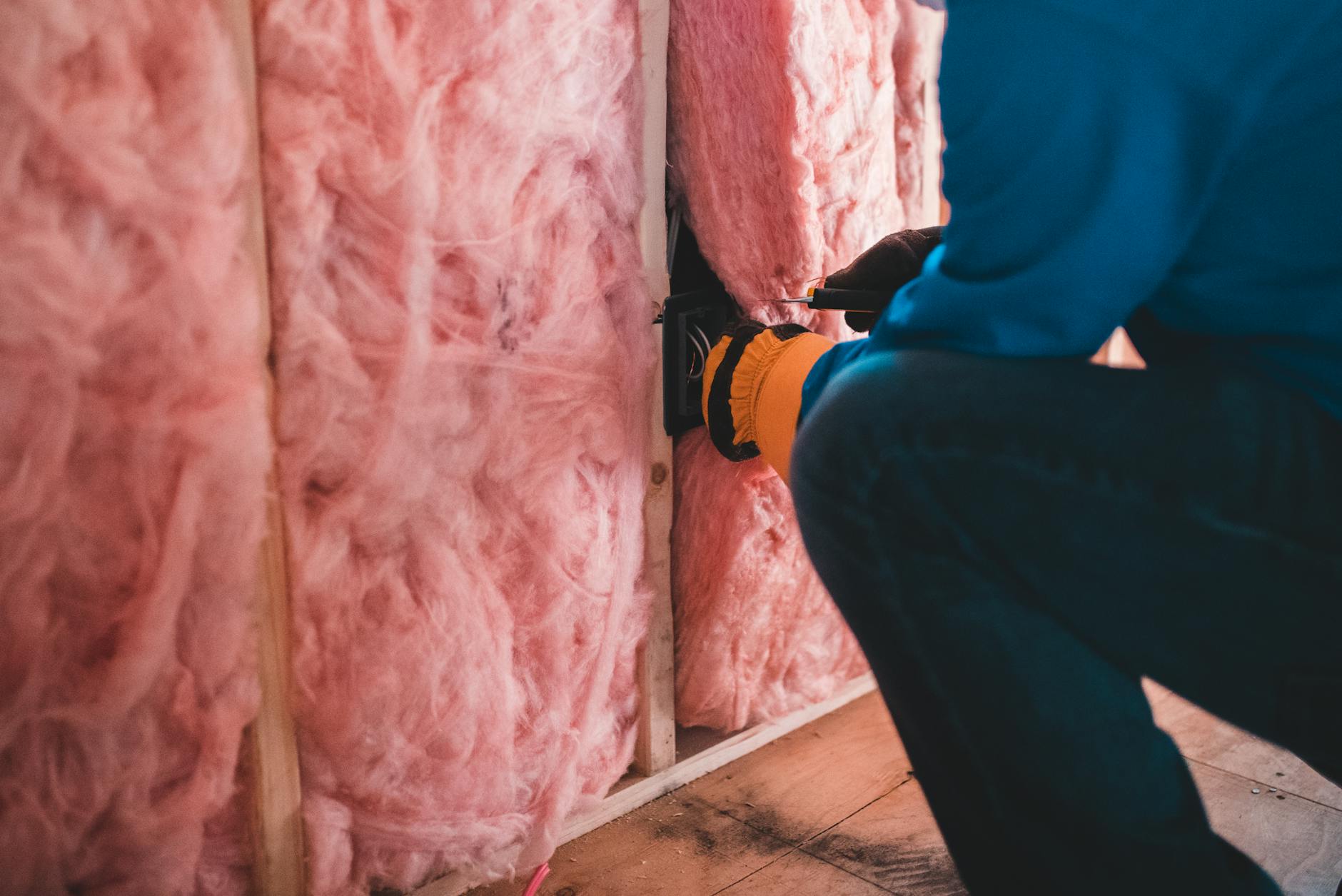
Blanket insulation arrives in pre-cut batts or continuous rolls, typically manufactured from fiberglass or mineral wool. These materials rely on density and fiber orientation to trap air, providing thermal resistance values between R-3.1 and R-4.0 per inch. Fiberglass dominates the market due to its low cost and fire resistance, while mineral wool offers superior sound dampening and operates effectively at temperatures exceeding 1,000 degrees Fahrenheit without combusting.
Loose-fill cellulose consists of recycled paper products treated with boric acid for fire and pest resistance. Installers blow this material into wall cavities or attic floors using specialized hoses, allowing the insulation to conform around plumbing, electrical work, and irregular framing. The material settles slightly over time, necessitating installation depths approximately 25% greater than the final desired thickness to account for density compression.
Rigid foam boards—extruded polystyrene (XPS), expanded polystyrene (EPS), and polyisocyanurate—provide continuous insulation sheathing for exterior walls, foundations, and cathedral ceilings. These boards deliver R-values ranging from R-4.0 to R-6.5 per inch and resist moisture absorption better than fibrous materials, making them suitable for basement applications where ground contact occurs. Spray polyurethane foam expands upon application, filling cracks and creating an air seal simultaneously with thermal insulation, though the chemical curing process requires professional handling and ventilation protocols.
How does blanket insulation compare to loose-fill alternatives?
⚡ In a Rush? Key Takeaways
- Blanket batts cost 40% less upfront but leave voids.
- Loose-fill achieves 22% better coverage density in irregular cavities.
- Loose-fill’s higher density reduces air movement within the insulation layer.
- ✅ For irregular cavities, loose-fill is the better choice.
The installation methodology creates distinct performance gaps between these materials. Blanket batts require precise cutting to fit around electrical boxes, ductwork, and framing irregularities. Each gap or compression point reduces the effective R-value by approximately 20%, meaning a poorly installed R-30 batt performs closer to R-24 in practice. The material also sags within open floor joist cavities over decades, creating thermal bridges where insulation pulls away from the subfloor.
Loose-fill cellulose eliminates many of these installation variables by flowing around obstructions and filling corners completely. The material’s higher density—typically 3.0 to 3.5 pounds per cubic foot when settled—reduces air movement within the insulation layer itself, mitigating convective heat loss that occurs in lighter fiberglass installations. However, loose-fill requires professional equipment for proper distribution and achieves optimal performance only when installed at depths exceeding 10 inches in attic applications. The settled density means homeowners must verify that installers account for the 15-20% loss in thickness that occurs during the first winter season as the material compresses under its own weight.
Is spray foam insulation worth the higher upfront cost?
| Option | Key stat | Best for |
|---|---|---|
| Closed-cell spray foam | R-6.0 to R-7.0 per inch, air barrier with permeance ratings below 1.0 perms | Occupied homes beyond 7 years |
Yes, if you occupy the home beyond seven years; the 30-40% energy savings typically recoup the $2,000–$5,000 premium within that timeframe.
Closed-cell spray foam delivers R-6.0 to R-7.0 per inch while simultaneously acting as an air barrier with permeance ratings below 1.0 perms at thicknesses above 1.5 inches. This dual function eliminates the need for separate housewrap or vapour barrier installations in many climate zones, reducing material costs elsewhere in the building envelope. The foam adheres directly to framing members, eliminating the convective loops that occur when air moves between the insulation and the sheathing in batt installations.
The chemical composition demands consideration. Open-cell foam, while less expensive at R-3.6 per inch, absorbs moisture and requires a vapour retarder in heating-dominated climates. Closed-cell formulations use hydrofluorocarbon blowing agents with high global warming potential, though newer water-blown and hydrofluoroolefin options reduce this environmental impact by 99%. The installation process requires the building to be vacated for 24-72 hours while off-gassing occurs, adding logistical costs for occupied retrofits. For attic applications in hot climates, spray foam roofline installations reduce air conditioning loads by 15-20% compared to vented attics with fibrous insulation, justifying the expense in regions with extended cooling seasons.
What is the actual cost per square foot for each insulation type?
- Fiberglass batts: $0.40–$1.00 per square foot
- Cellulose: $1.00–$1.80 per square foot
- Rigid foam: $1.50–$3.00 per square foot
- Closed-cell spray foam: $3.50–$6.00 per square foot
These figures represent fully installed costs including labour for a standard 2,400 square foot home.
Fiberglass batts remain the economical baseline, with unfaced rolls costing roughly $0.40 per square foot for DIY installation and $0.75–$1.00 including professional placement. Faced batts with attached vapour barriers add $0.15 per square foot but simplify installation sequencing.
Cellulose pricing varies dramatically based on application method. Dense-packing into closed wall cavities costs $2.00–$2.50 per square foot due to the difficulty of installation and the necessity of patching drywall access holes. Attic floor applications run closer to $1.20–$1.50 per square foot when blown to R-49 depths. Rigid foam sheathing costs $1.50 per square foot for 1-inch EPS boards up to $3.00 for 2-inch polyisocyanurate with foil facing. Spray foam commands the highest price point at $3.50–$5.00 for open-cell and $5.00–$6.50 for closed-cell formulations, though this cost includes the air sealing that would require additional materials and labour with other insulation types.
Which insulation type offers the best R-value for cold climates?
For cold climates, closed-cell spray foam provides the best R-value per inch (R-6.5) and creates an air barrier.
Cold climate performance depends on more than nominal R-values; thermal bridging and air leakage dominate heat loss in winter conditions. In climate zones 6 and 7, where January temperatures regularly drop below -10°F, continuous rigid foam sheathing over wall framing prevents thermal bridging through studs that reduces whole-wall R-values by 30% in standard batt installations. A 2×6 wall with R-19 batts performs at approximately R-13.5 whole-wall due to framing factors, while the same wall with 2 inches of exterior rigid foam achieves R-22 whole-wall despite using lower-density cavity insulation.
Spray foam at the roofline creates conditioned attics that protect HVAC equipment from temperature extremes, reducing duct losses by 10-15% in cold weather. Mineral wool batts provide an alternative for those avoiding petrochemicals, maintaining R-4.0 per inch even when moisture levels fluctuate, though they require meticulous installation to prevent gaps. In extreme cold, the combination of exterior rigid foam and dense-packed cellulose in cavities offers the best balance of thermal resistance, air tightness, and cost, achieving R-40 walls at roughly $8.00 per square foot installed.
How long does each insulation type last before replacement?
- Fiberglass: 80-100 years chemically, but sagging reduces effectiveness after 15-20 years
- Cellulose: 30-40 years, though boric acid fire retardant may degrade slightly after two decades
- Spray foam: 50+ years without degradation
- Rigid foam: 20-30 years, though XPS boards lose 10% of their R-value over the first five years
The functional lifespan often diverges from material durability. Fiberglass batts retain their chemical resistance to decomposition for decades, but gravity and vibration cause the material to settle and pull away from framing members in vertical wall cavities. Attic installations typically compress where homeowners walk or store items, creating thin spots with negligible R-value. Cellulose stabilizes after initial settling and performs consistently for 30-40 years, though the boric acid fire retardant may degrade slightly after two decades, reducing pest resistance.
Spray foam remains dimensionally stable once cured, though UV exposure degrades the surface within weeks if left uncovered in attics or crawl spaces. Properly protected behind drywall or foil facing, closed-cell foam maintains its R-value and air barrier properties indefinitely. Rigid foam similarly resists moisture and compression, though XPS boards lose 10% of their R-value over the first five years as the blowing agents slowly escape. All insulation types require inspection after roof leaks or plumbing failures; saturated fiberglass must be removed immediately to prevent mold, while closed-cell foam can occasionally be dried and retained due to its moisture resistance.
Can you install insulation yourself or should you hire a professional?
- Fiberglass batts and rigid foam boards: Suitable for competent DIY installation
- Loose-fill blowing and spray foam application: Require specialized equipment and certified technicians
DIY fiberglass installation demands attention to detail rarely found in rushed weekend projects. Each batt must be cut precisely to fit around electrical boxes without compression, and vapour barriers must face the conditioned interior in heating climates. Gaps as narrow as 4% of the surface area reduce the overall insulation effectiveness by 20%, meaning a single poorly fitted batt around a chimney chase can negate the thermal benefits of an entire wall section. Homeowners tackling attic installations must also install proper ventilation baffles to prevent soffit blockage, requiring careful navigation of trusswork while wearing respirators and protective clothing.
Loose-fill cellulose requires commercial blowing machines capable of achieving the 3.5 pounds per cubic foot density necessary for wall cavity dense-packing. Rental units from hardware stores typically lack the pressure and volume control for anything beyond attic floor topping. Spray foam demands respiratory protection, precise temperature control of chemical components, and knowledge of expansion rates to prevent distortion of window and door frames. Professional installers carry liability insurance for off-gassing incidents and provide warranties against shrinking or delamination that DIY applications cannot match. For sealing air leaks before insulating, however, homeowners can effectively apply caulk and foam sealant to prepare cavities for professional blown-in material.
Which insulation type is best for an energy-efficient home?
The optimal assembly combines exterior rigid foam with dense-packed cellulose or spray foam at the roofline, achieving Passive House levels of airtightness at moderate cost.
True energy efficiency requires addressing both conductive heat flow and air leakage simultaneously. The combination of exterior rigid foam and dense-packed cellulose or spray foam at the roofline creates a continuous insulation barrier that minimizes thermal bridging and air infiltration. This approach delivers the highest R-values per inch, ensuring optimal energy performance while maintaining a comfortable indoor environment.
“`