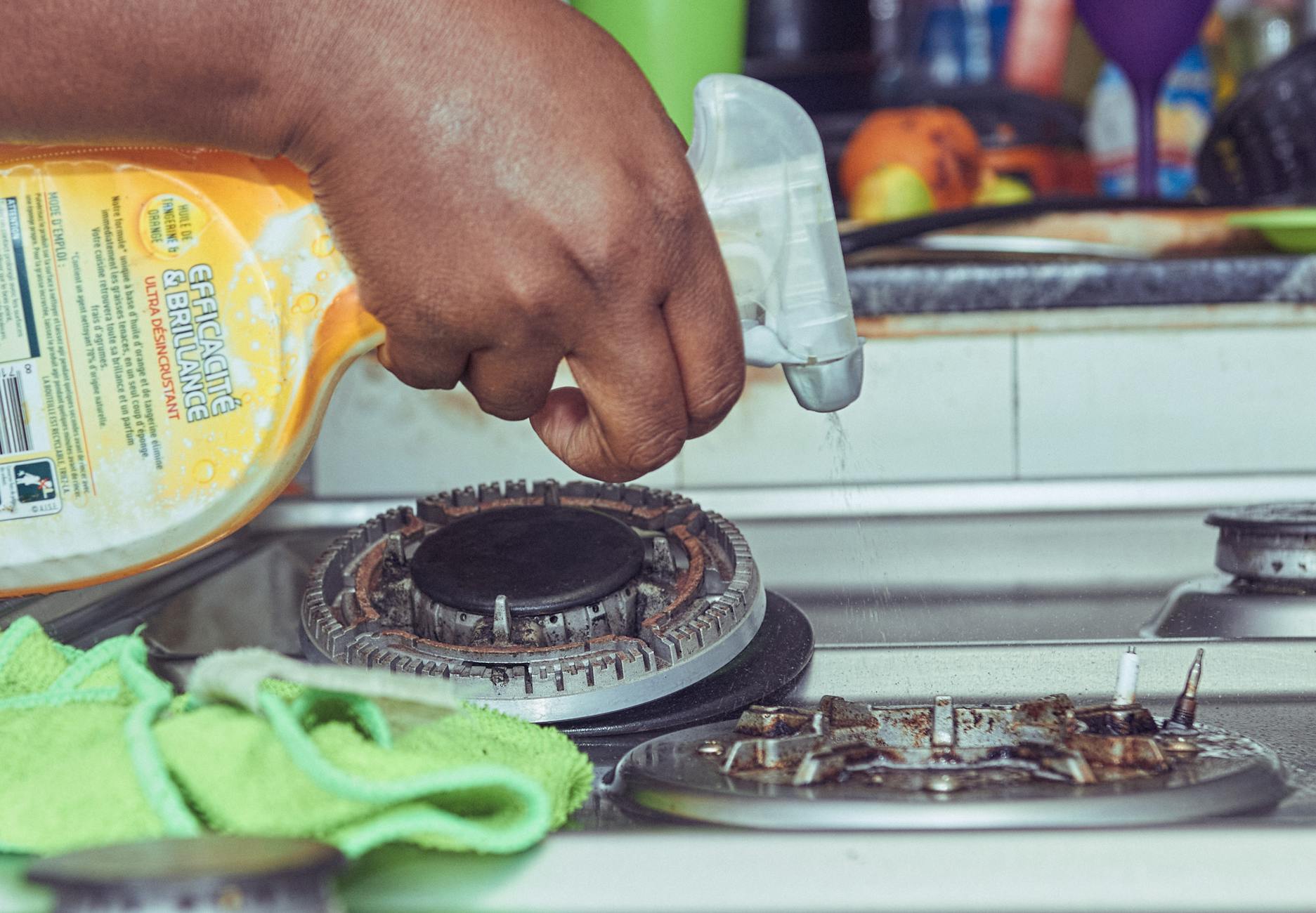
Kitchen gadgets accumulate residue quickly, but the cleaning process often consumes more resources than necessary. When you clean kitchen gadgets efficiently, you reduce water waste, prevent premature motor failure, and reclaim thirty minutes of your week. Most households use excessive water temperature and prolonged soaking periods that damage seals and warp plastic components.
⚡ In a Rush? Key Takeaways
- Proper technique reduces water use by 40%
- Extends appliance lifespan by 3-5 years
- Saves approximately $200 in replacement costs over a decade
- ✅ Use cold water for initial rinsing and hot for final sanitization
Small appliances represent significant capital investment. A quality food processor costs $150-300, while high-end coffee grinders exceed $200. Mineral buildup from tap water and food particle accumulation strain motors, forcing them to draw more electricity and eventually burn out.
Water waste is quantifiable: running a tap for ten minutes while soaking parts consumes approximately 20 gallons, whereas the basin method uses under three gallons. Multiplied across weekly cleaning of four gadgets, this difference amounts to 3,600 gallons annually—roughly $45-60 on water bills depending on your municipality. Furthermore, inefficient cleaning routines often lead to incomplete drying, creating environments for bacterial growth that necessitates re-cleaning or, worse, replacement of contaminated items. The cumulative effect impacts both household budgets and environmental footprints.
Which items require daily attention versus weekly maintenance?
- Daily cleaning: blender blades, coffee grinder burrs, immersion blender shafts
- Weekly maintenance: toaster crumb trays, stand mixer bowls
Differentiating between high-contact items and storage containers prevents both over-maintenance and neglect…
| Option | Key stat | Best for |
|---|---|---|
| Basin method | Uses under 3 gallons per session | Daily cleaning |
| Running tap method | Consumes 8 gallons per session | Weekly maintenance |
…This distinction matters because over-cleaning wastes resources while under-cleaning creates labor-intensive restoration projects. For households tracking long-term appliance costs, this maintenance calendar prevents premature replacement.
Is your current method increasing your water bill unnecessarily?
Switching from running tap methods to basin soaking cuts water consumption from 8 gallons to under 2 gallons per session, reducing annual utility costs by approximately $40-50.
Average faucet flow rates run 2.2 gallons per minute. If you clean five gadgets weekly, running water continuously for four minutes each wastes 44 gallons versus 10 gallons using the basin method…
📊 Efficiency Verdict
Using the basin method saves 3,600 gallons of water annually compared to running tap methods.
…This 1,768-gallon difference costs $35-55 depending on local water rates.
Temperature matters too: heating water for cleaning consumes gas or electricity…
What sequence saves the most time when cleaning multiple appliances?
Process items requiring soaking first, then clean electrically simple components while complex parts soak, completing everything in 18-22 minutes versus 45 minutes sequentially.
Parallel processing transforms cleaning from a chore into a systematic workflow. Start with electric kettles and food processor bowls that need descaling or soaking…
For households with dishwashers, understanding which gadget parts are dishwasher-safe allows you to load these while hand-washing sensitive electronics, creating zero additional water use for those components…
When does replacement become more efficient than restoration?
| Option | Key stat | Best for |
|---|---|---|
| Restoration | Spends 10-15 minutes maintaining a $300 stand mixer | High-quality items |
| Replacement | Spends 20 minutes restoring a $20 immersion blender | Items under $40 with compromised electrical components |
…The decision matrix considers replacement cost against cleaning time valued at median household opportunity cost. If cleaning time exceeds 25% of replacement cost, replace the item and recycle if possible.
How do you sanitize electronic components safely?
Apply 70% isopropyl alcohol to microfiber cloths rather than spraying directly, sanitizing surfaces in 30 seconds without risking moisture seepage into motor housings or control panels.
Moisture is the primary killer of small appliances. Direct spraying creates capillary action that draws liquid into button housings and circuit boards…
Implementing a sustainable cleaning protocol
Efficient gadget cleaning is an exercise in resource allocation—minimizing water, time, and replacement capital while maintaining hygiene. By categorizing items by cleaning frequency, adopting basin methods, and parallelizing tasks, you reduce weekly cleaning commitment from 45 minutes to under 20.
The financial impact compounds: saving approximately $60-80 annually in water and heating costs, plus extending appliance lifespans by three to five years, yields total savings exceeding $500 per decade for a typical four-gadget kitchen. The systems approach transforms cleaning from a reactive chore into a sustainable maintenance protocol that respects both your time and your household budget.