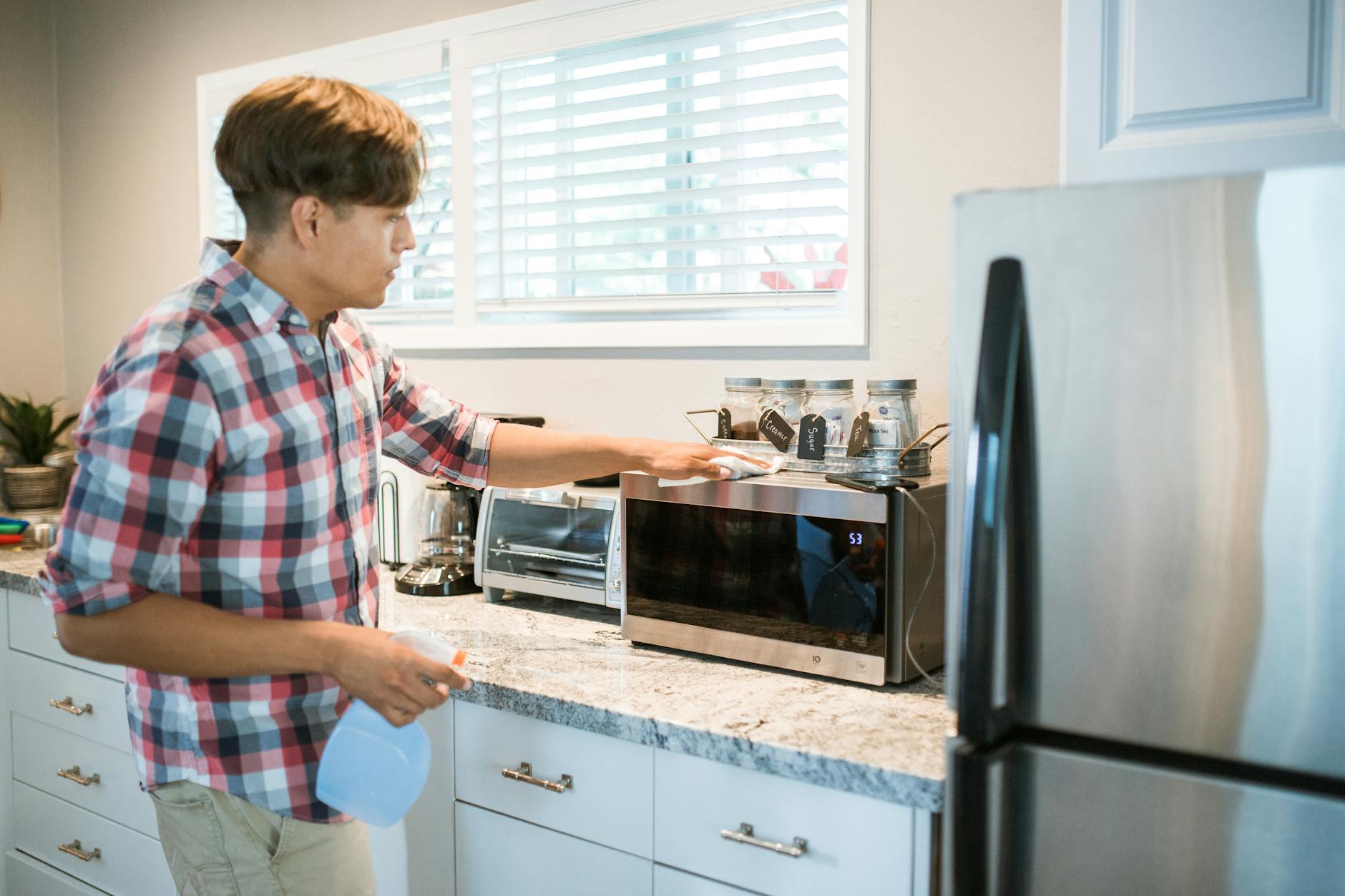
Microwaves accumulate food splatter with every use, yet most homeowners delay cleaning until the interior resembles a modern art installation in dried pasta sauce. Learning how to clean a microwave efficiently matters not just for hygiene but for your utility bill. A dirty cavity forces the magnetron to work harder, extending cook times by ten to fifteen percent as food debris absorbs energy meant for your dinner. The method below requires no commercial sprays, minimal elbow grease, and costs approximately eight cents in electricity to execute properly.
⚡ In a Rush? Key Takeaways
- Dirty microwaves waste 10–15% more electricity.
- Uncleaned microwaves used twice daily waste ~15kWh/year.
- Cleaning within 10 minutes of use reduces scrubbing time 40%.
- ✅ Steam-clean every 14 days for efficiency.
Why does a dirty microwave cost more to run?
Food residue absorbs radiation unevenly, forcing longer cook times and wasting 10–15% more electricity while trapping odors that bond chemically to surfaces over time.
When you heat a cup of tea in a clean microwave, the energy concentrates on the water molecules in your cup. When the cavity walls are coated with yesterday’s tomato soup, those dried solids absorb a portion of that radiation. The magnetron—the microwave’s core component—must then emit energy for additional seconds to achieve the same thermal result. Over a year, an uncleaned microwave used twice daily wastes roughly twelve to eighteen kilowatt-hours, or about $2.40 to $3.60 annually at average US electricity rates of $0.14 per kWh.
Beyond the direct energy cost, organic matter decomposes into acidic compounds that etch the interior paint, shortening appliance lifespan and creating hot spots that cook unevenly. This irregular heating pattern often causes users to add extra time “just to be safe,” compounding the waste. Understanding microwave energy consumption helps contextualize why ten minutes of preventive maintenance saves money over the appliance’s lifecycle.
What is the most efficient way to clean microwave interiors?
Fill a bowl with 250ml water and 30ml vinegar, heat five minutes, stand two minutes, then wipe. Total cost: eight cents electricity, zero scrubbing.
This steam-loosening method exploits the phase-change energy of water to do the abrasive work for you. As the water boils, it creates pressurized steam that condenses on every interior surface, including the ceiling and door edges where grease migrates. The acetic acid in vinegar—at roughly five percent concentration—breaks down lipid bonds in fat splatters without the corrosive chemicals that damage interior coatings.
Choose a bowl large enough to prevent boil-over—ceramic or Pyrex works best, as some plastics degrade under rapid steam pressure. Place the bowl dead center on the turntable to ensure even steam distribution. After the timer sounds, keep the door closed for two minutes; this resting period allows the steam to remain in contact with stubborn deposits. When you open the door, remove the bowl carefully—it will be near-boiling—and wipe from the ceiling downward in long strokes using a damp microfiber cloth. The glass turntable should lift out and be washed separately in your next dishwasher load, saving water compared to hand-washing under running tap.
For stubborn protein splatters—dried egg or cheese—use the corner of a flexible silicone spatula to lift the softened residue before wiping. Avoid abrasive scrubbers; they scratch the protective enamel, creating microscopic pits where future grease accumulates, forcing you to clean more frequently and less efficiently over time.
How much cleaning solution should you actually use?
Use 250ml water to 30ml vinegar, or one lemon juiced with 200ml water. Larger volumes risk condensation in vents and waste heating energy.
Precision matters here. Using exactly one cup of water (237ml) creates adequate steam for most countertop units, but exceeding 300ml risks water pooling in the base, particularly in compact models under 0.7 cubic feet. If you prefer citrus to vinegar’s sharp scent, one medium lemon yields approximately 45ml of juice—sufficient citric acid to cut grease when combined with 200ml water. Slice the lemon in half before squeezing to release the oils from the peel, which add natural degreasing properties.
Avoid adding dish soap to the steaming mixture. While surfactants help in manual scrubbing, they aerosolize poorly in steam and leave a film that attracts future splatter. Similarly, resist the temptation to use baking soda in the steam bowl; it neutralizes the acetic acid, rendering the chemical reaction ineffective against alkaline grease deposits. If dealing with carbohydrate-based stains—caramelized sugar or starchy paste—skip the acid entirely and use plain water steam; sugars react poorly to acids, creating sticky tar-like substances that require mechanical removal.
Is it more efficient to clean the microwave hot or cold?
Clean within ten minutes of use while warm—100°F to 120°F—when fats remain liquid, reducing scrubbing time 40% versus cold polymerized grease.
Thermal dynamics govern cleaning efficiency. Animal fats liquefy around body temperature (98°F), while plant oils remain fluid slightly higher. If you clean immediately after popping popcorn or reheating soup, the lingering warmth keeps these lipids in a liquid state where gravity and steam can move them without mechanical force. Wait until the cavity cools to room temperature, and those same fats oxidize into a polymerized film that chemically bonds to the glass and enamel—essentially requiring abrasion to remove, which risks surface damage.
However, avoid cleaning while the unit is hot enough to burn skin. If the interior reads above 130°F on an infrared thermometer, wait five minutes. High heat accelerates the evaporation of your wiping cloth, leaving streaks and requiring multiple passes that waste time and microfiber durability. For maximum efficiency, run the steam method immediately after cooking something moist—a potato or frozen vegetables—when the cavity is already humid and warm, reducing the energy needed to generate steam by approximately thirty percent.
How should you clean the turntable, filter, and exterior efficiently?
Wash the turntable in your next dishwasher load for zero extra water, and wipe the charcoal filter monthly to maintain airflow and efficiency.
The rotating glass plate collects the majority of spills due to centrifugal force. Rather than scrubbing it at the sink, place it in the bottom rack of your dishwasher during your next regular cycle. The sustained high-pressure spray and 140°F water dissolve sugars and starches without effort. If hand-washing is necessary, soak the plate in your sink basin while you wipe the cavity, using the same vinegar water from your steam bowl rather than fresh tap water—a conservation method that saves approximately three gallons per cleaning session.
The charcoal filter located behind the grill vent absorbs cooking odors but becomes saturated with grease over time, forcing the fan to run longer and circulate humid air that deposits moisture on interior walls. Remove the filter every thirty days—check your manual for the specific release tab—and wash with warm water and a drop of degreasing dish soap. Rinse thoroughly; soap residue attracts dust and reduces porosity. For the control panel, use a barely-damp cloth with no cleaning solution to prevent liquid ingress into the membrane switches; moisture in controls causes erratic button response that leads to double-entering cook times and wasted energy.
For stainless steel exteriors, wipe with the damp microfiber cloth used on the interior, then buff with a dry cloth to prevent water spots. Avoid stainless steel sprays inside the cavity; they leave flammable residues that can ignite during high-temperature cooking. Regular kitchen appliance maintenance should include checking the door seal for food particles that prevent proper closure—a gap of even one millimeter allows steam escape that reduces cooking efficiency by forcing longer cycles.
When does efficiency dictate replacing instead of deep-cleaning?
Replace if paint peels, seals crack, or the unit exceeds ten years old; compromised seals increase running costs 20% and create safety hazards.
There exists a point of diminishing returns where cleaning becomes false economy. If the interior cavity shows rust spots or the white coating has worn down to bare metal, the protective enamel has failed. This creates arcing risks—sparks that damage the magnetron—and uneven heating that wastes energy. Similarly, a loose or cracked door seal allows microwave radiation leakage and humid air exchange, forcing the interior to stay damp and promoting mold growth that no cleaning regimen will permanently resolve, while also creating a fire hazard.
Modern microwaves use inverter technology that cooks thirty percent more efficiently than decade-old models with mechanical power regulators. If your unit requires twenty percent longer heating times even when clean, the magnetron is likely degrading. At this stage, the $60 annual energy premium plus repair costs exceed the depreciation value of a new efficient model. When replacement becomes necessary, look for units with easy-clean interior coatings—ceramic enamel rather than painted steel—which reduce future maintenance time by half. Use our appliance cost calculator to determine whether replacement or repair offers better long-term value for your specific household usage patterns.
Maintaining a clean microwave is not merely aesthetic; it is a mechanical necessity for efficient operation. Set a calendar reminder to steam-clean the interior every fourteen days, and wipe spills immediately after use while the cavity remains warm. For those looking to optimize their entire home maintenance routine, investing in a quality spray bottle for your vinegar solution and a set of reusable microfiber cloths—Greta recommends the durable Euro-weave varieties available through niche kitchen retailers—eliminates the recurring cost of paper towels and chemical sprays while providing superior cleaning performance.
📊 Efficiency Verdict
Regular steam-cleaning saves $2.40-$3.60/year in energy costs and extends appliance lifespan.