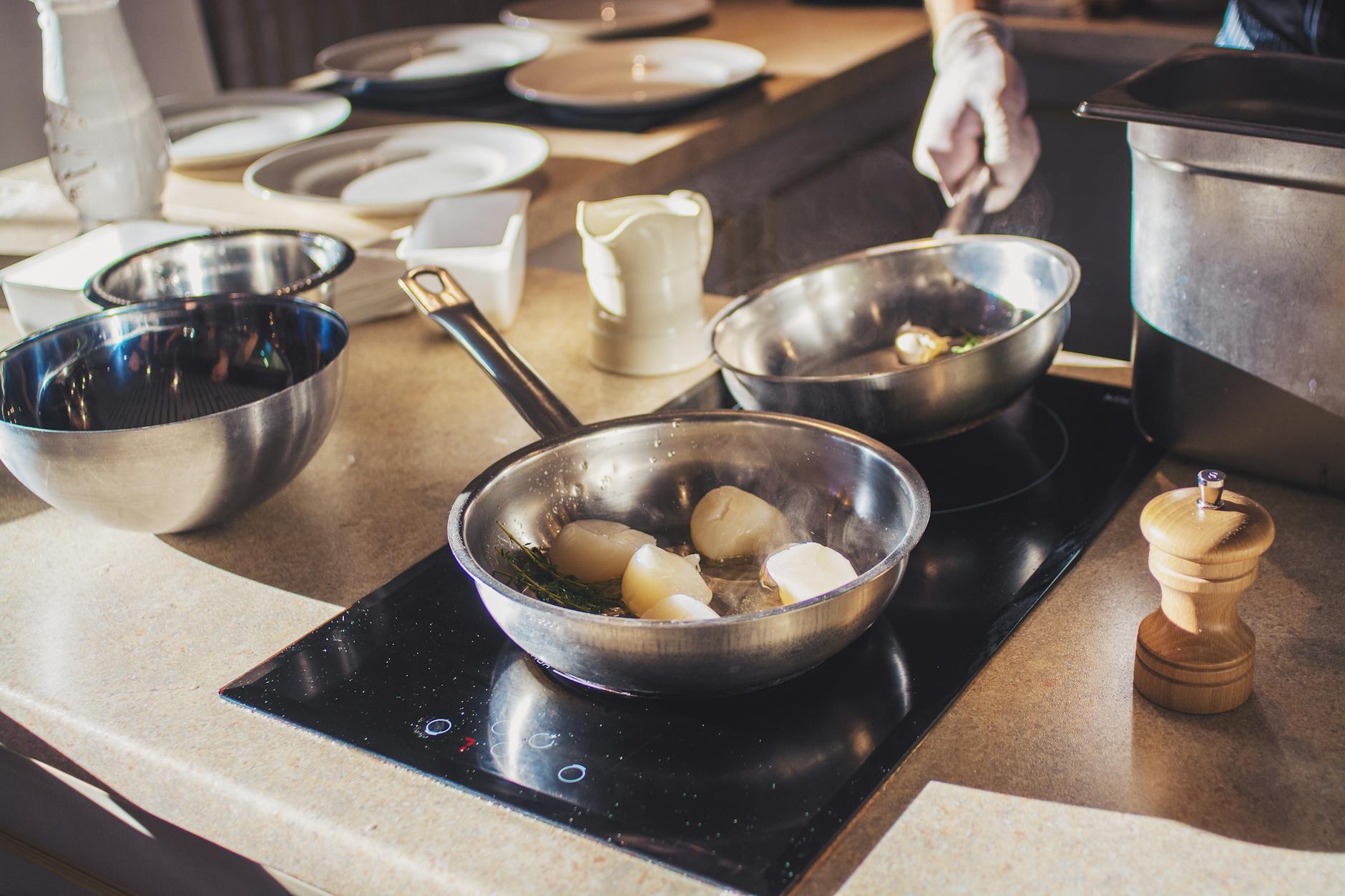
When upgrading or fitting a new kitchen in your UK home, the choice between an induction hob and a traditional gas hob often comes down to perceived cooking performance versus long-term running costs. While gas has long been favoured by professional chefs for its instant heat control, induction technology has advanced significantly, promising superior energy efficiency and speed. Understanding the real financial implications of each — from installation to daily use — is crucial for making an informed decision that suits both your budget and your culinary habits in 2026.
⚡ In a Rush? Key Takeaways
- Induction hobs cost £38–£42/month to run for average use, but can drop by 40% with off-peak electricity.
- Gas hobs typically cost £35–£40/month, making them slightly cheaper per hour but less efficient overall.
- Induction hobs are 85–90% thermally efficient, while gas hobs are only 38–42% efficient, according to the Energy Saving Trust.
- The upfront cost of an induction hob is usually higher, but the long-term energy savings can offset this in 3-5 years.
- ✅ For overall long-term value and efficiency in 2026, induction is the better choice for most UK homes.
What is the initial cost difference between induction and gas hobs for UK homes?
Induction hobs typically cost £350–£1,000 for the unit alone, while gas hobs range from £200–£700, making induction generally more expensive upfront.
The first point of comparison for many homeowners is the purchase price. Induction hobs generally sit at a higher price point than their gas counterparts, largely due to the advanced technology involved in their construction. However, this initial outlay is only one part of the total cost of ownership.
Do induction hobs require special electrical installation?
Yes, induction hobs often require a dedicated 32-amp electrical circuit, which can add £150–£400 to the installation cost if a new circuit is needed.
One often-overlooked cost for induction hobs is the potential need for electrical infrastructure upgrades. Many induction models, especially larger ones with multiple zones, draw significant power and may require a dedicated 32-amp power supply. If your current kitchen wiring cannot support this, you’ll incur additional costs for an electrician to run a new circuit from your consumer unit. Gas hobs, conversely, typically only require a standard electrical connection for ignition and a gas line, with professional installation costs potentially lower if a gas supply is already present.
What are the typical installation costs for gas versus induction?
Installation for an induction hob can cost £50–£200, or £200–£600 with electrical upgrades; gas hob installation typically costs £100–£300.
Installation costs can vary widely based on your location and the complexity of the job. For a straightforward replacement where the necessary services are already in place, the costs might be similar. However, if new gas lines need to be laid or significant electrical work is required, these prices can diverge substantially. It’s always advisable to get multiple quotes from Gas Safe registered engineers for gas installations and certified electricians for induction hobs to ensure safety and compliance.
How do the running costs of induction and gas hobs compare in the UK?
Induction hobs use 85–90% of their energy for cooking, costing £38–£42/month; gas hobs are 38–42% efficient, costing £35–£40/month.
This is where the ‘true cost’ really comes into play. While gas might be cheaper per unit of energy, induction’s superior efficiency often translates into lower overall running costs, especially when considering heat transfer and cooking speed. The way each technology uses energy is fundamentally different, which directly impacts your utility bills.
What is the thermal efficiency difference between induction and gas?
Induction hobs boast 85–90% thermal efficiency, directing more heat into the pan, whereas gas hobs are only 38–42% efficient.
The Energy Saving Trust reported that induction hobs are significantly more thermally efficient than gas hobs. This means a much larger proportion of the energy consumed by an induction hob is directly transferred to the pan and its contents, rather than being lost to the surrounding air. Gas flames, by their nature, release a lot of heat into the kitchen, warming the air as well as the pan. This efficiency gap is a critical factor in determining long-term running costs. Because induction hobs only heat the pan directly via a magnetic field, the surrounding cooking surface remains relatively cool.
Given the difference in efficiency, here’s a comparison of typical energy transfer:
- Induction Hob: Up to 90% of electricity directly heats the pan.
- Gas Hob: Less than 45% of the gas energy heats the pan, with the rest lost to the environment.
Can cooking habits influence the energy usage of induction and gas hobs?
Yes, habits like using correct pan sizes, fitting lids, and pre-chopping ingredients can significantly reduce ‘on-time’ and energy consumption.
Regardless of whether you use gas or induction, smart cooking habits can make a measurable difference to your energy bills. Using pans that match the size of your hob’s cooking zone ensures maximum heat transfer and minimises wasted energy. Keeping lids on pots also traps heat, allowing food to cook faster and requiring less energy. My kitchen workflow and systems articles explore into this in more detail. Even simple steps like pre-chopping ingredients can reduce the overall ‘on-time’ of your hob, regardless of the fuel source. Investing in quality cookware specifically designed for induction can further enhance efficiency.
How does off-peak electricity pricing affect induction hob costs?
With off-peak electricity tariffs, induction hob running costs can decrease by up to 40%, making them significantly cheaper than gas hobs for flexible cooks.
For homes with smart meters and time-of-use tariffs, induction hobs offer a unique advantage. If you can shift some of your cooking to off-peak hours, when electricity is cheaper, the running cost of an induction hob can drop dramatically. This is not an option for gas, where prices are generally consistent throughout the day. This flexibility makes induction particularly appealing for those looking to optimise their energy expenditure.
To illustrate the potential savings with off-peak tariffs:
| Hob Type | Typical Monthly Cost (Peak) | Potential Monthly Cost (Off-Peak) |
|---|---|---|
| Induction | £38–£42 | £23–£28 |
| Gas | £35–£40 | £35–£40 (No change) |
What are the other benefits and drawbacks of induction and gas hobs?
Induction offers faster heating, precise control, and easier cleaning but requires specific cookware; gas provides visual heat feedback and works with any pan.
Beyond the pure financial comparisons, there are significant differences in user experience, safety, and maintenance that could sway your decision. These qualitative factors play a large role in daily home life.
How do speed and precision differ between the two hob types?
Induction heats water up to 50% faster than gas and offers instantaneous, precise temperature adjustments; gas provides immediate visual feedback.
Induction hobs are renowned for their speed. They can boil water significantly faster than gas, rivalling or even surpassing the speed of an electric kettle for larger volumes. This is due to the direct transfer of energy. Precision is another strong suit for induction; the ability to adjust heat levels with fine increments and have them respond instantly means better control over delicate dishes. Gas, while offering immediate visual feedback on flame size, isn’t always as precise for subtle temperature shifts. I track cost per serving, not cost per hour in my assessments, the air fryer vs oven debate being another example of this approach.
Are there safety and cleaning advantages with induction?
Induction cooking surfaces remain cooler, reducing burn risk and making spills easier to clean; gas hobs have open flames and can be harder to clean around grates.
Safety is a major differentiator. Since induction hobs only heat the pan itself, the surrounding cooking surface remains relatively cool to the touch. This significantly reduces the risk of accidental burns, especially important in households with children or pets. Spills also don’t bake onto a hot surface, making cleaning an induction hob a quick wipe-down. Gas hobs, with their open flame and grates, pose a higher burn risk and are notoriously more challenging to clean, often requiring removal and scrubbing of pan supports and burner caps.
The main safety and cleaning considerations are:
- Induction: Low surface heat, automatic pan detection, easy wipe-clean surface.
- Gas: Open flame, higher risk of burns, grates and burners require more intensive cleaning.
Do induction hobs require special cookware?
Yes, induction hobs only work with magnetic cookware (cast iron, stainless steel), so non-magnetic pans (copper, aluminium, glass) will not function.
This is a crucial point for anyone considering an induction hob. Only ferromagnetic cookware will work on an induction surface. This means pots and pans made from cast iron or magnetic stainless steel are compatible, while aluminium, copper, glass, or ceramic cookware will not heat up. A simple magnet test can determine if your existing pans are suitable. If not, factor in the cost of replacing some or all of your cookware when budgeting for an induction hob.
Frequently Asked Questions About Hobs
Is it more expensive to cook with gas or induction in the UK?
Generally, induction hobs are slightly more expensive per month (up to £7 more) to run on peak electricity, but their efficiency can lead to lower overall costs.
How much energy does an induction hob use per hour (UK)?
An average induction hob uses 1.8–2.5 kWh per hour of active cooking, consuming energy only when a pan is present.
Is it worth switching from gas to induction in the UK?
Yes, switching is often worthwhile for improved efficiency, faster cooking, better safety, and potential long-term savings, despite higher upfront costs.
Why is induction cooking so efficient?
Induction cooking is efficient because it directly heats the magnetic pan via electromagnetic fields, minimising heat loss to the surrounding air.
Based on our efficiency data, cooking appliances, particularly induction hobs, that transfer heat directly and efficiently consistently reduce overall running costs — which is why for most UK homes in 2026, an induction hob is the superior long-term choice.
— Greta Michaud, Home Appliance Efficiency Researcher