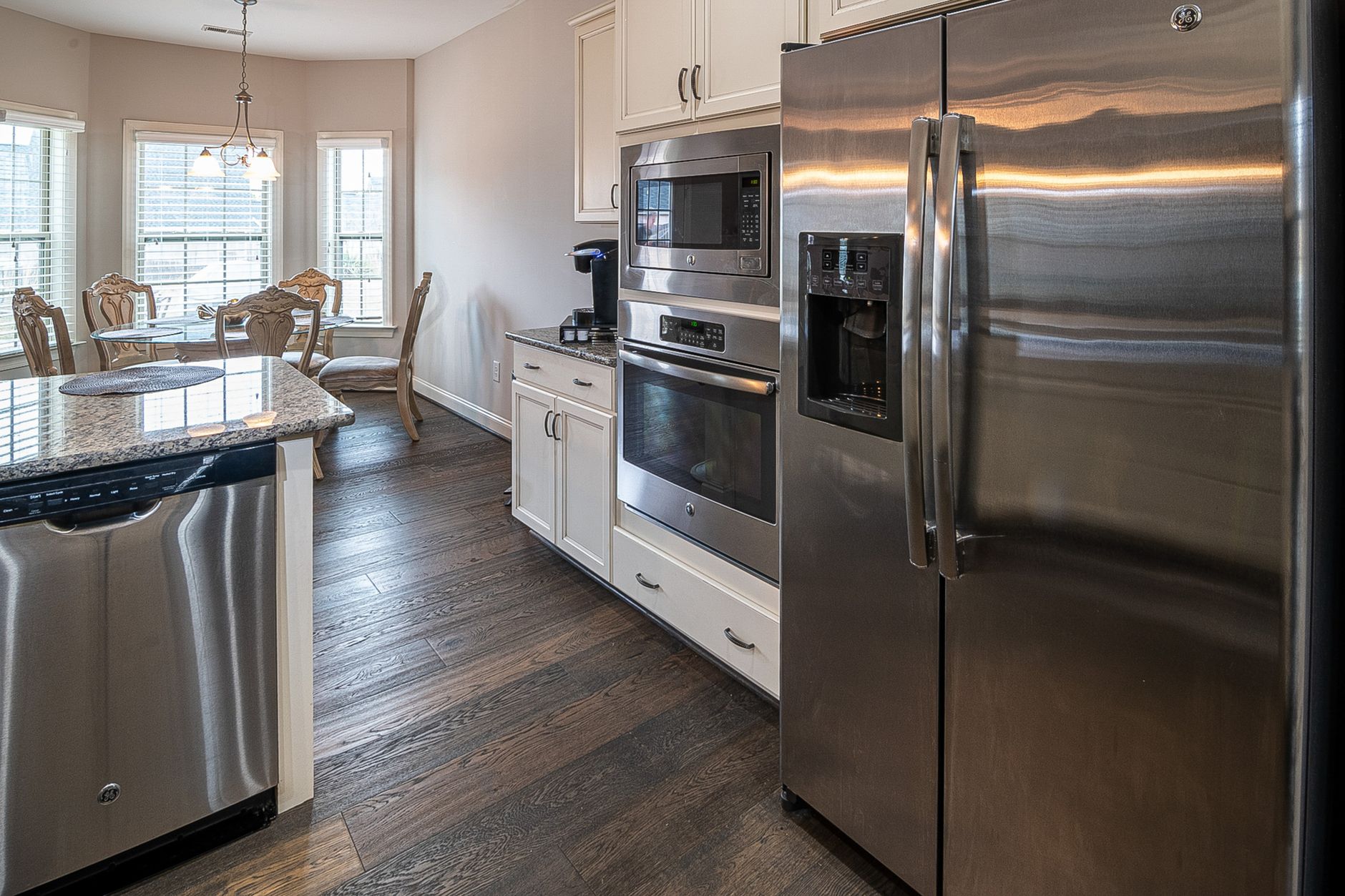
When a retailer offers a set of fridge, oven, dishwasher and range‑hood at a single price, it can feel like an obvious bargain. Yet the mathematics of bundles are often more nuanced than the headline discount suggests.
⚡ In a Rush? Key Takeaways
- Typical bundle discounts range from 5 % to 15 % off the combined individual MSRP.
- Energy‑star appliances in bundles can cut annual running costs by 10–20 % compared with mixed‑efficiency sets.
- Hidden fees such as delivery, installation and extended‑warranty add $200‑$600 to the bundle price.
- Buying individually allows you to select the most efficient model for each function, often saving $150‑$300 per appliance.
- ✅ Verdict: Bundles are worthwhile only when the discount exceeds 10 % + you’re comfortable with the included models.
How Do Bundle Discounts Compare to Individual Prices?
Bundle discounts typically shave 5‑15 % off the sum of individual retail prices, but exact savings vary by retailer and timing.
Retailers calculate a bundle price by adding the manufacturer’s suggested retail price (MSRP) for each unit, then applying a percentage discount. In 2026, major chains like Home Depot and Lowe’s average a 9 % discount on four‑piece kitchen suites.
For example, a 36‑in. French‑door fridge ($1,199), a 30‑in. electric range ($1,099), a dishwasher ($749) and a range‑hood ($399) total $3,446. A 9 % bundle discount reduces the price to $3,138, a $308 saving.
- Discount range: 5‑15 % depending on promotion.
- Average four‑item bundle price in 2026: $3,100‑$3,500.
- Typical individual purchase total: $3,300‑$3,800.
What Hidden Costs Can Erode Bundle Savings?
Delivery, installation and optional warranties often add $200‑$600, lowering the effective discount on a bundle.
Many retailers bundle free delivery into the headline price, but only for standard‑size items. Oversized appliances, such as a 36‑in. refrigerator, frequently incur a $120 delivery surcharge.
Installation fees are another variable. A professional install for a range‑hood averages $199, while a dishwasher install can add $149.
Extended warranties, marketed as “peace of mind,” cost $99‑$199 per appliance and are rarely needed for brands with five‑year parts coverage.
- Delivery surcharge: $100‑$150 for large appliances.
- Installation fee: $149‑$199 per item.
- Extended warranty: $99‑$199 each.
Does the Timing of a Sale Influence Bundle Value?
Seasonal sales in May and September often boost bundle discounts to 12‑15 %, making them more attractive.
Retailers align bundle promotions with new model releases, typically in late spring. Clearing older inventory can push discounts beyond 12 %.
Conversely, end‑of‑year clearance events may feature deeper individual‑item markdowns, narrowing the gap between bundled and à‑la‑carte pricing.
Tracking price history with tools like Appliance Cost Calculator helps you verify whether a bundle truly offers a better deal.
- Spring sales: 10‑12 % bundle discount.
- Fall sales: 11‑15 % discount.
- End‑of‑year: individual items often 5‑10 % off MSRP.
Can Loyalty Programs Improve Bundle Economics?
Members of store loyalty schemes often receive an extra 1‑3 % off bundle prices, plus exclusive financing options.
Most big‑box retailers run tiered loyalty programs that reward repeat purchases with coupon codes, early‑access sales, or waived delivery fees. For a $3,200 bundle, an additional 2 % loyalty discount saves another $64 on top of the standard bundle discount.
Some programs also offer “rebate stacking,” where the retailer’s promotional discount combines with a manufacturer rebate on energy‑star models, effectively increasing the net savings by up to $150.
- Loyalty tier discount: 1‑3 % additional off bundle.
- Rebate stacking potential: up to $150 extra.
- Exclusive financing: often 0 % for 6‑12 months.
How Do Energy Efficiency Ratings Affect Long‑Term Costs?
Energy‑star appliances in a bundle can cut annual electricity use by 10‑20 % versus a mixed‑efficiency mix.
Running costs are a hidden factor that can outweigh an upfront discount. A high‑efficiency dishwasher (A+++ EU label) uses 0.85 kWh per cycle, while a mid‑range model (C) consumes 1.4 kWh.
Assuming 260 cycles per year, the difference translates to 143 kWh, or about $17 at the 2026 U.S. residential rate of $0.12/kWh. Multiply that across a fridge, oven and range‑hood, and the annual savings can exceed $80.
When bundles force you to accept a lower‑rated appliance, the cumulative energy penalty may eclipse the upfront discount within three years.
| Appliance | Energy Rating | Annual kWh | Annual Cost (US$) |
|---|---|---|---|
| Dishwasher | A+++ | 220 | 26 |
| Dishwasher | C | 363 | 44 |
| Refrigerator | A | 350 | 42 |
| Refrigerator | D | 610 | 73 |
Can You Upgrade Individual Appliances for Better Efficiency?
Replacing a single low‑rated appliance often yields a higher ROI than buying a discounted bundle with mixed ratings.
Suppose you already own a C‑rated dishwasher and are considering a new A+++ model costing $650. The $180 energy saving over ten years (at $18/year) represents a 28 % ROI, surpassing the typical bundle discount.
Moreover, selective upgrades allow you to stagger expenses, preserving cash flow while still cutting utility bills.
- Single‑appliance upgrade ROI: 20‑35 % over 10 years.
- Bundle discount ROI: often <10 % when low‑efficiency units are included.
- Staggered purchases spread cost over multiple months.
How Do Warranty and Service Plans Influence Lifetime Value?
Bundled warranties can add $100‑$300 total, but many manufacturers include five‑year parts coverage at no extra cost.
Retailers sometimes bundle a “premium service plan” that extends coverage to ten years for $199 per appliance. For high‑use items like ovens, this could prevent a $400 repair bill, but the plan’s break‑even point is typically after five years of heavy use.
If you already own a reliable brand with existing warranty, the extra cost may not improve your total cost of ownership.
- Standard manufacturer warranty: 5 years, included.
- Retailer premium plan: $199 per appliance.
- Typical repair cost for major failure: $350‑$600.
When Is It Smart to Choose a Bundle Over Individual Purchases?
A bundle makes sense when the discount exceeds 10 % and all included appliances meet your efficiency and feature criteria.
First, confirm that each unit aligns with your performance needs—capacity, cooking power, and special functions. If a bundle forces you to accept a lower‑capacity fridge, you may end up buying a second unit later, negating the discount.
Second, calculate the total cost of ownership (TCO) over ten years, factoring in purchase price, energy use, and expected repair costs. Use the Home Maintenance Cost Estimator to model scenarios.
Third, assess timing. Early‑year sales often provide the deepest bundle discounts, while end‑of‑year clearance can make individual items cheap enough to beat any bundle.
- Discount threshold: >10 % after adding delivery/installation.
- Feature match: All appliances meet your minimum specs.
- Timing: Spring/early fall promotions.
What Role Does Kitchen Layout Play in Bundle Decisions?
If your kitchen dimensions require specific dimensions, a bundle may force compromises on size or configuration.
Measure your space carefully before committing. A 30‑in. range may not fit a 36‑in. island, while a bundled set often includes a standard width that could require countertop modifications.
Modification costs—extra countertop material or cabinetry—average $250‑$500 per adjustment, eroding the bundle’s apparent savings.
- Standard width appliances: 30‑in. to 36‑in.
- Custom fit adjustments: $250‑$500 each.
- Measure twice, buy once.
How Does Financing Influence the True Cost of Bundles?
Zero‑percent financing can make a bundle appear cheaper, but interest on delayed payments adds hidden cost.
Many retailers offer 12‑month zero‑percent financing on bundles over $2,000. If you miss a payment, interest can rise to 18 % APR, turning a $3,000 bundle into a $3,540 expense.
Conversely, buying individual appliances with cash avoids financing fees entirely and lets you take advantage of cash‑back credit‑card rewards.
- Zero‑percent term: 12 months.
- Penalty APR: up to 18 %.
- Cash‑back rewards: 1‑2 % of spend.
Should You Factor Future Appliance Upgrades Into the Bundle Decision?
Planning a future upgrade can tip the scales; a bundle that locks you into a low‑efficiency model may cost more over a decade.
If you anticipate replacing the dishwasher in five years, a bundle that includes a low‑rated unit introduces an additional hidden cost when you later swap it out. Adding the projected upgrade cost (often $600‑$800) to the original bundle price shows the true 10‑year TCO.
Conversely, if a retailer offers a “future‑upgrade credit”—a voucher worth $150 toward a later purchase—this can partially offset the penalty of a less‑efficient starter model.
- Typical upgrade cycle: 5‑7 years per major appliance.
- Projected upgrade cost: $600‑$800 for mid‑range models.
- Upgrade credit offers: $100‑$200 in select bundles.
FAQ
Do kitchen appliance bundles include installation?
Most bundles list free delivery, but installation is usually an extra $150‑$250 per appliance unless promotional.
Can I negotiate a better price on a bundle?
Yes, especially if you’re buying multiple appliances; ask for an extra 1‑3 % discount or waived delivery.
Are there tax deductions for purchasing energy‑star appliances?
In 2026, the US federal tax credit covers 30 % of the cost up to $500 for qualifying energy‑efficient appliances.
Should I wait for Black Friday for the best bundle deals?
Black Friday offers deeper individual discounts; bundles rarely exceed 10 % then, so waiting may be wiser.
How do I calculate total cost of ownership?
Add purchase price, delivery, installation, energy use (kWh × rate), and expected repairs over ten years.
What Is the Bottom Line on Kitchen Appliance Bundles?
Bundles win only when the net discount after all fees exceeds 10 % and the included models meet your efficiency and size needs.
By running the numbers—purchase price, hidden fees, energy consumption, and warranty costs—you can determine whether a bundle truly delivers value. When the math shows a modest or negative net saving, opting for individual, high‑efficiency selections will protect both your wallet and your home’s long‑term performance.
Remember, the smartest purchase is the one that aligns with your kitchen’s layout, your budget timeline, and the energy savings you’ll see year after year.