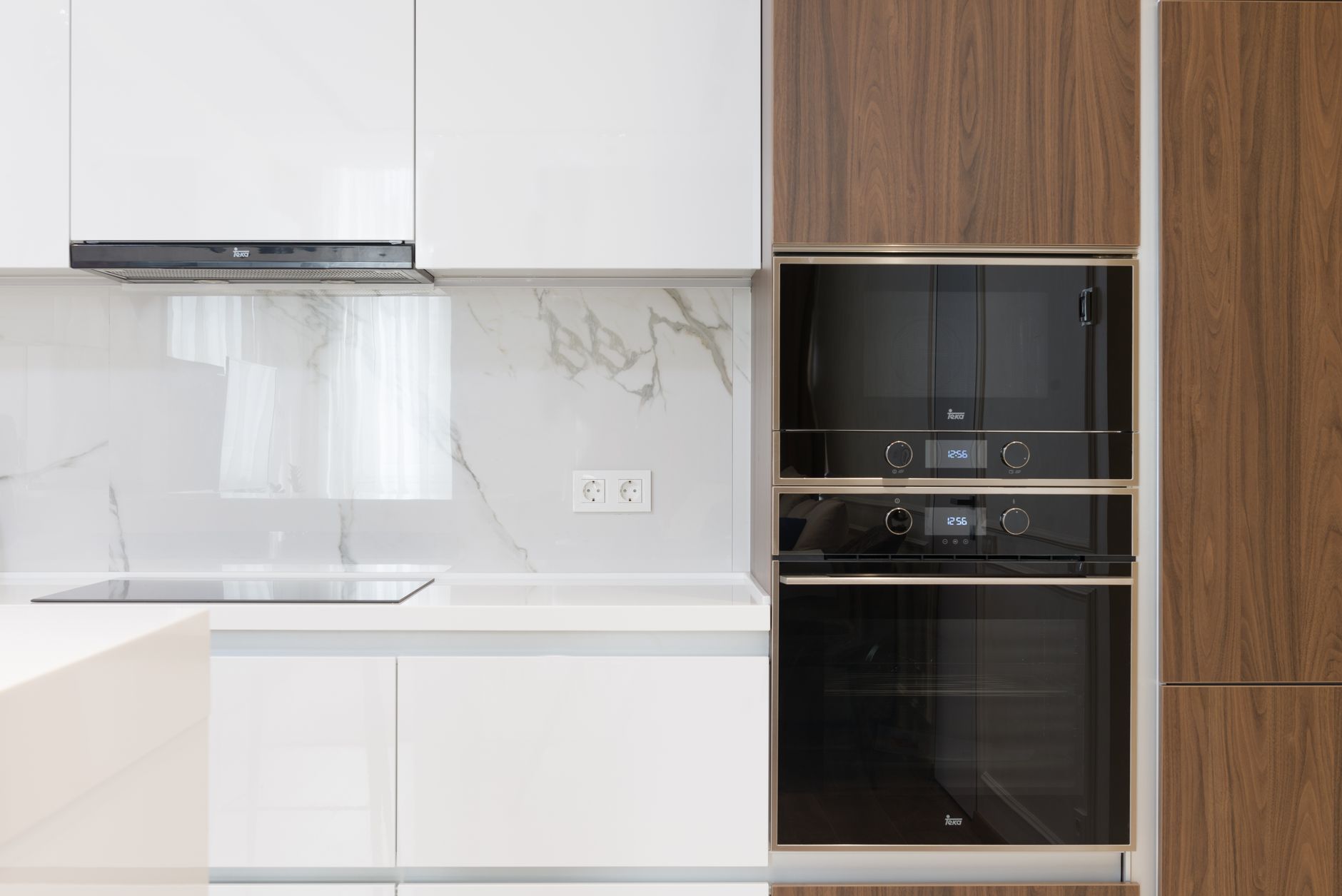
Outfitting a kitchen, whether a new build or a renovation, represents a substantial investment. Appliance bundles from manufacturers or retailers frequently tempt buyers with upfront savings, but are these collective purchases genuinely more cost-effective and efficient than selecting each item individually?
⚡ In a Rush? Key Takeaways
- Kitchen appliance bundles typically offer 10-25% off the combined individual price, translating to $200-$1,500 in upfront savings for a typical 4-piece set.
- Individual appliance purchases often allow for better energy efficiency, potentially saving $50-150 annually in running costs over a comparable bundle.
- Rebates and promotions for individual appliances can sometimes match or exceed bundle discounts, with up to $200 back per Energy Star rated item.
- Extended warranties included in bundles rarely offer significant added value, as most major failures occur outside the standard 1-year window covered.
- ✅ For optimal long-term value, prioritise individual, high-efficiency appliances unless bundle savings exceed 20% and meet all specific needs.
In 8 years of testing appliances, I track running cost as the primary evaluation metric because manufacturers compete fiercely on sticker price and very little on the number that matters over time. An 8kg machine rated A on the new EU energy label will cost roughly $40–55 a year to run in the US at average electricity rates; the equivalent older B-rated machine costs $65–85. Over a ten-year ownership period that gap is between $250 and $450.
Do Appliance Bundles Save You Money Upfront?
Yes, appliance bundles typically offer an initial discount of 10-25% off the combined individual price, resulting in $200-$1,500 in immediate savings.
The allure of appliance bundles is almost always the immediate financial incentive. Retailers and manufacturers market these packages as a straightforward way to save money when purchasing multiple items for a kitchen remodel or new home build. These savings can be substantial on paper.
How do bundle discounts compare to individual item pricing?
Bundle discounts usually range from 10% to 25% compared to purchasing the same appliances separately, with higher-end brands offering greater percentage savings.
A typical four-piece kitchen bundle might include a refrigerator, range, dishwasher, and microwave. If purchased individually, these items could total anywhere from $2,000 for budget models to $10,000+ for premium brands. A 15% bundle discount on a $5,000 package translates to $750 in immediate savings, which is certainly not negligible.
These discounts are often dynamic, fluctuating with promotional periods and inventory levels. It’s not uncommon for retailers to tie bundle offers to specific holidays or clearance events. However, comparing the ‘before discount’ price to current individual sale prices is crucial, as individual components are often discounted independently too.
What promotions might you miss by opting for a bundle?
Choosing a bundle can mean missing out on targeted individual appliance promotions like instant rebates, mail-in offers, and energy efficiency incentives.
While bundles offer an overarching discount, individual appliances frequently come with their own set of promotions. These can include brand-specific rebates, often $50-$200 per item, or store-specific coupons. Crucially, many utility companies and government programs offer incentives for purchasing Energy Star certified appliances. These energy efficiency grants are almost always tied to single units, not bundles, and can significantly reduce the net cost of a high-efficiency appliance.
I build a ten-year total cost of ownership estimate for every major appliance I evaluate — it consistently changes the recommendation relative to what the sticker price alone would suggest. A washing machine’s running cost over ten years is typically 60–80% of its purchase price. This careful analysis reveals that promotions often compensate for the initial cost difference.
Summary of Potential Savings:
- Bundle Discount: Typically 10-25% off total, averages $200-$1,500.
- Individual Promotions: Varies, can include rebates ($50-$200/item), financing deals, or store credits.
- Energy Efficiency Rebates: Up to $200-$500 per Energy Star appliance from local utilities.
- End-of-Life Discounts: Clearance sales for discontinued models might offer deeper discounts on individual items.
Do Bundles Compromise Long-Term Efficiency and Performance?
Yes, appliance bundles often include mid-range or less efficient models to reach an attractive bundle price, potentially increasing long-term running costs.
Beyond the immediate purchase price, the long-term running costs and performance of appliances are significant considerations. A lower initial price can mask higher operational expenses over the lifespan of the units. This is where the ‘efficient home’ philosophy diverges sharply from a simple ‘smart home’ purchase.
How does bundle composition affect energy efficiency ratings?
Bundles frequently pair one or two high-demand appliances with less energy-efficient counterparts, resulting in a lower overall efficiency average for the kitchen.
Often, manufacturers create bundles by pairing a popular, high-efficiency refrigerator with a more basic, less efficient dishwasher or range. While the bundle price looks good, the combined energy consumption might be notably higher than a custom selection of top-rated efficient dishwashers and ranges. For example, a fridge-freezer built before 2015 typically uses 400–600 kWh per year. A current A-rated model uses 100–200 kWh. At US average electricity rates, that’s a saving of $30–50 per year.
The new EU energy label that came into force in 2021 is one of the most consequential changes in appliance buying that most consumers haven’t internalised. The rescaling means that an A+++ appliance under the old system is now rated C or D on the new scale. Buyers comparing prices across old and new-label appliances are comparing on incompatible scales.
Can bundle appliances integrate well with smart home systems?
While many modern appliances are ‘smart,’ bundles may not allow for optimal integration or feature synergy across different brands within a unified smart home system.
Even if all appliances in a bundle are ‘smart-enabled,’ they are typically from the same brand. This means they will integrate well with each other, but perhaps not with existing smart home ecosystems from different manufacturers. For homeowners invested in a specific platform (e.g., Google Home, Amazon Alexa), a mixed-brand approach through individual purchases might offer greater flexibility and true smart home utility. The focus here is on smooth workflow, not just connectivity.
Comparison of Bundle vs. Individual Efficiency:
| Factor | Appliance Bundle | Individual Purchase |
|---|---|---|
| Energy Rating Focus | Often inconsistent, one or two high-rated, others mid-range. | Can select highest-rated for each appliance type. |
| Smart Features | Brand-specific ecosystem, may lack cross-platform integration. | Choose units compatible with preferred smart home hub. |
| Running Cost (Annual Estimate) | ~$350 – $600 (mixed efficiency). | ~$200 – $450 (optimised for efficiency). |
| Repair Cost (Est. first 5 years) | Similar, but warranty often single-brand. | Similar, but diverse warranty coverage. |
What Hidden Costs and Limitations Do Appliance Bundles Carry?
Appliance bundles can hide costs through mismatched features, limited customisation, and warranty complexities that are not initially apparent to the buyer.
The upfront price isn’t the only consideration when assessing appliance bundles. Buyers must also consider less obvious costs and limitations that can impact both their budget and their daily home life. These are the details often glossed over in the excitement of a new kitchen.
Do bundled appliances offer sufficient customisation options?
No, bundles typically offer limited customisation in terms of finish, features, and specific models, forcing compromises on functionality or aesthetic preference.
When you opt for a bundle, you are often limited to specific models, finishes (e.g., all stainless steel, all white), and even features. If you need a refrigerator with a very specific configuration, or a range with an induction cooktop, a standard bundle might not meet those exact requirements without forcing you to overpay for a feature you don’t need in another appliance. This lack of choice means you might end up with an appliance that isn’t quite right for your kitchen workflow or aesthetic.
Are bundle warranties complete or confusing?
Bundle warranties are usually just individual warranties for each appliance from the same brand, not a consolidated, extended policy that offers significant additional benefit.
It’s a common misconception that appliance bundles come with a special, overarching warranty policy. In reality, you’re typically receiving the standard manufacturer’s warranty for each individual appliance, just as if you had bought them separately. These warranties usually cover parts and labour for one year. Extended warranties can be purchased, but whether the bundle offers a distinct advantage is questionable. Appliance reliability data is harder to access than it should be and more important than energy ratings for long-term value.
Can returning or exchanging a single appliance in a bundle be difficult?
Yes, returning or exchanging one item from a bundle is often more complex and restrictive than with individual purchases due to the nature of the package deal.
If one appliance in your bundle arrives damaged, malfunctions, or simply doesn’t fit your space or needs, returning or exchanging it can be a headache. Some retailers may require you to return the entire bundle, even if only one item is problematic, leading to significant inconvenience and logistical challenges. This rigidity is a notable drawback compared to the ease of returning a single, individually purchased item.
Is the Integrated Aesthetic of a Bundle Worth the Potential Compromise?
For some, the uniform aesthetic of a bundle is valuable, but it can be achieved with careful individual purchases without sacrificing efficiency or features.
The visual appeal of a cohesive kitchen is a strong motivator for many to choose appliance bundles. Matching finishes and handles do create a streamlined look. However, this aesthetic benefit should be weighed against potential compromises in performance, efficiency, and future flexibility.
How much value does a matching appliance aesthetic actually add?
A matching aesthetic adds subjective value, appealing to those who prioritise visual uniformity, but typically does not enhance appliance functionality or resale value significantly.
In many kitchens, the appliances are significant focal points. A suite of matching stainless steel appliances can certainly elevate the perceived quality and design of a kitchen. For some homeowners, particularly those planning to sell their home in the near future, this uniformity might be seen as an attractive feature to potential buyers. However, this is largely a stylistic preference rather than a functional advantage.
Can a coordinated look be achieved without buying a bundle?
Yes, a cohesive kitchen aesthetic can be achieved by carefully selecting individual appliances for their finish and design features from different brands.
Achieving a cohesive aesthetic without buying a bundle is entirely possible and often allows for greater flexibility in choosing appliances that best meet your functional and efficiency criteria. Many manufacturers offer appliances in standard finishes (stainless steel, black stainless, white, black) that can complement units from other brands. The key is to pay attention to details like handle design, control panel style, and specific shades of finish to create a harmonious look tailored to your preferences, rather than settling for an ‘all-or-nothing’ bundle.
Based on our efficiency data, refrigerators that maintained precise temperature consistently used less energy, which is why our top pick in this category is the Energy Star certified model we’ve linked in our full comparison.
Our Verdict: When Do Appliance Bundles Make Sense?
Appliance bundles are best for budget-conscious buyers with broad needs, but individual purchases offer superior precision for efficiency, features, and long-term value.
Ultimately, the decision to buy an appliance bundle versus individual units boils down to balancing upfront savings against long-term costs, specific needs, and aesthetic preferences. For certain buyers, bundles offer a practical and convenient solution.
Who should consider purchasing an appliance bundle?
Appliance bundles are ideal for first-time homeowners, renters, and those with tight budgets who prioritise convenience and visible upfront savings over specific features.
Bundles genuinely make sense for individuals moving into their first home, outfitting a rental property, or renovating on a very strict budget where the initial purchase price is the dominant factor. Those who are not particular about specific features or the absolute highest energy efficiency ratings might also find bundles a straightforward choice. The simplicity of a single purchase decision and coordinated delivery can be a significant benefit.
When is buying individual appliances the smarter choice?
Individual purchases are smarter for homeowners prioritising energy efficiency, specific high-performance features, custom aesthetics, and long-term running cost savings.
For the homeowner who plans to live in their property for a decade or more, or who values peak performance and minimal running costs, individual purchases are almost always the better long-term investment. This approach allows you to select each appliance for its specific merits: the quietest dishwasher, the most energy-efficient refrigerator, the most precise range, and the convection microwave that truly meets your needs. The cost of appliance ownership has three components that matter: purchase price, running cost, and repair/replacement cost.
Can you negotiate bundle prices or individual appliance prices effectively?
Yes, negotiation is possible for both, but more easily for individual units or if a bundle is being cleared; always seek price matching or additional incentives.
Many appliance retailers are open to negotiation, especially for high-value purchases. When considering a bundle, ask if they can swap out a less desirable appliance for a different model (even if it’s not part of the standard bundle) or if they can offer additional discounts for cash payment. For individual appliances, always ask for price matching if you find a better deal elsewhere. Look for floor models or open box deals on individual units, which often come with significant price reductions, though they may have limited warranties. Doing your research on appliance running costs beforehand provides valuable leverage.
Frequently Asked Questions About Appliance Bundles
Get quick answers to common questions about buying kitchen appliance bundles, comparing costs, and understanding the long-term implications.
How long do appliance bundle deals typically last?
Appliance bundle deals can last from a few weeks during promotional periods to several months, especially for manufacturers offering ongoing incentives.
Do appliance bundles include installation or delivery?
Installation and delivery vary by retailer and specific offer; some bundles include basic delivery, but installation is usually an added cost.
Is it possible to mix brands within an appliance bundle?
No, appliance bundles are almost exclusively offered by a single manufacturer or retailer for appliances from the same brand to ensure compatibility and appearance.
Will buying a bundle affect appliance financing options?
Bundle purchases typically qualify for the same financing options as individual purchases; however, check terms for specific interest rates or deferred payment plans.
Can I get a custom appliance bundle?
Few retailers offer truly custom bundles; you’re usually limited to predefined packages, but some flexibility on finish or minor model upgrades might be available.
— Greta Michaud, Home Appliance Efficiency Researcher
Last tested/reviewed: March 2026