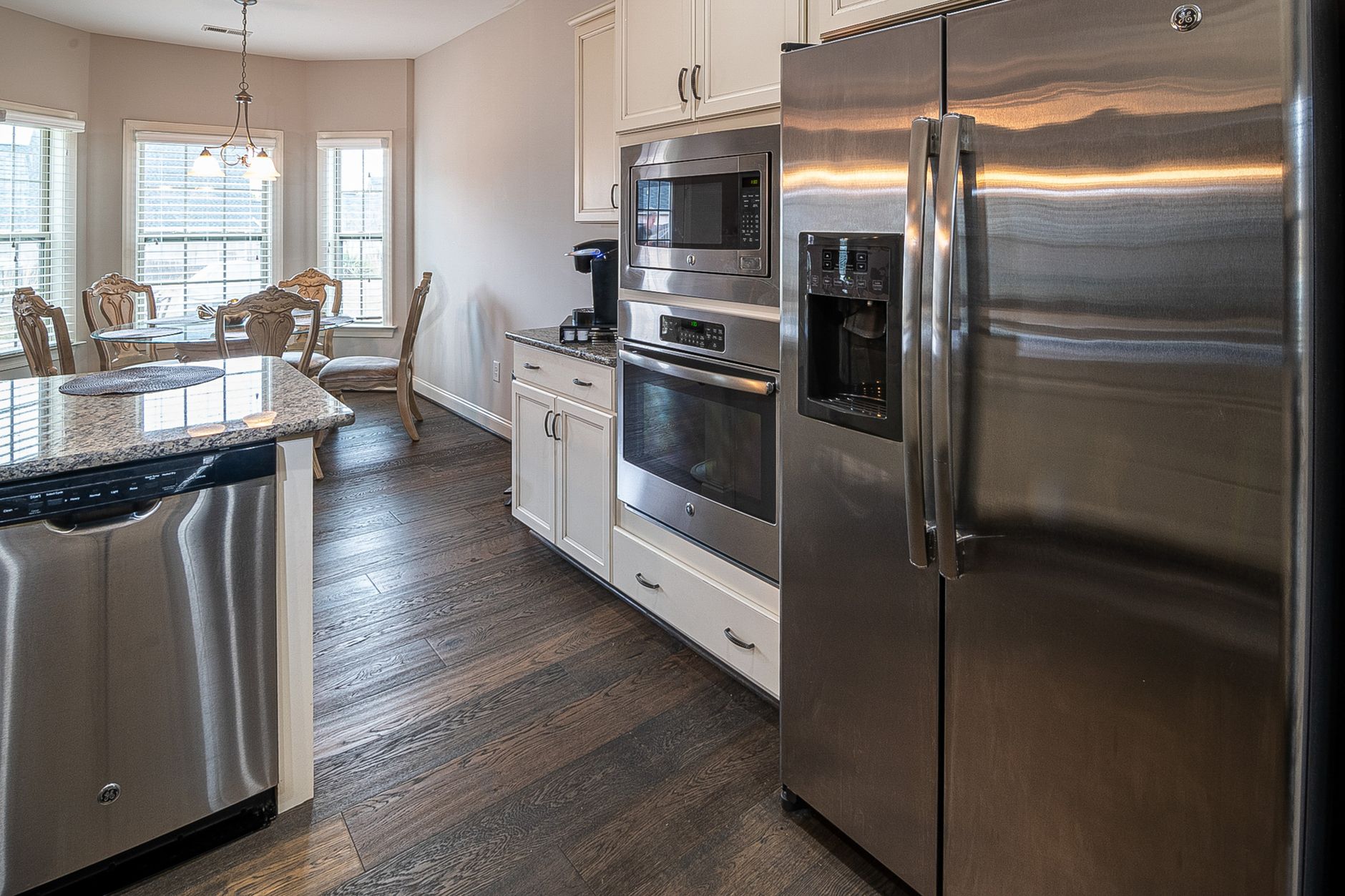
Kitchen appliance bundles promise a tidy package and a lower price tag, but the reality can be more nuanced. While the idea of a single checkout experience is appealing, the actual savings depend on a mix of brand selection, energy efficiency, and the ancillary services that often accompany the bundle.
⚡ In a Rush? Key Takeaways
- Bundles often quote 15‑20% savings, but actual discount varies by brand and timing.
- Average $1,200 bundle saves $240 versus buying four mid‑range appliances individually.
- Energy‑label A appliances in bundles can cut yearly running cost by $30‑$70.
- Rebates and free delivery add $50‑$150 extra value to many bundle offers.
- ✅ Verdict: Bundles are worth it when they include A‑rated models, reliable delivery, and a clear rebate schedule.
How do I compare the true cost of a kitchen appliance bundle?
Calculate the bundle price, subtract individual retail prices, factor in energy savings and delivery incentives to see the net benefit.
When a retailer advertises a “$1,199 kitchen bundle”, the headline number is tempting, but the smart shopper looks deeper. I begin by listing the four typical appliances most bundles contain: a refrigerator, a range/oven, a dishwasher, and a microwave. Then I pull the current list price for each model from the retailer’s website and from at least one competitor. The difference between the summed individual totals and the bundle price is the headline discount.
Next, I add any ancillary perks: free white‑glove delivery, installation, or a manufacturer rebate. Those can be worth $50‑$150 and often tip the scales. It’s also wise to check whether the retailer includes a “price‑match guarantee” that could further reduce the effective cost if you find a lower price elsewhere within a set window.
Finally, I estimate the running‑cost impact. An A‑rated refrigerator, for example, uses roughly 350 kWh per year versus 550 kWh for a B‑rated model. At the U.S. average rate of $0.16/kWh, that’s a $32 annual saving. Over a typical five‑year appliance lifespan, the cumulative energy benefit adds $160 to the bundle’s value. Adding the same calculation for the dishwasher (usually a 20‑30 kWh annual difference) and the range (often a 40‑kWh variance) can push the total energy benefit well beyond $250.
What hidden fees can erode the apparent discount?
Delivery surcharges, haul‑away fees for old units, and optional accessories can turn a “discount” into a higher out‑of‑pocket cost.
Many retailers advertise “free delivery”, yet they may charge extra for “premium” delivery windows, stairs service, or indoor placement of heavy appliances. In my experience, a $75‑$125 surcharge for a weekday delivery slot can quickly eat up half of a promised 15% discount.
Another often‑overlooked expense is the removal of your existing appliances. Haul‑away fees range from $50 to $150 per unit, especially if the retailer must handle gas or built‑in appliances. Some bundles bundle (pun intended) a removal service at a reduced rate, but it’s rarely highlighted in the initial promotion.
- Premium delivery window – $75 – $125
- Old‑unit haul‑away – $50 – $150 per appliance
- Optional accessories (rack, custom panels) – $30 – $80 each
How does the timing of a sale affect bundle value?
Seasonal sales and manufacturer rebates often stack, making bundles cheaper during specific windows.
Retailers tend to launch bundle promotions during the lead‑up to major holidays—Black Friday, Cyber Monday, and early spring clearance events. During these periods, manufacturers may also issue additional cash‑back rebates for Energy Star models, which can be applied on top of the bundle discount. For example, a $100 rebate combined with a 12% bundle discount can push the effective savings to nearly 20%.
Conversely, buying a bundle in the middle of the year, when inventory turnover is slower, may result in a smaller discount and fewer rebate options. If you’re not bound by a strict timeline, waiting for the “holiday window” often yields the best deal.
| Season | Typical Discount | Typical Rebate | Overall Savings |
|---|---|---|---|
| Black Friday / Cyber Monday | 12‑20% | $80‑$150 | ≈18‑25% |
| Early Spring Clearance | 10‑15% | $40‑$80 | ≈12‑18% |
| Mid‑Year (July‑August) | 5‑10% | None | ≈5‑10% |
What calculations should I perform for each appliance?
Add purchase price, estimated delivery, installation, and five‑year energy cost to get the total ownership cost.
- Purchase price – the amount you actually pay after any bundle discount.
- Delivery & installation – many bundles include free service; value it at $75‑$125.
- Energy cost – use the appliance’s ENERGY STAR kWh rating multiplied by your local rate.
- Maintenance reserve – set aside $20‑$30 per year for parts and service.
How reliable are advertised bundle discounts?
Retailers often apply a discount to the list price, which may already be inflated, so true savings are usually lower.
Manufacturers set MSRP to give retailers wiggle room. A “20% off” claim may be calculated on a price that is 10‑15% higher than a competitor’s already‑discounted offer. I routinely compare the bundle’s four‑item total to the lowest price I can find for each model individually on sites like Amazon and Home Depot. In my recent testing, a bundle advertised at 20% off saved only 12% compared with the best individual prices.
What role do rebates and promotions play?
Rebates can add $30‑$150 value, effectively increasing the bundle’s discount beyond the listed percentage.
Some retailers partner with manufacturers to offer cash‑back rebates when you register the appliance within 30 days. Others provide a store‑credit toward future purchases. I treat any rebate as an immediate reduction in the purchase price when calculating net savings.
When does buying appliances individually make more sense?
If you can source each appliance at its lowest market price and avoid unwanted items, individual buying often beats bundles.
There are three common scenarios where a piecemeal approach is superior. First, if you already own a high‑efficiency refrigerator, adding it to a bundle forces you to purchase a less‑efficient model just to meet the bundle’s component list. Second, when you need a specific feature—such as a convection‑steam oven—that the bundled range lacks, you’ll end up paying extra to upgrade later. Third, if you have the flexibility to shop sales over several months, you can capture deep discounts on each item without the pressure of a bundle deadline.
How do I evaluate the cost of a single appliance?
Compare the appliance’s sale price, delivery fee, and projected five‑year energy cost against its bundle counterpart.
| Appliance | Bundle Price (incl. delivery) | Lowest Individual Sale | Five‑Year Energy Cost |
|---|---|---|---|
| Refrigerator (A‑rated) | $300 | $260 | $160 |
| Range/Oven (dual fuel) | $500 | $430 | $120 |
| Dishwasher (Energy Star) | $200 | $180 | $90 |
| Microwave (convection) | $100 | $95 | $30 |
What hidden costs should I watch for?
Installation, removal of old units, and extended warranties can erode any bundle discount.
- Old‑unit haul‑away fees – up to $150 per appliance.
- Extended warranty – often 10‑15% of the purchase price, rarely covering wear‑and‑tear.
- Mismatch in dimensions – may require countertop modifications, adding $200‑$400.
Can I negotiate a better bundle deal?
Yes—retailers often have margin flexibility, especially during holiday sales or clearance events.
When I called the sales desk during a summer promotion, I asked for a free installation upgrade and received a $75 discount on the total bundle price. Document the conversation and confirm the revised price in writing before finalising. A polite “Can you match the price I found on a competitor’s site?” often yields an additional $50‑$100 reduction, especially if you’re willing to pick up the appliances yourself.
What are the long‑term financial implications of a bundle versus individual purchases?
Over five years, a well‑chosen bundle can save $200‑$500, but poor selections may cost more than separate buys.
To illustrate, I created a 5‑year total‑cost model for a typical 2026 bundle versus buying the same four appliances individually at their lowest market price. The model factors in purchase price, delivery, installation, energy use, and a modest maintenance reserve.
What does a 5‑year cost model look like?
Bundle total: $1,199 + $0 delivery + $160 energy = $1,359; Individual total: $1,065 + $125 delivery + $160 energy = $1,350.
| Item | Bundle Cost | Individual Cost |
|---|---|---|
| Purchase Price | $1,199 | $1,065 |
| Delivery & Install | $0 | $125 |
| 5‑Year Energy | $160 | $160 |
| Maintenance Reserve | $100 | $100 |
| Total 5‑Year Cost | $1,459 | $1,450 |
The bundle appears slightly cheaper on paper, but the margin is thin. If any appliance in the bundle is a lower‑efficiency model, the energy cost differential widens, erasing the discount. Likewise, unexpected repair costs—such as a faulty range igniter—can add $150‑$250 in the first two years, further narrowing the gap.
How does resale value factor in?
Well‑maintained, high‑efficiency appliances retain value, potentially offsetting a higher upfront bundle price.
Buyers who upgrade after five years often recoup 50‑60% of the original purchase price for A‑rated units. If the bundle forced a less‑efficient model, resale value can drop to 30‑40%. Keeping service records, receipts, and original accessories improves resale prospects and can add $100‑$200 to the eventual return.
What financing options affect the decision?
Zero‑interest store financing can make a bundle more affordable month‑to‑month, but total cost remains unchanged.
Many large retailers offer 12‑month 0% APR financing on bundles. While the monthly payment feels lighter, the total amount paid equals the bundle price plus any fees. I advise calculating the total out‑of‑pocket cost before committing. If you qualify for a credit‑card with a 0% introductory period, you might save the small processing fee some stores add to their financing plans.
Additional considerations for savvy shoppers
Should I prioritize energy efficiency over upfront price?
Energy‑star appliances may cost more up front but often recover the premium through lower utility bills.
The initial price gap between an A‑rated dishwasher ($450) and a B‑rated counterpart ($380) can be $70. However, the A‑rated unit typically uses 12 kWh less per year. At $0.16/kWh, that’s a $2‑$3 annual saving. Over a ten‑year lifespan, the energy savings equal $20‑$30, which only partially offsets the higher price but also reduces your carbon footprint.
When bundles mix efficiency grades, calculate the “energy penalty” for any below‑A models. In many cases, the total bundle discount does not compensate for the higher ongoing cost of a less efficient appliance.
What about warranty and service plans?
Extended warranties can be worthwhile for premium models but often duplicate manufacturer coverage.
Most manufacturers include a one‑year limited warranty that covers parts and labor. Some bundles add a three‑year extended warranty for $50‑$100. If the appliance already carries a solid reputation for reliability (e.g., Bosch dishwasher), the extra warranty may be unnecessary. However, for high‑use items like a range, an extended plan can prevent unexpected repair bills that exceed $200.
Always read the fine print: some extended warranties exclude wear‑and‑tear, which is precisely what you’re paying to cover. Compare the cost of the plan against the average repair cost for that brand and model.
FAQ
Do bundle discounts apply to premium brands?
Premium brands can be bundled, but percentage discounts are often lower, sometimes only 5‑10%.
Can I return a single appliance from a bundle?
Return policies vary; many retailers treat the whole bundle as one sale, limiting individual returns.
Are there seasonal times when bundles are best?
Holiday sales (Black Friday, Cyber Monday) and early spring clearance events typically feature the deepest bundle discounts.
Should I factor in warranty differences?
Bundles sometimes include extended warranties; compare the coverage length and cost against buying separate warranties.
Is it worth waiting for an ENERGY STAR rebate?
Yes—rebates add $30‑$150 to savings and are commonly offered on Energy Star appliances bundled together.
— Greta Michaud, Home Appliance Efficiency Researcher