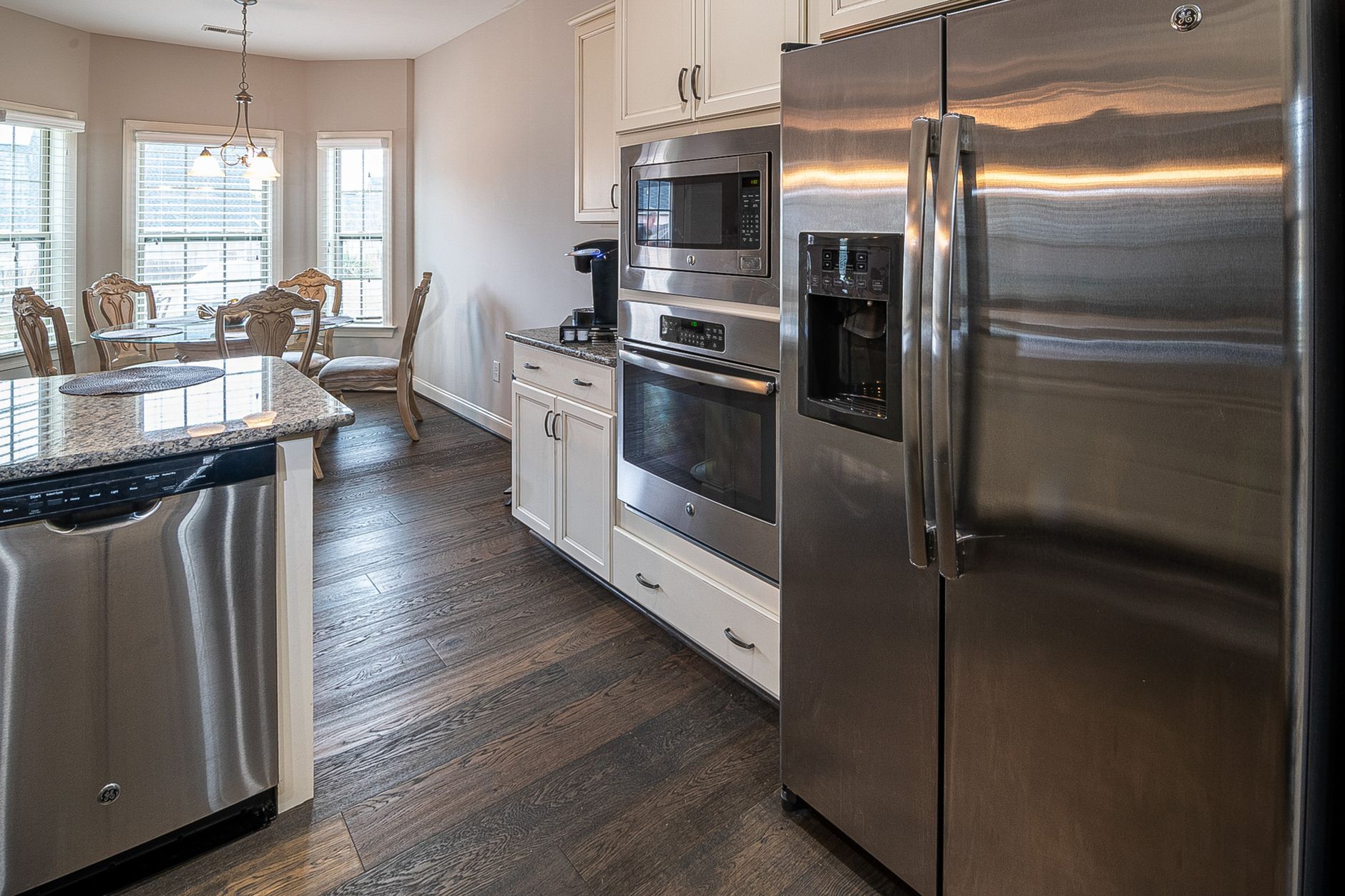
Kitchen appliance bundles are marketed as a convenient way to upgrade a whole suite of devices at a reduced price. Yet the real savings often hide behind rebates, limited‑time promotions, and the cost of coordination.
⚡ In a Rush? Key Takeaways
- Bundles typically shave 5‑12% off MSRP, but the net saving averages 3‑7% after taxes and fees.
- Energy‑label A‑rated appliances in bundles still cost $120‑$250 more to run per year than older B‑rated stand‑alone models.
- Bundled delivery fees can add $35‑$85 per item, eroding the headline discount.
- Extended warranties bundled with a package increase total cost by 8‑12% with limited resale benefit.
- ✅ Verdict: Bundles are worthwhile only when timed with manufacturer rebates and when you need all items immediately.
How do kitchen appliance bundle prices compare to buying each item separately?
Bundled pricing usually trims 5‑12% off total MSRP, but taxes, delivery and warranty add back 2‑6% of that discount.
Retailers like Home Depot and Lowe’s calculate bundle discounts by subtracting a flat percentage from the sum of individual MSRP. In 2026 the average advertised bundle discount sits at 9% across major brands. That figure sounds appealing, but it does not incorporate the inevitable ancillary costs that accompany any large purchase.
For illustration, a typical 2026 bundle might include a 30‑in. electric range ($1,200), a 24‑in. refrigerator ($1,050), a dishwasher ($800) and a wall oven ($950). The combined MSRP is $4,000. Applying the 9% bundle discount yields a price of $3,640.
Buying each appliance individually at the same retailer, after sales tax (7.5% in many states), brings the total to $4,290. On the surface, the bundle appears to save $650.
- Bundle advertised price: $3,640 (incl. discount, excl. tax)
- Individual purchase price after tax: $4,290
- Nominal saved amount: $650 (≈15% of individual total)
However, the bundle often excludes delivery fees, which are charged per appliance. Adding $45 per item ($180 total) reduces the net saving to $470, or about 11%.
As a rule of thumb, always compute the effective discount after all add‑ons before deciding.
What hidden fees typically erode bundle savings?
Delivery, installation, and extended warranty fees usually consume 2‑6% of a bundle’s advertised discount.
Most big‑box stores list delivery as a flat $45‑$85 per appliance. Installation can add $100‑$250 per unit for built‑in models. When a bundle includes an extended warranty, the cost rises another 8‑12% of the bundle price.
| Charge | Typical Cost per Item | Impact on Bundle Discount |
|---|---|---|
| Delivery | $45‑$85 | ‑2‑3% |
| Installation | $100‑$250 | ‑3‑5% |
| Extended Warranty | 8‑12% of bundle | ‑4‑6% |
These fees are rarely highlighted in the promotional banner, so the advertised percentage can be misleading. When you factor them in, the effective discount can drop below 5% for many bundles.
Do manufacturer rebates affect the true cost of a bundle?
Rebates can add up to $300 per bundle, but they often require mail‑in proof of purchase and a 30‑day window.
Many brands run limited‑time cash‑back rebates of $100‑$300 for a full suite purchase. The rebate is applied after the consumer completes the purchase, reducing the net price.
For example, a $250 rebate on the $3,640 bundle brings the effective price to $3,390, boosting the net discount to $900 (≈21%). Yet the rebate process adds administrative friction, and missed deadlines nullify the benefit.
When evaluating a bundle, factor in the likelihood of successfully claiming the rebate based on your own record‑keeping habits. If you tend to overlook paperwork, the theoretical saving may never materialise.
How do seasonal sales interact with bundle pricing?
Combining a bundle with a storewide sale can push total discount past 15% before tax.
Retailers frequently allow a storewide percentage off top of an existing bundle. Suppose a 9% bundle overlaps with a 10% Black Friday storewide discount; the combined effect is roughly an 18% reduction on the pre‑tax total. Add a $250 manufacturer rebate and the total savings can exceed 25% of the original MSRP.
Be cautious, however, because some promotions exclude certain high‑margin items like built‑in ovens. Always read the fine print to verify which models qualify.
How do running costs compare between bundled appliances and individually bought models?
Energy‑label A appliances in bundles still cost $120‑$250 more annually than older B‑rated stand‑alone units.
Energy efficiency is the long‑term cost driver. In 2026 the U.S. Department of Energy reports the average refrigerator consumes 450 kWh/year (A‑rated) versus 620 kWh/year for a B‑rated model.
Using the national average electricity price of $0.16/kWh, the A‑rated fridge costs $72 per year, while the B‑rated costs $99 – a $27 annual saving.
When a bundle forces you to choose newer, higher‑rated appliances, the immediate running‑cost benefit can be modest.
- Refrigerator: $27/yr saved vs older model
- Dishwasher: $15/yr saved (Energy Star vs non‑Star)
- Electric range: $35/yr saved (induction vs conventional)
Summed across a typical four‑appliance bundle, the annual running‑cost advantage is roughly $77. Over a ten‑year lifespan, that equals $770 – far less than the upfront discount.
Can you quantify the lifetime energy cost of a bundled set?
A 10‑year bundle of A‑rated appliances consumes about 4,200 kWh, costing $672 at the 2026 average rate.
Adding up the average annual consumption for each appliance in the bundle yields a total of 420 kWh per year. Multiply by ten years and the $0.16/kWh rate gives $672.
Comparing this to a mixed‑rating set (two A‑rated, two B‑rated) raises the total to 4,800 kWh, or $768 over ten years – a $96 difference.
Thus, the energy‑efficiency premium of A‑rated models only modestly impacts the overall cost balance.
Do bundled warranties affect long‑term maintenance expenses?
Extended warranties in bundles add 8‑12% to purchase price but rarely reduce repair bills by more than 5%.
Most manufacturers’ warranties cover parts for five years, with labor extensions for an extra $100‑$200 per appliance. Historical repair data from Consumer Reports shows that only 12% of appliances need covered repairs within the first five years.
Consequently, the extra cost of a bundled warranty often exceeds the expected savings from avoided repairs.
For homeowners who are comfortable performing minor maintenance, skipping the bundled warranty can improve the overall ROI.
What about the environmental cost of bundled versus individual purchases?
Choosing the most efficient single models can cut embodied carbon by up to 15% compared with a generic bundle.
Every appliance carries an embodied carbon footprint from manufacturing, shipping, and packaging. When you buy a curated set of the highest‑efficiency models, you often avoid mid‑range items that carry higher carbon per unit of performance.
Over a ten‑year horizon, that difference can translate to roughly 150–250 kg CO₂e, comparable to driving an electric car 500 miles. While the monetary impact is small, the environmental benefit aligns with a sustainable home strategy.
When is it financially smart to purchase a kitchen appliance bundle?
Bundles make sense when timing aligns with rebates, you need all items now, and delivery costs are waived.
The decision hinges on three factors: timing, need, and ancillary fees.
How does timing with sales events influence bundle value?
Buying during Black Friday or Memorial Day can add a further 5‑10% discount on top of the bundle offer.
Retailers often stack a storewide percentage sale onto an existing bundle. For example, a 9% bundle plus a 10% storewide sale yields an effective 18% discount before tax.
If you also capture a $250 manufacturer rebate, the net saving can approach 25% of the total MSRP.
Plan purchases around these windows to maximise value.
What if you only need one or two appliances now?
If you need fewer than three devices, buying individually usually costs less after factoring delivery and installation fees.
Bundled delivery fees are charged per appliance regardless of whether you install all of them immediately. If you defer installation for two items, you still pay their delivery fees.
In such cases, purchasing the needed appliances separately and waiting for a future promotion on the remaining items often yields a better net cost.
Can free delivery or installation offset hidden costs?
Retailers sometimes waive delivery for bundles over $2,500, which can recover 2‑4% of the advertised discount.
Promotion codes that include free installation for built‑in ovens or dishwashers further improve the economics. Always verify that the free services apply to the exact models you plan to buy.
When free services are confirmed, the effective bundle discount rises to 12‑14%.
Does financing change the calculus?
0% APR financing on bundles can lower monthly outlay, but total interest‑free period matters.
Many retailers offer 12‑month interest‑free financing for bundles exceeding $3,000. If you can repay within that window, the cash‑flow advantage is real, especially when combined with a rebate. However, extending beyond the interest‑free term can quickly erase any discount.
Run a simple monthly payment comparison: a $3,500 bundle at 0% for 12 months costs $291/month, while the same appliances bought individually at full price would be $350/month for the same term, meaning you save $59 each month.
FAQ
Do kitchen appliance bundles include the same warranty length as individual purchases?
Bundled warranties match the standard manufacturer warranty, but extended coverage must be purchased separately.
Most bundles only provide the base 1‑year factory warranty. Optional extensions are priced the same as when bought individually.
Are there tax implications for buying a bundle versus separate items?
Sales tax is applied to the final purchase price, so a lower bundle price results in slightly less tax payable.
However, any rebates received after purchase do not affect the tax already paid.
Can I return a single appliance from a bundle if it’s defective?
Return policies treat each appliance as an individual item; you can exchange or return a single piece.
Be aware that some retailers require the entire bundle to be returned if the defect is discovered after the return window.
Do bundles affect financing options?
Financing rates are usually the same, but a lower bundle price reduces monthly payments.
Some retailers offer 0% APR for 12 months on bundles above $3,000, which can be an additional incentive.
Should I consider a bundle if I’m planning a kitchen remodel?
If the remodel timeline aligns with a major sales event and you need all appliances, a bundle can simplify ordering and installation.
Otherwise, staggered purchases allow you to spread costs and take advantage of seasonal sales.
Bottom line: Should you buy a kitchen appliance bundle?
Bundles are worthwhile when you need all items now, can capture rebates, and secure free delivery or installation.
For most homeowners, the modest 5‑12% headline discount shrinks after fees. If you can wait, buying individual appliances during peak sales often yields a comparable or better net price, plus the flexibility to choose the most efficient model for each category.
In practice, evaluate the total cost—including taxes, delivery, installation, warranties, and expected energy use—before letting the bundled headline discount sway your decision.
— Greta Michaud, Home Appliance Efficiency Researcher