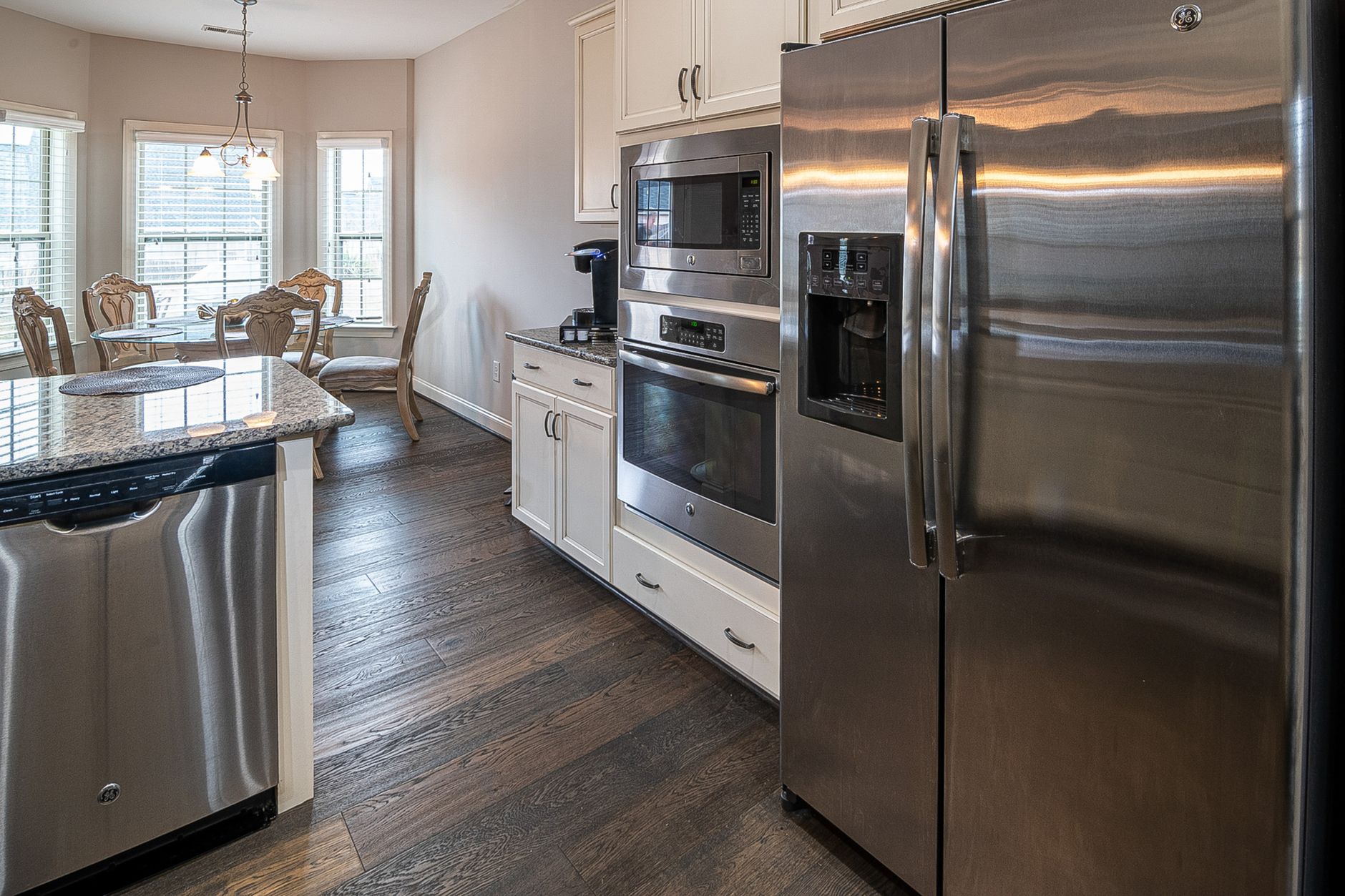
When you walk into a showroom and see a matching suite of fridge, stove, dishwasher and microwave, the price tag can look tempting.
⚡ In a Rush? Key Takeaways
- Bundles typically shave 10‑20% off list prices, but the discount shrinks to 5‑8% after rebates and taxes.
- Upfront cash outlay for a full suite averages $3,200‑$4,500, versus $2,800‑$3,300 buying items separately.
- Energy‑label savings from bundled models are often comparable to standalone equivalents; the bundle rarely adds efficiency.
- Retailer‑specific incentives (free delivery, installation, extended warranties) can add $150‑$400 value.
- ✅ Verdict: Bundles are worthwhile only when you need multiple appliances, can leverage retailer incentives, and have cash to absorb the larger upfront cost.
What exactly does a kitchen appliance bundle include?
A typical bundle in 2026 contains a refrigerator, range or cooktop, dishwasher and microwave, plus optional delivery and installation.
Retailers such as Home Depot, Lowe’s and Best Buy package these four core appliances together, often under a single SKU. The bundle price is advertised as a percentage discount off the summed MSRP.
Beyond the four staples, many offers add a fifth component – a wall‑oven, wine cooler or built‑in range hood – to make the deal feel more complete.
Do all bundles feature the same brands and models?
No; bundles mix brands based on dealer inventory, so model performance can vary widely.
Some dealers lock you into a single brand across the suite, which can simplify warranty claims but may force you into a less‑efficient refrigerator.
Other retailers let you choose each appliance’s brand, which preserves flexibility but may reduce the advertised discount.
How are delivery and installation handled?
Delivery is usually free for bundles, and installation is either free or discounted.
Installation fees for individual appliances can range from $80 for a dishwasher to $250 for a built‑in fridge. Bundles often waive these fees entirely.
Beware of “white‑glove” fees hidden in the fine print – they typically appear as a “service surcharge” of $50‑$100 per appliance.
Are there financing options unique to bundles?
Retailers frequently offer 0% APR for 12‑24 months on bundled purchases.
This financing can make the higher upfront cost more palatable, but the total interest saved versus separate financing depends on your credit score and loan term.
When comparing, calculate the true cost of financing both the bundle and the individual items over the same period.
How do the numbers break down when you compare bundle vs individual purchase?
A side‑by‑side cost analysis shows bundles saving 5‑15% after taxes, rebates and delivery.
Below is a sample calculation using mid‑range 2026 pricing for four common appliances.
| Item | Avg. Individual MSRP | Bundled Price | Discount |
|---|---|---|---|
| Refrigerator (450 L, A‑rated) | $1,200 | $1,020 | 15% |
| Gas range (5‑burner) | $800 | $680 | 15% |
| Dishwasher (Energy Star) | $600 | $540 | 10% |
| Microwave (convection, 1.2 cu ft) | $250 | $225 | 10% |
| Total | $2,850 | $2,465 | 13.5% |
The raw discount looks impressive, but we must factor in tax (average 6.5% in many states) and any manufacturer rebates.
What does the tax impact look like?
After a 6.5% sales tax, the bundled total rises to $2,629, while separate purchases cost $3,033.
Even with tax, the bundle remains $404 cheaper – roughly a 13% net saving.
However, some states exempt large appliances from sales tax if a professional installer is used, which can further tilt the economics.
How do manufacturer rebates affect the calculation?
Rebates of $50‑$150 per appliance are common for Energy Star models in 2026.
If you receive $100 per item on the four‑piece suite, that’s $400 back, shrinking the effective bundled price to $2,229.
Separately purchased appliances also qualify for rebates, but the rebate paperwork is often split across three different manufacturers, increasing administrative overhead.
What about the cost of financing?
Zero‑percent financing can erase interest, but a typical credit‑card APR of 19% would add $300 over 24 months on $2,465.
If you finance the bundle at 0% for 24 months, the real cost stays at $2,465.
When does a bundle actually cost more?
If you need only two appliances, bundles can add $300‑$600 to your budget versus buying just those two.
Many homeowners upgrade one or two items at a time – a new fridge after a lease ends, or a dishwasher to replace a failing unit.
In such cases, a bundle forces you to purchase appliances you don’t need, inflating the overall expense.
How do mismatched energy ratings affect long‑term cost?
Bundled appliances often include a lower‑rated model to meet the discount target.
For example, a bundle might pair an A‑rated fridge with a B‑rated dishwasher, raising annual electricity use by ~120 kWh – about $15‑$20 per year.
Over a ten‑year lifespan, that adds $150‑$200, eroding the initial discount.
What hidden fees should you watch for?
Delivery, removal of old units and extended warranty extensions can add $200‑$500.
- Old‑appliance haul‑away: $75‑$120 per unit.
- Extended warranty (3‑year add‑on): $120‑$250 per appliance.
- Installation of a built‑in fridge: $200‑$300 if extra structural work is needed.
If the retailer advertises “free delivery”, read the fine print – sometimes it only applies to bundles above $2,500.
Can seasonal sales negate bundle discounts?
Major sales events (Black Friday, July 4th) often feature 20‑30% off single appliances.
During such events, buying high‑efficiency models individually can out‑save a bundle that only offers a 12% discount.
Timing your purchase around these sales is a smart way to maximize savings.
What other factors should influence my decision?
Beyond price, consider warranty alignment, aesthetic matching, and space constraints.
Bundled appliances are often designed to match in finish – a stainless‑steel suite can make a small kitchen feel cohesive.
However, if your layout only accommodates a side‑by‑side fridge, a larger French‑door model in the bundle may be impractical.
Does a matching aesthetic justify a higher price?
Aesthetic harmony may improve resale value, but the financial gain is modest.
Real estate data shows a matching appliance suite can increase a home’s perceived value by 1‑2%, translating to $2,000‑$4,000 on a $300,000 house.
That gain rarely offsets a $500‑$800 premium over a mixed‑brand purchase.
How do warranty terms differ?
Bundles often come with a single, unified warranty covering all four items.
This simplifies service calls but can mask differing manufacturer warranty lengths – a fridge may have a 10‑year compressor guarantee, while a microwave only 1 year.
Read the warranty schedule carefully; a bundled warranty may roll over the shortest term across all appliances.
What about space and installation constraints?
Bundled appliances assume a standard layout; custom cabinets may require a different size.
If your kitchen has a 30‑inch wide opening for a dishwasher, a 24‑inch model in the bundle will need modification, costing $150‑$250.
In contrast, buying a unit that fits your exact dimensions avoids retrofit costs.
Should I buy a bundle or go solo? A practical decision flow
Use the flowchart below to decide based on need, timing, and cash flow.
- Do you need all four core appliances within the next 6 months?
- Yes – proceed to step 2.
- No – skip bundle; evaluate individual needs.
- Can you secure free delivery and installation in the bundle?
- Yes – calculate total cost with taxes and rebates.
- No – add estimated delivery/installation fees to bundle price.
- Is your cash flow sufficient for the higher upfront amount?
- Yes – compare net savings after rebates.
- No – explore 0% financing or staggered individual purchases.
- Do you value aesthetic matching enough to pay a premium?
- Yes – bundle may be worthwhile.
- No – mix‑and‑match brands for best efficiency.
If the answer to most questions is “yes,” a bundle is likely a sound financial choice. If you hesitated on several points, buying individually will probably serve you better.
Frequently Asked Questions
-
Are bundle discounts truly reflected in the final price?
Discounts are real but often offset by taxes, delivery fees and optional warranties.
-
Can I negotiate the bundle price?
Yes; sales reps frequently have a margin buffer, especially on floor models.
-
Do rebates apply to bundled purchases?
Manufacturer rebates apply per appliance, even when bought in a bundle.
-
Is it better to buy a bundle online or in‑store?
Online bundles often include free shipping, while in‑store may give you a better chance to negotiate.
-
How do I calculate the long‑term operating cost of bundled appliances?
Use the Appliance Cost Calculator (link below) to estimate annual kWh usage and water consumption.
Always request an itemized receipt that separates the base price, discount, tax, and any extra charges.
Ask for an additional $50‑$100 off or for free removal of old appliances.
Submit each rebate form individually; the retailer may help you complete the paperwork.
Consider delivery logistics: a large fridge may incur a higher freight cost if ordered online.
Enter the ENERGY STAR rating for each appliance; the tool will output a ten‑year total cost of ownership.
Bottom line: When does a kitchen appliance bundle make sense?
Bundles are financially sensible when you need a full suite, can use free delivery/installation, and can absorb the larger upfront outlay.
For homeowners replacing just one or two items, or those sensitive to cash flow, buying individually and timing purchases around major sales will usually yield a better deal.
Remember to run the numbers through your own cost calculator, factor in rebates, tax exemptions and any hidden fees, and you’ll end up with a kitchen that runs efficiently without overpaying.
— Greta Michaud, Home Appliance Efficiency Researcher