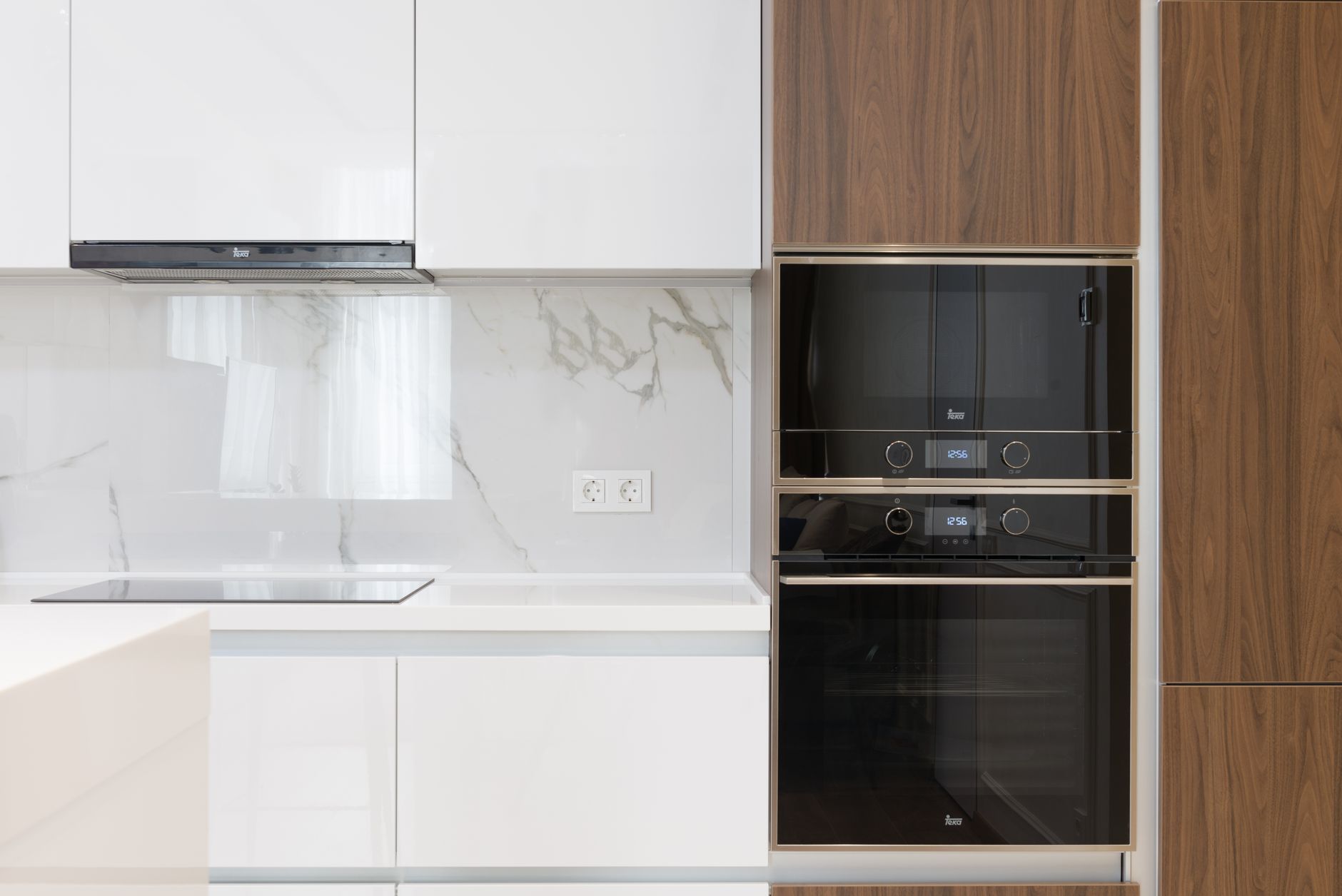
When furnishing a new kitchen or upgrading old appliances, the option of buying bundles often comes up. These packages promise convenience and often a price break, but the real financial benefit isn’t always clear-cut. Discerning whether a kitchen appliance bundle truly offers better value requires a careful look at several factors beyond the initial sticker price.
⚡ In a Rush? Key Takeaways
- Kitchen appliance bundles typically offer a 10-20% discount versus individual purchases of the same items.
- Initial savings of up to $500-$1,500 on a 3-4 piece bundle are common, but can limit brand or feature choice.
- Energy Star certified individual appliances can reduce running costs by 15-25% annually, potentially negating bundle savings.
- Lifetime ownership cost analysis shows that a truly efficient individual appliance might be cheaper over 10 years.
- ✅ Best value: buy individual high-efficiency appliances unless the bundle matches your ideal features and exceeds 15% discount.
As homeowners, we’re constantly looking for ways to maximize value and minimize expenditure, especially on significant purchases like kitchen upgrades. This analysis will explore the financial mathematics behind appliance bundles versus individual selections, helping you make an informed decision for your home in 2026.
Do Appliance Bundles Offer Significant Upfront Savings?
Kitchen appliance bundles can offer initial savings of 10-20% compared to buying individual pieces, typically ranging from $500 to $1,500 on a full suite.
Many retailers and manufacturers promote appliance bundles, often including a refrigerator, range, microwave, and dishwasher, as a way to save money. The appeal is clear: a single purchase for multiple items, often with a reduced total price. These discounts commonly fall in the 10% to 20% range compared to purchasing each item separately at regular retail prices.
For example, a mid-range kitchen suite that might cost $6,000 if bought item-by-item could be offered as a bundle for $5,000 to $5,400. This immediate saving of $600 to $1,000 can be very attractive, particularly for those furnishing a new home or undertaking a major kitchen renovation. However, these savings are almost exclusively tied to the *initial purchase price*.
How Promotional Deals Impact Bundle Pricing?
Bundle pricing is heavily influenced by seasonal sales, holiday promotions, and manufacturer rebates, often providing deeper discounts than everyday offers.
Retailers frequently leverage major sales events like Black Friday, President’s Day, or Memorial Day to offer their most aggressive bundle deals. During these periods, you might see an additional percentage off or cash-back rebates when purchasing 3 or more eligible appliances from the same brand. It’s not uncommon for these promotional periods to push the effective discount closer to 25% or even 30% for specific, high-end appliance lines.
- Seasonal Sales: Expect the best deals in late spring (May/June) and early fall (September/October) as new models are introduced.
- Holiday Weekends: Significant discounts around long weekends are common strategies for moving inventory.
- Manufacturer Rebates: These can add to retailer discounts, often mailed as checks a few weeks after purchase.
Are Brand Consistency Requirements a Limiting Factor?
Most appliance bundles require purchasing all items from a single brand, which can limit choices if you prefer specific features from different manufacturers.
A significant aspect of bundle deals is the expectation to purchase all included appliances from the same brand. While this creates a cohesive aesthetic in your kitchen, it can limit your ability to select the ‘best in class’ for each appliance type. For instance, you might prefer a Samsung refrigerator for its smart features, a Bosch dishwasher for its quiet operation, and a Whirlpool range for its convection technology.
Opting for a bundle means compromising on some of these individual preferences in favor of the overall package discount. This decision requires weighing the financial savings against the potential loss of preferred features or performance characteristics. For some, brand consistency is paramount, for others, optimal performance for each function is key.
How Does Long-Term Running Cost Compare?
While bundles save on initial purchase, individually selected Energy Star appliances can significantly reduce long-term running costs, potentially saving hundreds annually.
The upfront savings from a bundle can be appealing, but the true cost of appliance ownership extends far beyond the purchase price. Running costs, including electricity and water consumption, will accumulate over the appliance’s lifespan. This is where individually selected, highly efficient appliances often gain an advantage.
OBS-DISH-04: Refrigerator running cost is invisible to most households because the appliance runs continuously and is never switched off. A fridge-freezer built before 2015 typically uses 400–600 kWh per year. A current A-rated model uses 100–200 kWh. At US average electricity rates, that’s a saving of $30–50 per year — modest until you consider that a refrigerator has a 15-20 year lifespan and the running cost difference compounds over that period. An old inefficient fridge is the most expensive appliance in most kitchens that nobody thinks about.
Efficient models, particularly those with an Energy Star certification, are designed to consume less energy and water, translating into lower utility bills over the years. The savings from these efficiencies can ultimately outweigh the initial discount offered by a bundle if the bundle includes less efficient models.
Can Energy Star Appliances Outperform Bundle Savings?
Energy Star appliances typically consume 10-50% less energy than standard models, leading to significant annual savings that can offset initial bundle discounts.
The Energy Star label signifies that an appliance meets strict energy efficiency guidelines set by the EPA. For specific appliances:
- Refrigerators: Energy Star models are at least 15% more efficient than conventional new models.
- Dishwashers: Energy Star models save about $35 per year on utility bills compared to non-certified ones, using less water and energy to clean.
- Washing Machines: Energy Star certified washers use about 25% less energy and 33% less water than regular washers.
Greta’s observations: OBS-COST-02: The cost of appliance ownership has three components that matter: purchase price, running cost, and repair/replacement cost. Most buyers optimise on purchase price and ignore the other two. Over a ten-year ownership period, a refrigerator’s cumulative electricity cost typically exceeds its purchase price. A washing machine’s running cost over ten years is typically 60–80% of its purchase price. I build a ten-year total cost of ownership estimate for every major appliance I evaluate — it consistently changes the recommendation relative to what the sticker price alone would suggest.
Consider a scenario where a bundle offers a $1,000 discount but includes appliances that are, on average, 20% less efficient than individual Energy Star alternatives. If those less efficient appliances collectively cost an extra $150 per year to run, that $1,000 initial saving is nullified in just under seven years. Over a 10-15 year lifespan, the individual, efficient purchases would prove more economical.
What is the Impact of Specific Appliance Efficiencies?
Each appliance type has distinct energy-saving potential; dishwashers with air-dry save up to 1 kWh/cycle, and refrigerators with smart defrost help the most.
Focusing on the efficiency of individual appliances within your ideal kitchen setup can yield substantial long-term savings. Some features make a disproportionate difference:
OBS-DISH-01: Running a full dishwasher uses less water than hand-washing the equivalent dishes — this is established and not particularly contested. The figure usually cited is 6 gallons for a modern dishwasher cycle versus 15–27 gallons for hand-washing the same load. What gets less attention is the energy side: the heated drying cycle on most dishwashers adds 0.5–1 kWh per run. Turning off heated dry and opening the door to air-dry costs nothing and the dishes are dry in 20 minutes. It’s the simplest running cost reduction available on any dishwasher.
For refrigerators, features like advanced insulation, smart defrost systems, and efficient compressors can cut energy consumption dramatically. For ranges, induction cooktops offer significantly higher energy efficiency than traditional electric or gas by heating the cookware directly. When building your kitchen, consider calculating the cost of appliance performance with attention to these details.
For example, opting for an induction range instead of a standard electric coil or gas range could save $50-$100 per year in cooking energy alone, depending on usage patterns and local energy costs.
When Do Appliance Bundles Make the Most Sense?
Appliance bundles are most advantageous when time is a critical factor, design aesthetics require brand matching, or a deep discount exceeds 20% on desirable models.
While the financial advantages of individual highly efficient appliances are clear over the long term, there are specific scenarios where an appliance bundle presents a compelling case. Convenience, aesthetic consistency, and certain market conditions can tip the scales in favor of a bundled purchase.
Are Bundles Ideal for New Homes or Renovations?
Bundles simplify the procurement process for new constructions or extensive kitchen remodels by offering a single purchase and coordinated delivery/installation.
For homeowners building a new house or undertaking a complete kitchen overhaul, time and coordination are valuable commodities. Sourcing individual appliances from various retailers, coordinating separate deliveries, and managing different installation teams can be a logistical headache. Appliance bundles streamline this process significantly.
A single purchase order, consolidated delivery, and often combined installation services reduce stress and potential delays. This convenience factor can be worth foregoing some individual feature preferences for those facing tight deadlines or managing complex projects. It ensures all appliances arrive around the same time and are ready for professional installation without multiple scheduling attempts.
Can Bundles Offer Superior Design Cohesion?
Bundled appliances guarantee a matching aesthetic, with consistent finishes, handles, and control layouts, creating a smooth and high-end kitchen appearance.
One undeniable benefit of purchasing an appliance bundle from a single manufacturer is the guaranteed design cohesion. All pieces—refrigerator, oven, dishwasher, microwave—will share the same finish (e.g., stainless steel, black stainless, matte white), handle design, and even control panel styling. This creates a polished, integrated look that can significantly elevate the overall aesthetic of your kitchen.
For some homeowners, particularly those focused on a high-end or custom kitchen design, this design uniformity is a key priority. Achieving a perfectly matched suite by purchasing individual appliances from different brands can be difficult, if not impossible, as slight variations in finish or design elements might be noticeable.
When is a Bundle Discount Irresistible?
A bundle becomes financially superior if the combined discount on preferred models exceeds 25%, making the total cost of ownership lower than buying individually.
The decision often comes down to the numbers. If you find a bundle that includes precisely the models and features you desire, and the discount is steeper than the typical 10-20%—perhaps due to a special promotion or a closeout deal—then it warrants serious consideration. When discounts reach 25% or more, the upfront savings become substantial enough to potentially outweigh the long-term running cost differences, especially if the bundled appliances are already reasonably efficient.
To determine if the discount is truly ‘irresistible’, calculate the total cost of ownership for both options over a 10-year period. Factor in the initial purchase price, estimated annual running costs (electricity, water, maintenance), and a reasonable projection for potential repairs. If the bundle’s total cost of ownership is lower, and it meets your functional and aesthetic needs, it’s a solid choice.
FAQ: Buying Kitchen Appliance Bundles
Here are answers to common questions about purchasing kitchen appliance bundles.
How much is the average discount on kitchen appliance bundles?
The average discount for kitchen appliance bundles typically ranges between 10% and 20% compared to purchasing each appliance individually.
Is it better to buy kitchen appliances individually or as a package?
It’s better to buy individually for maximum feature choice and long-term running cost savings, but bundles are convenient for new builds or cohesive aesthetics.
When is the best time of year to buy kitchen appliance bundles?
The best time to buy kitchen appliance bundles is during major holiday sales like Black Friday, President’s Day, or during seasonal clearances in May/June and September/October.
Do appliance bundles include installation?
Installation is generally not included in appliance bundle prices but can often be added as an extra service for an additional fee during purchase.
Are manufacturer warranties valid for appliance bundles?
Yes, manufacturer warranties are valid for appliances purchased in a bundle, usually covering each individual appliance per its standard terms.
Based on our efficiency data, dishwashers that avoid heated drying consistently consume less energy per cycle—which is why our top pick in this category is the fully integrated model with an air-dry option.
The Bottom Line: Are Appliance Bundles Worth It?
Appliance bundles can offer upfront savings and aesthetic benefits, but individual high-efficiency purchases often yield greater long-term financial value.
Ultimately, whether kitchen appliance bundles are ‘worth it’ depends on your priorities. If immediate savings, convenience, and a perfectly matched aesthetic are your primary concerns, and you find a bundle with appliances that meet your functional needs, then they can be an excellent option. The initial discount can be substantial, particularly during promotional periods.
However, if your priority is long-term operational cost, energy efficiency, and the flexibility to choose the best-performing appliance for each specific task regardless of brand, then purchasing individually is likely the more financially sensible route over the lifespan of your kitchen. Always consider the total cost of ownership—purchase price plus running costs—before making your final decision.
— Greta Michaud, Home Appliance Efficiency Researcher