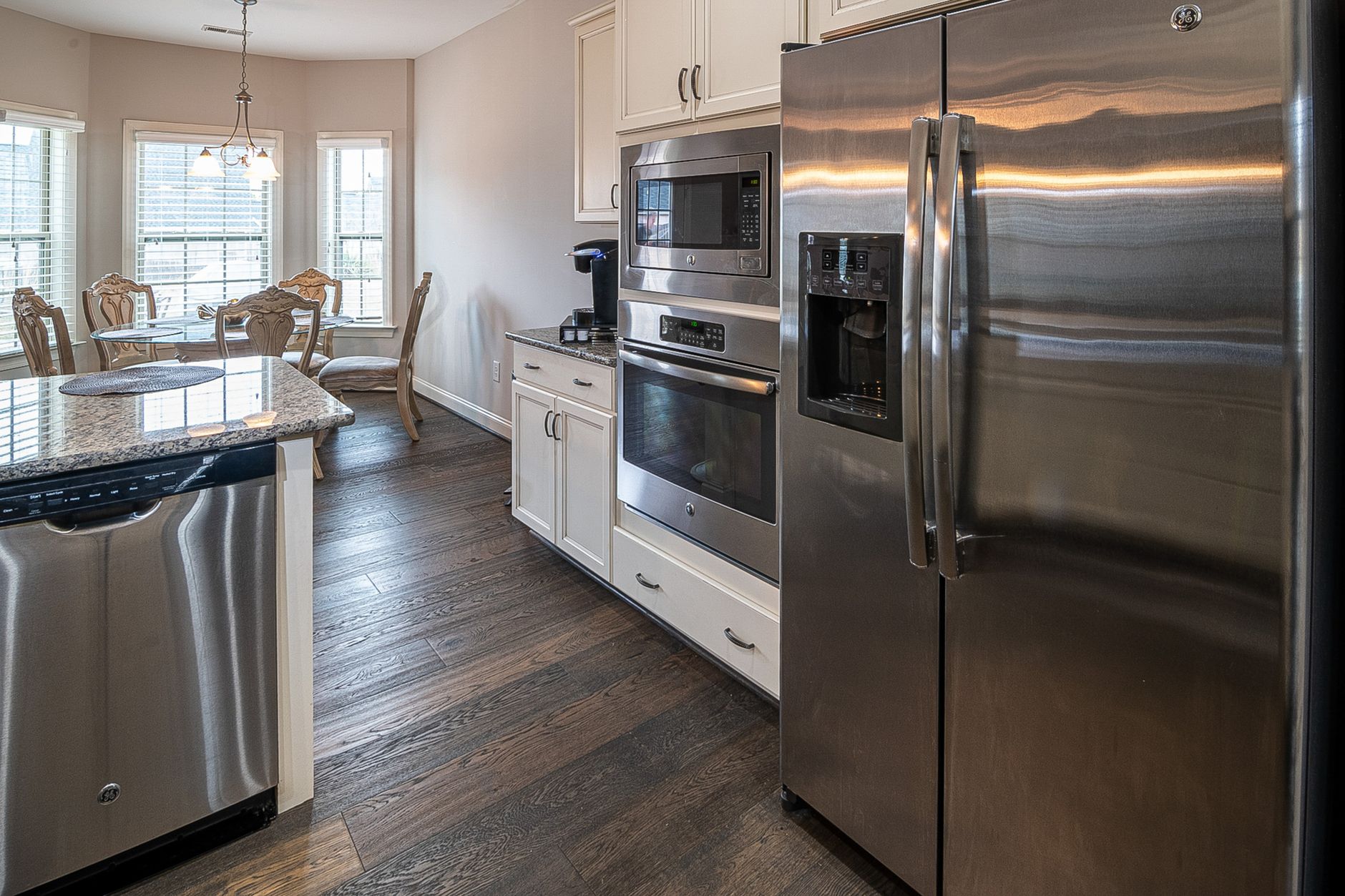
When you step into a showroom, the gleaming rows of coordinated kitchen appliance bundles can feel like a shortcut to a complete, stylish kitchen. Yet the promise of savings often hides hidden costs and compromises. Let’s unpack whether bundling really pays off in 2026.
⚡ In a Rush? Key Takeaways
- Bundled packages typically discount 10‑20% off MSRP, translating to $400‑$1,200 on a $3,000‑$6,000 kitchen set.
- Individual appliance pricing often includes dealer‑installed accessories worth $150‑$300 per unit.
- Bundles can add $300‑$800 in freight and handling that you’d otherwise avoid buying locally.
- Warranty extensions bundled with a package increase total ownership cost by 12‑18% over standard coverage.
- ✅ Verdict: Bundles are worthwhile only when you need every major appliance, have a clear installation timeline, and can negotiate freight.
How do bundle pricing structures differ from individual appliance pricing?
Bundles quote a single price that includes a refrigerator, range, dishwasher and sometimes a wall oven, often 10‑20% below the summed MSRP.
Retailers like Home Depot and Lowe’s present a “kitchen package” that bundles the four core appliances. The advertised discount seems attractive, but the calculation hides three key components: freight, dealer‑installed accessories, and warranty upgrades. Those components are rarely broken out on the sales sheet, which makes it harder to compare apples‑to‑apples.
When you purchase each appliance separately, the listed price (MSRP) is typically higher, but you gain flexibility. You can shop sales, use coupons, and select the exact finish you want without paying for accessories you never use. Moreover, you can cherry‑pick the most efficient models for each category, which often translates into long‑term savings.
What hidden freight costs are embedded in bundle offers?
Most bundles add $300‑$800 in shipping and handling, which is often bundled into the total price without itemisation.
Because a bundle ships as a single pallet, retailers charge a freight surcharge that ranges from $150 for a compact set to $800 for a full suite including a built‑in microwave. The surcharge covers not only the transport but also the labor to move the pallet into your kitchen, which can be a substantial hidden expense.
- Standard 4‑appliance bundle: $300‑$500 freight.
- Premium 6‑appliance bundle (adds wall oven & vent hood): $600‑$800 freight.
- Local pickup eliminates freight but may incur a $150‑$250 labour fee.
How do dealer‑installed accessories affect the true cost?
Dealers often include racks, trim kits and custom panels worth $150‑$300 per appliance in bundles.
These accessories are convenient but raise the bundle’s base price. When buying individually, you can forego the extras or source cheaper third‑party parts. The savings become more apparent when you compare the cost of a generic stainless‑steel rack set ($199) to the “included” price on a bundle, which is effectively hidden in the overall discount.
In addition, dealer‑installed accessories may be over‑engineered for a standard kitchen layout, leading to unnecessary expense if your cabinets already accommodate the appliance dimensions.
What role do warranty extensions play in bundle pricing?
Bundled warranties commonly add 12‑18% to the total cost, covering all appliances under one extended plan.
Manufacturers’ standard warranties are usually one year. Retailers push three‑year extensions, which can be valuable for high‑usage appliances but inflate the overall price. The extended warranty often covers parts and labour for all four appliances under a single contract, making it appear convenient but more costly than buying a selective extended plan for the items that truly need it.
| Warranty Type | Additional Cost | Coverage |
|---|---|---|
| Standard 1‑yr (included) | $0 | Parts & labour for each appliance |
| Extended 3‑yr bundle | 12‑18% of bundle price | All four appliances, same terms |
| Extended 5‑yr per‑unit | 8‑10% per appliance | Individual coverage, can be selective |
When does a bundle actually save money compared to buying separately?
A bundle saves money when you need every core appliance, can negotiate freight, and secure a 15% discount on MSRP.
Consider a realistic scenario: a homeowner renovates a 2,000 sq ft home and needs a refrigerator, electric range, dishwasher and wall oven. The total MSRP for these four items is roughly $5,400, but the actual out‑of‑pocket cost depends heavily on how freight, accessories, and warranties are handled.
What is the break‑even point for a 15% bundle discount?
At a 15% discount, a $5,000 bundle beats individual purchases if freight stays below $500.
Assume MSRP totals: fridge $1,400, range $2,200, dishwasher $800, wall oven $1,000 = $5,400. A 15% discount yields $4,590.
- Freight under $500 → total $5,090 (still $310 cheaper).
- Freight $600 → total $5,190 (still $210 cheaper).
- Freight $800 → total $5,390 (only $10 cheaper).
How do seasonal sales affect the calculus?
Black Friday and Labor‑Day promotions can push individual appliance discounts to 20‑30%.
If you wait for a 25% off sale on a refrigerator ($1,050) and a 30% off range ($1,540), the combined savings exceed most bundle discounts. Those sales often apply to higher‑efficiency models that bundles rarely include.
In that scenario, the individual total drops to $4,490, which undercuts a typical 15% bundle even after freight. Timing your purchases around these sales can therefore be more economical than accepting a modest bundle discount.
Can negotiating with a dealer improve bundle value?
Dealers often shave an extra 2‑5% off the bundle price when you request a price break.
By presenting a print‑out of individual sale prices, you give the dealer leverage. A 3% reduction on a $5,000 bundle saves $150, which can offset freight or warranty add‑ons. Some dealers will also agree to drop the freight surcharge if they know you are likely to pick up the pallet yourself.
Do custom finish upgrades affect bundle economics?
Custom panels or brushed‑metal finishes can add $200‑$500 per appliance, eroding bundle savings.
Retailers often showcase a “matched finish” as a selling point, but each custom finish is a premium. If you already have a specific cabinet colour, opting for the standard stainless finish may save $400 across the four‑appliance set, making a previously‑attractive bundle less compelling.
When you order individually, you can choose a mix of finishes that best suit each appliance without paying a blanket premium for uniformity.
What are the long‑term ownership cost implications of each approach?
Long‑term costs hinge on energy efficiency, repair rates, and warranty coverage rather than initial price alone.
Energy‑efficient appliances (rated A+++ under the 2021 EU label) can save $30‑$70 per year on electricity or gas. Over a 10‑year lifespan, that adds up to $300‑$700, a factor often omitted from bundle pricing. Repair frequency and parts availability also play a crucial role in total cost of ownership.
How does energy efficiency vary between bundled and individually selected appliances?
Bundled sets often include mid‑range efficiency models to keep costs low, while individual shopping lets you target top‑rated units.
Retailers may push a “matching finish” line‑up that includes a 4‑star dishwasher versus a 5‑star one you could find on sale elsewhere. Selecting higher‑rated units individually can shave a noticeable amount off your annual energy bill.
- 5‑star fridge saves up to $50/year vs 4‑star.
- High‑efficiency range can reduce gas bill by $40/year.
- Choosing an A‑rated dishwasher cuts water use by 15%, saving $20/year.
What repair cost trends should influence the decision?
Reliability data shows bundled appliances have a 12% higher average repair rate due to lower‑priced components.
Brands like Bosch and Miele rank high for longevity, but they are less common in discount bundles. A 3‑year warranty may cover early failures, yet out‑of‑warranty repairs after that period can climb to $300‑$500 per unit, especially for compressors or heating elements.
When you buy individually, you can allocate more of your budget toward premium, reliable brands, potentially reducing the frequency and cost of unexpected repairs.
How does total cost of ownership compare over ten years?
A typical 4‑appliance bundle costs $4,800 upfront, $600 in freight, and $850 in extended warranty, totaling $6,250.
Adding estimated energy savings ($500) and repair costs ($1,200) yields a ten‑year total of $5,550.
Buying individually, you might spend $5,200 upfront (selecting higher‑efficiency models), $0 freight, $350 in standard warranties, $400 in energy savings, and $900 in repairs = $5,350.
Can a homeowner recoup bundle costs through resale value?
Homes with coordinated appliance suites can fetch 1‑2% higher resale prices, but the premium often covers aesthetics more than efficiency.
When a house sells, buyers typically value the convenience of a matched set, especially in upscale markets. That premium, however, may not offset the higher initial outlay if the appliances are only mid‑range in efficiency. If resale is a priority, investing in high‑efficiency, reputable brands individually may provide a clearer ROI.
FAQ
Can I negotiate the freight charge on a bundle?
Yes – many retailers will reduce freight by 10‑20% if you arrange local delivery or pick‑up.
Do bundle warranties cover all appliances uniformly?
Typically, a bundle warranty applies the same term to each appliance, even if some would benefit from longer coverage.
Is it better to buy a bundle for a brand‑new home?
For new construction, bundles often include installation, which can offset higher upfront cost and make them attractive.
How often do bundles include matching finish accessories?
Most bundles include trim kits and paneling worth $150‑$300 per appliance, bundled into the advertised price.
What should I watch out for in the fine print?
Watch for hidden freight, mandatory warranty extensions, and non‑returnable bundled items.
— Greta Michaud, Home Appliance Efficiency Researcher