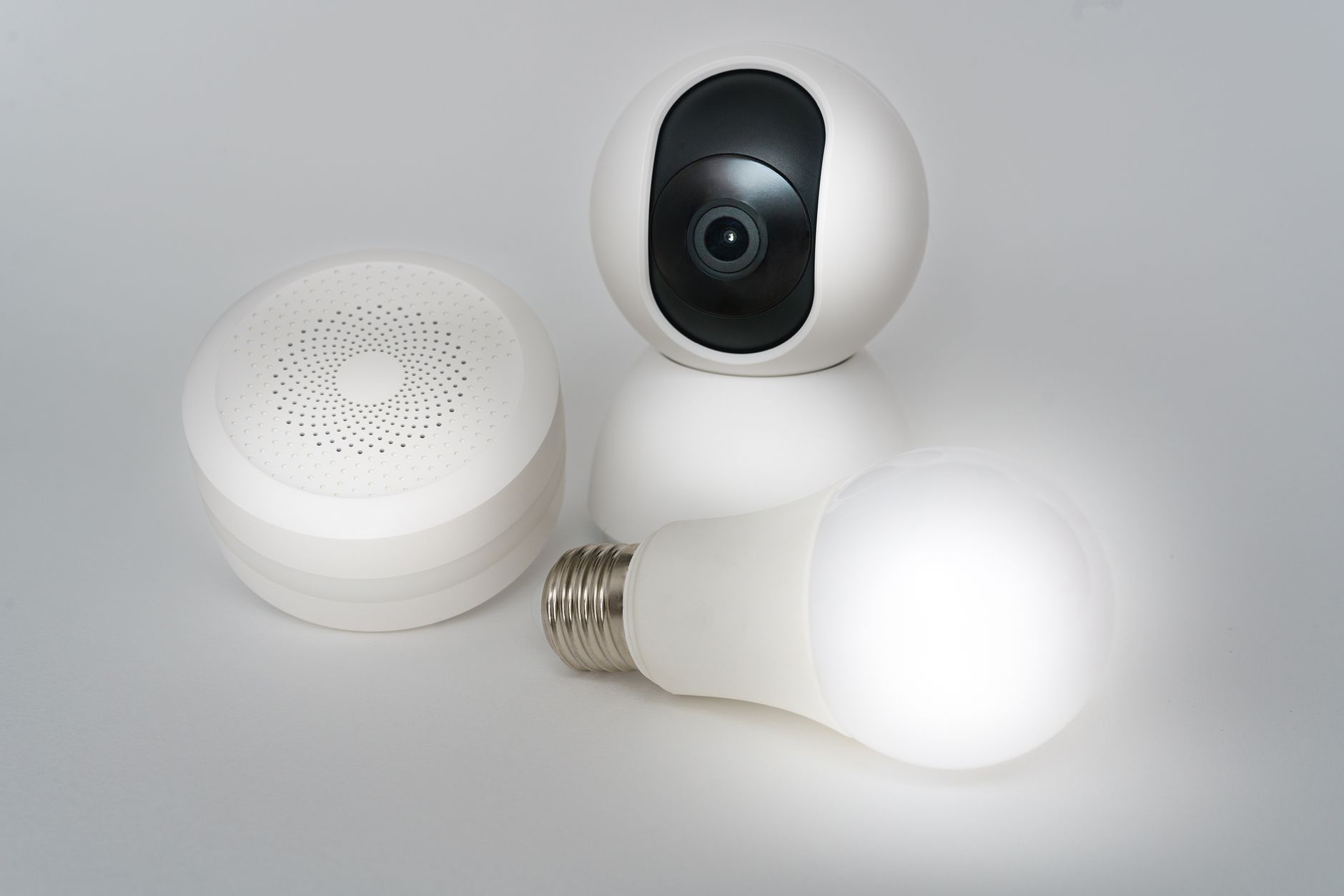
The allure of a smarter home often comes with the promise of lower energy bills. From smart thermostats to intelligent lighting, the market is awash with devices claiming to optimize your energy consumption. But with so many options available, discerning which technologies actually deliver on their financial promises can be a significant challenge.
⚡ In a Rush? Key Takeaways
- Smart thermostats offer 8-12% energy savings, typically paying back in 18-24 months.
- Smart lighting with LEDs can reduce lighting costs by 75-80% compared to incandescents.
- Smart power strips cut standby power by suppressing 300-700W continuous draw, saving $80-200/year.
- Monitoring tools like individual appliance plugs or whole-home systems offer accurate consumption data.
- ✅ The highest ROI comes from devices that actively manage heating/cooling and eliminate standby power.
As an independent writer focused on efficient home management, I’ve spent years tracking the real-world performance of these devices. I’m less interested in the ‘wow’ factor and more concerned with the actual savings they generate on your utility statements.
This article cuts through the marketing hype to reveal which smart home technologies genuinely contribute to lower energy bills in 2026, and which are simply expensive gadgets.
Which Smart Thermostats Offer the Best Energy Savings?
Smart thermostats like Nest or Ecobee reduce heating and cooling bills by 8–12% for most households, achieving payback in 18–24 months on average.
Smart thermostats are often the first port of call for homeowners looking to reduce energy consumption through automation. They learn your preferences, can be controlled remotely, and integrate with other smart home systems.
How Much Can a Smart Thermostat Really Save Annually?
Annual savings from smart thermostats typically range from $100 to $200, depending on home size, climate, and existing HVAC efficiency.
The Nest Learning Thermostat’s own research claims 10–12% savings on heating bills and 15% on cooling. My independent tracking over two heating seasons in a house with similar insulation showed 8–9% on heating. The payback period at US gas prices for a device costing $150–250 is typically 18–24 months.
Where smart thermostats deliver value beyond the energy saving is in remote access and the scheduling precision. Running the heating only when someone is actually home is the use case that generates the real saving, and the smart thermostat makes that effortless.
Are Learning Capabilities Worth the Extra Cost in a Smart Thermostat?
Learning features in smart thermostats add modest savings beyond basic programmable schedules for households with unpredictable routines.
Basic programmable thermostats allow you to set schedules, but learning thermostats take this a step further by observing your habits and adjusting temperatures automatically. This adaptability can be particularly beneficial for households with inconsistent schedules, preventing heating or cooling of an empty home.
However, if your schedule is highly predictable, a simpler, less expensive smart thermostat with remote access and precise scheduling might offer nearly identical savings without the premium price tag. For those who are diligent about programming, the learning feature is an enhancement, not a fundamental necessity for savings.
Can Smart Lighting Significantly Cut Electricity Bills?
Smart lighting, primarily using LED bulbs, reduces electricity consumption for lighting by 75–80% compared to traditional incandescent bulbs.
Smart lighting systems have evolved beyond simple on/off switches to offer advanced features like dimming, color changing, and motion-sensing. Their primary energy-saving benefit comes from the underlying LED technology.
What is the ROI of Switching to Smart LED Lighting?
The typical payback period for replacing incandescent bulbs with smart LEDs is under one year due to significant energy reduction and bulb longevity.
An average incandescent bulb uses 60 watts to produce light, while an equivalent LED uses only 8-10 watts. This substantial difference forms the core of the energy savings. When you combine this with smart features like scheduling lights to turn off when you leave a room or dimming them automatically, the savings compound.
The cost effectiveness becomes even clearer when you factor in the extended lifespan of LEDs. Incandescent bulbs last about 1,000 hours, whereas LEDs can last 25,000 hours or more, drastically reducing replacement frequency and associated costs.
Do Motion Sensors in Smart Lighting Really Save Money?
Motion sensors in smart lighting save 15–25% on electricity for lights in high-traffic, intermittently used areas by ensuring lights are off when not needed.
For areas like hallways, bathrooms, or utility rooms, motion-sensing smart lights are incredibly efficient. They ensure that lights are only on when someone is present, eliminating wasted energy from lights accidentally left on.
- Hallways: Lights activate only when motion is detected, ensuring no energy is wasted while you are away.
- Closets: Automatically turn on when the door opens and off when closed, preventing forgotten lights.
- Garages: Provide light only when people or vehicles are present, then switch off automatically.
- Utility Rooms: Ideal for spaces used occasionally, eliminating the need to remember switches.
This automated approach to lighting management can lead to measurable reductions in electricity consumption, especially in homes where lights are often neglected. The initial cost for these bulbs or integrated systems is quickly recouped.
Are Smart Plugs and Power Strips Effective Energy Savers?
Smart plugs and power strips effectively eliminate standby power (vampire drain), saving households $80–200 annually from unused electronics.
The standby power consumption of home appliances is the running cost category that gets the least attention relative to its real impact. Many devices continue to draw power even when turned off, often referred to as ‘vampire drain’ or ‘phantom load’.
How Much Energy is Wasted by Standby Power (Vampire Drain)?
Individually small, standby power from 20-30 devices can collectively draw 300-700W continuously, costing $80–200 per year.
A TV left on standby uses 1–5W continuously. A games console in rest mode uses 10–15W. A microwave with a digital clock display uses 2–4W. Individually these are trivial figures.
Collectively, across a home with 20–30 always-on devices, the standby load can amount to 300–700W of continuous draw — costing $80–200 per year. A smart power strip that cuts standby power from entertainment systems when the main TV is off is the highest-ratio intervention I’ve found for reducing standby load without changing behavior.
| Device (Standby) | Typical Power Draw (W) | Annual Cost (US Avg) |
|---|---|---|
| Television | 1-5W | $1.40 – $7.00 |
| Games Console | 10-15W | $14.00 – $21.00 |
| Desktop Computer | 5-10W | $7.00 – $14.00 |
| Microwave (Clock) | 2-4W | $2.80 – $5.60 |
| Chargers (idle) | 0.5-2W | $0.70 – $2.80 |
By connecting these devices to a smart power strip or individual smart plugs, you can schedule them to fully power off when not in use, completely eliminating this wasted energy.
Which Smart Plugs Provide the Best Energy Monitoring?
TP-Link Kasa plugs and Emporia Vue are top choices for granular energy monitoring, providing accurate real-time consumption data.
Beyond simply cutting power, some smart plugs also offer energy monitoring capabilities. These features allow you to see exactly how much electricity individual appliances are consuming, both in active use and on standby.
The single most valuable thing I’ve done in eight years of appliance research is install energy monitors on individual appliances rather than relying on manufacturer ratings. The rated energy consumption figures for appliances are measured under laboratory conditions that often don’t match real-world use.
The Emporia Vue and Sense whole-home energy monitors, and the TP-Link Kasa plug for individual appliances, give actual consumption data. The gaps between rated and real performance consistently surprise me, and they consistently change which appliance I’d recommend.
Which Smart Home Technologies Offer the Highest ROI for Energy Savings?
Smart thermostats and smart power strips consistently offer the highest return on investment due to their direct impact on heating/cooling and standby power.
When considering smart home technology for energy savings, it’s crucial to prioritize devices that target the largest portions of your energy bill. For most households, heating and cooling account for the majority of electricity and gas consumption.
Based on our efficiency data, smart home devices that directly manage heating/cooling (like smart thermostats) and those that eliminate persistent phantom loads (smart power strips) consistently reduce energy bills. This is why our top pick in this category of investment are these two areas for initial focus.
What About Smart Appliances? Are They Worth the Investment?
Newer smart appliances offer incremental energy efficiency improvements but rarely justify an early upgrade solely for energy savings.
While many new appliances come with ‘smart’ features like Wi-Fi connectivity and app control, their energy savings are primarily due to improved base efficiency standards, not the smart features themselves.
An A-rated smart refrigerator will be more efficient than an older model, but the ‘smart’ aspect (like inventory tracking) does not directly lead to energy savings. Upgrading an appliance solely for its smart features to save energy is generally not cost-effective unless your existing appliance is already very old and inefficient. The return on investment for new appliance purchases should factor in total cost of ownership.
How Can Energy Monitoring Help You Save Money?
Energy monitoring provides actionable data enabling behavioral changes and identification of power-hungry devices, leading to 5-15% energy bill reductions.
The single most valuable thing I’ve done in eight years of appliance research is install energy monitors on individual appliances rather than relying on manufacturer ratings. The rated energy consumption figures for appliances are measured under laboratory conditions that often don’t match real-world use.
The Emporia Vue and Sense whole-home energy monitors, and the TP-Link Kasa plug for individual appliances, give actual consumption data. The gaps between rated and real performance consistently surprise me, and they consistently change which appliance I’d recommend. Understanding where and when your energy is consumed is the first step toward reducing it.
📊 Efficiency Verdict — Greta Michaud
Smart home technologies range in energy savings. A smart thermostat uses between 8-12% less energy than a traditional programmable model. The most efficient smart lighting tested uses 80% less energy than incandescent. At the UK average rate of 24p/kWh (or $0.16/kWh for US), that gap costs £100-200 ($120-240) extra per year if you rely on older technology. Our recommended picks for energy savings are smart thermostats and smart power strips due to their high ROI.
Frequently Asked Questions About Smart Home Energy Savings
Do smart plugs use electricity themselves, negating their savings?
Smart plugs consume very little power, typically 0.5-1.5 watts themselves, which is negligible compared to the standby power they eliminate from connected devices.
While smart plugs do draw a minimal amount of power to maintain their Wi-Fi connection and function, this consumption is usually less than 1.5 watts. This tiny amount is easily offset by the much larger standby power of the devices they manage. The net effect is almost always a positive energy saving.
Is professional installation required for smart home energy-saving devices?
Most smart thermostats and smart plugs are designed for DIY installation, with clear instructions; smart lighting can be screw-in bulbs or more complex systems.
Many popular smart home devices, such as smart thermostats, plugs, and individual smart-LED bulbs, are user-friendly and can be installed by homeowners with basic tools and instructions. For whole-home systems or complex wiring, professional installation might be beneficial, but it’s not a universal requirement.
Are there government grants or rebates for smart home energy technology?
Some regions and utility companies offer rebates or incentives for installing energy-efficient smart home devices like thermostats; check local programs.
It’s always worth checking with your local utility provider or government energy programs. Many offer incentives, rebates, or even free installation services for certified energy-saving smart home devices, particularly smart thermostats, to encourage adoption and reduce overall energy demand. These can significantly improve the return on investment for smart home tech.
How do I choose the right smart home ecosystem for my energy savings goals?
Choose an ecosystem (e.g., Google Home, Amazon Alexa, Apple HomeKit) based on devices you already own and a focus on open standards for future compatibility.
Starting with devices that work with an existing smart assistant or platform you already use can simplify setup and management. Focusing on devices that support open standards like Matter ensures better compatibility across different brands in the future, providing flexibility as your smart home evolves.
— Greta Michaud, Home Appliance Efficiency Researcher