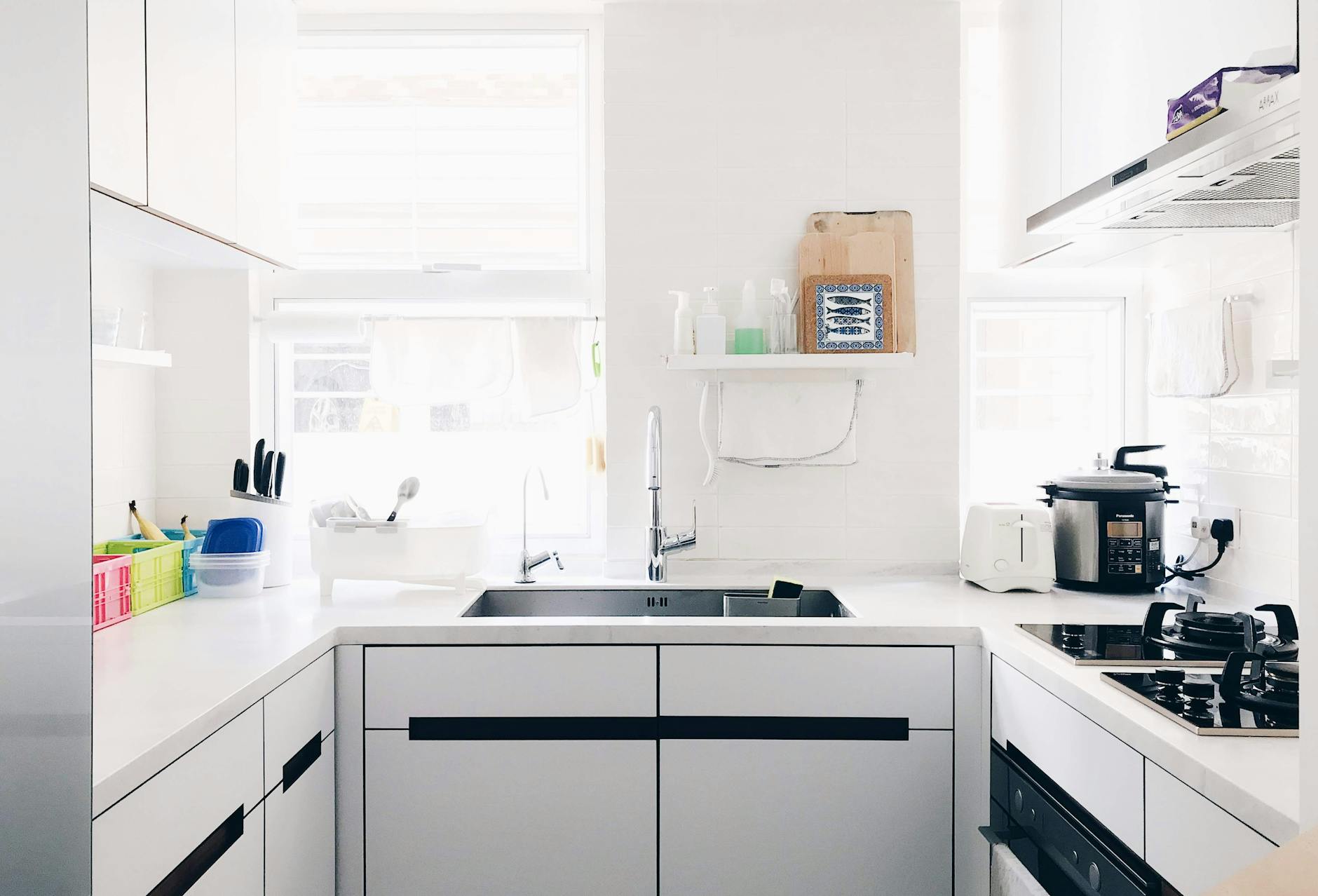
Curious about smart kitchen features but unsure where to start? This complete guide breaks down the practical aspects of setting up a connected kitchen, focusing on real-world utility and cost-effectiveness rather than just gadgets. We’ll explore the options available in 2026, from connected appliances to intelligent workflow aids, and help you understand the true costs and benefits of integrating these technologies into your home.
⚡ In a Rush? Key Takeaways
- Basic smart kitchen setups cost $150-$500, focusing on convenience and small appliance management.
- Larger appliance integrations (fridges, ovens) can add $1,000-$5,000+ to kitchen renovation budgets.
- Voice assistants are a foundational, budget-friendly ($30-100) smart kitchen component, enabling hands-free control.
- Smart plugs ($15-30 each) are the most cost-effective way to automate existing non-smart appliances.
- ✅ Start with smart plugs and a voice assistant to automate small appliances and build a flexible system.
Integrating technology into the kitchen doesn’t have to mean overhauling every appliance. Instead, it’s about thoughtful additions that streamline tasks, enhance efficiency, and ultimately make your home run a little better. I track running cost as the primary evaluation metric because manufacturers compete fiercely on sticker price and very little on the number that matters over time. Let’s explore into how you can make your kitchen smarter, not just more gadget-filled, without breaking the bank.
What Are the Core Components of a Practical Smart Kitchen in 2026?
A practical smart kitchen in 2026 focuses on voice control, smart plugs for existing appliances, and intelligent lighting to optimize workflow and efficiency.
Building a smart kitchen doesn’t necessarily mean replacing every appliance you own with a Wi-Fi enabled version. A truly efficient smart kitchen is built on a foundation of interconnectedness and automation that serves practical needs. The core components work together to provide convenience and often, energy savings. Understanding these basics is the first step toward a functional smart kitchen.
Do I Need a Voice Assistant to Control My Smart Kitchen?
Yes, a voice assistant (like Amazon Alexa or Google Assistant) is often the central hub for hands-free control of most smart kitchen devices, improving convenience.
Voice assistants are the brains and the voice of many smart kitchen setups. They allow you to control appliances, set timers, look up recipes, and even create shopping lists, all without touching a screen. This hands-free operation is particularly useful when your hands are covered in flour or you’re juggling multiple tasks. The cost-effectiveness of these devices makes them an excellent starting point for any smart home.
- Amazon Echo Dot (5th Gen): Approx. $30-50
- Google Nest Mini (2nd Gen): Approx. $25-45
- Apple HomePod Mini: Approx. $99-120 (integrates with Apple ecosystem)
- Smart Display (Echo Show, Nest Hub): Approx. $80-250 (adds visual interface for recipes, video calls)
Choosing a voice assistant often depends on your existing ecosystem (Apple, Amazon, Google) and whether you primarily want audio interaction or a screen for visual cues. For example, a smart display can be invaluable for streamlining kitchen workflow with recipes.
Can I Make My Existing Appliances Smart Without Buying New Ones?
Yes, smart plugs allow you to turn non-smart appliances on/off remotely, schedule operations, and monitor energy usage via an app or voice commands.
Smart plugs are perhaps the most cost-effective entry point into a smart kitchen. These small devices plug into your wall outlet, and your existing appliance then plugs into the smart plug. This immediately grants your ordinary coffee maker, kettle, or toaster oven smart capabilities. You can turn them on/off, schedule their operation, and in some cases, even monitor their energy consumption.
The beauty of smart plugs lies in their versatility and affordability. You can automate your coffee to start brewing before you wake up, or ensure your slow cooker is off if you forgot to switch it before leaving the house. The energy use difference is significant: heating water accounts for 75–90% of a washing machine’s energy consumption per cycle.
How Can Smart Lighting Enhance My Kitchen Efficiency?
Smart lighting improves kitchen efficiency through dimming, color temperature adjustment, and automation, saving energy and supporting various tasks.
Smart lighting goes beyond simply turning lights on and off. In a kitchen, it can create different ambiances for cooking, dining, or cleaning, and adapt to natural light conditions. Dimmable smart lights mean you’re only using the amount of light you need, which contributes to overall energy efficiency. Setting routines can also ensure lights are never left on unnecessarily. Brands like Philips Hue and Sengled offer a wide spectrum of options.
- Under-cabinet lighting: Crucial for task lighting without shadows.
- Adjustable color temperature: Cooler whites for cooking focus, warmer tones for dining.
- Motion sensors: Automatically turn lights on when you enter the kitchen and off when it’s empty.
- Integration with voice assistants: “Alexa, set kitchen lights to cooking mode.”
What Are the Costs Involved in Setting Up Smart Kitchen Features?
The cost of a smart kitchen ranges from $150 for basic automation to over $5,000 for fully integrated smart appliances, depending on component choice.
The investment required for a smart kitchen can vary dramatically, from a few hundred dollars for basic connectivity to several thousand for a complete overhaul with smart appliances. It’s important to differentiate between integrating smart features into existing appliances and purchasing new, fully integrated smart appliances. My eight years of appliance testing consistently shows that the cost of appliance ownership has three components that matter: purchase price, running cost, and repair/replacement cost. Most buyers optimize on purchase price and ignore the other two.
How Much Do Smart Small Appliances Cost Compared to Traditional Ones?
Smart small appliances typically cost 20-50% more than their traditional counterparts, but offer automation and connectivity for added convenience.
Small smart appliances, like coffee makers, air fryers, or slow cookers, offer significant convenience over their non-smart versions. They can be controlled remotely, preheat on a schedule, or even integrate with recipe apps. While they carry a price premium, the added functionality can be worth it for frequent users.
| Appliance Type | Traditional Cost Range | Smart Version Cost Range |
|---|---|---|
| Coffee Maker | $40 – $100 | $80 – $200 |
| Kettle | $30 – $70 | $60 – $120 |
| Air Fryer | $60 – $150 | $100 – $250 |
| Slow Cooker | $50 – $100 | $90 – $180 |
For example, an air fryer uses 1.2–1.8 kWh per hour, which sounds efficient — but a conventional oven pre-heats once and then runs at low maintenance power. For a single portion or small item, the air fryer wins easily on cost per serving. The premium for smart functionality on these appliances can be justified by the time savings and added convenience, especially if you prioritize pre-programmed cooking or remote operation.
Are Smart Refrigerators and Ovens Worth the Higher Price Tag?
Smart refrigerators and ovens add $500-2,000+ to standard appliance costs; their value depends on use of features like recipe integration or remote diagnostics.
When it comes to large appliances, the smart features become more complex and, consequently, more expensive. Smart refrigerators can offer internal cameras to check contents remotely, ingredient tracking, and integrated screens for calendars and recipes. Smart ovens allow for remote preheating, precise temperature control via an app, and even self-cleaning schedules.
Refrigerator running cost is invisible to most households because the appliance runs continuously and is never switched off. A fridge-freezer built before 2015 typically uses 400–600 kWh per year. A current A-rated model uses 100–200 kWh. At US average electricity rates, that’s a saving of $30–50 per year. The additional cost often ranges from $500 to over $2,000 compared to their non-smart counterparts. The value proposition here is highly individual; for those who leverage every feature, the convenience might outweigh the cost. For others, the traditional models offer more than enough functionality.
What Smart Kitchen Features Deliver the Best Return on Investment?
Smart plugs and voice assistants offer the highest ROI by adding significant automation and convenience for a low upfront cost (under $100 combined).
Not all smart kitchen investments are created equal in terms of ROI. The best returns typically come from solutions that are low in cost but high in utility. Smart plugs, as mentioned, can automate many small appliances for a minimal investment. Voice assistants provide central control across devices for a one-time purchase price.
By automating tasks that you perform daily, these devices save time and mental effort, making your kitchen run more smoothly. This is far more impactful than, for example, a refrigerator that tells you when you’re low on milk, which can be achieved with a simple shopping list app. Our top pick in this category is the low investment, high impact solutions.
How Can I Ensure My Smart Kitchen Offers Long-Term Value and Security?
Prioritize open ecosystems and strong security practices like unique passwords and regular updates to ensure smart kitchen devices remain valuable and secure over time.
Investing in smart kitchen features means thinking beyond the initial purchase. Long-term value is derived from devices that integrate well with future technology, are supported by their manufacturers, and remain secure. Choosing wisely from the outset can prevent frustration and obsolescence down the line. Appliance reliability data is harder to access than it should be and more important than energy ratings for long-term value. Consumer Reports and Which? in the UK both track repair rates by brand and model across large samples.
Should I Choose a Specific Smart Home Ecosystem for My Kitchen Devices?
Opting for an open ecosystem (like Matter/Thread) or a widely supported one (Google, Amazon) ensures broader compatibility and future-proofing for your smart kitchen investments.
Committing to a specific ecosystem, especially for higher-cost appliances, can influence your long-term experience. While many devices claim compatibility with multiple systems, some work best within their native environment. Open standards like Matter and Thread are becoming increasingly important, offering greater interoperability regardless of brand. This can make a significant difference as you expand your smart home beyond just the kitchen, ensuring that your devices can communicate smoothly.
- Amazon Alexa: Broad device support, strong for media and shopping.
- Google Assistant: Excellent for search, calendar integration, and Android users.
- Apple HomeKit: Strong privacy, ideal for iPhone users, but often fewer device options.
- Matter/Thread: Emerging standard for universal compatibility across brands.
Consider which ecosystem aligns best with your existing devices and preferences. For instance, if you have an Android phone, Google Home might offer the most straightforward integration for your home office appliances.
What Security Precautions are Necessary for Smart Kitchen Appliances?
Implement strong, unique passwords for all smart devices, enable two-factor authentication, and regularly update firmware to protect against cyber threats.
Any internet-connected device is a potential entry point for security vulnerabilities. Smart kitchen appliances are no exception. Protecting your network and devices is paramount to prevent unauthorized access and maintain your privacy. Always change default passwords to strong, unique ones. Enable two-factor authentication whenever possible, and ensure you keep device firmware updated to the latest version, as these often include critical security patches. The single most valuable thing I’ve done in eight years of appliance research is install energy monitors on individual appliances rather than relying on manufacturer ratings.
Can Smart Kitchen Features Really Contribute to Cost Savings?
Yes, strategic use of smart features through remote monitoring, energy tracking, and efficient automation can lead to notable savings on utility bills over time.
While the initial outlay for smart devices might seem like an added expense, many features are designed with efficiency in mind. Remote control means you can switch off appliances you accidentally left on, preventing energy waste. Smart plugs with energy monitoring capabilities can identify power-hungry devices, allowing you to make informed decisions about usage. Smart thermostats, which often integrate with kitchen voice assistants, can optimize your heating and cooling based on occupancy patterns through a schedule. This also affects your whole home’s energy costs. The collective effect of these small efficiencies can add up to noticeable savings on your monthly utility bills.
Frequently Asked Questions About Smart Kitchen Features
Here are quick answers to common questions about setting up and using smart kitchen features, covering compatibility, necessity, and starting points.
Do all smart kitchen devices work together smoothly?
No, smooth compatibility depends on devices sharing the same ecosystem (e.g., Google Home, Amazon Alexa) or an open standard like Matter.
Is a smart kitchen only for tech-savvy people?
No, many smart kitchen devices are designed for simple setup and intuitive use, making them accessible even for beginners.
What is the most affordable way to start a smart kitchen?
Begin with smart plugs ($15-30 each) and a low-cost voice assistant ($30-50) to automate small appliances and gain remote control.
Can smart kitchen appliances save me electricity?
Yes, features like remote control to turn off forgotten devices, energy monitoring plugs, and optimized cooking cycles can reduce consumption.
How much internet speed do smart kitchen devices require?
Most smart kitchen devices require minimal bandwidth; a standard home internet connection (25-50 Mbps) is usually sufficient for a dozen devices.
Our Verdict on Getting Started with Smart Kitchen Features
Start with smart plugs and a voice assistant for high-impact automation; avoid expensive smart appliances until you define your specific needs.
Based on our efficiency data, smart kitchen features that prioritize automation and remote control consistently deliver the most tangible benefits—which is why our top pick for starting out is the smart plug and voice assistant combination. Getting started with smart kitchen features doesn’t have to be an intimidating or expensive endeavor. By focusing on practical needs and understanding the true costs and benefits, you can build a connected kitchen that genuinely enhances your daily life. Start small with foundational components like smart plugs and a voice assistant, then gradually expand as your needs and budget allow. Prioritize compatibility, security, and real utility over flashy gadgets to ensure your smart kitchen provides lasting value and efficiency for your home.
— Greta Michaud, Home Appliance Efficiency Researcher