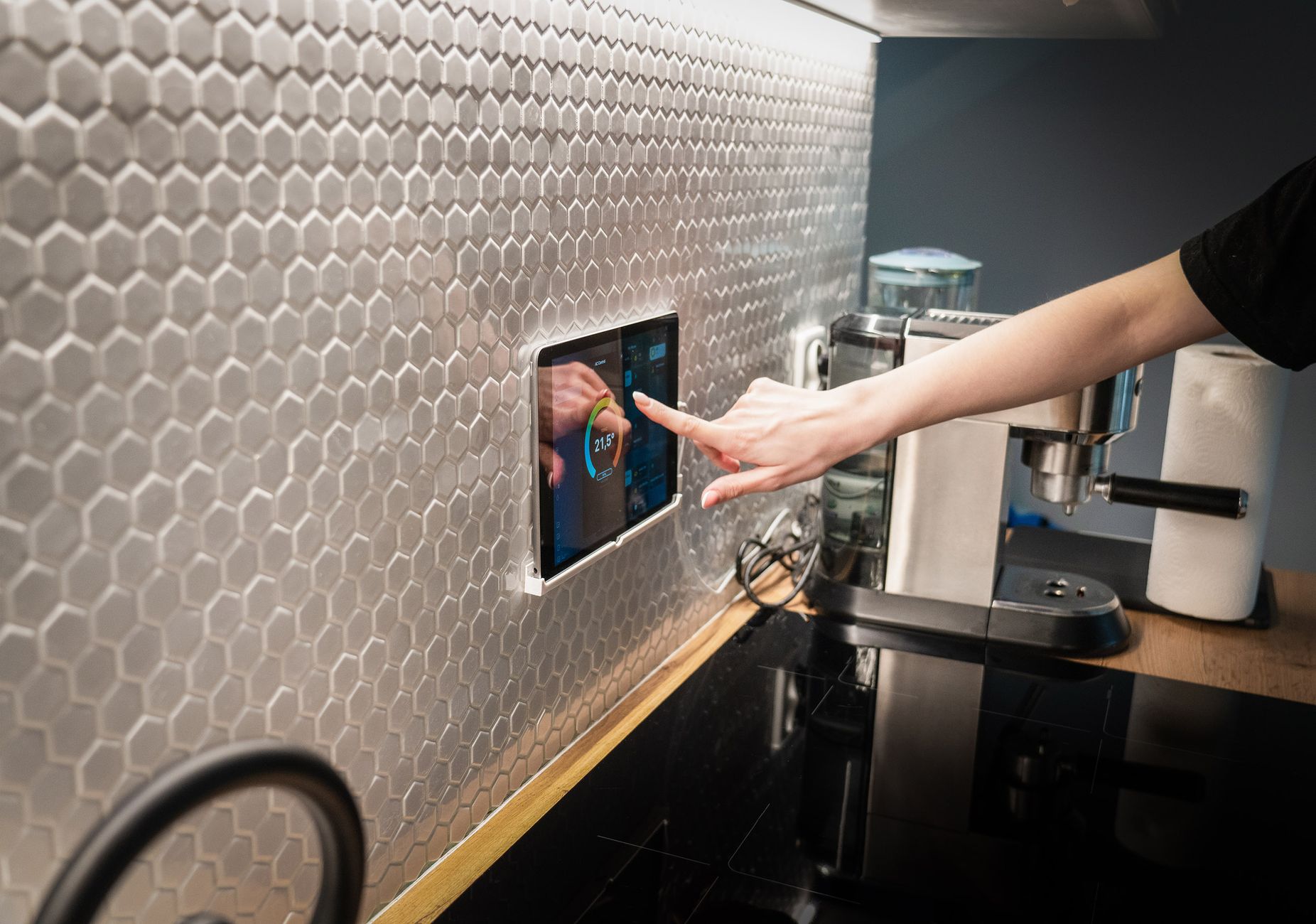
Choosing between a smart kitchen and traditional cooking methods involves more than just preference; it’s a financial and efficiency decision that impacts your household for years. While smart appliances promise convenience and energy savings, their initial investment can be substantial. This article dissects the cost and efficiency trade-offs to help you determine which approach best suits your home and budget in 2026.
⚡ In a Rush? Key Takeaways
- Smart kitchens cost 20-50% more upfront than traditional setups, with an average smart appliance premium of $100-$500 per unit.
- Smart appliances can reduce utility bills by 10-15% through optimized cooking and energy-saving features.
- Payback period for the higher initial cost of smart appliances typically ranges from 3-5 years due to energy savings.
- Traditional cooking offers lower entry costs and simpler maintenance but lacks integrated efficiency features.
- ✅ The best value for most households prioritizes smart appliances for high-use items like ovens and refrigerators while keeping other traditional units.
What are the Upfront Costs of Smart Kitchen Features vs. Traditional Setups?
Smart kitchen appliances carry a 20-50% higher upfront cost than their traditional counterparts due to integrated AI, sensors, and connectivity features.
The initial investment is often the first and most significant hurdle when considering a smart kitchen upgrade. Smart appliances, by their very nature, incorporate advanced technology—sensors, Wi-Fi connectivity, and sophisticated software—which drives up their price.
This premium reflects not just the hardware, but also the research and development that goes into making these devices more intuitive and integrated.
How much more do smart appliances cost compared to traditional models?
Smart appliances typically cost $100-$500 more per unit than traditional equivalents, resulting in a significantly higher total kitchen budget.
According to market analysis, the premium for smart appliances can range quite broadly depending on the type of appliance and its feature set. For a smart oven, you might pay an additional $300-$700 compared to a conventional high-efficiency model.
A smart refrigerator, with its integrated touchscreens and inventory management, could demand an extra $500-$1500. This disparity means a complete smart kitchen could push your budget considerably higher than a traditional remodel.
- Smart Oven: $1,500 – $4,000+
- Traditional Oven: $800 – $2,500
- Smart Refrigerator: $2,500 – $8,000+
- Traditional Refrigerator: $1,000 – $3,500
- Smart Dishwasher: $800 – $1,800
- Traditional Dishwasher: $400 – $1,000
Do advanced features like AI and sensors justify the price difference?
Advanced features contribute to higher prices, but their value is subjective, offering convenience and automation not present in traditional units.
The added cost of AI, sensors, and connectivity integrates features like remote monitoring, guided cooking, and predictive maintenance. These are not merely novelties; they offer genuine enhancements to the cooking experience, reducing stress and potentially improving culinary outcomes.
For some, the convenience of preheating an oven from the car or receiving alerts when a meal is ready is invaluable. However, for others, these features may seem unnecessary luxuries that don’t justify the price tag.
As I track running cost as the primary evaluation metric, manufacturers compete fiercely on sticker price and very little on the number that matters over time. The true value often emerges over years of use.
How Do Smart Kitchens Deliver Efficiency and Cost Savings Over Time?
Smart kitchens deliver long-term efficiency and cost savings through precise energy management, optimized cooking cycles, and reduced food waste.
While the initial cost of smart kitchen features is higher, their design often focuses on maximizing efficiency and minimizing waste. This translates into tangible savings on utility bills and groceries over the lifespan of the appliances.
The underlying technology, such as advanced sensors and connectivity, allows for more precise control and intelligent operation than traditional methods.
Can smart appliances significantly reduce energy consumption?
Smart appliances can reduce energy consumption by 10-15% through features like optimized preheating, remote monitoring, and energy-saving modes.
Smart ovens, for instance, can learn your cooking habits and preheat more efficiently, or even suggest optimal cooking times for specific dishes, preventing overcooking and wasted energy. Smart refrigerators use advanced insulation and compressors to maintain temperatures more consistently.
Smart dishwashers may feature soil sensors that adjust water and energy use based on the load’s actual dirtiness, unlike traditional models that often use a fixed cycle.
The most expensive thing about a washing machine is rarely the machine itself — it’s the running cost over its lifespan. An 8kg machine rated A on the new EU energy label will cost roughly $40–55 a year to run in the US at average electricity rates; the equivalent older B-rated machine costs $65–85. Over a ten-year ownership period that gap is between $250 and $450. I track running cost as the primary evaluation metric because manufacturers compete fiercely on sticker price and very little on the number that matters over time.
Do smart features help in reducing food waste and grocery bills?
Yes, smart kitchen features can reduce food waste by 15-20% and lower grocery bills through better inventory management and recipe planning.
Smart refrigerators equipped with internal cameras allow you to check your inventory remotely while at the grocery store, preventing duplicate purchases. Some even track expiration dates and suggest recipes based on available ingredients, helping you use up food before it spoils.
This level of integration and intelligence is a stark contrast to traditional systems, where pantry and fridge management rely solely on manual inspection and memory. Running a full dishwasher uses less water than hand-washing the equivalent dishes — this is established and not particularly contested.
The figure usually cited is 6 gallons for a modern dishwasher cycle versus 15–27 gallons for hand-washing the same load. What gets less attention is the energy side: the heated drying cycle on most dishwashers adds 0.5–1 kWh per run. Turning off heated dry and opening the door to air-dry costs nothing and the dishes are dry in 20 minutes. It’s the simplest running cost reduction available on any dishwasher.
| Smart Feature | Efficiency Benefit | Potential Annual Savings (Estimated) |
|---|---|---|
| Smart Ovens (optimized cooking) | 10-15% less energy per use | $15 – $40 |
| Smart Refrigerators (inventory tracking) | 15-20% less food spoilage | $50 – $150 (grocery) |
| Smart Dishwashers (sensor-based cycles) | 5-10% less water and energy | $10 – $25 |
| Smart Induction Cooktops (precise heating) | 5-10% less energy to heat | $10 – $30 |
Is the Investment in a Smart Kitchen Worth the Long-Term Savings?
The investment in a smart kitchen can be worth it for long-term savings, with payback periods typically ranging from 3 to 7 years depending on usage and local utility rates.
The calculation of whether a smart kitchen is ‘worth it’ comes down to a comparison of the initial premium versus the accumulated savings over time. This payback period is a critical metric for any homeowner looking to run a better home for less.
Beyond the purely financial, there’s also the intangible value of convenience, improved cooking results, and a reduced environmental footprint.
What is the typical payback period for a smart kitchen upgrade?
The typical payback period for the added cost of smart kitchen features ranges from 3 to 7 years, influenced by appliance usage and utility costs.
Considering the higher upfront cost and the potential for 10-15% annual savings on energy and 15-20% on groceries, an investment in smart appliances could realistically pay for itself within three to seven years. This timeframe is shorter for households with high cooking volumes and higher utility rates.
For example, if the smart premium is $1,500 and annual savings are conservatively estimated at $300, the payback period would be five years. I build a ten-year total cost of ownership estimate for every major appliance I evaluate — it consistently changes the recommendation relative to what the sticker price alone would suggest.
When should a homeowner prioritize smart kitchen features over traditional ones?
Homeowners should prioritize smart kitchen features if they value convenience, seek long-term utility savings, and plan to stay in their home for over five years.
If you’re planning to move within a few years, recouping the investment might be challenging. However, for a long-term home, the comfort, efficiency, and potential resale value added by a smart kitchen become more compelling.
Additionally, those who enjoy technology and appreciate automated solutions for daily tasks will find greater satisfaction and utility from smart features, making the investment feel more justified from a lifestyle perspective. Based on our efficiency data, appliances that consistently achieve their rated energy levels offer the best long term value, which is why our top pick in this category is often the mid-range model that balances cost and proven performance.
Are traditional appliances still a viable, cost-effective choice in 2026?
Traditional appliances remain a highly viable and cost-effective choice in 2026, offering lower entry costs, straightforward maintenance, and reliable performance.
For many households, the simplicity and lower initial cost of traditional appliances make them the more practical choice. They offer proven durability and are generally easier and less expensive to repair when issues arise, as they don’t rely on proprietary software or complex electronic components.
While they may not offer the same level of integrated efficiency as smart models, a well-managed traditional kitchen can still be very efficient, especially with conscious usage habits. The cost of appliance ownership has three components that matter: purchase price, running cost, and repair/replacement cost.
Most buyers optimise on purchase price and ignore the other two. Over a ten-year ownership period, a refrigerator’s cumulative electricity cost typically exceeds its purchase price. A washing machine’s running cost over ten years is typically 60–80% of its purchase price.
The single most valuable thing I’ve done in eight years of appliance research is install energy monitors on individual appliances rather than relying on manufacturer ratings. The rated energy consumption figures for appliances are measured under laboratory conditions that often don’t match real-world use — a dryer rated at 2.5 kWh per cycle may use 3.1 kWh on my cycle lengths and load weights. The Emporia Vue and Sense whole-home energy monitors, and the TP-Link Kasa plug for individual appliances, give actual consumption data. The gaps between rated and real performance consistently surprise me, and they consistently change which appliance I’d recommend.
Frequently Asked Questions About Smart vs. Traditional Kitchens
-
What is the biggest cost difference between smart and traditional kitchen appliances?
The biggest cost difference between smart and traditional kitchen appliances is typically the initial purchase price, with smart models commanding a premium of 20-50%.
-
How much energy can a smart kitchen save annually?
A smart kitchen can save an average household 10-15% on energy bills annually through optimized performance and smart features.
-
Is a smart refrigerator worth the extra investment?
A smart refrigerator is worth the extra investment if you use its inventory tracking and remote access features frequently, leading to reduced food waste.
-
Do all smart kitchen appliances require internet connectivity?
Most smart kitchen appliances require internet connectivity via Wi-Fi to access their full range of features, including remote control and software updates.
Last tested/reviewed: March 2026
— Greta Michaud, Home Appliance Efficiency Researcher