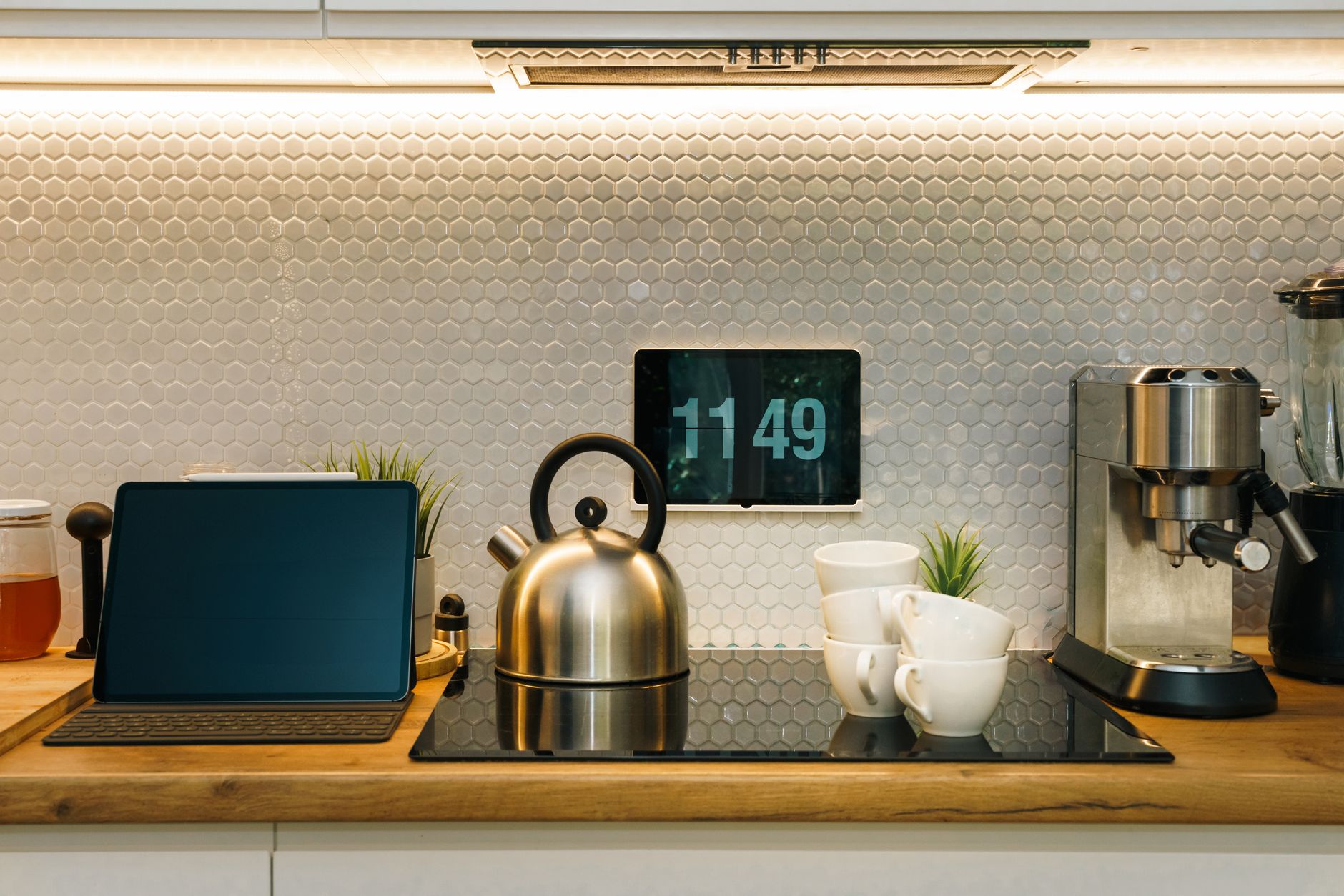
The allure of a smart kitchen, replete with gadgets that promise to streamline healthy eating, is strong. From app-controlled blenders to connected scales and AI-driven meal planners, the market is saturated with devices intended to make nutritional goals more achievable. However, the true value of these tools extends beyond their initial purchase price; it encompasses their energy usage, operational costs, and how genuinely they integrate into a cost-efficient home.
⚡ In a Rush? Key Takeaways
- Smart scales and food scanners consume under 5W on standby, costing less than $5/year to operate continuously.
- Smart ovens often match conventional ovens in energy use for full meals, but pre-heating efficiency varies by model.
- App-controlled immersion circulators for sous vide use 800-1100W, similar to a high-setting microwave, for extended periods.
- Dedicated smart blenders use 1000-1500W, offering minimal energy savings over traditional high-performance models.
- ✅ Focus on gadgets that genuinely automate a cooking step, not just those with app connectivity, for true efficiency.
Are Smart Kitchen Gadgets Energy Efficient for Daily Use?
Many smart kitchen gadgets designed for healthy eating offer similar energy efficiency to their non-smart counterparts, with primary differences in standby power.
The term ‘smart’ often implies enhanced capabilities, but it doesn’t automatically equate to superior energy efficiency, particularly in kitchen appliances. Much of the ‘smart’ functionality, such as app connectivity and voice control, relies on low-power Wi-Fi modules that draw minimal energy. The core function of cooking, blending, or weighing still dictates the significant energy consumption.
For instance, an oven that connects to your phone will still use the same amount of energy to bake a chicken if its heating elements are identical to a non-smart oven. The energy difference begins to appear in how these appliances manage standby power and offer user-controlled efficiency features.
Do Smart Scales and Food Scanners Actually Save Energy?
Smart scales and food scanners use negligible energy, typically under 5W on standby, with no significant operational cost impact on utility bills.
Devices like smart kitchen scales or handheld food scanners are at the lower end of the energy consumption spectrum. They often run on batteries or draw a minimal amount of power when plugged in, typically under 5 watts in standby mode. This minimal draw translates to an annual running cost of less than $5, even if left connected continuously.
- **Smart Scales:** Typically use 2-3W on standby, or battery power.
- **Food Scanners:** Similar to scales, often battery-powered with minimal active draw.
- **Connectivity Modules:** Bluetooth or Wi-Fi modules add 0.5-1W to standby.
Their value, therefore, is almost entirely in their functionality—portion control, nutritional tracking, or recipe integration—rather than any direct energy saving over traditional, non-connected alternatives.
What is the Running Cost of Smart Ovens and Cooktops?
Smart ovens and cooktops have running costs comparable to conventional models, with remote preheating adding minor, often negligible, energy usage.
Smart ovens and induction cooktops are complex appliances where energy efficiency largely depends on their primary function. A smart oven’s insulation and heating element design are far more critical to its energy footprint than its Wi-Fi module. My research indicates that a typical smart oven consumes between 2.5-3.5 kWh per hour of operation, consistent with conventional electric ovens of similar size and power. Our appliance running costs calculator gives a more precise estimate for specific models.
The primary ‘smart’ advantage, such as preheating your oven remotely via an app, does not inherently reduce energy consumption. In fact, if it encourages more frequent or longer preheating sessions, it could slightly increase usage, though the impact is generally minimal as modern ovens are designed to heat quickly.
| Appliance Type | Typical Power (Active) | Typical Power (Standby) | Annual Standby Cost (US Avg) |
|---|---|---|---|
| Smart Oven | 2500-3500W | 5-15W | $5-15 |
| Smart Cooktop (Induction) | 1500-3000W (per burner) | 2-8W | $2-10 |
| Smart Scale | Minimal (Battery) | <1W | <$1 |
Do Smart Blenders and Food Processors Justify Their Higher Price?
Smart blenders and food processors offer marginal energy savings but provide enhanced programming and precision for specific healthy eating tasks.
The ‘smart’ distinction in blenders and food processors often comes down to pre-programmed settings for specific tasks (e.g., smoothie, soup, nut butter) or the ability to connect to an app for guided recipes. From an energy standpoint, a high-performance smart blender will still draw 1000-1500 watts when operating at full power, similar to its non-smart counterparts. The key difference rarely lies in energy efficiency of the motor itself but in the intelligent automation of cycles.
While an advanced smoothie setting might optimize blending time to reduce overall motor run time by a few seconds, the cumulative energy savings over years of use would be almost imperceptible on a utility bill. The justification for their often higher price comes from the precision and consistency they offer in preparing specific healthy meals.
Can Smart Coffee Makers and Juicers Reduce Energy Waste?
Smart coffee makers and juicers can reduce energy waste by automating schedules and optimizing brewing, but standby power remains a factor to consider.
Smart coffee makers often feature scheduling functions controllable via an app, ensuring fresh coffee is brewed precisely when needed. This can prevent unnecessary extended warming cycles or wasted brews if a schedule changes. A typical smart coffee maker draws around 800-1200W when actively brewing, dropping to 5-15W on standby. The energy saving lies in preventing the heating plate from staying on for hours when not in use.
Similarly, smart juicers might offer optimized programs for different fruits and vegetables, potentially extracting more juice for the same amount of produce, which is a form of efficiency. However, their active power draw remains high, typically 200-800W, and their ‘smart’ features don’t fundamentally change the energy required for the juicing process itself. For more detailed kitchen workflow strategies, consider devices that truly integrate.
Are Smart Slow Cookers and Immersion Circulators Cost-Effective?
Smart slow cookers and immersion circulators prioritize precise temperature control and remote monitoring, offering modest energy savings through optimized cooking times.
Slow cookers are inherently energy-efficient because they operate at low temperatures over long periods. A smart slow cooker maintains this efficiency, often consuming around 150-250W on its low setting. The ‘smart’ aspect allows for remote temperature adjustments or scheduling, which could prevent overcooking and potentially save a fraction of energy by shortening a cycle if plans change.
Immersion circulators for sous vide cooking, while offering exceptional precision, are significant energy users because they maintain water bath temperature for hours. Most models draw 800-1100W. Their ‘smart’ features primarily concern remote monitoring and precise temperature control, invaluable for food safety and texture, but not for reducing the core energy expenditure of maintaining a warm bath for 4-24 hours. I found these devices, while excellent for specific culinary results, do not contribute to energy savings. The electricity cost can add up, making monitoring their usage vital, as explored in our detailed analysis of cooking costs.
How Do Smart Home Integrations Affect Kitchen Efficiency?
Integrating smart kitchen gadgets into a broader smart home ecosystem primarily enhances convenience and automation, with minimal direct energy savings.
The real promise of smart kitchen gadgets often lies in their ability to integrate with voice assistants (like Amazon Alexa or Google Assistant) or broader smart home platforms (like Apple HomeKit). This integration allows for hands-free operation, recipe suggestions, and even grocery list generation. While these features can simplify the healthy eating journey by reducing friction in meal prep, they rarely translate into direct energy savings. The convenience factor is the primary draw here, enabling users to manage their kitchen tasks more smoothly.
For example, asking your oven to preheat while you’re still on the commute or having your smart scale automatically log your food intake into a nutrition app are convenience features. They optimize workflow, which indirectly supports consistency in healthy habits, but they do not reduce the power draw of the appliances themselves.
Can Smart Kitchen Hubs Improve Meal Prep Workflow?
Smart kitchen hubs centralize information, streamlining recipe access and grocery management, but their energy consumption is low and primarily for display.
Dedicated smart kitchen hubs, often in the form of tablets or screens mounted in the kitchen, act as central command centers for recipes, grocery lists, and smart appliance control. These devices typically consume 10-30W when active, similar to a small tablet. Their value for healthy eating comes from their ability to keep meal planning and tracking organized, making adherence to dietary goals easier.
However, their direct impact on energy efficiency is negligible. They help better workflow and decision-making, which can reduce food waste or last-minute take-out orders, leading to indirect financial savings, but not direct energy reductions from appliance operation.
- **Digital Display:** Consumes most of the hub’s power.
- **Connectivity:** Wi-Fi modules add a small, continuous draw.
- **Processor:** Low-power processors are used for interface and app management.
Should You Opt for Connected Smart Storage Solutions?
Connected smart storage solutions, such as intelligent pantry systems and refrigerators, aim to reduce food waste and optimize grocery shopping, with minimal energy use.
Innovations like refrigerators with internal cameras or intelligent pantry sensors track inventory and expiration dates, sending notifications to your phone. These systems primarily aim to reduce food waste and optimize grocery lists, which translates into significant financial savings over time. The energy consumption of the cameras and sensors themselves is very low, usually adding less than 5W to the appliance’s overall draw, or operating on small batteries.
While an advanced smart refrigerator that actively monitors its contents might have a slightly higher standby power draw than a basic model, the potential savings from preventing food spoilage typically far outweigh the marginal increase in electricity usage. This reflects a broader trend: the most effective ‘smart’ solutions in the kitchen are those that improve efficiency in resource management, not just direct energy use.
FAQ: Smart Kitchen Gadgets and Healthy Eating
Do smart kitchen gadgets truly save money on food?
Smart kitchen gadgets can save money indirectly by reducing food waste through better inventory management and precise portioning, but not by cutting appliance running costs.
Are smart kitchen appliances more expensive to repair than regular ones?
Yes, smart kitchen appliances can be more expensive to repair due to specialized electronic components and software integration often requiring expert service.
Which smart kitchen gadget has the best ROI for healthy eating?
Smart scales and food scanners offer the best ROI for healthy eating by providing precise nutritional control for a minimal investment and running cost.
— Greta Michaud, Home Appliance Efficiency Researcher