Time of Use Electricity Rates Explained: A Data-Driven Guide to Lower Bills

Time of use electricity rates explained simply: instead of paying a fixed price for every kilowatt-hour regardless of when you consume it, these variable pricing structures charge more during high-demand periods and significantly less during off-peak hours. For the average American household consuming approximately 877 kilowatt-hours monthly, understanding these rate structures could mean the difference between a $142 bill and a $108 bill without reducing total electricity consumption. The concept relies on straightforward grid economics—when afternoon demand strains generation capacity, prices rise to reflect scarcity; when demand drops overnight, prices fall to reflect surplus baseload power.

What Exactly Are Time of Use Electricity Rates?

Time of use rates charge variable prices per kilowatt-hour based on demand periods, with peak pricing reaching 35 cents/kWh against 10 cents/kWh off-peak in most markets.

Traditional flat-rate electricity plans disguise the true cost of generation by averaging expensive peak power with inexpensive off-peak power into a single rate, typically ranging between 12 and 16 cents per kilowatt-hour nationwide. Time of use (TOU) rates unbundle this average, exposing the underlying volatility of electricity markets. Most utilities operating these plans divide the weekday into three distinct intervals: peak hours, typically spanning 4:00 p.m. to 9:00 p.m. when commuters return home and air conditioning loads spike; off-peak hours, generally running from 10:00 p.m. to 6:00 a.m. when industrial and commercial demand evaporates; and shoulder periods covering the remaining hours when pricing falls between these extremes.

Weekends and holidays often see simplified structures, with peak periods shortening or disappearing entirely as commercial buildings close. The pricing differential proves substantial—Pacific Gas & Electric’s TOU plans, for instance, charge 36 cents per kilowatt-hour during summer peak hours versus merely 10 cents during the overnight period, a ratio of 3.6 to 1 that rewards discipline and penalizes consumption during grid stress.

How Do Time of Use Rates Actually Work?

Utilities divide the day into peak, off-peak, and shoulder periods; electricity costs 28-35 cents/kWh during peak hours versus 8-12 cents/kWh off-peak in most deregulated markets.

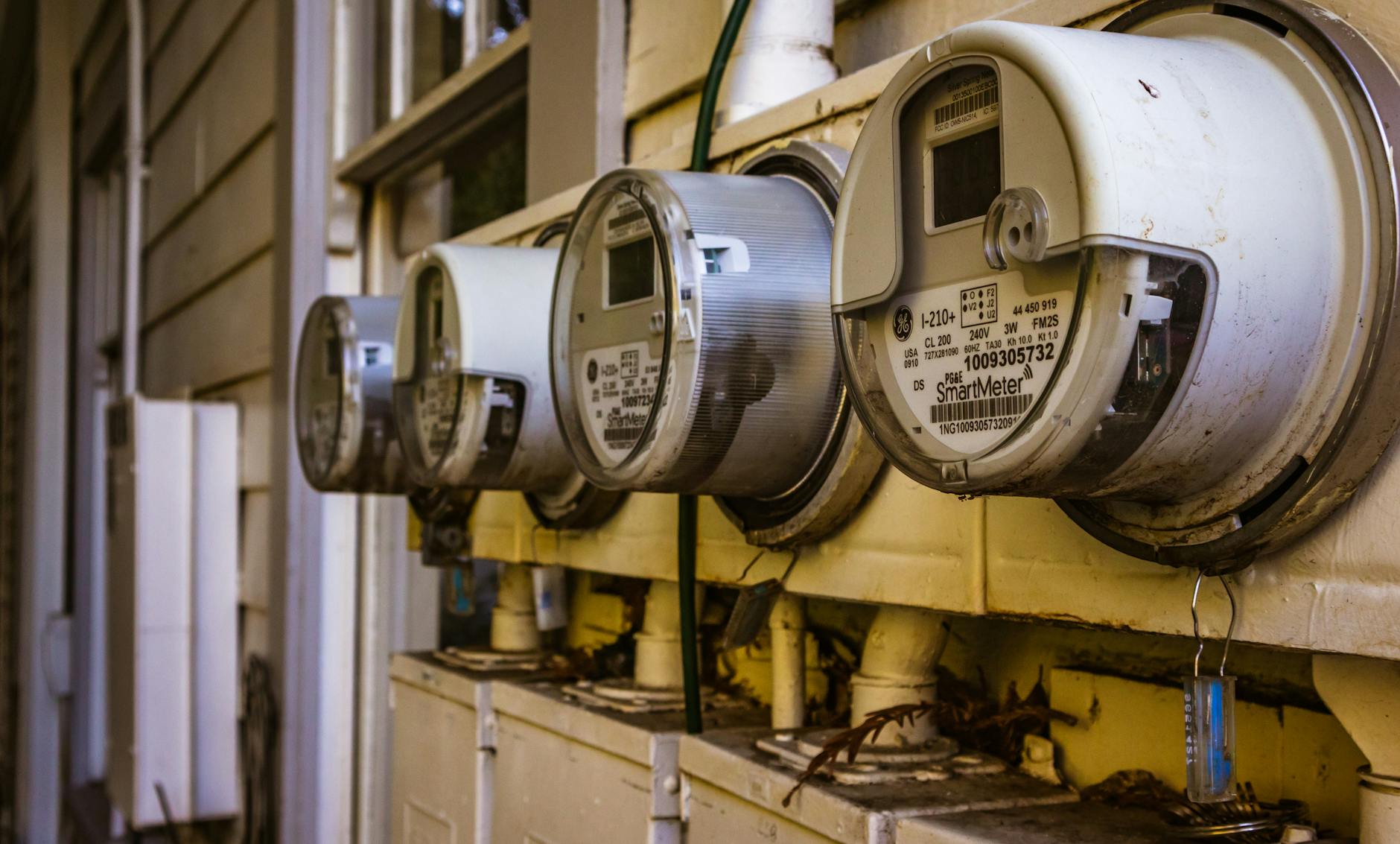
The mechanics require a smart meter capable of recording consumption in fifteen-minute intervals rather than merely tallying monthly totals. When you run your dishwasher at 7:00 p.m. on a TOU plan, the meter logs those kilowatt-hours against the peak rate; when you start the same cycle at 11:00 p.m., it applies the off-peak multiplier. This granular tracking enables utilities to shift consumption patterns without reducing total generation capacity, effectively using existing infrastructure more efficiently rather than building peaker plants that sit idle twenty hours daily.

Seasonal variations complicate the calculus. Summer schedules typically feature higher peak rates and longer peak windows to manage air conditioning loads, while winter structures may emphasize morning peaks around 7:00 a.m. to 11:00 a.m. as heating systems activate. Some utilities introduce “super off-peak” periods between midnight and 3:00 a.m. when wind generation often exceeds demand, offering rates as low as 6 cents per kilowatt-hour for electric vehicle charging and energy-intensive appliances. Understanding your specific utility’s seasonal definitions matters—Southern California Edison’s summer peak runs 4:00 p.m. to 9:00 p.m., while Con Edison in New York often defines peak as 8:00 a.m. to midnight during high-demand months.

How Much Can You Realistically Save With Time of Use Pricing?

Households shifting thirty percent of consumption to off-peak hours typically reduce annual electricity costs by one hundred fifty to three hundred dollars, though results vary by climate region.

The mathematics require analyzing your load profile against the rate differential. Consider a household consuming 1,000 kilowatt-hours monthly with a baseline flat rate of 14 cents, producing a $140 bill. On a TOU plan with peak pricing at 32 cents and off-peak at 10 cents, that same household could reduce their bill to $118 simply by moving 400 kilowatt-hours to off-peak times while accepting 200 kilowatt-hours at the higher peak rate. The 30% shift threshold serves as a rough benchmark—households achieving this displacement generally capture sufficient off-peak savings to offset unavoidable peak consumption.

Electric vehicle owners see amplified benefits. Charging a 60-kilowatt-hour battery during peak hours costs approximately $19 at 32 cents per kilowatt-hour, whereas overnight charging costs merely $6 at 10 cents per kilowatt-hour. Over a year of driving 12,000 miles, that differential accumulates to $650 annually, rendering TOU plans virtually mandatory for EV owners unless they possess substantial solar generation. Tracking these shifts through your utility’s web portal reveals whether your behavioral changes translate to actual savings or merely redistribute consumption without financial benefit.

Is Time of Use Electricity Pricing Right for Your Home?

Time of use plans suit households with programmable appliances, electric vehicles, and flexible schedules; they disadvantage those with medical equipment needs or rigid 9-to-5 occupancy patterns.

The suitability assessment hinges on controllability. If your residence features a programmable thermostat, a dishwasher with delay-start functionality, a clothes dryer with timed cycles, and lifestyle flexibility regarding when you cook, clean, and cool, TOU rates offer substantial arbitrage opportunities. Remote workers particularly benefit, as they can schedule laundry cycles during the 10:00 a.m. to 2:00 p.m. shoulder period and run dishwashers after 9:00 p.m. without compromising domestic efficiency.

Conversely, households with elderly residents requiring consistent climate control, medical equipment demanding uninterrupted power regardless of time, or infants with rigid feeding schedules that necessitate dishwasher and bottle sterilizer cycles during dinner hours face asymmetric risk. A single day of peak-rate consumption can erase weeks of careful off-peak shifting. Similarly, homes lacking programmable appliances or smart thermostats require upfront investment to realize savings—delay-start dishwashers cost $50-$150 more than basic models, though they pay for themselves within eighteen months under typical TOU differentials. Before enrolling, audit your previous twelve months of hourly consumption data; if your peak-hour usage exceeds 40% of your total, flat rates likely prove more economical.

Time of Use vs Flat Rate: Which Costs Less?

Time of use rates cost fifteen to twenty-five percent less than flat rates when sixty percent of consumption occurs off-peak; otherwise, flat rate structures prove more economical.

The break-even calculation depends on your utility’s specific price spread. Where peak rates merely double off-peak rates (a 2:1 ratio), households need shift only moderate consumption to benefit. Where peak rates quadruple off-peak costs (as seen in some Texas markets during scarcity events), even modest shifting yields dramatic savings. However, if your lifestyle demands air conditioning during 100-degree afternoons or you operate a home business requiring servers and equipment during standard business hours, the unavoidable peak consumption may render TOU plans punitive.

Flat rates provide predictability valuable for budgeting, averaging $0.13-$0.15 per kilowatt-hour regardless of temporal patterns. They insulate households from scarcity pricing events when heat waves drive peak rates to 50 cents or higher. Yet this predictability extracts a premium—utilities embed the cost of peak generation into every hour, meaning off-peak consumers subsidize peak-hour users under flat-rate structures. For households capable of shifting 60% or more of consumption to overnight hours, TOU plans essentially stop subsidizing their less flexible neighbors while capturing wholesale market lows.

How Do You Shift Electricity Usage to Off-Peak Hours?

Programmable dishwashers, delayed-start laundry cycles, and smart thermostats can shift sixty percent of domestic electricity consumption to the ten p.m. to six a.m. window without lifestyle disruption.

Implementation requires systematic scheduling rather than sacrifice. Begin with thermal mass—if your home features good insulation, pre-cool to 72 degrees Fahrenheit during the 9:00 p.m. to 6:00 a.m. super-off-peak window, then allow temperatures to drift upward to 78 degrees during peak hours while using ceiling fans for comfort. This “load shifting” strategy stores coolness in your walls and furniture, reducing air conditioning runtime during expensive afternoon periods by 40-60%.

Water heating represents another opportunity. Conventional tank water heaters maintain 120-degree water continuously; installing a timer to heat water only from 11:00 p.m. to 5:00 a.m. captures off-peak rates while maintaining sufficient capacity for morning showers. Laundry proves simplest—most modern washers and dryers offer delay-start functions allowing you to load clothes at 8:00 p.m. but commence cycles at 10:30 p.m. when rates drop. Pool pumps, which consume 2,000-3,000 kilowatt-hours annually, should run exclusively during off-peak hours; variable-speed pumps operating at lower RPMs for longer overnight cycles often filter water more effectively while costing 70% less than single-speed pumps running during peak periods. Track these adjustments using your home maintenance logs to verify actual bill reductions align with theoretical savings.

Common Mistakes That Eliminate TOU Savings

Enrollment alone generates no savings—behavioral adaptation determines outcomes. The most frequent error involves maintaining previous consumption patterns while merely observing the bill; households continuing to run dryers, ovens, and air conditioning during 6:00 p.m. to 9:00 p.m. peak periods face bills 20-30% higher than flat-rate equivalents. Another pitfall involves ignoring seasonal rate changes—winter TOU structures often feature morning peaks from 6:00 a.m. to 9:00 a.m., catching households accustomed to summer evening peaks who begin pre-heating homes at 6:00 a.m. unaware of winter pricing.

Failing to utilize utility-provided monitoring tools compounds these errors. Most utilities offering TOU plans provide hourly consumption graphs showing exactly when your dollars evaporate; ignoring these dashboards leaves you optimizing blindly. Finally, households with solar panels must verify net metering agreements—some utilities apply TOU rates only to consumption, crediting solar generation at flat avoided-cost rates, while others apply TOU structures to net consumption, creating complex arbitrage opportunities requiring battery storage to maximize.

Conclusion: Is the Switch Worthwhile?

Time of use electricity rates reward the disciplined and punish the inattentive. For households possessing programmable appliances, electric vehicles, or occupancy patterns allowing thermal pre-loading and delayed appliance cycles, the savings prove substantial and consistent—typically $15-$25 monthly without comfort sacrifice. For those with rigid schedules, medical necessities, or homes lacking programmable infrastructure, flat rates offer valuable predictability that outweighs potential arbitrage gains. Before committing, request twelve months of hourly usage data from your utility and model the costs explicitly; the mathematics reveal quickly whether your specific consumption geometry aligns with time-based pricing or whether you should pursue efficiency improvements through equipment upgrades rather than temporal shifting.