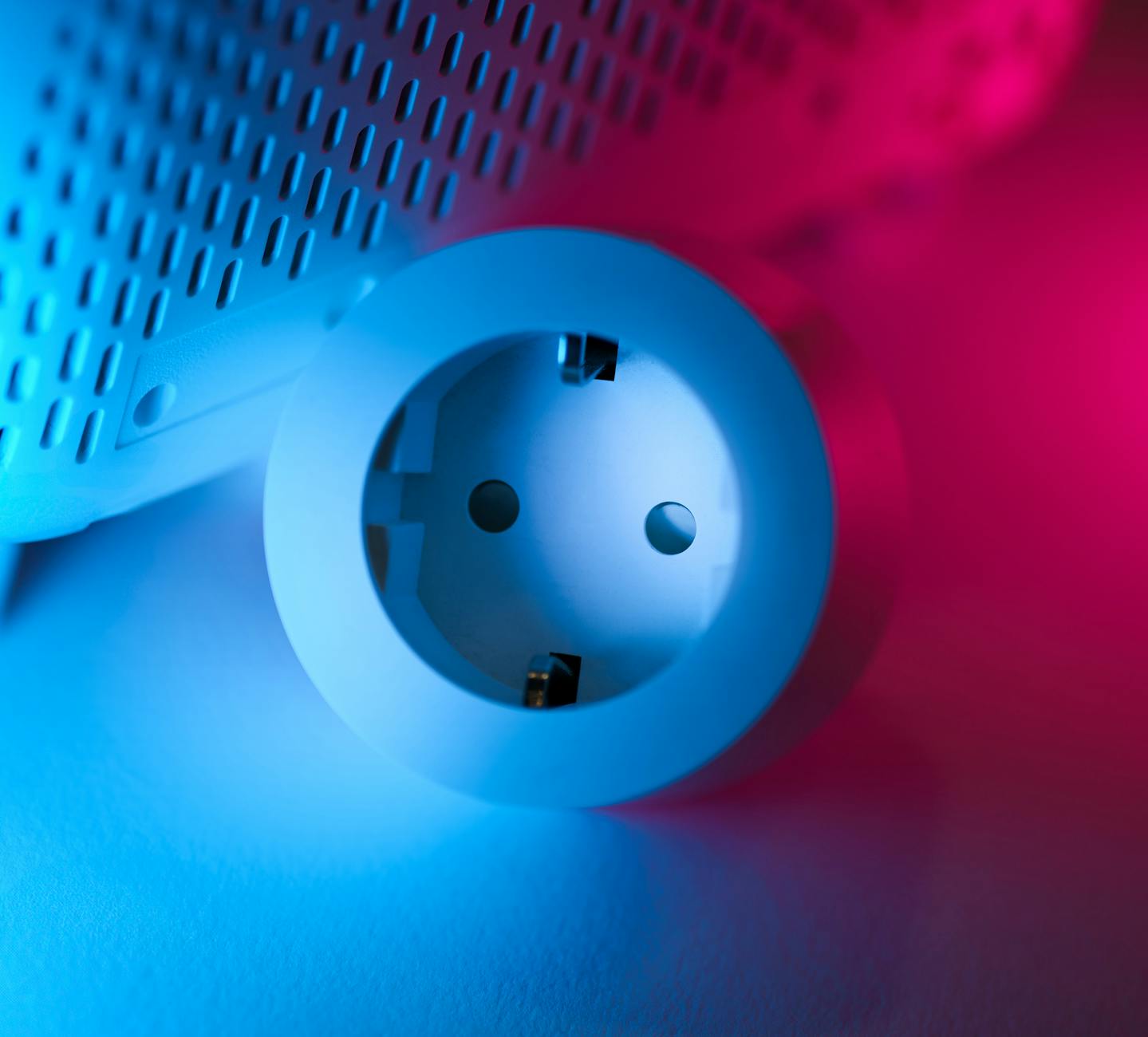
What does electricity monitoring actually measure?
Smart plugs measure real-time wattage and cumulative kilowatt-hour consumption, displaying usage patterns through companion apps that track daily, weekly, and monthly intervals.
⚡ In a Rush? Key Takeaways
- Smart plugs measure real-time wattage (up to 1500W).
- They track cumulative kilowatt-hour consumption.
- Data is displayed through companion apps.
- ✅ Ideal for intermittent high-draw appliances.
Smart plugs with electricity monitoring capabilities do more than simply turn devices on and off remotely. They contain small sensors that measure the voltage and amperage passing through the socket, calculating real-time wattage draw and cumulative kilowatt-hour consumption. This data feeds into companion smartphone applications that display granular usage patterns over time.
Unlike your utility bill, which offers only aggregate household consumption, these devices isolate individual appliances. They reveal precisely when a refrigerator compressor cycles between one hundred and eight hundred watts, how much power a gaming console consumes in rest mode versus active play, or whether a phone charger continues drawing current after the battery reaches capacity. The accuracy typically falls within plus or minus two percent, sufficient for household auditing though not laboratory-grade measurement.
Most applications allow users to input their specific electricity rate—usually thirteen to sixteen cents per kilowatt-hour in the United States—translating raw wattage into actual dollar costs. This conversion proves crucial for motivating behavioral change, as seeing that a space heater costs forty-five cents per hour to operate carries more weight than knowing it draws fifteen hundred watts.
How much does a smart plug with monitoring cost to run?
A typical monitoring smart plug consumes 1-2 watts continuously, costing approximately $1.50 to $3.00 annually—negligible compared to controlled devices.
The hardware investment for a reputable monitoring smart plug typically ranges from fifteen to thirty dollars per unit. Established manufacturers including TP-Link, Amazon, and Eve occupy this price bracket with WiFi-enabled models. This upfront cost represents the primary barrier to entry, particularly considering that meaningful home energy auditing often requires five to ten units to cover major discretionary appliances.
However, the plug itself consumes electricity to power its internal radio and circuitry. A typical monitoring smart plug draws between one and two watts continuously, translating to roughly eight to seventeen kilowatt-hours annually. At average residential electricity rates, operating the monitoring hardware costs roughly one dollar fifty to three dollars per year. While negligible compared to a refrigerator or air conditioner, this parasitic load is not zero.
When calculating return on investment, one must subtract this operational overhead from any documented savings. For a plug managing a high-draw appliance like a space heater, this overhead amounts to less than five percent of potential savings. For a plug monitoring a five-watt phone charger, the overhead actually exceeds the device’s consumption, creating a net loss of approximately two dollars annually.
Which appliances benefit most from monitoring?
High-draw intermittent appliances like space heaters and window units reveal actionable data; low-wattage devices rarely justify the hardware investment.
| Appliance | Power Draw | Best for |
|---|---|---|
| Space Heaters | 800-1500W | Identifying usage patterns |
| Window AC Units | 800-1500W | Optimizing runtime |
| Gaming Consoles | 60-100W (rest mode) | Eliminating phantom loads |
Conversely, monitoring a fifty-watt laptop charger or a ten-watt LED desk lamp provides minimal actionable intelligence. These devices cost pennies per week to operate; knowing precisely how many pennies offers little practical value. Similarly, major appliances like electric dryers or central air conditioning units exceed the fifteen-amp rating of standard smart plugs, requiring hardwired monitoring solutions instead.
Can a smart plug actually lower your electric bill?
Monitoring alone saves nothing; value emerges through behavioral changes or automation that reduces runtime, typically yielding $5-15 monthly on high-consumption devices.
The technology itself reduces nothing. A smart plug functions purely as a diagnostic and control tool; savings materialize only through behavioral modifications or automated scheduling. Without acting upon the data—remotely turning off a forgotten heater, scheduling a dehumidifier for off-peak hours, or replacing an inefficient appliance—the hardware merely documents waste rather than preventing it.
Real-world savings vary dramatically. Users who discover an old refrigerator or chest freezer running inefficiently might save twenty to thirty dollars monthly by replacing it. Those merely confirming that LED lamps consume minimal electricity save nothing beyond verification. The plugs prove most valuable in households with high baseline consumption, multiple discretionary appliances, or occupants prone to leaving devices running.
Automation features offer the most reliable savings pathway. Scheduling a window air conditioner to pre-cool during off-peak rates rather than running continuously, or setting a hard cutoff for entertainment centers at midnight, creates measurable kilowatt-hour reductions without requiring constant manual intervention.
How long until smart plug electricity monitoring pays for itself?
At $20 per plug, monitoring pays for itself in 8-14 months when managing 200+ watt devices daily, or immediately if preventing one overnight heater incident.
Calculating the payback period requires comparing hardware cost against documented savings. At twenty dollars per plug, monitoring becomes cost-effective after approximately eight to fourteen months when managing devices drawing two hundred watts or more for several hours daily. This assumes the user reduces consumption by twenty to thirty percent through awareness and scheduling.
The timeline compresses significantly if the plug prevents a single incident. A space heater running unnecessarily overnight—eight hours at fifteen hundred watts—consumes twelve kilowatt-hours. At sixteen cents per kilowatt-hour, that single mistake costs one dollar ninety-two, or nearly ten percent of the hardware investment recovered in one night.
For moderate-draw devices like desktop computers or entertainment systems consuming one hundred to two hundred watts, expect eighteen to thirty-six months to break even. Low-wattage devices never achieve payback; monitoring a five-watt charger that might save one watt through unplugging generates annual savings of approximately one dollar thirty, requiring fifteen years to amortize a twenty-dollar plug.
Are there cheaper alternatives?
Basic plug-in energy meters provide identical wattage readings without remote access for $10-15, while utility bill graphs suffice for many households.
Basic plug-in energy meters from manufacturers like Kill A Watt provide identical instantaneous wattage readings without wireless connectivity, costing ten to fifteen dollars at hardware stores. These units display voltage, amperage, and cumulative kilowatt-hours on an LCD screen, sufficient for spot-checking individual appliances. They lack remote monitoring and automation but serve adequately for one-time audits.
Many utility companies now provide detailed consumption graphs through online portals for homes equipped with smart meters. These tools display hourly usage patterns across the entire house, allowing residents to identify high-consumption periods without purchasing hardware. While less granular than plug-level monitoring, this data often suffices for diagnosing behavioral patterns.
For comprehensive visibility without multiple plug purchases, whole-home monitors that clamp onto the main electrical panel offer detailed circuit-level data, though they require professional installation and cost several hundred dollars.
When is it not worth the investment?
Monitoring low-wattage items under 5 watts provides negligible data, as the plug’s own consumption may exceed what it measures, creating net energy loss.
Certain scenarios render these devices economically irrational. Rentals with included utilities remove the financial incentive, though environmental consciousness might still motivate usage. Homes already optimized with Energy Star appliances and disciplined occupancy-sensor controls offer minimal low-hanging fruit for discovery.
The technology also proves unsuitable for high-humidity outdoor environments or appliances exceeding fifteen amps—electric dryers, stoves, and central air units. Attempting to monitor these through standard smart plugs creates fire hazards.
Households lacking technical comfort to interpret data or discipline to act upon findings gain nothing from monitoring. A plug revealing that your gaming console consumes eighty watts continuously saves no money until someone changes the power settings.
The verdict
Smart plug electricity monitoring occupies a narrow but useful niche in household efficiency. The investment justifies itself primarily for high-draw intermittent appliances where eight to fourteen months of diligent use recovers the hardware cost. For households monitoring multiple devices, using an appliance energy cost calculator alongside physical monitors helps prioritize which sockets warrant the investment.
For those specifically tracking high-consumption devices like space heaters or window units, the TP-Link Kasa Smart Plug with Energy Monitoring provides reliable connectivity and detailed historical data. I earn a small commission if you purchase through this link, at no additional cost to you. Ultimately, the technology serves as a diagnostic scalpel rather than a universal solution—effective when applied to specific, measurable inefficiencies, but wasteful when deployed indiscriminately across low-draw devices where awareness alone cannot generate meaningful returns.
📊 Efficiency Verdict
Smart plug electricity monitoring is most effective for intermittent high-draw appliances, where it can pay for itself in 8-14 months. It’s less useful for low-wattage devices and may not be worth the investment in certain scenarios.