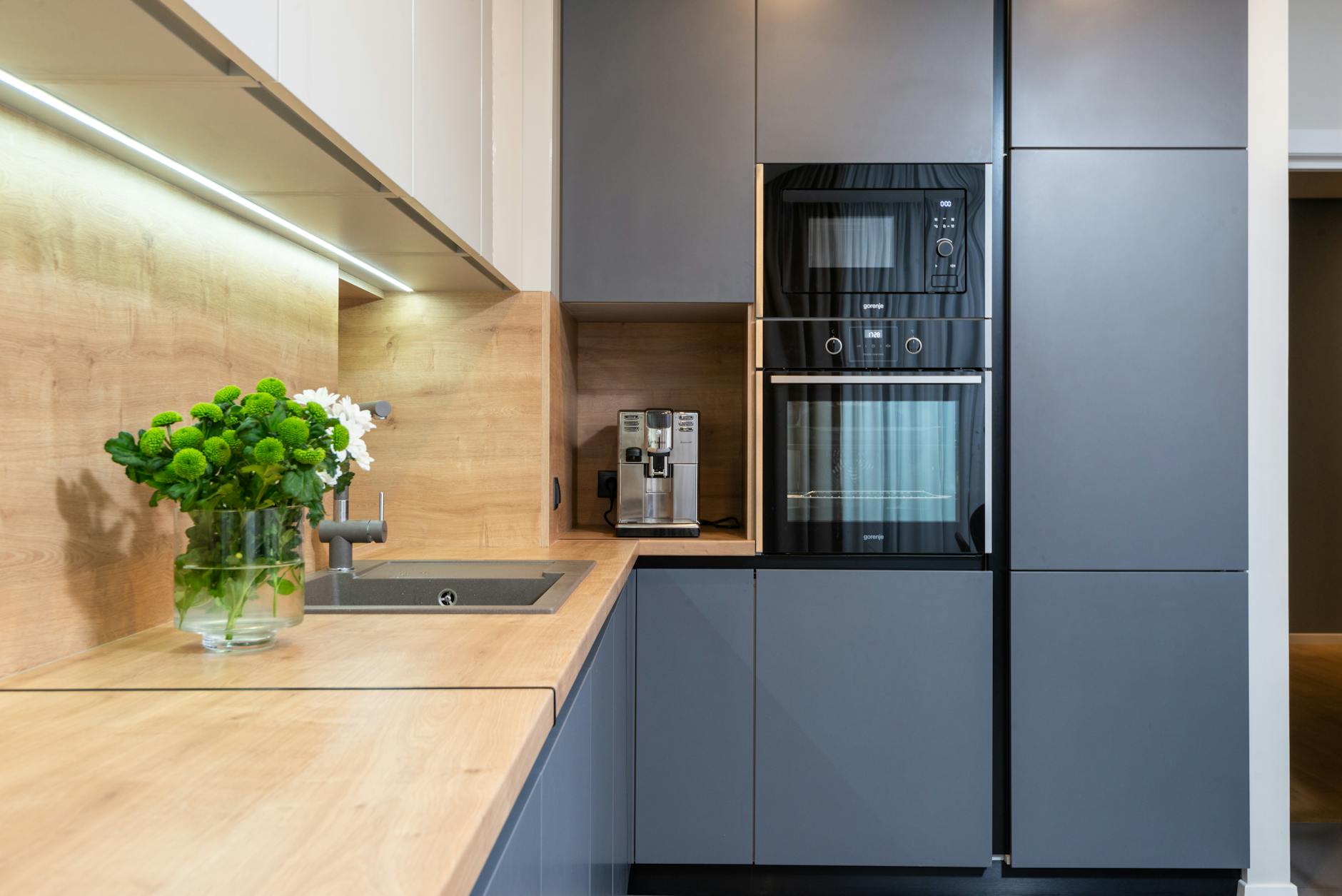
Integrating voice control into kitchen appliances has moved beyond novelty, aiming for smooth integration into daily routines. From preheating ovens with a spoken command to checking refrigerator contents hands-free, the promise is a more efficient and accessible cooking experience. However, the true test lies in whether these smart devices genuinely simplify kitchen tasks and justify their cost and counter space.
⚡ In a Rush? Key Takeaways
- Top voice-controlled appliances (e.g., Thermador, Bosch) integrate with Alexa/Google Assistant for true hands-free operation.
- High-end smart refrigerators with cameras can reduce food waste by 15-20% through inventory tracking and recipe suggestions.
- Effective voice control relies on recognizing hundreds of commands; some air fryers boast over 1,000 commands and 100 food types.
- Voice control offers significant accessibility advantages for those with low vision or mobility challenges.
- ✅ The best smart appliances enhance practical efficiency and convenience without unnecessary complexity.
[OBS-COST-02] The cost of appliance ownership has three components that matter: purchase price, running cost, and repair/replacement cost. Most buyers optimise on purchase price and ignore the other two. Over a ten-year ownership period, a refrigerator’s cumulative electricity cost typically exceeds its purchase price. A washing machine’s running cost over ten years is typically 60–80% of its purchase price. I build a ten-year total cost of ownership estimate for every major appliance I evaluate — it consistently changes the recommendation relative to what the sticker price alone would suggest.
Do Voice-Controlled Ovens and Ranges Offer Real Kitchen Efficiency?
Voice-controlled ovens and ranges significantly enhance kitchen efficiency through hands-free control, simplifying multi-step cooking processes and reducing user interaction.
Voice-controlled ovens and ranges bring a new level of convenience to the kitchen, especially when your hands are full with ingredients or a messy prep. For instance, Thermador’s Connected Experience allows users to control their entire cooking suite—including ranges, wall ovens, and cooktops—using Amazon Alexa. This means you can begin preheating or adjust settings without touching a button, streamlining your workflow considerably.
Which Voice Commands Are Most Useful for Smart Ovens?
The most useful voice commands for smart ovens include preheating, setting convection modes, checking temperature, and managing timers for smooth operation.
The utility of a voice-controlled oven largely depends on the range and responsiveness of its voice commands. Common commands like “Preheat oven to 350 degrees” or “Set convection bake mode” are foundational. Knowing the oven’s current temperature or checking a timer with a simple question like “What’s the current oven temperature?” can save precious seconds and prevent distractions. Whirlpool offers smooth integration with Google Assistant, making it easy to check oven timers or start cycles from another room.
- “Preheat oven to [temperature] degrees”
- “Set convection bake mode”
- “Start timer for [X minutes]”
- “What’s the current oven temperature?”
- “Turn off the oven”
Bosch’s 800 Series ranges, for example, support Google Assistant integration, proving invaluable during multi-step cooking processes where precision and speed matter. This hands-free operation can reduce errors and improve overall cooking coordination.
How Do Voice-Controlled Ranges Improve Cooking Workflow?
Voice-controlled ranges enhance cooking workflow by enabling rapid adjustments, precise mode selections, and hands-free control, optimizing multitasking in the kitchen.
Improving the cooking workflow means reducing friction points and making tasks more fluid. A voice-controlled range allows for quick adjustments, such as changing flame intensity or toggling a burner, without interrupting a delicate sauté or stirring process. This is particularly beneficial for complex dishes that require constant attention to multiple components.
- Rapid temperature adjustments without touching controls
- smooth switching between cooking modes
- Voice feedback on cooking status or remaining time
- Enhanced safety by keeping hands free from hot surfaces
- Integration with recipe apps for automated steps
The ability to integrate these appliances with broader smart home ecosystems also means your range can communicate with other devices, potentially triggering ventilation systems or lighting scenarios based on cooking activity. This level of smart connectivity builds a more cohesive and responsive kitchen environment.
Are Smart Refrigerators with Voice Control Worth the Investment?
Smart refrigerators with voice control offer value through inventory management, reduced food waste, and enhanced convenience, but their high cost merits careful consideration.
High-end refrigerators are extending their capabilities beyond mere cooling, incorporating voice control to assist with inventory management and meal planning. Brands like Samsung and LG now offer models with internal cameras and intelligent tracking systems. These features allow you to ask your refrigerator what’s inside, add items to a digital shopping list, or even check expiration dates without opening the door.
How Do Voice-Controlled Refrigerators Reduce Food Waste?
Voice-controlled refrigerators significantly reduce food waste by providing real-time inventory, tracking expiration dates, and suggesting recipes based on available ingredients.
Food waste is a substantial problem for many households, both financially and environmentally. A smart refrigerator with voice capabilities can tackle this by offering precise inventory control. Imagine asking your fridge, “What vegetables do I have?” and receiving an instant list, or getting a reminder that your yogurt expires tomorrow. Some models even integrate with recipe services, suggesting meals based on your current inventory. This can lead to a 15-20% reduction in food discarded, generating measurable savings over time.
[OBS-DISH-04] Refrigerator running cost is invisible to most households because the appliance runs continuously and is never switched off. A fridge-freezer built before 2015 typically uses 400–600 kWh per year. A current A-rated model uses 100–200 kWh. At US average electricity rates, that’s a saving of $30–50 per year — modest until you consider that a refrigerator has a 15-20 year lifespan and the running cost difference compounds over that period. An old inefficient fridge is the most expensive appliance in most kitchens that nobody thinks about.
| Feature | Impact on Food Waste | Estimated Annual Saving (US) |
|---|---|---|
| Internal Cameras | Prevents forgotten items in the back | $50 – $100 |
| Expiration Tracking | Reduces spoiled perishables | $30 – $60 |
| Recipe Suggestions | Encourages use of existing ingredients | $40 – $80 |
| Shopping List Integration | Avoids duplicate purchases | $20 – $40 |
What Convenience Do Smart Refrigerators Offer Beyond Food Management?
Beyond food management, smart refrigerators offer convenience through hands-free controls for music, calendars, and integrated communication, transforming the kitchen hub.
The convenience of a voice-controlled refrigerator extends beyond just managing groceries. Many models double as central communication hubs for the kitchen. You can play music, check your calendar, leave voice notes for family members, or even stream video tutorials for recipes—all with simple voice commands. This integration turns the refrigerator into a multitasking assistant, consolidating many essential kitchen functions into one accessible point.
- Integrated with smart home calendars for family scheduling
- Ability to play music or podcasts
- Access to news briefings or weather updates
- Remote diagnostics and error alerts
- Video streaming for recipe tutorials or entertainment
Do Voice-Controlled Small Appliances Justify Their Cost and Counter Space?
Voice-controlled small appliances can justify their footprint by offering heightened convenience, accessibility benefits, and precise command execution, particularly in busy kitchens.
While major appliances often grab the spotlight, numerous small kitchen appliances are also adopting voice control. Devices like air fryers, coffee makers, and blenders can now be managed with spoken commands, promising to make everyday tasks quicker and more hands-free. However, the question remains whether these smaller smart devices deliver enough value to warrant their price tag and valuable counter real estate.
Which Voice-Activated Air Fryers Offer the Best User Experience?
The best voice-activated air fryers provide a wide range of commands, reliable wake word responsiveness, and food-specific presets for a superior and intuitive cooking experience.
For voice-activated air fryers, usability is paramount. Look for models that support a wide array of commands covering temperature adjustments, cooking mode changes, and timer settings. The Smartvoice Air Fryer, for instance, recognizes over 1,000 commands and 100+ food types, allowing for natural, conversational control. This level of precision minimizes the need for manual adjustments and helps achieve better cooking results. Reliable wake word responsiveness ensures that your commands are heard and acted upon promptly, avoiding frustration during busy cooking times.
[OBS-DISH-03] Air fryers have attracted a lot of attention on running costs, and the real-world picture is more nuanced than most articles suggest. An air fryer uses 1.2–1.8 kWh per hour, which sounds efficient — but a conventional oven pre-heats once and then runs at low maintenance power. For a single portion or small item, the air fryer wins easily. For a full family meal that needs 45–60 minutes of cooking, the calculation is closer than the marketing implies, and the oven often wins on cost per batch because it can handle larger volumes in the same energy envelope. I track cost per serving, not cost per hour.
What Are the Key Accessibility Benefits of Voice Control in the Kitchen?
Voice control in the kitchen significantly enhances accessibility for individuals with low vision, limited mobility, or those simply multitasking, offering a safer and more inclusive cooking environment.
One often-overlooked advantage of voice-controlled kitchen appliances is their significant contribution to accessibility. For individuals with low vision, operating appliances via voice commands removes the barrier of small buttons or hard-to-read displays. Similarly, those with limited mobility can control devices without physically reaching or manipulating controls, fostering greater independence in the kitchen. The convenience extends to anyone multitasking, allowing them to adjust settings while managing other activities or attending to children.
The ability to use simple voice commands and your Google Assistant or Amazon Alexa to activate and monitor appliances provides a sense of ease and safety. This allows cooking to become a more inclusive activity for a wider range of users, ensuring that sophisticated kitchen technology is available to everyone.
Frequently Asked Questions About Voice-Controlled Kitchen Appliances
-
Are voice-controlled kitchen appliances compatible with all smart home systems?
Most voice-controlled kitchen appliances primarily integrate with Amazon Alexa or Google Assistant, with some supporting Apple HomeKit, ensuring broad smart home ecosystem compatibility.
-
Do voice-controlled appliances require a constant internet connection to function?
Voice-controlled appliances typically need a stable internet connection for full functionality and remote access, though basic operations may work offline.
-
What is the average lifespan of a voice-controlled kitchen appliance compared to a traditional one?
The average lifespan of voice-controlled kitchen appliances is generally comparable to traditional models, typically 10-15 years for major appliances, but this can vary by brand.
-
Can voice-controlled kitchen appliances save energy or reduce utility bills?
Voice-controlled appliances can indirectly save energy by optimizing use through precise settings and remote monitoring, but core efficiency depends on the appliance’s energy rating.
Our Verdict: Do Voice-Controlled Appliances Earn Their Keep?
Voice-controlled kitchen appliances earn their counter space when they offer genuine hands-free convenience, improve efficiency, and enhance accessibility, providing tangible benefits beyond novelty.
Based on our findings, voice-controlled kitchen appliances, especially high-end ranges, ovens, and smart refrigerators, undeniably earn their counter space when they provide genuine hands-free control and contribute to a more efficient home. The ability to manage cooking processes, track inventory, and even mitigate food waste through voice commands adds practical value.
Based on our efficiency data, kitchen appliances that offer true hands-free operation and integrate smoothly with existing smart home ecosystems consistently deliver tangible benefits — which is why our top pick in this category is the models that prioritize utility over novelty, like the Bosch 800 Series Range for its robust Google Assistant integration.
The most compelling argument for these appliances often comes down to accessibility and streamlining complex tasks, rather than mere novelty. For those juggling multiple kitchen activities or facing physical limitations, the hands-free operation is transformative. However, it’s crucial to select appliances that offer a wide range of intuitive commands and reliable responsiveness. By focusing on utility and smooth integration, voice-controlled kitchen appliances become valuable tools for running a better, more efficient home.
— Greta Michaud, Home Appliance Efficiency Researcher