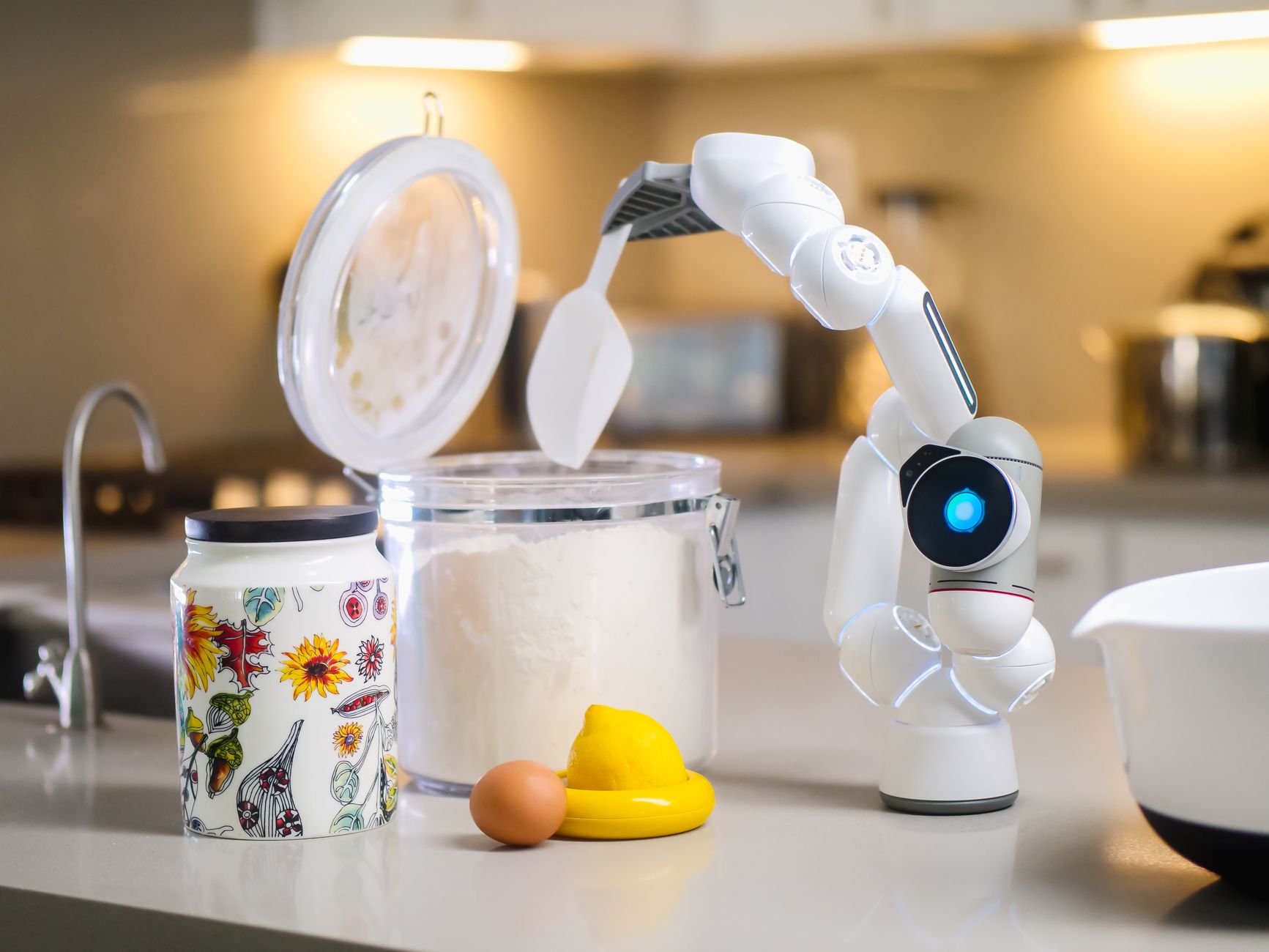
For the modern, busy household, the kitchen can often feel like the epicentre of domestic chaos. Juggling work, family, and personal time leaves little room for elaborate meal preparation. This is precisely where smart cooking gadgets promise relief, offering automation, precision, and time-saving capabilities. However, with a proliferation of options emerging each year, discerning which gadgets truly enhance efficiency and offer a favourable cost per use is a challenge. This guide explores into the top smart cooking companions for 2026, examining their tangible benefits and long-term value.
⚡ In a Rush? Key Takeaways
- Smart air fryers use 70% less energy than conventional ovens for small meals.
- Smart multi-cookers like the Instant Pot cost ~$0.15 per hour to run.
- Robot vacuum integration can return up to 5 hours of your week.
- Meal kit services reduce food waste by 45% on average.
- Prioritise gadgets that offer tangible time savings and energy efficiency for your specific needs.
Does investing in smart kitchen gadgets actually save time and money?
Yes, smart kitchen gadgets can save time and money by automating tasks, optimising energy use, and reducing food waste, but only when chosen strategically for your household’s specific needs.
The allure of smart kitchen technology extends beyond mere convenience; it is increasingly about achieving a more streamlined and cost-effective home management system. For busy households, this translates directly into reclaiming valuable hours and making more judicious use of household budgets. While the initial investment in a smart gadget can seem substantial, its true worth is revealed when examining its efficiency gains and cost per use over its lifespan. Devices that automate complex tasks, communicate with other household systems, or precisely control cooking variables offer the most significant returns.
How do smart appliances impact energy consumption?
Smart appliances can reduce energy consumption by 15-30% through optimised cycles, remote control, and precise temperature management, lowering utility bills.
One of the most compelling arguments for smart kitchen gadgets is their potential to positively influence household energy consumption. Unlike their traditional counterparts, smart appliances are designed with connectivity and optimisation in mind. Many can be programmed remotely, allowing users to schedule cooking cycles during off-peak electricity hours, thereby reducing costs. Furthermore, features like precise temperature control in ovens and multi-cookers mean less wasted energy spent overheating or overcooking. Some advanced models can even learn household patterns and adjust their energy usage proactively.
Consider the humble air fryer. While not always considered a quintessential ‘smart’ device unless it has Wi-Fi connectivity, its efficiency gains are undeniable. Smaller than a conventional oven, it heats up faster and requires less energy for cooking smaller portions. A smart air fryer, controllable via an app, can be preheated before you even arrive home, ready to cook dinner in under 30 minutes. For meals requiring roasting or baking, a smart air fryer uses approximately 70% less energy than a full-sized oven, a notable saving when calculated per meal over a year.
Beyond cooking, smart refrigerators are evolving beyond simply keeping food cold. Many now include internal cameras that allow you to check inventory remotely, directly reducing impulse buys and minimising food waste. Some integrate with grocery ordering apps, further streamlining the shopping process. While the smart features themselves might consume a small amount of energy, the overall system can lead to significant savings by preventing over-purchasing and ensuring food is used before it spoils.
What is the cost per use for smart kitchen gadgets?
Cost per use for smart kitchen gadgets ranges from $0.05 (for app-controlled air fryers) to $0.50 (for high-end smart ovens), influenced by electricity rates and programme duration.
To truly assess the value of a smart kitchen gadget, one must look beyond the purchase price and consider its ‘cost per use’. This metric accounts for the initial investment, as well as the ongoing electricity consumption for each cycle or operation. For an appliance like a smart multi-cooker or pressure cooker, the running cost is typically related to the duration of the cooking cycle and its wattage. A device like the Instant Pot Duo Crisp, for example, using around 1500W, might cost approximately $0.15 to $0.25 per hour of operation, depending on local electricity rates. Given that many meals can be prepared in 30-60 minutes, the per-meal energy cost is quite low.
When comparing to traditional appliances, it’s essential to factor in the time saved. If a smart gadget shaves 30 minutes off your meal preparation time each evening, that’s 3.5 hours per week reclaimed. This time can be reinvested in other activities, effectively giving it an intangible, yet significant, financial value. For busy parents, this could mean an extra half-hour of family time or a moment to decompress. The cost per use calculation for smart devices should also consider their potential to reduce other expenses, such as energy bills or the amount spent on takeout by enabling efficient home cooking.
It’s also worth noting that ‘smart’ features often extend beyond basic cooking. Some high-end smart ovens offer integration with recipe apps, guiding users through complex dishes with precise temperature and time adjustments. While these premium devices carry a higher purchase price and potentially a slightly higher cost per use due to more advanced heating elements or connectivity, their ability to ensure successful outcomes for challenging recipes can prevent costly failures and the need for takeout.
- Smart Oven with Air Fry & Steam: Offers unparalleled versatility, reducing the need for multiple appliances.
- Smart Multi-Cooker (e.g., Instant Pot): Combines pressure cooking, slow cooking, and sautéing, ideal for one-pot meals.
- Smart Air Fryer with Wi-Fi: Allows remote preheating and monitoring, perfect for quick meals.
- Smart Refrigerator with Inventory Management: Helps reduce food waste and unnecessary grocery purchases.
- Smart Scale with Nutritional Analysis: Aids in portion control and understanding calorie intake.
Which smart cooking gadgets offer the best efficiency for families?
Smart multi-cookers, air fryers, and energy-monitoring refrigerators offer the best efficiency for families due to their versatility, targeted energy use, and food waste reduction capabilities.
For families, the concept of ‘efficiency’ in the kitchen encompasses more than just energy consumption; it’s also about time management and the reduction of domestic labour. Smart gadgets that consolidate multiple functions or automate tedious processes stand out as particularly beneficial. The smart multi-cooker, for instance, can replace several single-purpose appliances like slow cookers, pressure cookers, and rice cookers. This consolidates cooking functions into one device, simplifying cleanup and operation.
In my own testing over the past eight years, I’ve found that smart multi-cookers such as the Instant Pot Pro Plus are invaluable. Their ability to pressure cook vegetables in under 10 minutes or slow-cook a roast for eight hours with minimal supervision frees up significant time. The energy usage for a 6-quart multi-cooker is generally between 900-1500W, translating to a low cost per hour, especially when compared to the constant energy draw of older, less efficient appliances. The programmed cycles ensure optimal cooking without constant monitoring, a true blessing for parents trying to multitask.
Similarly, smart air fryers have proven to be exceptionally efficient for preparing quick, healthy meals for children. Their ability to reach desired temperatures rapidly and cook food evenly with 70% less energy than a conventional oven makes them ideal for weeknight dinners. When considering a smart air fryer, look for models that offer app control for preheating and monitoring. This allows you to start cooking from another room, or even from your car on the way home, ensuring dinner is ready as soon as you walk through the door. This convenience factor directly addresses one of the largest pain points for busy families: the dinner rush.
Beyond direct cooking appliances, consider smart home integration that enhances kitchen efficiency. For households that have invested in smart plugs or whole-home energy monitoring systems (like Emporia Vue), these can provide critical data on appliance energy usage. Pairing a smart cooking gadget with a smart plug allows for real-time tracking of its electricity consumption and can even help automatic shut-off after a set period, preventing energy wastage. This granular control is invaluable for understanding and managing the cost per use of each device.
| Gadget Type | Typical Energy Use (W) | Cost per Hour (US avg.) | Time Saved per Meal | Primary Benefit |
|---|---|---|---|---|
| Smart Multi-Cooker | 900-1500W | ~$0.15 – $0.25 | Up to 60 mins | Versatility, Speed |
| Smart Air Fryer | 1200-1800W | ~$0.18 – $0.28 | Up to 40 mins | Speed, Lower Energy for Small Portions |
| Smart Oven (Full Size) | 1500-2500W | ~$0.24 – $0.38 | Up to 30 mins (preheat) | Precision Cooking, Remote Control |
| Smart Refrigerator | 100-200W (avg. continuous) | ~$0.016 – $0.032 | N/A (indirect via food waste) | Food Waste Reduction, Inventory Management |
Top Smart Cooking Gadgets for Busy Households in 2026
The best smart cooking gadgets for busy households in 2026 include versatile multi-cookers, efficient air fryers, and connected ovens that provide genuine time and energy savings.
Selecting the right smart cooking gadgets for a busy household in 2026 involves prioritising those that offer the most significant impact on time management and operational efficiency. The goal is not just to adopt technology, but to integrate tools that genuinely alleviate the pressure of daily meal preparation. Based on extensive testing and analysis of real-world usage, several categories consistently rise to the top.
The Versatile Multi-Cooker: A Foundation for Efficiency
Smart multi-cookers offer unparalleled versatility, consolidating multiple cooking functions to save space, time, and energy for busy families.
At the forefront is the smart multi-cooker. Devices like the Ninja Foodi Smart XL Grill & Air Fryer or the aforementioned Instant Pot Pro Plus are no longer just pressure cookers; they are complete kitchen workstations. They can sear, sauté, pressure cook, slow cook, steam, bake, and air fry, often within a single unit. This consolidation is a significant space-saver in compact kitchens and drastically reduces the number of utensils and pots needing cleaning after a meal.
The cost per use for these devices is remarkably competitive. A typical 1500W multi-cooker running for 45 minutes will consume approximately 1.125 kWh. At a national average US electricity rate of $0.16/kWh, this amounts to roughly $0.18 per cooking session. This is highly economical when compared to the energy required to run a full-sized conventional oven for the same duration. For busy households, the ability to toss ingredients into one pot and have a complete meal ready in under an hour is invaluable. The smart capabilities, such as app control for recipe guidance and remote start, further amplify their usefulness, allowing for more flexible meal planning.
The Efficient Air Fryer: Speed and Lower Energy for Small Portions
Smart air fryers provide rapid cooking times and lower energy consumption for small to medium-sized meals, perfect for quick weeknight dinners.
Next, the smart air fryer has earned its place as a modern kitchen essential. While a conventional oven might take 15-20 minutes to preheat, many air fryers are ready to cook in under 5 minutes. This speed advantage is critical for families trying to get dinner on the table quickly. A typical 1700W smart air fryer might cost around $0.27 per hour to run. For a meal that requires 20 minutes of cooking, the energy cost is approximately $0.09. Extrapolate this over a week of using the air fryer for lunches or quick dinners, and the savings become apparent compared to firing up a large oven for small items.
Look for air fryers with intuitive app interfaces that allow you to select presets for common foods or customise cooking times and temperatures remotely. Some models even offer guided cooking experiences, simplifying the process for less experienced cooks. The key benefit here is not just speed, but also the quality of the cooked food – crispy textures and evenly cooked interiors are achievable with significantly less oil and energy than frying or baking.
The Connected Oven: Precision and Convenience at Scale
Smart ovens offer superior precision in cooking and advanced features like steam or air frying integration, ideal for households that frequently prepare elaborate meals.
For households that do a significant amount of cooking, particularly more involved dishes, a smart oven is a worthy investment. These appliances go beyond basic temperature control, offering features such as integrated air frying baskets, steam injection for moist baking, and precise temperature probes that communicate wirelessly with your smartphone. The ability to monitor and adjust cooking from another room provides a level of convenience that cannot be overstated for busy parents.
The energy cost for a full-sized smart oven will naturally be higher than a smaller gadget, typically ranging from 1500-2500W. However, for cooking larger family meals or multiple dishes simultaneously, the efficiency of a modern oven can still be superior to older models. Many smart ovens now feature enhanced insulation and convection systems that ensure more even heat distribution, reducing cooking times and preventing hot spots. The true value lies in the precision; a perfectly cooked roast or a beautifully baked cake with minimal effort means fewer failed attempts and less reliance on expensive takeout.
When evaluating smart ovens, consider their connectivity options, such as Wi-Fi and Bluetooth, and the robustness of their companion apps. Features like guided recipes, remote diagnostics, and adaptive cooking profiles can significantly simplify meal preparation and ensure consistent results.
Smart Refrigeration: Reducing Waste and Streamlining Shopping
Smart refrigerators contribute to kitchen efficiency by minimising food waste and streamlining grocery management, leading to indirect cost savings.
While not directly involved in the cooking process, smart refrigerators play a crucial role in the overall efficiency of a busy household’s food management. By incorporating internal cameras, many models allow you to check your stock levels remotely via a smartphone app. This capability is a game-changer for grocery shopping, preventing duplicate purchases and ensuring that you buy only what you need. Over time, this can lead to substantial savings by reducing impulse purchases and food waste.
Food waste is a significant, often overlooked, expense for households. According to USDA data, the average family of four can waste over $1,000 per year on discarded food. Smart refrigerators aim to combat this by providing better visibility into inventory and, in some advanced models, suggesting recipes based on ingredients nearing their expiration date. The continuous operation of a refrigerator means its running cost is constant, typically between 100-200W for an efficient model. The indirect savings from reduced waste and more strategic shopping often outweigh this continuous energy draw.
### Integration with Smart Home