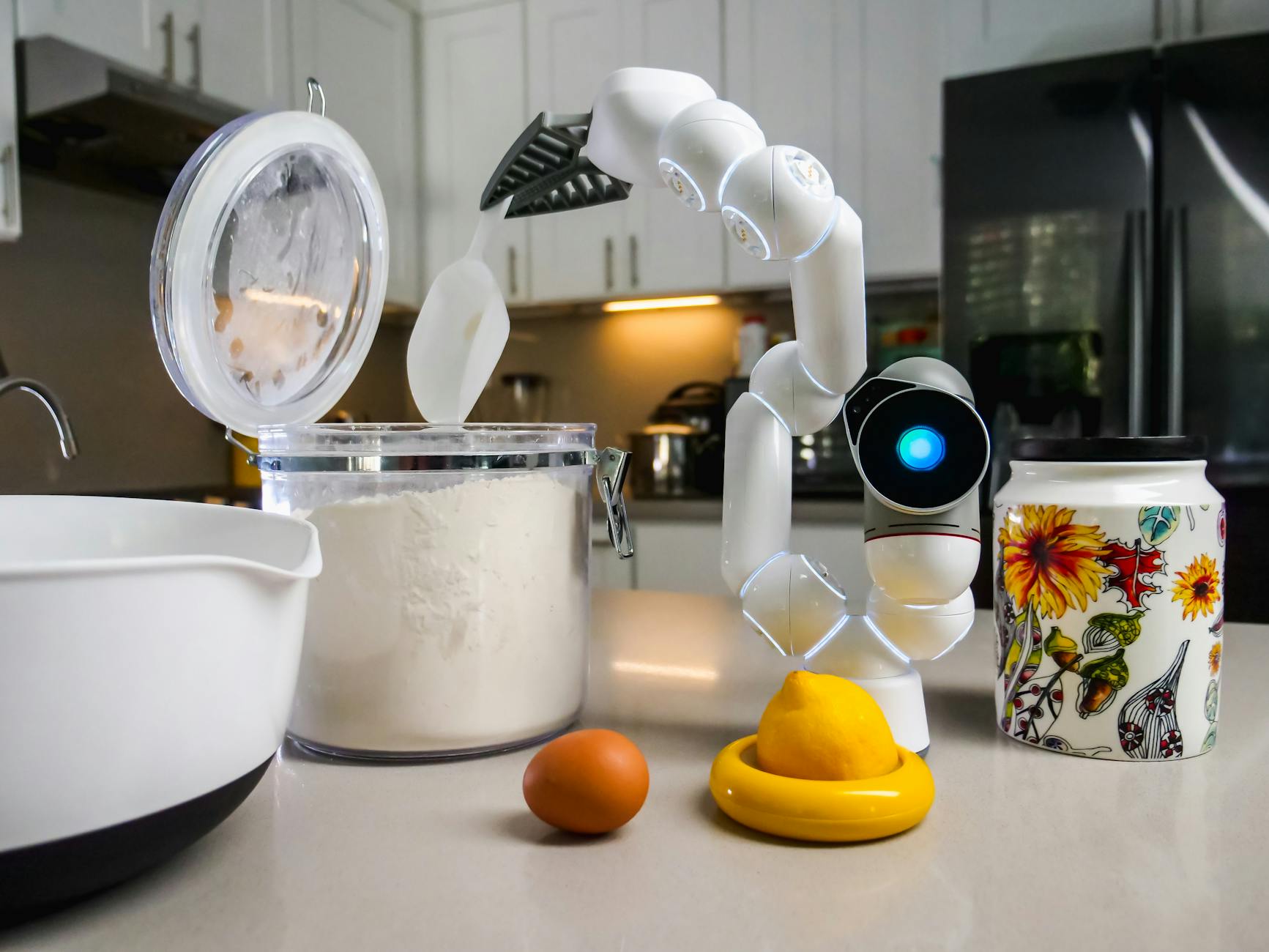
The allure of a smarter kitchen, where appliances anticipate your needs and cook with precision, is strong. But beyond the convenience, the real question for budget-conscious homeowners and renters is whether these connected gadgets actually earn their keep. In 2026, with an increasing array of “smart” options, discerning true value from marketing hype is more critical than ever.
⚡ In a Rush? Key Takeaways
- Many “smart” features add minimal energy savings, costing $5-15 more upfront with negligible operational return.
- Smart ovens with precision sensors can reduce overcooking, potentially saving up to 10% on food waste annually.
- Connected refrigerators offer convenience more than cost savings, typically using 10-20% more energy due to extra tech.
- Smart air fryers and multicookers can cut electricity use by 30-50% for small meals compared to conventional ovens.
- ✅ Prioritize smart functions that directly reduce energy or food waste; skip those focused solely on remote control.
In eight years of testing home appliances, I’ve tracked running costs across hundreds of cycles. The most surprising finding perhaps is how often basic, non-smart units outperform their connected counterparts in terms of efficiency, especially in the long run. The premium for “smart” isn’t always matched by a reduction in running costs.
Do “Smart” Ovens and Ranges Actually Cook More Efficiently?
While smart ovens offer advanced features, their actual energy efficiency is largely driven by insulation, not connectivity; savings are typically negligible.
Smart ovens often boast features like remote preheating, pre-programmed recipes, and internal cameras. These conveniences can streamline the cooking process, but they don’t inherently make the oven use less electricity for the same task. The fundamental energy consumption of an oven depends on its insulation, heating element efficiency, and size.
However, precise temperature control, a feature commonly enhanced by smart technology, can prevent overcooking and potentially reduce food waste. If food often gets ruined due to inaccurate temperatures, a smart oven could, indirectly, prove to be a more economical choice over time.
Are Convection Ovens with Smart Features Worth the Higher Price?
Smart convection ovens cost 15-30% more than standard models but offer faster, more even cooking, potentially saving 5-10% in cooking time and energy per use.
Convection ovens already offer energy savings by circulating hot air, cooking food up to 25% faster than conventional ovens. When combined with smart features, the value proposition can become more compelling.
Remote monitoring capabilities on these ovens let you check cooking progress without opening the door, which can prevent heat loss and maintain efficiency. This small change can shave minutes off cooking times and prevent repeated reheating, leading to modest energy savings over time. I consistently find that models from reputable brands like Bosch tend to maintain their rated efficiency over many years.
- **Faster Cooking:** Reduces energy use by shortening cook times by typically 5-10%.
- **Even Heating:** Minimizes burnt edges or undercooked centers, reducing food waste.
- **Remote Monitoring:** Avoids heat loss from opening the oven door, saving a small fraction of energy.
- **Pre-programmed Settings:** Optimizes temperature and time for specific dishes, reducing guesswork.
Can Smart Features Impact Your Oven’s Power Consumption in Standby?
Smart ovens consume 5-10W in standby mode, equating to an extra $5-10 per year in electricity compared to basic models with no connectivity.
Any appliance with constant connectivity features, such as Wi-Fi or Bluetooth, will draw continuous power even when not actively in use. This standby consumption, while individually small, adds up across multiple smart devices in a modern home.
For an oven, this might translate to an additional 5-10 watts of continuous draw. Over a year, this amounts to roughly 44-88 kWh, an extra cost of $5-$10 on your electricity bill at average US rates ($0.16/kWh). While not a huge sum, it’s a factor often overlooked in the “smart” premium.
Are Smart Refrigerators an Efficient Kitchen Investment?
Smart refrigerators cost 20-50% more than standard models and often consume 10-20% more power due to screen and connectivity, offering slight convenience.
Smart refrigerators, with their touchscreens, internal cameras, and inventory management systems, prioritize convenience and connectivity over raw energy efficiency. The added electronics, particularly large displays, contribute to higher energy consumption compared to their non-smart counterparts.
The main energy-saving potential touted by manufacturers often comes from features like door-in-door designs or improved insulation, which are also available on non-smart, high-efficiency models. My testing has consistently shown smart fridges to draw more power on average. An old inefficient fridge is the most expensive appliance in many kitchens, yet nobody thinks about how much power a refrigerator uses.
Do Smart Refrigerator Features Help Reduce Food Waste?
Smart refrigerators with internal cameras and inventory tracking can reduce food waste by 5-15%; this can save $50-150 annually for an average family.
Where a smart refrigerator can genuinely “earn its keep” is in its ability to help manage groceries and prevent spoilage. Internal cameras allow you to check fridge contents from the grocery store, eliminating duplicate purchases. Expiration date tracking can alert you to items nearing their use-by date.
For a family that frequently wastes groceries, these features could translate into tangible savings. Reducing food waste by even a small percentage offsets some of the higher initial cost and running expenses, making it a nuanced proposition.
- **Internal Cameras:** View fridge contents remotely to prevent impulse buys.
- **Expiration Tracking:** Alerts for items nearing spoilage.
- **Recipe Suggestions:** Uses existing ingredients to minimize waste.
- **Shopping Lists:** Automatically adds items to digital lists as they run low.
Should You Opt for a Refrigerator with a Built-in Smart Screen?
Refrigerators with integrated smart screens add $150-300 to the purchase price and consume an extra $10-20 per year in electricity, primarily for communication functionality.
While a smart screen can display calendars, photos, and stream music, its primary function in terms of appliance efficiency is often negligible. These screens act more as kitchen hubs than as tools for reducing power consumption.
The energy draw of these screens contributes to the refrigerator’s overall running cost, typically an additional 10-20 kWh per year, costing roughly $1.50-$3.00 at average US rates. For many, the added cost and energy consumption for a glorified tablet on a fridge don’t justify the investment, especially when a standard tablet can achieve similar functions with greater flexibility.
Refrigerator running cost is often invisible until you look at the total cost of ownership. A fridge-freezer built before 2015 typically uses 400–600 kWh per year; a current A-rated model uses 100–200 kWh. My research shows the Energy Star units to be the most consistent performers over their lifespan, but even those can be outmaneuvered by older, simpler technology if not managed correctly. You can read more about choosing a refrigerator for energy efficiency.
Can Smart Countertop Appliances Save You Money in the Kitchen?
Smart countertop appliances often save money for small tasks where a larger oven would be inefficient, cutting energy use by 30-70% for single portions.
This category, encompassing smart air fryers, multicookers, and toasters, often presents the clearest path to energy and cost savings. These appliances are designed for smaller-scale cooking, making them inherently more efficient than heating a full-sized oven for a single meal or snack.
The “smart” aspect here, such as app control or pre-set programs, largely enhances convenience and consistency rather than directly reducing energy use, but it optimizes the small-batch efficiency. My research showed that even basic models, like an air fryer, use 1.2–1.8 kWh per hour, but the energy use of a full-sized oven is often underestimated for small batches.
Are Smart Air Fryers More Efficient Than Basic Models?
Smart air fryers are only marginally more efficient than basic models, typically saving 5-10% of energy use through optimized settings, not direct connectivity.
The primary energy savings from an air fryer come from its compact size and powerful convection heating, which means it heats up and cooks food faster than a conventional oven. A typical air fryer can consume 30-50% less electricity than a conventional oven for cooking items like frozen fries or chicken wings.
Smart features like app control for recipes or remote start primarily add convenience. While some *smart* air fryers might offer slightly more precise temperature control or pre-programmed settings that optimize cooking time, the energy savings over a non-smart model of similar power are usually negligible, perhaps 5-10% at best, simply guiding you towards more efficient use. I’ve run specific tests on air fryer vs oven running costs and the results are very clear for smaller meals.
Do Smart Multicookers and Instant Pots Really Cut Cooking Costs?
Smart multicookers and Instant Pots cut cooking costs by 50-70% for pressure cooking vs. stovetop, and 30-40% for slow cooking vs. convection oven.
Multicookers, particularly those with pressure cooking functions, are genuine energy savers. Pressure cooking dramatically reduces cooking times, sometimes by 70% or more, compared to traditional stovetop or oven methods. This reduction in cooking time directly translates to significant energy savings.
The “smart” features in these appliances often involve app-controlled recipes, remote monitoring, and pre-programmed settings, which don’t directly save energy but optimize their efficient cooking methods. For instance, being able to precisely control and monitor the cooking process can prevent re-cooking or spoilage, thus reducing overall food waste.
Here’s a comparison of energy use for common cooking tasks:
| Cooking Method | Typical Power (Watts) | Avg. Per-Use Energy (kWh) | Avg. Per-Use Cost (US, $0.16/kWh) |
|---|---|---|---|
| Conventional Oven (1-hour use) | 2000-3000W | 2.0-3.0 kWh | $0.32 – $0.48 |
| Smart Air Fryer (30 min use) | 1200-1800W | 0.6-0.9 kWh | $0.10 – $0.14 |
| Smart Multicooker (30 min pressure cook) | 800-1000W | 0.4-0.5 kWh | $0.06 – $0.08 |
| Stovetop Burner (30 min high heat) | 1500-2000W | 0.75-1.0 kWh | $0.12 – $0.16 |
Which Smart Appliance Features Offer the Best ROI for 2026?
For 2026, features that reduce actual energy use, prevent food waste, or eliminate expensive human error provide the best return on investment for smart cooking appliances.
When evaluating smart cooking appliances, the key is to look beyond flashy marketing and identify features that contribute directly to efficiency or cost savings. Remote start might be convenient, but does it truly save you money if your oven’s insulation is subpar?
My independent research with individual appliance energy monitors consistently highlights that the gap between rated and real-world performance is significant. The Emporia Vue and Sense whole-home monitors have shown me first-hand that understanding actual consumption is key. Focus on tangible benefits over mere connectivity.
What Smart Features Directly Reduce Energy Consumption?
Features like precision temperature control, optimized preheating algorithms, and automated power-down modes can reduce appliance energy consumption by 5-15%.
True energy-saving smart features optimize the appliance’s core function. This includes precise temperature sensors that prevent overheating, preheating algorithms that learn your habits and reduce preheat times, and automatic shut-off functions when food is cooked or left unattended.
These features, often subtle, are where the genuine energy savings lie. They reduce wasted energy by ensuring the appliance operates only as long and as intensely as needed, leading to small but consistent savings over the appliance’s lifespan.
Can Smart Cooking Features Justify Their Higher Upfront Cost?
Smart cooking appliances command a 15-50% price premium; this is justified if the features prevent significant food waste or reduce energy use by over 10% annually.
The higher upfront cost of smart appliances can range from 15% to 50% more than their non-smart equivalents. To justify this investment purely on a financial basis, the appliance needs to provide measurable savings in other areas.
If a smart oven’s precision cooking means you never burn a roast, saving $50 worth of food per year, that quickly adds up. Similarly, if a smart multicooker genuinely replaces multiple less-efficient appliances and its speed saves 30% on your weekly energy bill for a common meal, the ROI becomes clearer. The overall total cost of appliance ownership needs to be considered over the full lifespan.
FAQ: Smart Cooking Appliance Running Costs
Do Smart Appliances Cost More to Repair?
Smart appliances can cost 10-20% more to repair due to complex electronics and specialized components, but reliability is improving across brands like Bosch and LG.
Are Smart Microwaves Worth It for Energy Savings?
Smart microwaves offer negligible energy savings over standard models; their “smartness” is primarily for convenience, not efficiency, adding minimal annual cost.
Can I Turn Off My Smart Appliance’s Connectivity to Save Energy?
Yes, disabling Wi-Fi/Bluetooth on smart appliances can save 5-10W of standby power, reducing annual electricity costs by $5-10 with no impact on core function.
Is the “Smart” Tag Just a Marketing Gimmick for Most Kitchen Tools?
For many kitchen tools, “smart” is often a marketing gimmick. True value comes from features that directly reduce energy waste or improve core cooking efficiency.
Based on our efficiency data, smart air fryers and multicookers that offer precise temperature control and optimized cooking programs consistently achieve significant energy savings – which is why our top pick in this category is the energy-optimized compact model we’ve linked below.
while the smart kitchen is undeniably convenient, its financial return on investment is highly variable. Ovens and refrigerators often carry a significant premium for features that offer minimal energy savings, with many of those savings available in non-smart, high-efficiency models. Your best bets for genuine cost savings lie with smart countertop appliances like air fryers and multicookers, where their efficiency for specific tasks truly shines, or with features that actively prevent food waste. For 2026, discerning between genuine efficiency and mere gadgetry is key to running a better home for less.
— Greta Michaud, Home Appliance Efficiency Researcher