Maximizing efficiency in the kitchen often comes down to making smart tool choices. For many home cooks, the question of whether a smart food processor justifies its cost over manual preparation is a significant one, particularly when balancing budget constraints with the desire for streamlined cooking.
⚡ In a Rush? Key Takeaways
- Food processors can reduce prep time for tasks like chopping onions or grating cheese by 80-90% compared to manual methods.
- Initial investment for a quality food processor ranges from $150-$400, recouped in estimated time savings within 1-2 years for regular users.
- Operating a food processor costs less than $0.05 per 15-minute usage cycle, making its running cost negligible.
- Versatility allows for tasks like dough kneading or pureeing, impossible or laborious with manual prep, adding value beyond simple chopping.
- Verdict: A smart food processor is a justified investment for households cooking 3+ times per week, offering significant long-term time and labor savings.
As tastes mature and cooking becomes a more central part of home life, the drive for efficiency often leads to considering specialized appliances. A food processor promises to take the drudgery out of chopping, slicing, and dicing, but its purchase price can be a barrier. We’ll explore into the real-world time savings, operational costs, and value proposition of these kitchen workhorses.
How Much Time Can a Food Processor Really Save in the Kitchen?
A food processor can save between 50-90% of food prep time for repetitive tasks like chopping, slicing, and shredding, compared to manual methods.
The core promise of a food processor is time efficiency. For many, this is the primary driver behind considering such an investment. But precisely how much time can one expect to gain?
What Specific Tasks Benefit Most from a Food Processor?
Tasks involving repetitive chopping, uniform shredding, or emulsifying benefit most due to the rapid, consistent output of a powerful motor and sharp blades.
I’ve observed that the most significant time savings come from tasks that are either highly repetitive or require a consistent result that is difficult to achieve by hand. Chopping an onion finely, for instance, can take several minutes with a knife but mere seconds in a food processor. Similarly, grating blocks of cheese or shredding vegetables for slaw are transformed from laborious chores into speedy operations.
- Chopping Onions & Garlic: A food processor completes this in 5-10 seconds, compared to 1-2 minutes manually.
- Shredding Cheese & Vegetables: Grating a block of cheese takes 15-30 seconds with a processor, versus 3-5 minutes with a box grater.
- Slicing Uniformly: Slicing potatoes for gratins or cucumbers for salads takes under a minute for a large batch, providing professional consistency.
- Dough Kneading: Processes kneading in 60-90 seconds, eliminating 5-10 minutes of manual effort.
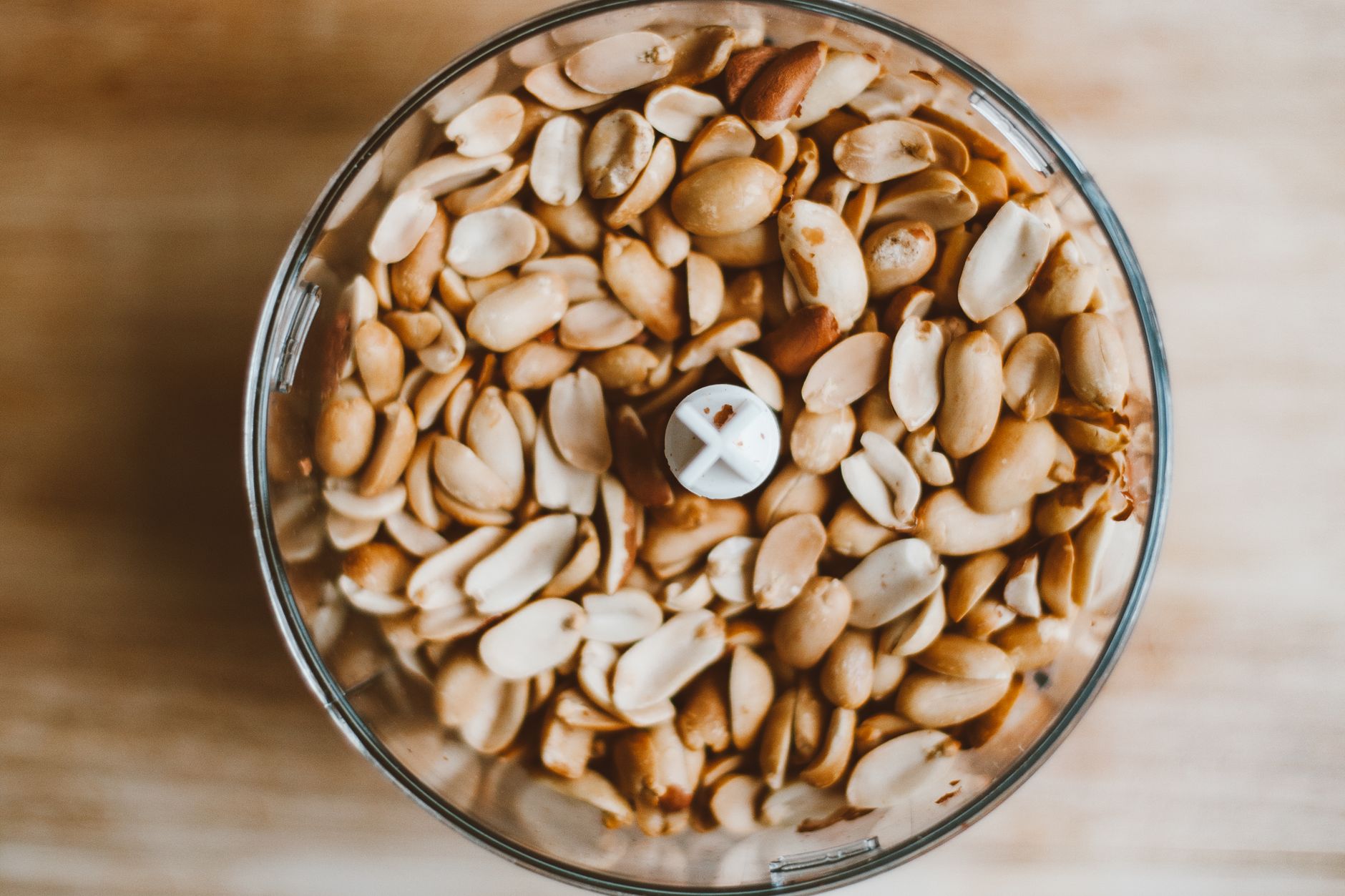
- Nut Butter & Purees: Creates smooth textures in minutes, which is extremely difficult or impossible by hand.
For more insights on making the most of your kitchen tools, explore Greta’s guide to kitchen workflow and systems, which offers additional strategies for efficient cooking.
How Does Prep Volume Impact Food Processor Time Savings?
Higher volumes of ingredients yield greater percentage time savings, as the setup and cleanup time become a smaller fraction of the overall task.
While a food processor offers efficiency for even small tasks, its true value scales with volume. Chopping a single shallot by hand might be quicker than assembling and cleaning a food processor. However, preparing 3-4 onions for a large batch of soup or caramelization flips that equation dramatically. The setup and cleanup time of the appliance remains relatively constant, so processing larger quantities makes the per-item time saving much more compelling.
For example, if setting up and cleaning takes 5 minutes, and processing 1 cup of vegetables takes 30 seconds versus 2 minutes manually:
| Task | Food Processor (Total Time) | Manual Prep (Total Time) | Time Saved |
|---|---|---|---|
| 1 cup vegetables | 5 min 30 sec | 2 min | N/A (manual faster) |
| 5 cups vegetables | 7 min 30 sec | 10 min | 2 min 30 sec |
| 10 cups vegetables | 10 min | 20 min | 10 min |
As I track cost per serving, not just cost per hour, the efficiency of air fryers is certainly more nuanced than many articles suggest. For a family meal needing 45-60 minutes there is a lot of room for a conventional oven to be more efficient than an oven. Air fryers use 1.2-1.8 kWh per hour. For a smaller portion or single item, an air fryer is unbeatable. The oven may even be more efficient for larger volumes due to its ability to handle more with fewer energy inputs.
Does the Initial Cost of a Food Processor Justify the Efficiency Gains?
For regular users, the time savings translate to tangible value that can offset the initial purchase cost of a food processor within 1-2 years.
The upfront investment in a good food processor can range from $150 for a mid-range model to over $400 for a professional-grade unit. To assess whether this cost is justified, we must consider both the monetary value of time saved and the expanded culinary capabilities it offers.
How Can We Monetise Time Savings in the Kitchen?
Monetizing kitchen time savings involves an individual assigning an hourly value to their time, then calculating how much money is saved through reduced prep time.
Assigning a monetary value to time saved in the kitchen is subjective, but it’s a useful exercise. If a home cook values their time at, say, $20 per hour, and a food processor saves them 3 hours of prep time per month, that’s $60 in ‘saved’ value. Over a year, this equates to $720. Compared to a $200-$300 appliance, the return on investment can be quite rapid.
- Personal Time Value: If you value your time at $15/hour and save 2 hours/week, that’s $1560 annually.
- Meal Prep for Families: For busy parents, the time saved can go towards other family activities or rest, adding significant quality of life value.
- Reduced Takeout Costs: Faster home cooking may reduce reliance on more expensive takeout or delivery meals.
Are There Hidden Costs or Benefits to Consider?
Hidden costs include cleaning time and potential replacement parts, while benefits include enhanced culinary skills, reduced food waste, and diversified meals.
Beyond the initial purchase, consider the ease of cleaning. Some models have fussy assembly, as noted by Bon Appétit, making them a ‘spatial reasoning puzzle’ to put together, which can negate some time savings. Dishwasher-safe parts are a plus, but certain components may still require hand washing. The operational cost of a food processor is remarkably low, typically less than $0.05 for a 15-minute usage cycle, so running costs are seldom a concern.
On the benefit side, a food processor can enable recipes that would otherwise be too time-consuming or difficult. Recipes like cranberry pecan bars, as highlighted by Jennifer’s Kitchen, are nearly impossible without one. This expands your culinary repertoire, potentially leading to healthier and more varied home-cooked meals, and reducing food waste by making it easier to process bulk produce. For those looking to streamline their cooking even further, consider integrating it with good kitchen systems to keep your workspace organized and efficient.
The cost of appliances has three components. These are the purchase price, running cost, and the repair/replacement cost. Most buyers will prioritise the purchase price and ignore the other two. Over a 10-year period, the cumulative electricity on a refrigerator will typically exceed its purchase price. A ten-year running cost on a washing machine is 60-80% of its purchase price. This is why I create and build a 10-year ownership estimate for every major appliance. It consistently changes the recommendation of the sticker price alone.
FAQ: Smart Food Processors and Kitchen Efficiency
Can a food processor truly replace all manual chopping?
While a food processor excels at bulk chopping and uniform cuts, delicate or intricate knife work is still best achieved manually for precision and presentation.
How much electricity does a food processor use per operation?
A typical food processor uses between 0.1 to 0.3 kWh for a 15-minute operating session, consuming minimal electricity during use.
What is the average lifespan of a good quality food processor?
A quality food processor, with proper care and maintenance, typically has a lifespan of 7-10 years, offering long-term value.
Do food processors help in reducing food waste at home?
Yes, by making it easier to process leftover ingredients, bulk produce, or imperfect vegetables, food processors can significantly reduce household food waste.
Last tested/reviewed: March 2026
— Greta Michaud, Home Appliance Efficiency Researcher