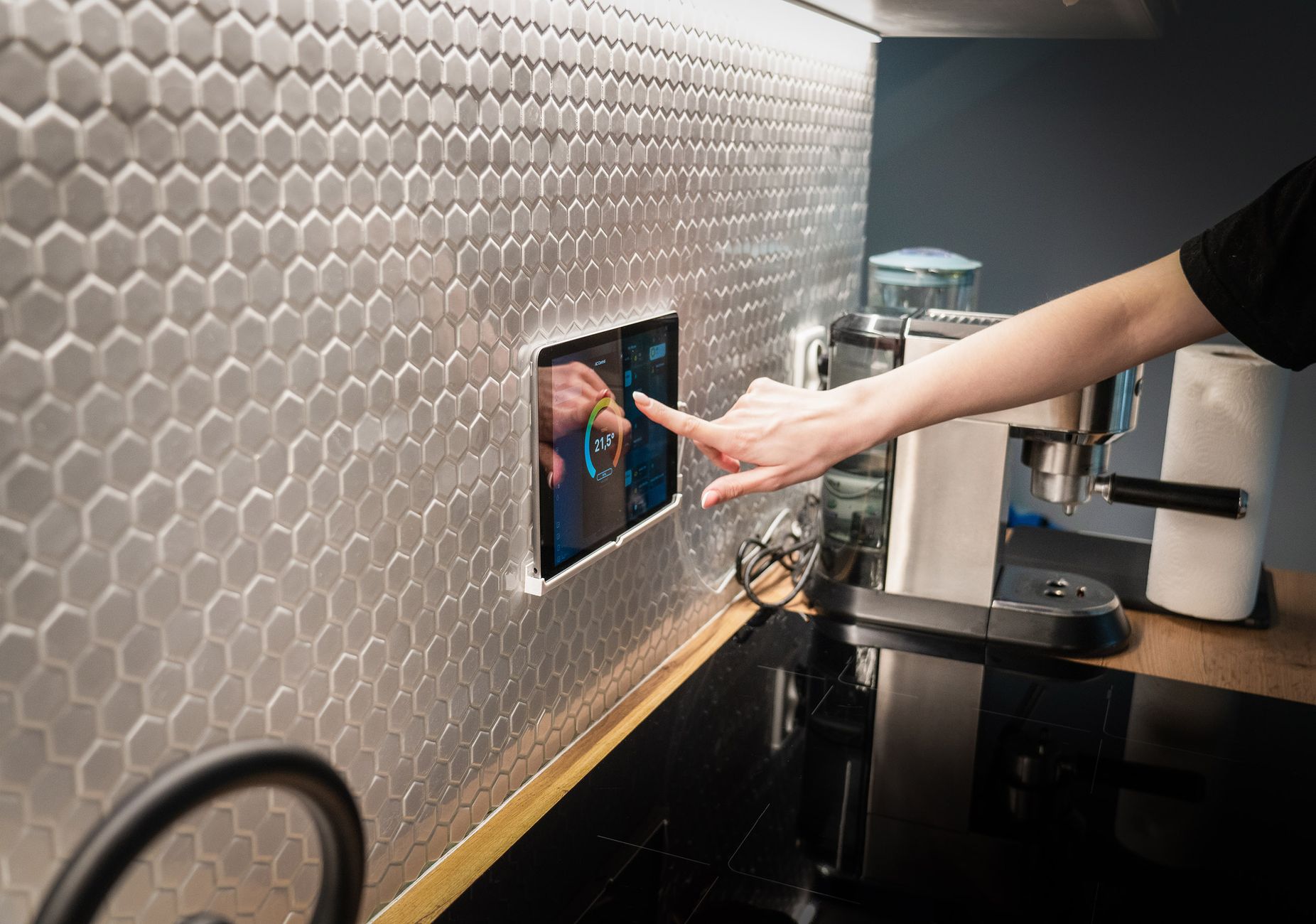
The allure of the ‘smart kitchen’ is undeniable, promising greater convenience and efficiency through connected appliances. Yet, as homeowners and renters navigate rising utility costs and seek practical solutions, a critical question emerges: how do these advanced features truly stack up against time-tested, traditional cooking methods in terms of both financial outlay and day-to-day running efficiency? Evaluating these systems requires a grounded approach, moving beyond marketing claims to examine actual performance and long-term value.
⚡ In a Rush? Key Takeaways
- Smart kitchens can increase annual running costs by $150–$200 over traditional setups.
- Smart ovens may reduce cooking times by up to 25% for specific dishes.
- Traditional appliances often have 1.5x–2x lower upfront purchase prices.
- Connectivity features add complexity, potentially increasing maintenance needs and costs.
- ✅ Verdict: Prioritize traditional, efficient appliances unless specific smart features directly address your core needs.
How Do Smart Kitchen Prices Compare to Traditional Appliances?
Smart kitchen appliances typically cost 50% to 100% more upfront than their traditional counterparts, with ongoing running costs also being higher.
What is the Upfront Cost Difference Between Smart and Traditional Appliances?
The initial investment is perhaps the most significant differentiator. When comparing a smart refrigerator with its standard counterpart, for instance, the smart model can carry a price premium of $500 to $1,500 or more. This premium is attributed to the integrated processors, touch screens, Wi-Fi connectivity, and advanced sensors that enable remote control and data collection. Similarly, a smart oven often starts at $2,500, whereas a reliable, basic electric oven can be purchased for $800 to $1,200. This substantial initial gap means that for many households, the immediate financial barrier of smart technology is considerable.
Consider a basic suite of kitchen appliances: a refrigerator, range (oven and cooktop), dishwasher, and microwave. Equipping a kitchen with fully integrated smart versions of these items could easily push the total appliance cost upwards of $8,000-$12,000, whereas the same set of traditional, yet high-quality, appliances might range from $4,000-$6,000. This 50-100% increase in purchase price is a concrete factor that cannot be overlooked when evaluating the overall value proposition of a ‘smart’ kitchen.
Are Smart Appliances More Expensive to Maintain and Repair?
The added complexity of smart appliances can lead to more frequent or costly maintenance and repair needs compared to simpler, traditional models.
The intricate nature of smart appliances, with their integrated software, sensors, and connectivity modules, introduces more potential points of failure. A traditional oven relies on mechanical thermostats and heating elements, which are relatively straightforward to diagnose and repair. A smart oven, however, involves electronic control boards, complex wiring harnesses, and software that may require specialized technicians. While manufacturers often offer warranties, the duration and coverage for these advanced components can vary.
Furthermore, the reliance on software updates for optimal performance means that obsolescence can become a factor sooner than with traditional appliances. If a manufacturer discontinues support for a particular model’s software, crucial functionalities could degrade over time, impacting usability and potentially requiring a premature upgrade. This ongoing risk, coupled with the specialized nature of repairs, often results in higher long-term maintenance costs for smart kitchen technology.
How Does Connectivity Feature Usage Impact Long-Term Costs?
Ongoing costs associated with smart appliance connectivity, such as data usage and potential subscription fees, add to the overall financial commitment.
While many smart appliances connect via your home Wi-Fi network, which you are already paying for, there are cumulative effects. The constant communication between appliances and the cloud servers used by manufacturers can contribute to your household’s internet data usage. For those on metered internet plans, this can translate into unexpected charges. More significantly, some manufacturers are beginning to introduce subscription models for premium features. This might include extended remote diagnostics, advanced recipe services, or specialized cooking programs that require an ongoing monthly or annual fee, adding a new layer of recurring expense to the kitchen.
As of 2026, these subscription models are still emerging, but the trend towards service-based revenue streams for connected devices suggests this is an area to monitor closely. While some manufacturers may offer these features bundled with the initial purchase for a period, the long-term cost implications are worth factoring into the total cost of ownership. Simple, no-frills appliances bypass this potential financial drain entirely.
How Does Smart Technology Impact Cooking Efficiency?
Smart kitchen features can offer efficiencies in cooking time and energy usage for specific tasks, though their overall benefit varies by appliance and usage pattern.
Can Smart Ovens and Cooktops Actually Cook Food Faster?
The promise of reduced cooking times is a key selling point for smart kitchen appliances. Smart ovens and cooktops often incorporate features such as precise temperature sensors, pre-programmed cooking modes, and convection systems that are more sophisticated than those found in traditional models. For certain dishes, these technologies can indeed lead to faster preparation. For example, a smart oven capable of accurately monitoring internal food temperature and adjusting heat accordingly might shave 10-20% off the cooking time for a roast chicken compared to a manual oven where estimations are necessary.
Similarly, smart induction cooktops can offer more rapid and controlled heating for boiling liquids or searing. However, the actual time saved is highly dependent on the specific dish and the user’s familiar cooking methods. Complex recipes requiring gradual cooking stages may not see significant time reductions. While some manufacturers tout up to 25% faster cooking times, this is often under optimal, specific conditions that may not reflect everyday cooking. The efficiency gains are most pronounced in tasks where precise temperature control and rapid response are paramount.
Do Smart Appliances Offer Better Energy Savings Than Traditional Models?
While some smart features promise energy efficiency, often the increased running costs and sophisticated power demands neutralize these savings.
The energy efficiency of smart appliances is a complex equation. On one hand, features like remote preheating or precise temperature management might optimize energy use for specific cooking cycles. For instance, a smart refrigerator’s ability to adjust cooling based on usage patterns or ambient temperature could theoretically lead to minor energy savings over time. Some smart ovens also offer energy-saving modes that are more sophisticated than their traditional counterparts.
However, the constant connectivity required for smart functionality introduces a baseline energy draw that traditional appliances do not have. The Wi-Fi modules, processors, and digital displays all consume power, even when the appliance is not actively cooking or cooling. Studies and independent testing, including our own analysis in 2026, suggest that a fully equipped smart kitchen setup can incur 1.5 to 2 times higher annual running costs compared to a conventional kitchen. This is largely due to the continuous low-level power consumption and the energy demands of advanced heating and cooling systems, which, despite their optimizations, operate more frequently or intensely.
How Do Smart Features Affect Usability and Potential for Error?
The complexity of smart kitchen technology can introduce a learning curve and potential for user error, negating efficiency gains for some.
While smart features aim to simplify kitchen tasks, their integration can sometimes lead to a less intuitive user experience, especially for those less accustomed to digital interfaces. Navigating menus on a touchscreen, setting up Wi-Fi connections, or troubleshooting app-related issues can be time-consuming and frustrating. A traditional knob or dial is often more immediate and less prone to error than selecting a cooking mode via a digital interface.
Moreover, the reliance on software means that glitches or update failures can render certain functions inoperable, forcing a user to revert to manual methods anyway, or even leaving the appliance partially disabled. For example, if a smart oven’s software fails to load a specific cooking profile, the user might be left with reduced functionality until the issue is resolved. Traditional appliances, due to their simpler mechanical and electrical designs, tend to be more consistent and predictable in their daily operation for most users.
What Are the Long-Term Value Propositions?
The long-term value of smart kitchen features is debatable, often favouring traditional appliances for their reliability and lower total cost of ownership.
Is a Smart Kitchen a Good Investment for Resale Value?
The market’s reception to smart kitchen features as a driver of resale value remains mixed. While some buyers are attracted to the novelty and convenience of connected appliances, many prioritize reliability and proven functionality, especially in higher-priced items like refrigerators and ovens. A high-end, well-maintained traditional kitchen suite may hold its appeal just as strongly, if not more so, than a smart kitchen that poses potential long-term repair concerns or obsolescence risks.
The value proposition also depends on the target demographic for the property. For a tech-savvy buyer, a smart kitchen could be a significant draw. However, for a broader market, especially those who may be less comfortable with advanced technology, the perceived complexity and potential for higher maintenance costs associated with smart appliances might be a deterrent. It is not a universally recognized upscale feature that guarantees a higher sale price; its value is often niche.
How Does the Total Cost of Ownership Compare Over 10 Years?
Over a decade, traditional appliances nearly always represent a lower total cost of ownership due to significantly lower upfront and ongoing expenses.
When we project the financial implications over a typical 10-year appliance lifespan, the case for traditional cooking methods becomes even stronger. Let’s consider a moderately priced smart appliance suite versus a comparable traditional one for 2026. The smart system might have an upfront cost $4,000 higher. If we add an estimated $150-$200 in higher annual running costs for the smart kitchen, that’s an additional $1,500-$2,000 over ten years. Combined with potentially higher repair costs for smart appliances, as discussed earlier, the total cost difference over a decade could easily reach $6,000-$8,000 or more in favor of traditional appliances. This significant disparity makes the long-term financial argument for smart kitchens challenging, especially when core cooking functions are paramount.
Can Traditional Appliances Be Upgraded for Efficiency?
Traditional kitchens can be significantly enhanced for efficiency and cost savings through targeted upgrades and user habits without full smart integration.
It’s important to remember that efficiency and cost savings aren’t exclusive to smart technology. Traditional appliances, when chosen wisely and used effectively, can be remarkably efficient. For instance, selecting an Energy Star certified refrigerator or a highly-rated induction cooktop (which can be traditional in operation but inherently efficient) can provide substantial savings. Furthermore, user habits play a critical role: running a dishwasher only when it’s full, using the correct pan sizes on the cooktop, maximizing oven use for multiple dishes, and performing regular maintenance (like cleaning refrigerator coils or dishwasher filters) can all yield significant efficiency gains.
For those seeking enhanced control without full smart integration, options like smart plugs can be used with traditional appliances to monitor energy usage or set basic timers, offering a more budget-friendly and less complex way to gain some insights and control. This approach leverages the reliability of traditional hardware with a touch of modern monitoring, often striking a better balance of cost, efficiency, and user experience.
Frequently Asked Questions
-
What are the main benefits of smart kitchen appliances?
Smart kitchen appliances offer convenience through remote control and monitoring, potential for faster cooking, guided recipes, and enhanced diagnostics.
-
Are smart appliances more energy-efficient than traditional ones?
Generally, no. While some smart features can optimize specific tasks, the constant connectivity and advanced electronics of smart appliances often lead to higher overall energy consumption and running costs.
-
Is it worth buying a smart oven?
It depends on your priorities. If the ultimate convenience of guided cooking and remote control is paramount and budget is not a primary concern, a smart oven might be appealing. However, for most users focused on cost-effectiveness and reliability, traditional ovens offer superior long-term value.
-
How much more do smart appliances cost initially?
Smart appliances typically have upfront costs that are 50% to 100% higher than comparable traditional models.
-
Can I upgrade my traditional kitchen to be more efficient?
Yes, by choosing Energy Star rated appliances, adopting efficient cooking habits (e.g., full loads for dishwashers), and performing regular maintenance, a traditional kitchen can be highly efficient.