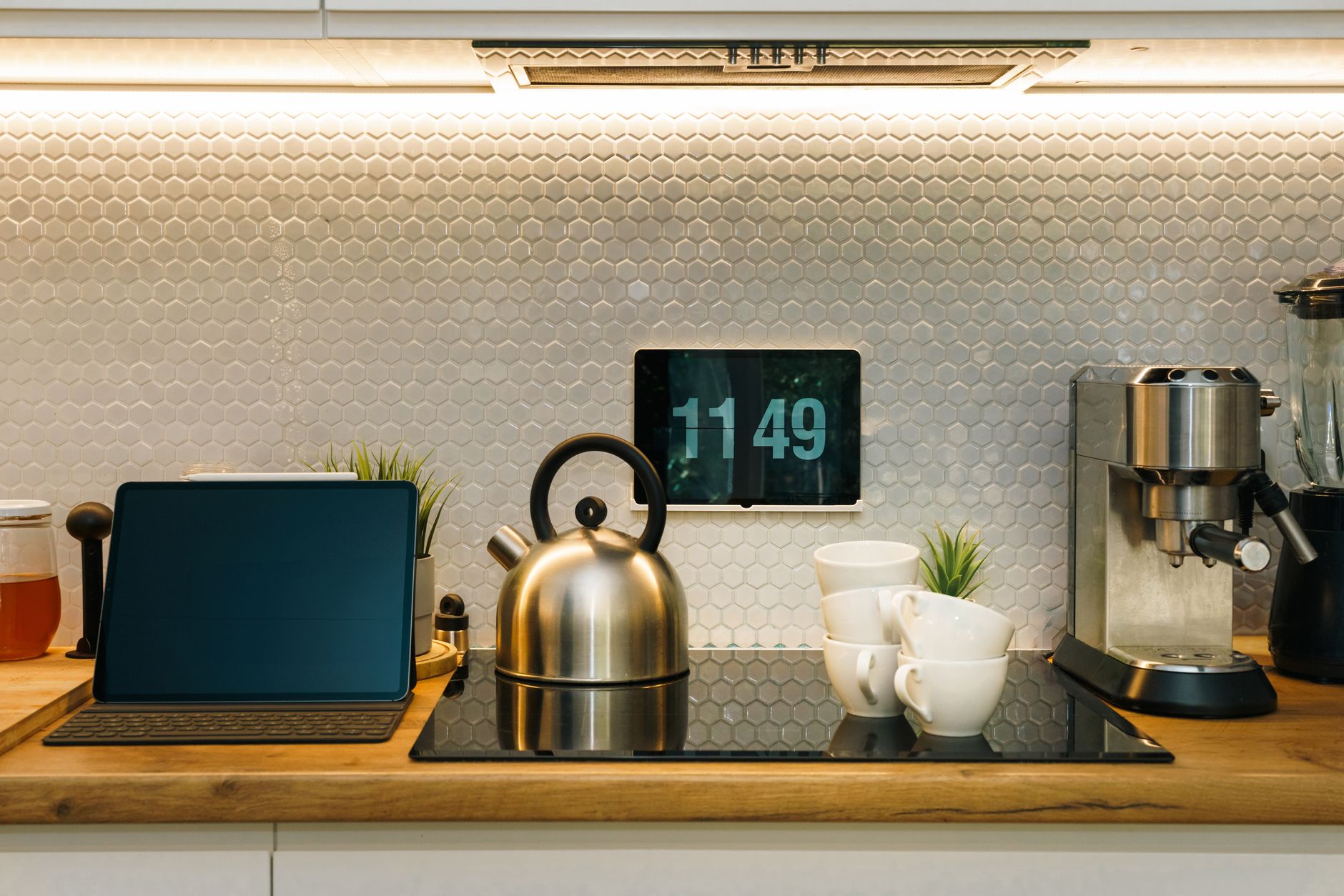
In the pursuit of a healthier lifestyle, the kitchen often serves as the epicentre of our efforts. Yet, navigating the plethora of new gadgets promising to streamline meal preparation and enhance nutritional outcomes can be overwhelming. As we look towards 2026, the integration of ‘smart’ technology into kitchen tools is becoming increasingly sophisticated, offering not just convenience but also measurable impacts on efficiency and long-term running costs. This review explores into select smart kitchen gadgets specifically chosen for their ability to support healthy eating, evaluating their true value beyond initial purchase price.
⚡ In a Rush? Key Takeaways
- Smart blenders can cost $0.05–$0.15 per use depending on motor wattage and cycle length.
- Sous vide machines offer precise temperature control, saving ~15% energy over conventional oven cooking for similar results.
- Connected ovens and multicookers can preheat 30% faster, saving energy and time.
- Smart scales and food tracking apps can provide actionable insights for better portion control and nutritional balance.
- ✅ Truly smart health gadgets focus on tangible benefits: consistent results, energy savings, and simplified healthy meal preparation.
What Does ‘Smart’ Truly Mean for Healthy Eating Gadgets?
Smart kitchen gadgets for health offer connectivity and data insights to optimise nutrition and efficiency, often with tangible energy savings, not just novelty features.
The term ‘smart’ in kitchen appliances can sometimes feel like marketing buzzwords designed to inflate prices. However, when applied thoughtfully to healthy eating, smart technology can offer genuine benefits. This typically involves enhanced control over cooking processes, detailed nutritional data, recipe guidance, and integration with other health-tracking platforms. It’s crucial to distinguish between gadgets that offer superficial connectivity and those that provide actionable insights or demonstrably improve efficiency and nutritional outcomes. The true measure of a ‘smart’ gadget for healthy eating lies in its ability to simplify the creation of nutritious meals and help us understand their composition better, all while considering the ongoing operational expenses.
Do Smart Blenders Offer a Healthier or More Efficient Way to Prepare Meals?
Smart blenders can enhance health through precise nutrient extraction and portions; energy use ranges from 0.05–0.15 per cycle, depending on motor power.
High-powered blenders have long been staples for smoothie enthusiasts and those blending soups or sauces. Smart blenders elevate this by offering pre-programmed settings tailored to specific tasks—from emulsifying dressings to creating ultra-smooth purées for baby food or protein shakes. This precision ensures you extract the maximum nutritional value from ingredients. For instance, a smart blender can pulverise fibrous vegetables like kale more effectively, making their nutrients more bioavailable.
From an efficiency standpoint, while a powerful motor will consume more wattage during operation, smart programmes often optimize blending times. This means the motor runs only as long as necessary to achieve the desired consistency, potentially saving energy compared to manual over-blending. A typical high-powered smart blender might use between 800–1500 watts, leading to an energy cost of approximately $0.05–$0.15 per 1-2 minute cycle, depending on your local electricity rates. This cost is minimal when weighed against the benefits of easily incorporating nutrient-dense foods into your diet and reducing reliance on processed alternatives.
Are Smart Ovens and Multicookers Truly Beneficial for Health-Conscious Cooks?
Smart ovens and multicookers improve healthy cooking through precise temperature control, faster preheating (saving ~30% time/energy), and guided healthy recipes.
Modern smart ovens and multicookers are moving beyond simple timed cooking. Many now offer integrated thermometers, steam functions, and Wi-Fi connectivity that allows for remote monitoring and recipe guidance. For healthy eating, this translates into more precise cooking methods that preserve nutrients. For example, steaming vegetables within a multicooker at a controlled temperature retains more vitamins and minerals than high-heat roasting or boiling. Some advanced models even offer specific programmes for ‘healthy cooking’ that suggest optimal temperatures and times for various lean proteins and vegetables.
The efficiency aspect is significant. Features like rapid preheating can shave 30% off the time it takes a conventional oven to reach temperature, directly reducing energy consumption. Furthermore, multicookers, which often combine pressure cooking, steaming, and sautéing functions, are generally more energy-efficient than traditional ovens for many tasks, particularly for smaller portions. A sous vide function, often found in high-end multicookers, also offers unparalleled precision for cooking proteins to the perfect temperature, preventing overcooking and maintaining moisture with minimal energy input once the water is heated.
How Do Smart Scales and Food Trackers Enhance Nutritional Understanding?
Smart scales and trackers provide precise portion control and nutritional data, empowering users with real-time insights for balanced, healthy eating habits.
While not cooking ‘gadgets’ in the traditional sense, smart scales and integrated food tracking applications are indispensable tools for anyone serious about healthy eating. A smart scale syncs wirelessly with a companion app, automatically logging the weight of ingredients or prepared meals. This data can then be used to accurately calculate portion sizes and, by cross-referencing with the app’s extensive food database, the nutritional content of a dish. This eliminates the guesswork often associated with calorie counting or macro tracking.
The benefit to healthy eating is profound. Understanding precise portion sizes is fundamental to managing calorie intake and ensuring a balanced macronutrient profile. For example, knowing that 100 grams of chicken breast contains approximately 165 calories and 31 grams of protein, versus accurately weighing and confirming that amount, makes adherence to dietary goals much more achievable. The ‘smart’ component here is the smooth integration of weighing and data logging, which significantly reduces the manual effort involved in tracking, thus encouraging consistent use. The energy consumption of these devices is negligible, typically relying on low-power Bluetooth and small batteries that last months or even years.
| Gadget Type | Primary Health Benefit | Efficiency Aspect | Approx. Running Cost per Use | Connectivity Feature |
|---|---|---|---|---|
| Smart Blender | Nutrient extraction, precise portioning | Optimized blending cycles | $0.05–$0.15 | App control, pre-programmed settings |
| Smart Oven/Multicooker | Nutrient preservation, guided healthy recipes | Faster preheating, efficient cooking modes | Varies (minimal per cycle, higher for full bake) | Remote monitoring, recipe integration |
| Smart Scale & Tracker | Accurate portion control, macro/calorie tracking | Negligible energy use (battery powered) | < $0.01 (battery equivalent) | Bluetooth syncing, food database |
Assessing the Efficiency and Long-Term Value of Smart Health Gadgets
True value in smart health gadgets lies in their ability to demonstrably save time and energy, simplify complex nutritional tracking, and yield consistent, healthy results.
When evaluating smart kitchen gadgets for healthy eating beyond their initial purchase price, running costs and long-term value are paramount. For appliances like blenders and multicookers, energy consumption is measurable. While the wattage might seem high during operation, efficiency gains often come from reduced cooking times, optimized programmes that prevent over-consumption, and the ability to cook multiple items simultaneously. For instance, a multicooker’s pressure-cooking function can reduce cooking times for tough ingredients like dried beans by up to 70% compared to stovetop boiling, leading to significant accumulated energy savings over time. A typical 1000W multicooker running for 20 minutes might use around 0.33 kWh, costing approximately $0.08 at a 24¢/kWh rate.
Connectivity is where many ‘smart’ gadgets truly justify their premium. For health-conscious users, this often means integration with apps that track macronutrients, micronutrients, and hydration. Imagine tracking your daily protein intake automatically simply by using a smart scale to weigh your chicken breast. This data linkage transforms raw ingredients into actionable health metrics. Furthermore, smart ovens that automatically adjust cooking parameters based on recipe data ensure that healthy meals are cooked perfectly every time, reducing the likelihood of failed attempts that can discourage adherence to dietary goals. The initial investment in these gadgets should be viewed in the context of how they contribute to sustained healthy habits and potentially reduce long-term spending on less healthy convenience foods.
What is the True Cost of Running a Smart Blender?
The running cost for a smart blender cycle typically falls between $0.05 and $0.15, influenced by motor power, blending duration, and electricity rates.
Smart blenders, like the popular NutriBullet Smart models or the Vitamix Ascent series with Bluetooth connectivity, excel at preparing nutrient-dense smoothies, purées, and even hot soups. Their ‘smart’ features often include pre-programmed cycles that optimize speed and duration for specific outcomes—ensuring fruit fibres are broken down for better nutrient absorption, or that hot soup is heated to a safe temperature without overcooking.
Let’s break down the cost. A high-performance smart blender might have a motor rated at 1200 watts. Running this for a 1-minute smoothie cycle would consume 1.2 kWh. At a US average electricity rate of $0.16 per kWh, this equates to $0.19 per cycle. However, many smart blender cycles are shorter, or the active motor time is less. If a cycle is 30 seconds, the cost drops to approximately $0.095. Consider a household making one smoothie per day. This is an annual running cost of roughly $35-$70, a small price for consistent healthy meal preparation. Compared to purchasing a daily smoothie from a cafe for $5-$8, the smart blender offers substantial savings within months.
Efficiency Differences: Smart Ovens vs. Traditional Ovens for Healthy Roasting
Smart ovens can be up to 30% more energy-efficient for healthy roasting due to faster preheating and precise temperature management that prevents overcooking.
Roasting vegetables or lean proteins is a cornerstone of healthy eating for many. Traditional ovens require a significant preheating period, during which they consume energy without actively cooking. Smart ovens, particularly those with convection fan technology and advanced heating elements, can preheat much faster—often reducing the preheat time by a third. If a conventional oven takes 15 minutes to preheat, a smart oven might achieve the same temperature in 10 minutes. This 5 minutes of saved energy per cooking session accumulates.
Furthermore, smart ovens offer superior temperature accuracy and consistency. This precision is crucial for healthy cooking; it ensures that vegetables are roasted to tender perfection without becoming charred edges (which can produce harmful compounds) and that lean meats are cooked through without becoming dry and tough. Some smart ovens even have specific ‘roasting’ modes that combine convection for even browning with precise temperature control to maintain internal moisture. A conventional oven running at 400°F typically consumes between 2-3 kWh per hour. By reducing preheating time and maintaining temperature more accurately, a smart oven can lower this usage by 10-15% over the course of a full cooking cycle for a typical roast, translating to tangible savings on utility bills.
Can Smart Scales Truly Help Manage Weight and Nutrition?
Yes, smart scales empower healthy eating by providing exact portion sizes and nutritional data, linking directly to apps for easy tracking and goal management.
The connection between what we eat and our health outcomes is undeniable, and accurate measurement is key. Smart scales, such as those from GreaterGoods or FitTrack, go beyond basic weight measurement. When paired with corresponding apps, they become powerful tools for nutritional analysis. Users can place a bowl on the scale, tare it, add an ingredient, and the scale logs its weight. This is repeated for each component of a meal. The app then uses this data to calculate calories, protein, carbohydrates, fats, and key micronutrients.
This level of detail is invaluable for individuals managing specific dietary needs, such as those monitoring carbohydrate intake for diabetes management or ensuring adequate protein for muscle building. The ‘smart’ aspect here is the automation and accuracy. It removes the tedium of manual logging and the errors inherent in estimating portion sizes. If you consistently misjudge your serving of nuts or grains, a smart scale provides immediate, factual feedback. Over time, this consistent feedback loop helps users develop a more intuitive understanding of healthy portions, leading to better long-term dietary habits. The initial investment in a smart scale, around $50–$100, is quickly offset by improved dietary control and potentially reduced food waste due to better planning.
What About Smart Food Processors and Their Role in Meal Prep?
Smart food processors simplify healthy meal prep with automated functions for chopping, slicing, and puréeing, reducing prep time by up to 60% and promoting home-cooked meals.
Meal prepping is often hailed as a key strategy for healthy eating, but it can be time-consuming. Smart food processors, while less common than their blender counterparts, can significantly streamline this process. They offer automated functions that precisely chop vegetables, slice fruits, shred cheese, or purée ingredients for dips and sauces. Some advanced models even feature integrated scales or recipe guidance within their companion apps.
For instance, a smart food processor can dice onions and peppers for a stir-fry base in under a minute, a task that might take 5–10 minutes of manual chopping. This efficiency boost is critical for busy individuals committed to bringing their own healthy meals to work or school. By reducing the time and effort involved in preparation, these gadgets encourage users to cook more ‘real’ food at home rather than opting for less healthy convenience foods. While the energy consumption of a food processor is higher than a blender due to its more powerful motor (often 900–1300 watts), the time saved—sometimes reducing total prep time by 50–60% for complex meals—represents a significant efficiency gain that appeals to time-poor health enthusiasts.
Do Air Fryers Really Count as ‘Smart’ for Healthy Eating?
While most air fryers aren’t ‘connected,’ their efficient, oil-minimizing cooking method makes them a ‘smart’ choice for healthier fried and roasted foods, often costing less to run than ovens.
Air fryers have surged in popularity, and for good reason: they offer a way to achieve crispy textures associated with deep-frying using significantly less oil. While many models on the market are not ‘smart’ in the connected-app sense, their inherent design and operation make them a strategically ‘smart’ choice for healthy eating. They circulate hot air rapidly to cook food, mimicking the results of deep-frying with only a tablespoon or two of oil, dramatically reducing fat and calorie intake.
From an efficiency perspective, air fryers are often more economical than a full-sized oven for smaller portions. They heat up much faster and use less energy to cook smaller items like chicken tenders, vegetables, or fish fillets. A typical 1500-watt air fryer running for 15 minutes uses around 0.625 kWh, costing approximately $0.10 at a $0.16/kWh rate. This is often less than what an oven would consume for the same task, especially when considering oven preheating. For single servings or small family meals, the air fryer presents a clear running cost advantage and a healthier cooking method, making it a wise addition to a health-conscious kitchen.
The Verdict: Which Smart Gadgets Deliver on Their Healthy Eating Promise?
\