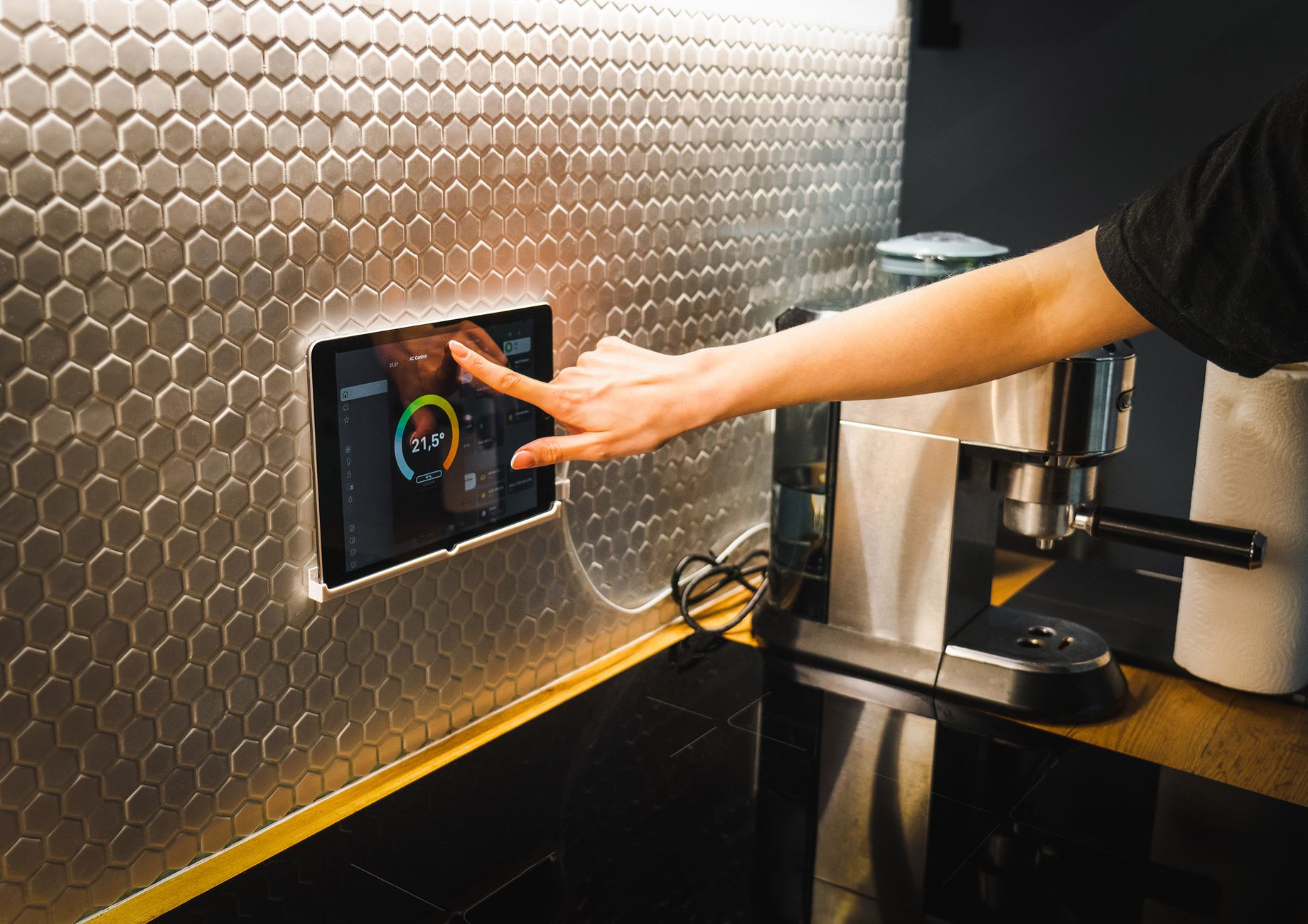
The modern kitchen is increasingly a hub of technology, and not all of it is purely for convenience. Increasingly, smart kitchen devices are proving their worth by addressing two significant household concerns: reducing food waste and lowering monthly running costs. For the considered homeowner, integrating these intelligent tools offers a tangible path towards a more efficient and economical home.
⚡ In a Rush? Key Takeaways
- Vacuum sealers extend food freshness up to five times longer, slashing spoilage.
- Smart refrigerators can monitor inventory and suggest recipes, reducing forgotten items.
- Composting devices process organic waste rapidly, reducing landfill contributions by 80%.
- Precision cookers ensure food is perfectly prepared, preventing overcooking waste.
- ✅ Invest in smart storage and inventory tech to save an estimated $100-$200 annually on groceries.
What are the most effective smart kitchen devices for reducing food waste?
Smart refrigerators, vacuum sealers, and advanced composting bins are top contenders for reducing kitchen food waste in 2026.
The sheer volume of food that ends up in landfills is a persistent global issue, and our kitchens are often the primary origin point. However, technology offers solutions that extend beyond mere refrigeration. These smart devices are designed with longevity, intelligent tracking, and efficient processing in mind, directly contributing to a less wasteful household and a lighter ecological footprint. By integrating these tools, we can make a substantial difference in both our environmental impact and our budgets.
How do smart refrigerators actively combat food waste?
Smart refrigerators use internal cameras and inventory tracking to alert users to expiring items and suggest recipes, preventing forgotten food.
Modern smart refrigerators are far more than just cold storage units. Many are equipped with internal cameras that allow you to check your inventory remotely via a smartphone app – invaluable when you’re at the grocery store and unsure if you already have milk. Beyond simple visibility, some models go further by tracking the purchase dates of items and sending notifications when food is approaching its expiration. This proactive alert system is a powerful deterrent against the common household scenario of finding forgotten produce or dairy hidden at the back, long past its prime.
To further leverage this inventory data, many smart refrigerators can now suggest recipes based on the ingredients you have on hand, especially those nearing their use-by dates. This feature not only helps prevent food from being discarded but also sparks culinary creativity. Instead of letting that half-used bunch of cilantro wilt away, the fridge might suggest a quick salsa or a pesto recipe. This intelligent integration of inventory management and meal planning is a significant step towards a more sustainable kitchen and directly impacts your grocery bill by ensuring that purchased items are fully utilised.
Consider the variety of fresh produce types that have different shelf lives. A smart refrigerator’s ability to catalog and flag these items at different stages of freshness is unparalleled. For instance, if it detects that your spinach was purchased 5 days ago and a bell pepper 3 days ago, it might offer recipes that combine both, encouraging consumption before either spoils. This level of granular awareness is difficult to achieve with traditional inventory methods.
Can vacuum sealers genuinely extend food freshness significantly?
Yes, vacuum sealers remove air, preventing oxidation and freezer burn, extending food freshness up to five times longer.
Vacuum sealing technology is a proven method for preserving food quality and extending its lifespan, and smart versions are making it more accessible and effective. By removing nearly all the air from a storage bag or container, these devices halt the oxidation process that leads to spoilage and nutrient degradation. This also significantly reduces the risk of freezer burn, a common issue with standard plastic bags that can render food unpalatable.
The results, as noted by various sources including Taste of Home, are substantial. Foods stored with a vacuum sealer can maintain their freshness for up to five times longer than those stored using conventional methods like freezer bags or plastic wrap. This applies to a wide range of items: raw meats, leftover cooked meals, fruits, vegetables, and even dry goods like coffee beans and flour. Extending the life of these items means fewer trips to the store and less overall waste. For items like grains or nuts, vacuum sealing prevents the oils from going rancid, preserving their quality for months longer. I’ve personally found that bulk purchases of herbs, sealed in individual portions, can last through an entire winter without losing their vibrant flavour.
Operating a vacuum sealer is straightforward, involving placing food into a special textured bag and then running the machine. The process typically takes less than a minute per bag. Smart models may offer pre-set modes for moist or dry foods, or even integrated bag cutters for custom sizes. The cost of the bags themselves is a consideration, but when weighed against the cost of replacing spoiled food, the investment is quickly recouped. A typical roll of vacuum sealer bags might cost $20 and seal 50–100 items, making the per-item cost pennies.
Are smart composting devices practical for home use?
Smart composters process food scraps rapidly into nutrient-rich soil amendments, reducing waste volume by 80% and odour.
For many, the idea of composting at home conjures images of outdoor bins and potential odours. However, smart composting devices have revolutionised this process, making it viable and convenient for even the smallest apartments. These countertop units are designed to break down food scraps – including meat, dairy, and bones, which are often unsuitable for traditional composting – in a matter of hours, rather than weeks or months.
The primary advantage of a smart composter is its speed and efficiency. It typically uses a combination of heat and aeration to rapidly dehydrate and break down food waste. This process dramatically reduces the volume of scraps by up to 80%, transforming a large bucket of leftovers into a small amount of dry, nutrient-dense material. This material can then be used as a highly effective fertiliser for houseplants or garden beds. Odour is also managed effectively through internal filters, often using activated carbon, ensuring that the device operates discreetly within the kitchen.
Smart composting devices represent a significant shift in how we manage household organic waste. They provide a clean, contained, and odour-free method for diverting food scraps from landfills. The resulting compost is rich in microbial activity and nutrients, ready to enrich soil without the long waiting period associated with traditional methods. For those living in urban environments with limited outdoor space, or for individuals seeking the quickest way to manage kitchen waste, these devices offer an elegant and environmentally responsible solution.
Consider a typical week’s worth of food scraps from a family of four. Without a smart composter, this waste fills a bin, contributes to methane emissions in landfills, and requires regular trips to the curb. With a smart composter, this volume is reduced to a cup or two of usable compost, ready within hours. The environmental benefits are clear, and the practical advantage of odourless, rapid processing makes it an attractive option for many households.
How do smart kitchen gadgets lower monthly costs through efficiency?
Precision cooking, smart inventory management, and energy-efficient appliances lower utility bills and grocery spend.
Beyond waste reduction, many smart kitchen devices are engineered with energy efficiency and cost savings as core functionalities. These gadgets optimise various kitchen processes, from cooking to storage, leading to a noticeable reduction in monthly utility bills and grocery expenditure. The integration of smart technology allows for more precise control, better resource management, and ultimately, a more economical operation of the kitchen.
Can precision cooking devices improve my grocery budget?
Precision cookers ensure food is cooked to the exact temperature, preventing overcooking and spoilage, thus reducing food waste.
Precision cooking, particularly as helped by immersion circulators (often referred to as ‘sous vide’ machines), offers a unique pathway to reducing food waste and, consequently, grocery costs. The core principle is precise temperature control. By immersing vacuum-sealed food in a water bath heated to an exact, consistent temperature, these devices cook food perfectly every time, eliminating the risk of overcooking which often leads to dry, tough, or otherwise unusable results. This is especially beneficial for expensive cuts of meat or delicate fish.
For example, cooking a steak or chicken breast to a precise medium-rare or internal temperature means that it will be exactly that, from edge to edge. There’s no grey band of overcooked meat, and no dry, wasted portion. This consistency ensures that every part of the food purchased is edible and enjoyable. When you consider the cost of premium ingredients, ensuring each purchase is prepared perfectly translates directly into savings, reducing the likelihood of needing to repurchase due to cooking errors. I’ve found that premium ingredients, like duck breasts or salmon fillets, benefit immensely from this method, yielding restaurant-quality results at home with near-zero waste.
Furthermore, the vacuum-sealing aspect often associated with precision cooking complements its waste-reducing capabilities. Food cooked sous vide is typically sealed in bags, which can then be stored efficiently in the refrigerator or freezer. This also allows for batch cooking; you can prepare several portions at once, and reheating is often as simple as re-immersing the already perfectly cooked food for a short period. This method is not only efficient for reducing waste on the day of cooking but also for ensuring that prepared meals remain high quality for subsequent consumption, further embedding cost savings into your meal planning.
Do smart meat thermometers offer significant cost savings?
Smart thermometers provide precise cooking temperatures, preventing under or overcooking, thus reducing meat waste and costs.
While not always classified as a ‘smart device’ in the same vein as a refrigerator, a high-quality smart meat thermometer acts as a crucial tool for minimising food waste and maximising the value of expensive proteins. These thermometers connect via Bluetooth or Wi-Fi to a smartphone app, allowing you to monitor the internal temperature of meats remotely and receive alerts when your food reaches the desired level of doneness.
The benefit here is twofold. Firstly, it drastically reduces the chance of undercooking, which can lead to food safety concerns and unappetising results. Secondly, and perhaps more relevant to cost savings, it eliminates overcooking. Many cooks, especially when using traditional dial thermometers or cooking by guesswork, tend to err on the side of caution and cook meat longer than necessary to “ensure it’s done.” This leads to drier, tougher cuts that are less enjoyable and may even be discarded. A smart thermometer removes this guesswork, ensuring that chicken is perfectly cooked but still moist, or that a steak reaches its ideal medium-rare without becoming tough.
When you consider the average cost of cuts like beef tenderloin, ribeye, or even a whole chicken, the savings from preventing even a single instance of overcooking can be substantial. The peace of mind knowing your food is perfectly cooked, safe, and hasn’t been wasted is a tangible benefit. The apps often provide recommended temperatures for various meats and doneness levels, acting as a helpful guide for both novice and experienced cooks. This precise control ensures you get the best possible result from every dollar spent on groceries.
What are the best smart meat thermometers available in 2026?
Top smart meat thermometers in 2026 include MEATER+, ThermoWorks Smoke, and Yummly Smart Meat Thermometer for accuracy and features.
In 2026, the market offers several outstanding options for smart meat thermometers, each providing excellent accuracy and user-friendly interfaces. The MEATER+ is a popular choice for its completely wireless design, featuring a probe that rests entirely within the meat, with a charging dock that also acts as a Bluetooth transmitter. Its companion app provides cooking progress, estimated cook times, and alerts, making it ideal for grills and smokers where constant monitoring is difficult.
For those requiring extreme accuracy and rugged durability, ThermoWorks products, such as the ThermoWorks Smoke, are highly regarded. While it uses two wired probes, its rapid read times and robust construction make it a favourite among professional chefs and serious home cooks. Its dual-probe capability allows for simultaneous monitoring of meat and ambient grill temperature, offering complete control.
The Yummly Smart Meat Thermometer is another strong contender, often praised for its ease of use and integration into the Yummly ecosystem of recipes and cooking guidance. It typically offers both Wi-Fi and Bluetooth connectivity, ensuring reliable performance whether you’re in the kitchen or stepping outside. All these devices aim to demystify the cooking process, ensuring that expensive ingredients are treated with the precision they deserve, thereby reducing cooking-related waste.
Can smart plugs help manage kitchen appliance energy consumption?
Smart plugs allow remote control and scheduling of appliances, reducing ‘phantom load’ and optimizing energy usage.
While perhaps not directly reducing food waste, smart plugs are a vital component in the broader strategy of kitchen efficiency and cost reduction by managing the energy consumption of various appliances. These small devices plug into a standard outlet, and then you plug your appliance into the smart plug. They connect to your home’s Wi-Fi network, allowing you to control the plugged-in device remotely via a smartphone app or voice assistant.
Their most significant contribution to cost savings is combating ‘phantom load’ or ‘standby power.’ Many kitchen appliances, such as coffee makers, microwaves with clocks, toasters, and even some refrigerator models (when not actively cooling), draw a small amount of electricity even when turned off. Over time, this cumulative draw can add up, contributing to your electricity bill without providing any active service. Smart plugs allow you to schedule these appliances to turn off completely when not in use – for example, turning off the coffee maker overnight or ensuring that stand-by power from small countertop appliances is cut when you’re away from home.
Beyond eliminating phantom load, smart plugs enable better energy management. You can monitor the energy usage of connected appliances through the app, identifying which devices are the biggest energy consumers. This data empowers you to make informed decisions about usage. For instance, if you see that your rarely used bread maker draws significant power even when idle, you might decide to unplug it or ensure it’s controlled by a smart plug switched off daily. The ability to schedule appliance operation can also be beneficial for off-peak electricity rates, if available in your area, further optimising costs.
How much can smart plugs save on energy bills annually?
Smart plugs can reduce energy waste from phantom loads, potentially saving households $50–$150 annually depending on appliance usage.
The potential savings from smart plugs are directly related to the number of devices they control and the amount of standby power they consume. While a single device’s phantom load might be minimal, the aggregate effect across multiple appliances in a kitchen can be considerable. Scientific estimations suggest that phantom load can account for 5–15% of a household’s total electricity consumption. For an average annual electricity bill in the United States, this translates to tens or even hundreds of dollars wasted purely on devices drawing power while ostensibly ‘off’.
By effectively cutting power to these devices when they are not needed, smart plugs can reclaim that lost energy. For a household that diligently uses smart plugs to manage its coffee maker, microwave clock, toaster, multiple chargers, and other small appliances, annual savings can range from approximately $50 to $150. This figure increases if applied to larger appliances that are frequently left in standby mode. Regular monitoring through the smart plug app can help users fine-tune schedules and maximise these savings over time, making the initial investment in the plugs (which are typically $10–$25 each) a worthwhile endeavour.
## Frequently Asked Questions
### Can smart kitchen devices actually help me save money on groceries?
Yes, smart refrigerators can track inventory and suggest recipes using expiring items, while vacuum sealers extend food life, reducing spoilage. Precision cookers ensure perfect results, preventing waste of expensive ingredients. These features collectively minimise unnecessary food purchases and discard, leading to grocery savings estimated between $100-$200 annually.
### Which smart kitchen devices are best for beginners?
For beginners looking to reduce waste and cost, a quality vacuum sealer and a set of smart plugs offer the most straightforward and impactful benefits. A vacuum sealer immediately helps preserve food longer, preventing common household spoilage. Smart plugs require minimal setup and help tackle energy waste from everyday appliances.
### Are smart composters worth the investment for a small kitchen?
For small kitchens where traditional composting is not feasible, smart composters are often worth the investment. They efficiently process food scraps into