When you fill a mug for tea or a pot for pasta, the method you choose to heat that water has a measurable impact on your annual energy expenditure. Despite what kitchen lore suggests, not all appliances convert electricity or gas into thermal energy with equal efficiency. The cheapest way to boil water depends on the volume you need, the appliance you already own, and whether you value speed over marginal savings.
⚡ In a Rush? Key Takeaways
- Boiling one litre of water requires 0.09 kWh of energy, but appliance inefficiencies raise actual consumption to 0.11–0.25 kWh.
- An electric kettle converts 90% of electricity into heat, costing 3–5p per litre, while a microwave achieves only 50% efficiency.
- Gas hob efficiency sits at 40%, costing 2–3p per litre, but takes significantly longer than electric methods.
- ✅ For single cups and small volumes, use an electric kettle for the best balance of speed, cost, and convenience.
In this comparison, we examine the three most common methods—electric kettle, microwave, and stovetop hob—using current UK energy prices (approximately 30p per kWh for electricity and 7.5p per kWh for gas). We calculate the cost per litre and per cup, accounting for the thermal inefficiencies that affect every appliance.
How much energy does boiling water actually require?
Boiling one litre of water from 15°C to 100°C requires precisely 0.09 kWh of thermal energy, but appliance inefficiencies raise actual consumption to between 0.11 and 0.25 kWh depending on your chosen method.
Physics dictates the baseline. To raise one gram of water by one degree Celsius requires 4.18 joules of energy. For a litre (1,000 grams) heated by 85 degrees, that equals 355,300 joules, or 0.099 kilowatt-hours. However, no appliance transfers 100% of its energy input to the water. Heat escapes into the air, into the container itself, and through steam loss. The proportion that actually reaches the water determines your actual cost.
Is the electric kettle the most efficient method?
An electric kettle converts approximately 90% of electricity into heat, costing roughly 3–5p per litre at standard variable tariffs, with a single cup requiring less than a penny.
The immersion element sits directly in the water, minimizing heat loss to the surrounding environment. A typical 3kW kettle brings one litre to a rolling boil in three to four minutes, consuming approximately 0.11 kWh of electricity. For a 250ml cup, the time drops to roughly 45 seconds, using just 0.028 kWh—about 0.8p.
However, efficiency plummets when you boil more water than necessary. Heating a full 1.7-litre kettle for a single cup wastes approximately two-thirds of the energy. Kettles with clear viewing windows and cup markings help mitigate this, but the user’s habits ultimately determine the real-world cost. Limescale buildup also degrades performance over time; a 3mm layer of scale can increase energy consumption by 15%, making regular descaling an essential maintenance task for cost-conscious households.
Does using a microwave actually save money?
Microwaves achieve roughly 50% efficiency when boiling water, requiring six to nine minutes per litre and costing approximately 6–9p, making them more expensive than kettles for this specific task.
Microwaves excel at heating food but struggle with water. The electromagnetic radiation excites water molecules unevenly, often creating superheated pockets while other areas remain cooler. This necessitates frequent stopping and stirring to achieve a uniform boil, extending the time required. An 800W microwave (drawing approximately 1,200W from the wall) might require eight minutes to boil a litre, consuming 0.16 kWh—nearly 50% more energy than a kettle.
For small volumes, the gap narrows. A single cup in the microwave takes two to three minutes, using roughly 0.05 kWh (1.5p). However, the risk of superheating—where water boils violently upon disturbance—makes this method less safe and consistent. If you already own a kettle, using it exclusively for water remains the more economical choice.
Is boiling water on the gas hob cheaper than electric methods?
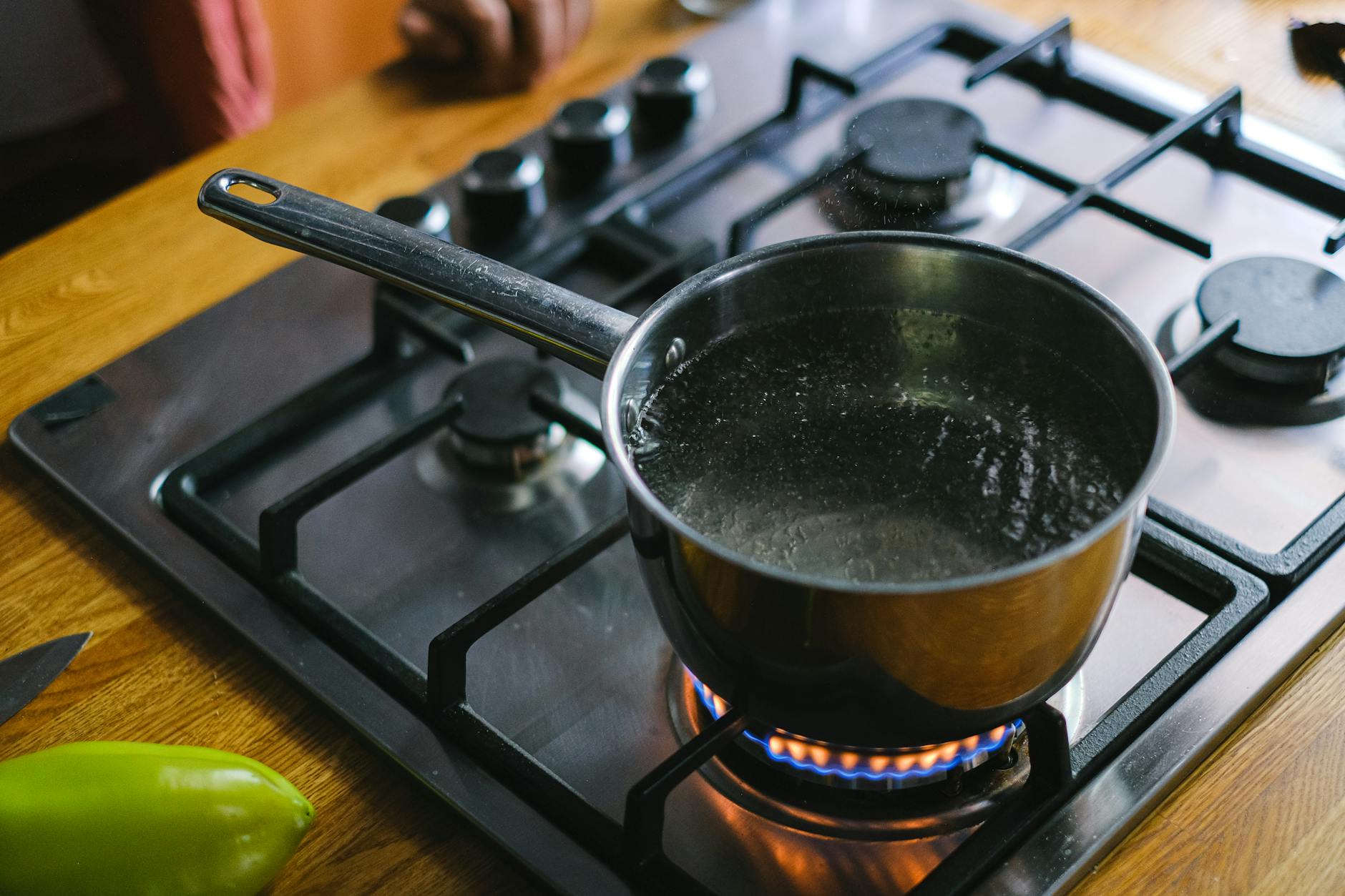
Despite lower gas unit costs, hob efficiency sits at only 40%, requiring 0.25 kWh of gas energy and costing 2–3p per litre, though the process takes significantly longer than an electric kettle.
Gas flames heat the metal pot and the surrounding air as much as the water itself. Only about 40% of the thermal energy transfers to the liquid; the rest dissipates into the kitchen. A standard gas burner (2kW output) requires six to seven minutes to boil a litre, consuming 0.25 kWh of gas. At 7.5p per kWh, that litre costs approximately 1.9p—cheaper than a kettle at 3.3p, but requiring twice the time.
Electric coil hobs perform slightly better at 50–60% efficiency but cost more to operate due to higher electricity prices. Induction hobs reach 70–80% efficiency by heating the pot directly via magnetic fields, costing roughly 4–5p per litre. However, induction requires compatible ferrous cookware; aluminium or copper pots will not work.
Kettle vs Microwave vs Hob: the cost breakdown per cup
| Method | Time (1 cup) | Energy Used | Cost per Cup |
|---|---|---|---|
| Electric Kettle | 45 seconds | 0.028 kWh | 0.8p |
| Microwave | 2.5 minutes | 0.05 kWh | 1.5p |
| Gas Hob | 3.5 minutes | 0.062 kWh gas | 0.5p |
| Induction Hob | 2 minutes | 0.035 kWh | 1.0p |
These figures assume boiling only the water you need. Filling a kettle to the maximum line for a single cup quadruples the cost to 3.2p, making it the most expensive option available. Similarly, heating a small cup of water in a large saucepan on the hob wastes energy heating the metal mass of the pot.
Does the volume of water change the cheapest method?
For volumes above two litres, the gas hob becomes increasingly cost-effective relative to electric kettles, though the time penalty often favors running the kettle twice instead.
Kettles have practical capacity limits. When cooking pasta for four requires three litres of boiling water, you face a choice: boil the kettle twice (0.22 kWh, 6.6p), fill a large pot on the gas hob once (0.75 kWh gas, 5.6p), or use the microwave in multiple shifts (impractical and expensive). The gas hob wins marginally on cost but loses significantly on time, requiring ten to twelve minutes versus six to eight minutes for two kettle cycles.
For the one-cup scenario that dominates most mornings, the kettle’s speed and 90% efficiency make it the rational default. The microwave serves only as a backup for those without a working kettle, while the gas hob justifies itself only when cooking volume exceeds the kettle’s capacity.
Are expensive kettles more energy efficient?
Price point has minimal correlation with energy efficiency; a £20 kettle and a £150 model both convert electricity to heat at approximately 85–90%, with premiums paying for materials, temperature control, and longevity rather than running cost reduction.
Variable temperature kettles allow heating water to 80°C or 90°C for coffee or tea, reducing energy use by 10–15% per boil compared to a full rolling boil. However, the initial cost premium for these features requires years of daily use to recoup through marginal savings. Insulated kettles maintain temperature longer, reducing the need for reboiling, but the standby energy draw of the base can offset these gains if left plugged in.
If you are replacing a broken kettle, select one with clear cup markings and a rapid boil time. If your existing kettle functions adequately, the environmental and financial cost of replacing it likely exceeds any efficiency gains from a newer model. Use our appliance running cost calculator to compare your specific models.
The verdict: which method should you use daily?
For single cups and small volumes, the electric kettle provides the optimal balance of speed, cost, and convenience; reserve the hob for volumes exceeding 1.5 litres and avoid the microwave for boiling water entirely.
The data supports a clear hierarchy. The kettle wins on efficiency and speed for the vast majority of domestic water-boiling tasks. The gas hob offers marginal savings for large volumes but requires constant supervision and extended waiting times. The microwave serves as an inefficient outlier, suitable only for those without access to a kettle or hob.
📊 Efficiency Verdict
For most households, an electric kettle is the most efficient and cost-effective method for boiling water daily.
I earn a small commission if you purchase through our recommended links. If your kettle has developed substantial limescale or takes noticeably longer to boil than when new, investing in a quality descaler will restore its efficiency more effectively than replacement. Running a more efficient home requires not just choosing the right appliance, but maintaining it properly to avoid the hidden costs of neglect.