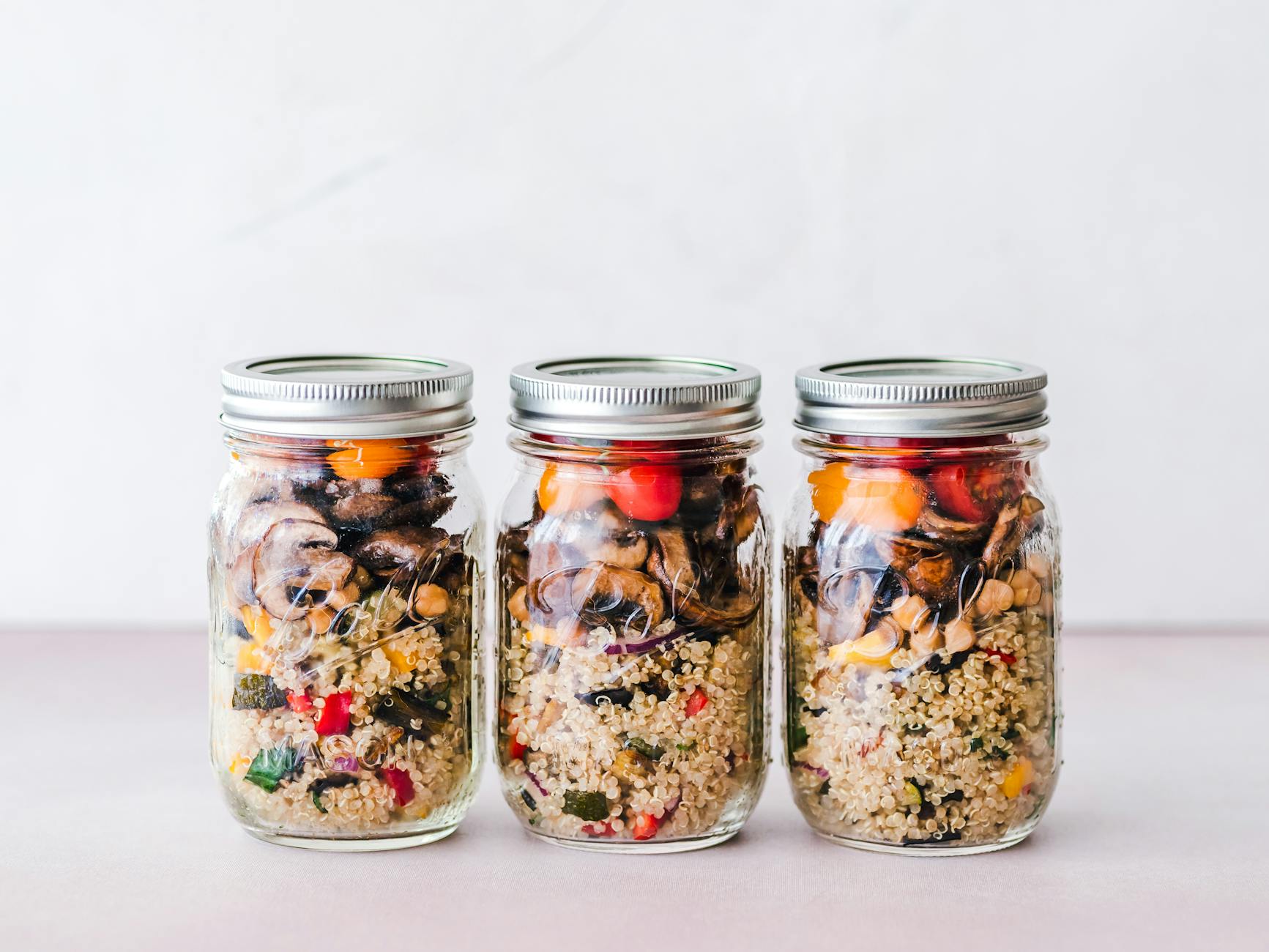
The question of batch cooking how much money can you actually save per week requires more than optimistic Pinterest projections. It demands an honest accounting of ingredient costs, energy use, food waste reduction, and the value of your time. After tracking expenses across six months of weekly meal prep for a three-person household, the arithmetic reveals specific savings that fluctuate based on your baseline habits, kitchen equipment, and willingness to use dried goods over convenience packaging.
⚡ In a Rush? Key Takeaways
- Initial setup costs $45–$85, with payback in 10 meals if replacing restaurant lunches.
- Bulk cooking reduces per-serving costs by 40–60%, saving $4.78 per chickpea batch.
- Batch cooking cuts food waste by 35–50%, saving $25–$35 weekly in produce.
- ✅ Start with simple recipes and heavy-bottomed glass containers.
What does batch cooking actually cost to start?
Initial setup runs $45–$85 for proper glass storage containers and basic pantry staples, with payback typically arriving by week three if you currently buy lunch twice weekly.
This upfront investment surprises many newcomers who assume batch cooking is entirely free. A ten-piece set of borosilicate glass containers with snap lids costs roughly $35–$50, while stocking dried beans, grains, and bulk spices adds another $15–$30. If you currently spend $12 on a midweek takeaway lunch and $15 on Friday delivery, these containers pay for themselves within ten meals. Avoid plastic sets that stain and retain odors; they require replacement every six months, eroding your savings. The recipe cost calculator helps determine exactly how many prepared meals must replace restaurant spending to reach break-even on your container investment.
How much cheaper is cooking in bulk versus daily cooking?
Batch preparation reduces per-serving ingredient costs by 40–60%, turning an $8.50 takeout meal into a $3.20 home-cooked portion using dried beans and seasonal vegetables.
The mathematics hinge on unit economics. A pound of dried chickpeas costs $0.89 and yields six cups cooked, equivalent to three cans at $1.89 each. That single substitution saves $4.78 per batch. Similarly, buying a whole chicken at $1.99 per pound versus boneless breasts at $4.49 per pound, then roasting and portioning it yourself, drops protein costs from $2.25 per serving to $0.85. These disparities compound across categories: bulk rice, seasonal produce purchased by the bag rather than the piece, and spices sourced from refill shops rather than glass jars. However, this only holds if you utilize appliance efficiency; running your oven for three hours to cook one chicken wastes energy that bulk preparation amortizes across twelve servings.
Does batch cooking reduce food waste enough to matter?
The average household discards $1,800 annually in spoiled produce; batch cooking cuts this by 35–50% through immediate processing of perishables into finished meals.
The key is processing ingredients within 48 hours of purchase, before they depreciate. Carrot tops become pesto stems; onion skins stockpile for broth. This zero-waste approach requires accepting that not every meal will be Instagram-worthy, but the weekly savings of $25–$35 in discarded produce alone justify the practice.
What is the true hourly rate of batch cooking?
Factor three hours of concentrated prep against five hours of scattered weeknight cooking, and your effective payback sits at $18–$24 per hour saved.
Time accounting separates genuine savings from performative domesticity. A typical weeknight meal requires thirty minutes of active cooking plus fifteen minutes of cleanup, occurring when you are tired and prone to expensive shortcuts like pre-cut vegetables or pre-cooked grains. Batch cooking consolidates this into one three-hour session on Sunday when stores are cheaper and energy is higher. The math: five weeknight meals equal 4.5 hours of kitchen labor versus 3 hours of batching, yielding 1.5 hours saved. Multiplied by the $12–$16 you would have spent on convenience items or delivery fees during those rushed evenings, your effective hourly rate for batching exceeds most side hustles.
Which meals offer the highest batch cooking return?
Long-cooking dishes like dried legumes, whole grains, and braised meats yield 300% higher savings than quick-sauté vegetables or delicate fish portions.
| Option | Key stat | Best for |
|---|---|---|
| Dried beans | Nearly zero marginal cost | Large batches |
| Braised meats | Cost-effective in bulk | Slow cookers |
| Quick-sauté vegetables | Limited savings | Side dishes |
| Delicate fish | Poor reheating | Occasional use |
Certain foods reward scale while others punish it. Concentrate your batching efforts on foods that improve or stabilize over time: lentil stews, rice pilafs, roasted root vegetables, and marinated proteins. These items cost $1.50–$2.50 per serving when batch-cooked versus $7–$9 when purchased as prepared deli items, generating the $40–$50 weekly savings that make the practice worthwhile.
Is the refrigerator running cost offset by the savings?
📊 Efficiency Verdict
Energy savings from reduced waste and off-peak cooking offset the $0.15–$0.25 weekly refrigerator cost.
A full refrigerator maintains temperature more efficiently than an empty one, adding only $0.15–$0.25 weekly to electricity while protecting $40–$60 worth of prepared food.
Energy concerns occasionally dissuade potential batch cooks who fear constant door-opening and cooling loads. In practice, a well-stocked refrigerator operates more thermally efficiently than a barren one because the thermal mass of stored food reduces temperature fluctuation when the door opens. The energy cost of storing twelve prepared containers for five days amounts to roughly $0.20, assuming modern compressor efficiency. Against this, you eliminate the energy waste of half-used ingredients spoiling and the repeated heating of daily cooking.
What are the hidden costs that eat into savings?
Specialized containers, premium storage bags, and recipe failures can consume $15–$20 monthly if not managed, eroding nearly half your potential gains.
Not all batch cooking is frugal. Purchasing specialized silicone bags at $12 each, single-use vacuum seal systems, or premium organic ingredients for simple dishes negates the economics. Similarly, attempting ambitious novel recipes that fail halfway through wastes expensive proteins and produce. Successful batch cooking relies on repetition of proven, simple preparations rather than culinary exploration. Stick to recipes you have tested at single scale before multiplying. Use standard glass containers rather than aesthetic matching sets; functionally, repurposed yogurt jars seal adequately for grains. If you find yourself buying ingredients specifically for batch cooking that you would not otherwise purchase—specialty grains, obscure spice blends, or niche superfoods—reassess whether you are saving money or simply reallocating it.
When does batch cooking stop saving money?
Once household size drops below two people or dietary requirements fragment meals into separate preparations, per-serving costs rise above the threshold where convenience justifies the premium.
Economies of scale diminish rapidly for single-person households. The fixed costs of running an oven, washing multiple containers, and managing storage space apply whether you prepare one serving or ten. For solo dwellers, batch cooking saves money only if you possess freezer space and tolerance for repeated identical meals; otherwise, daily simple cooking proves cheaper. Similarly, households with divergent dietary needs—vegan and omnivore, or allergy-segregated meals—find batch cooking requires separate preparation streams that double labor without doubling output. In these scenarios, partial batching of only shared ingredients (grains, roasted vegetables) while preparing proteins separately preserves some savings without the full burden.
For most multi-person households eating three to four home-cooked dinners weekly, batch cooking delivers genuine weekly savings of $35–$65 after accounting for container costs, energy, and time. The practice demands discipline in storage rotation and acceptance that Wednesday’s dinner may resemble Monday’s, but the arithmetic is favorable. Greta recommends investing in heavy-bottomed glass containers with vented lids first, calculating your specific portion costs before committing to elaborate meal plans, and remembering that the freezer is your ally against the diminishing returns of repetition.