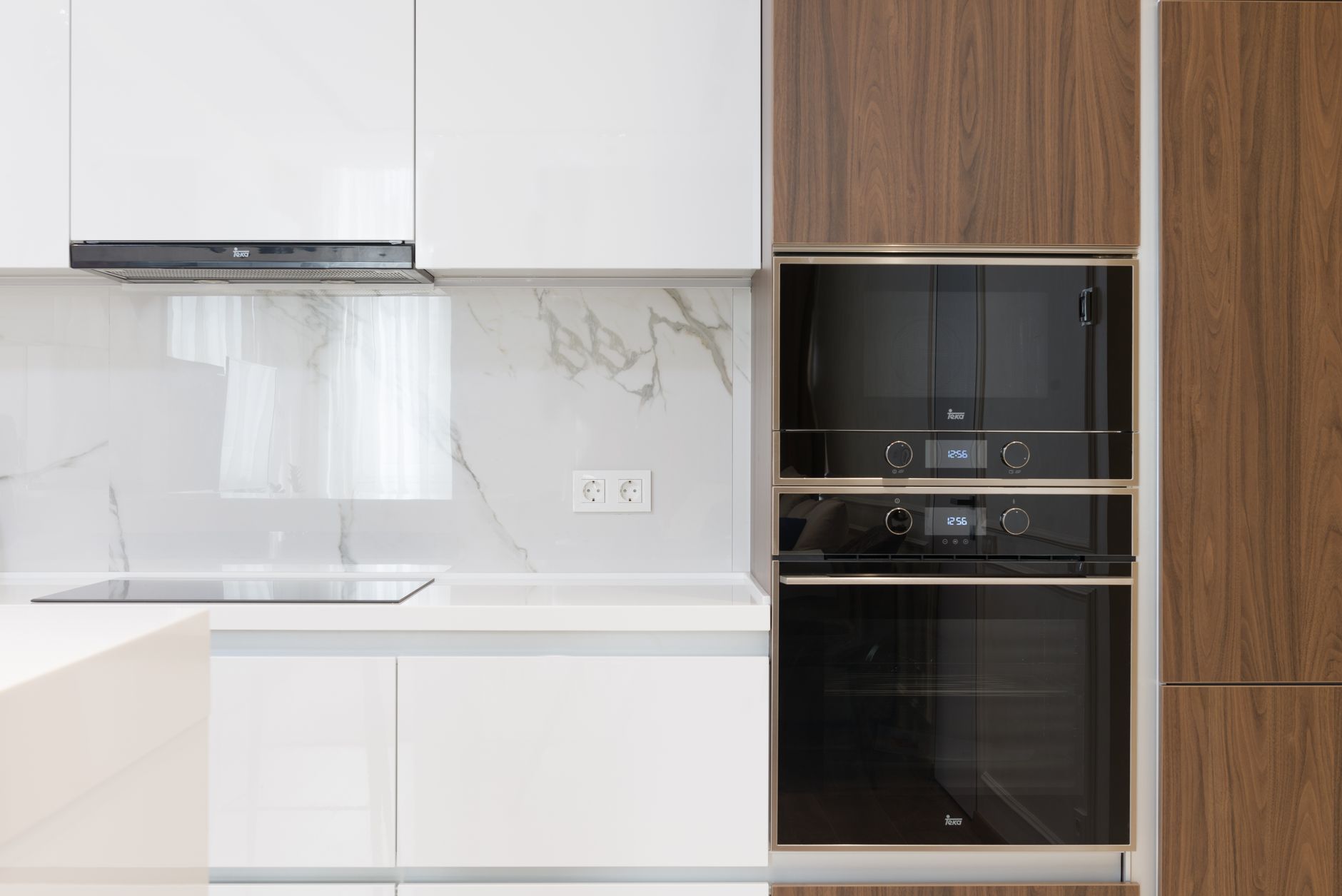
When furnishing a new kitchen or undertaking a major remodel, the decision often arises whether to purchase appliances in a bundle or individually. This choice significantly impacts both your budget and the overall aesthetic and functionality of your space. Understanding the nuances of bundled pricing, potential savings, and design flexibility is crucial for making an informed decision that aligns with your home’s needs and financial planning.
⚡ In a Rush? Key Takeaways
- Kitchen appliance bundles typically offer 10-20% savings over individual item purchases, translating to hundreds or thousands of dollars.
- Bundles also reduce shipping costs by consolidating delivery, saving up to $100-$300 depending on location and items.
- Individual purchases provide greater flexibility for specific features or replacing single failed appliances, but at a higher total cost.
- Many manufacturers offer bundle incentives with ranges, refrigerators, and dishwashers as core components.
- ✅ For new kitchens or major remodels in 2026, bundles offer significant cost savings and design cohesion, outweighing single-purchase flexibility.
In my eight years of testing appliances, I’ve seen firsthand how tempting the initial sticker price of a single appliance can be. However, when you calculate the total cost of ownership, including delivery, installation, and long-term energy use, the picture changes. An integrated approach, where appliances work in concert, often proves more efficient. While manufacturers compete fiercely on individual unit pricing, the real savings often lie in strategic purchasing decisions like bundles.
Appliance procurement strategies have evolved considerably, with manufacturers and retailers increasingly promoting package deals. These bundles often include a range, refrigerator, dishwasher, and microwave, but can be customized. The appeal is clear: simplify the buying process, ensure aesthetic consistency, and, most importantly, provide a cost advantage. However, the exact value proposition of a bundle versus purchasing each appliance separately requires careful evaluation.
Do Kitchen Appliance Bundles Really Save Money?
Yes, kitchen appliance bundles typically reduce overall costs by 10-20% through direct discounts and consolidated shipping fees compared to individual purchases.
What Financial Advantages Do Bundles Offer Over Separate Purchases?
The primary draw of appliance bundles is the potential for significant financial savings. When retailers and manufacturers package multiple appliances together, they frequently offer substantial discounts that wouldn’t be available on individual items. These savings can often range from 10% to 20% or even higher, depending on the brand, specific models included, and current promotional offers.
For a typical kitchen suite costing between $5,000 and $10,000, a 15% discount could mean saving $750 to $1,500. This is a considerable sum that can be reallocated to other aspects of a kitchen renovation, such as improving kitchen workflow or upgrading countertops. The savings are not just theoretical; they are a direct outcome of retailers incentivizing larger purchases.
- **Percentage Discounts:** Expect 10-20% off the combined individual prices.
- **Cash-Back Rebates:** Manufacturers often run promotions for bundled purchases.
- **Free Installation/Delivery:** Some bundles include installation services, which can cost hundreds when purchased separately.
- **Extended Warranties:** Occasionally, bundles come with enhanced warranty coverage.
How Do Shipping and Delivery Costs Impact Bundle vs. Individual Pricing?
Bundles significantly reduce shipping costs by consolidating delivery of multiple appliances to a single coordinated shipment, potentially saving $100-$300.
Beyond the direct discounts, shipping and delivery costs represent another critical area of savings when opting for a bundle. Many appliance retailers charge a flat fee per delivery or per item, or a tiered fee based on the number of large appliances. When purchasing individual items from different stores or even from the same store at different times, these charges can accumulate rapidly.
A bundle, on the other hand, typically ships as a complete set. This consolidation minimizes delivery charges, as you’re often paying for one shipment rather than multiple. For large appliances like a refrigerator, range, and dishwasher, individual delivery fees could easily add up to $100-$300 or more, especially for white-glove service that includes installation and removal of old units. Bundles negate much of this aggregated cost.
What About Installation and Old Appliance Haul-Away with Bundles?
Many appliance bundles include discounted or free installation and haul-away services, which can significantly reduce the overall cost and logistical burden of a renovation.
The total cost of appliances extends beyond the purchase price and delivery. Proper installation of major kitchen appliances, especially gas ranges or integrated dishwashers, can be complex and expensive if done by a third-party contractor. Similarly, disposing of old appliances can incur additional fees or require personal effort and time for transportation to a recycling center.
Many retailers sweeten bundle deals by including professional installation services at a reduced rate, or even for free. They also frequently offer complimentary haul-away of old appliances. This not only saves money directly but also offers invaluable convenience and peace of mind, ensuring that new appliances are set up correctly and old ones are disposed of responsibly.
| Cost Factor | Individual Purchase (Estimate) | Bundle Purchase (Estimate) | Potential Savings |
|---|---|---|---|
| Appliance Price (4 items) | $7,500 | $6,375 (15% discount) | $1,125 |
| Shipping & Delivery | $200 ($50/item) | $75 (single fee) | $125 |
| Installation | $300 ($75/item) | $100 (reduced fee) | $200 |
| Haul-Away (4 items) | $100 ($25/item) | $0 (included) | $100 |
| **Total Estimated Cost** | **$8,100** | **$6,550** | **$1,550** |
The cost savings become quite evident when you consider all these factors. The data reinforces what I’ve observed in my own cost models: the aggregated expenses of individual purchases almost always exceed the bundled price. It’s not just about the sticker price, but the full lifecycle cost of acquisition.
When is Buying Appliances Individually a Better Option?
Purchasing appliances individually is better when replacing only one or two items, when specific performance needs conflict with bundle offerings, or for unique design preferences.
Are There Situations Where Individual Purchases Offer More Value?
Yes, if replacing only a single failed appliance or seeking highly specialized features, individual purchases offer greater flexibility and targeted solutions.
While bundles frequently offer compelling financial advantages, there are distinct scenarios where purchasing appliances individually makes more sense. The most common situation is when only one appliance needs replacing due to breakdown or age. For instance, if your refrigerator fails but your range and dishwasher are still functioning perfectly, buying a full bundle would be unnecessary and wasteful.
Another scenario is when a household has very specific requirements for a particular appliance that a standard bundle cannot meet. Perhaps a professional-grade range is desired, or a compact, integrated dishwasher to maximize small kitchen systems. In these cases, opting for a bundle might mean compromising on a key feature or paying for an expensive upgrade that negates the bundle’s discount.
- **Single Appliance Replacement:** Only one item needs an upgrade.
- **Niche Appliance Needs:** Require highly specific features not found in bundles.
- **Budget Constraints for Specific Items:** Prioritizing investment in one high-end appliance.
- **Phased Renovations:** Spreading out appliance purchases over time.
How Does Design and Customization Factor into the Decision?
Individual purchases allow for diverse brands and styles, offering complete design customization, whereas bundles provide convenient aesthetic cohesion from a single brand.
Bundles typically feature appliances from the same brand and often within the same product line, ensuring a cohesive look. For many homeowners, this aesthetic harmony is a significant benefit. However, for those with a highly specific design vision or a preference for mixing brands to achieve a unique aesthetic, individual purchases offer unparalleled flexibility.
For example, a homeowner might adore the cooking performance of a Wolf range but prefer the sleek, minimalist design of a Miele dishwasher and the advanced features of a Samsung refrigerator. Trying to assemble such a collection within a single-brand bundle is impossible. Individual purchases allow for a curated selection that precisely matches design and functional preferences, albeit at a potentially higher financial cost.
The choice between design flexibility and cost-effectiveness is often where the individual versus bundle decision truly crystallizes. As noted in my observation on appliance ownership costs, balancing initial purchase price with long-term value extends to aesthetic and functional compatibility. I found that even with careful selection, mixing brands can sometimes lead to minor inconsistencies in trim or finish that can be noticeable over the lifespan of the kitchen.
What are the Long-Term Implications of Bundles vs. Individual Buys?
Bundles can offer long-term benefits in terms of coordinated repair logistics and consistent warranty terms, while individual buys can lead to varied service experiences.
Do Bundles Offer Better Warranty and Service Coordination?
Bundles typically streamline warranty claims and service coordination, as all appliances fall under one brand’s service network and often have synchronized warranty periods.
One often-overlooked aspect of appliance purchasing is the long-term service and support. When all your major kitchen appliances come from a single brand as part of a bundle, managing warranties and repairs can be significantly simpler. You deal with one customer service department and one network of authorized technicians.
In contrast, purchasing appliances from different manufacturers means navigating multiple warranty policies, contacting various service centers, and potentially coordinating different repair schedules. This can add complexity and frustration, particularly if multiple appliances experience issues around the same time. The simplicity of a unified service experience can be a valuable, albeit intangible, benefit of bundles.
For instance, one crucial observation I’ve made over the years relates to appliance reliability data. Brands with consistently high reliability, like Bosch or Miele, might not be the cheapest. If you bundle appliances from one of these top-tier brands, you’re not only getting the aesthetic cohesion but also consolidating your service expectations with a provider known for durability, which ultimately affects the overall cost of appliance ownership.
How Does Appliance Age and Obsolescence Differ?
Bundles mean all major appliances are introduced simultaneously, leading to synchronized obsolescence, whereas individual purchases allow for staggered upgrades and replacements.
When you purchase a bundle, all your major kitchen appliances are essentially the same age. This means they are likely to approach the end of their operational lifespan around the same time. While this can offer a fresh start during a full kitchen renovation, it also implies that a few years down the line, you might be facing the prospect of replacing multiple appliances simultaneously again.
Conversely, individual purchases can lead to a staggered replacement cycle. If you buy a dishwasher this year, a refrigerator in three years, and a range in five, you’ll likely have a continuous mix of older and newer appliances. This approach can help spread out the financial burden of replacements over time, avoiding one large expenditure for an entire kitchen suite. The choice depends on whether a homeowner prefers a complete overhaul or gradual updates.
Choosing Your Kitchen Appliance Strategy
The decision boils down to your specific circumstances and priorities. Here’s a brief summary:
- **Budget-Conscious Full Renovation:** Bundles offer the most direct path to savings on purchase price, delivery, and installation.
- **Aesthetic Cohesion:** Bundles guarantee a unified look, simplifying design choices.
- **Single-Item Replacement:** Individual purchase avoids buying unnecessary appliances.
- **Specific Feature Requirements:** Individual selection allows for precise functional needs.
- **Long-Term Staggered Upgrades:** Individual buys enable spreading out future replacement costs.
Frequently Asked Questions About Appliance Bundles
-
What Appliances Are Typically Included in a Kitchen Bundle?
Standard kitchen bundles usually include a refrigerator, range (or cooktop and wall oven), dishwasher, and a microwave or hood vent.
-
Can I Mix Brands in an Appliance Bundle to Get a Discount?
No, appliance bundles are almost exclusively offered by a single manufacturer to ensure brand consistency and are rarely mixed-brand deals.
-
Are Appliance Bundles Available for High-End or Professional-Grade Kitchens?
Yes, many luxury appliance brands offer bundles for their professional-grade lines, often with deeper discounts on multi-item purchases.
-
How Long Do Appliance Bundle Promotions Typically Last?
Appliance bundle promotions can vary; some are ongoing, while others are seasonal or tied to specific holiday sales events, often lasting 1-3 months.
-
Is It Hard to Find Replacement Parts for Bundled Appliances?
No, replacement parts for bundled appliances are typically no harder to find than for individually purchased ones as they are standard models.
— Greta Michaud, Home Appliance Efficiency Researcher