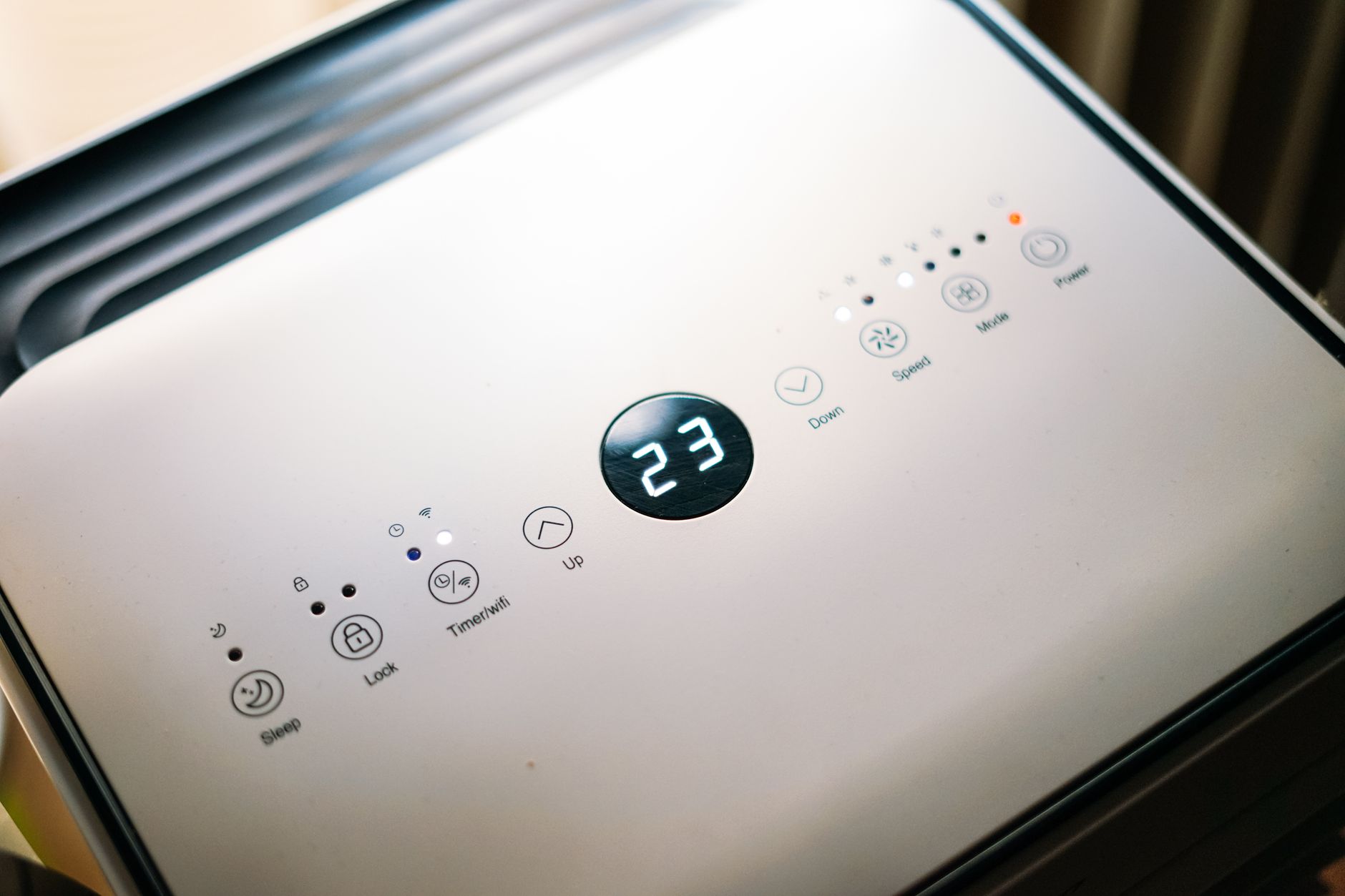
A dehumidifier is a necessary investment if your home consistently shows relative humidity levels above 60% or suffers from recurring condensation on windows. While many households believe they are a universal fix for dampness, their effectiveness is strictly tied to room temperature and the specific source of the excess moisture. If your humidity is driven by structural issues like rising damp or leaking pipes, a machine will mask the symptoms rather than treat the actual problem.
⚡ In a Rush? Key Takeaways
- Compressor units cost roughly $0.05–$0.12 per hour to operate in standard conditions.
- Ideal indoor relative humidity should remain between 40% and 50% for optimal comfort.
- Desiccant dehumidifiers perform 30% better than compressor models in rooms below 15°C.
- ✅ Verdict: Use a compressor for general home use; choose desiccant for cold garages or basements.
How Do You Know If You Need a Dehumidifier?
You need a dehumidifier if your indoor humidity consistently exceeds 60% or if you notice persistent condensation, mold, or musty smells.
Most modern homes are built to be airtight, which traps moisture from cooking, showering, and breathing. When that moisture has nowhere to escape, it settles on cold surfaces like windows or external walls.
If you see black spotting on window seals or feel a dampness in your upholstery, you are likely dealing with excess humidity. Before buying, test the air with a simple hygrometer to track your actual humidity levels over a full week.
What Are the Signs of Excessive Home Humidity?
Signs include persistent window condensation, peeling wallpaper, a lingering musty odor, and visible black mold growth on walls.
- Window condensation that does not clear by midday.
- A persistent, damp “musty” smell in cupboards or closets.
- Walls that feel cold or slightly clammy to the touch.
- Increased incidence of respiratory irritation or allergy flare-ups.
Is a Dehumidifier the Right Solution for Damp?
A dehumidifier treats air moisture effectively but cannot fix structural damp issues like leaking roofs, broken pipes, or rising damp.
Many homeowners rely on machines to hide the evidence of a larger home maintenance issue. If the moisture is coming through the brickwork or floor, you must repair the external barrier first.
If the moisture is purely internal, such as from drying laundry inside, a dehumidifier is a highly effective tool. It acts as an artificial ventilation system when natural airflow is restricted.
Which Type of Dehumidifier Is Best for Your Home?
Compressor models work best for warm, humid rooms, while desiccant units are superior for unheated spaces like garages or basements.
The internal technology determines how much energy you will use and how effective the unit remains in winter. Most residential models fall into these two distinct categories.
How Do Compressor Dehumidifiers Perform?
Compressor units use cooling coils to condense moisture from air, making them highly efficient in temperatures above 15 degrees Celsius.
Think of these as small fridges that pull moisture out of the air. They are the standard for most bedrooms and living rooms where temperatures remain consistent throughout the day.
| Feature | Compressor |
|---|---|
| Ideal Temp | Above 15°C |
| Noise Level | Moderate |
| Running Cost | Lower |
Why Choose a Desiccant Dehumidifier?
Desiccant units use an absorbent material to pull moisture from air, making them effective in cold rooms where compressors struggle.
If you need to dry out a cold cellar or a garage during the winter months, a compressor unit will likely frost over and fail. A desiccant unit maintains consistent extraction power regardless of how low the temperature drops.
They are generally quieter, though they can produce a slight increase in ambient temperature as they operate. They are an excellent way to maintain a dry home office environment during cold spells.
How to Size a Dehumidifier for Your Room
Choose a unit whose pint‑per‑day rating matches the square footage and typical humidity level of the space.
For moderate humidity (≈60 % RH) a 20‑pint model suffices for rooms up to 500 sq ft, while larger or damper areas need higher capacity.
| Room Size (sq ft) | Typical RH 60 % | Recommended Capacity (pints/day) |
|---|---|---|
| Up to 500 | Moderate | 20‑30 |
| 500‑1,000 | Moderate | 30‑50 |
| 1,000‑1,500 | Moderate | 50‑70 |
| Over 1,500 | Moderate | 70+ |
If the space is consistently above 70 % RH or you have multiple sources (laundry, showers), add roughly 10 pints to the base recommendation.
Frequently Asked Questions
Common questions about dehumidifier efficiency, running costs, and placement strategies for homeowners and renters in 2026.
Does a dehumidifier save money on heating?
Yes, it is cheaper to heat dry air than humid air. Dry air requires less energy to reach a comfortable temperature, reducing your bills.
Should I leave my dehumidifier on all day?
Use a built-in humidistat. Set the unit to 45% or 50% and it will automatically cycle off when the target level is reached to save energy.
Do dehumidifiers use a lot of electricity?
They use 200–500 watts per hour. At average rates, this costs roughly $0.05–$0.12 per hour, depending on your specific local electricity price.
— Greta Michaud, Home Appliance Efficiency Researcher