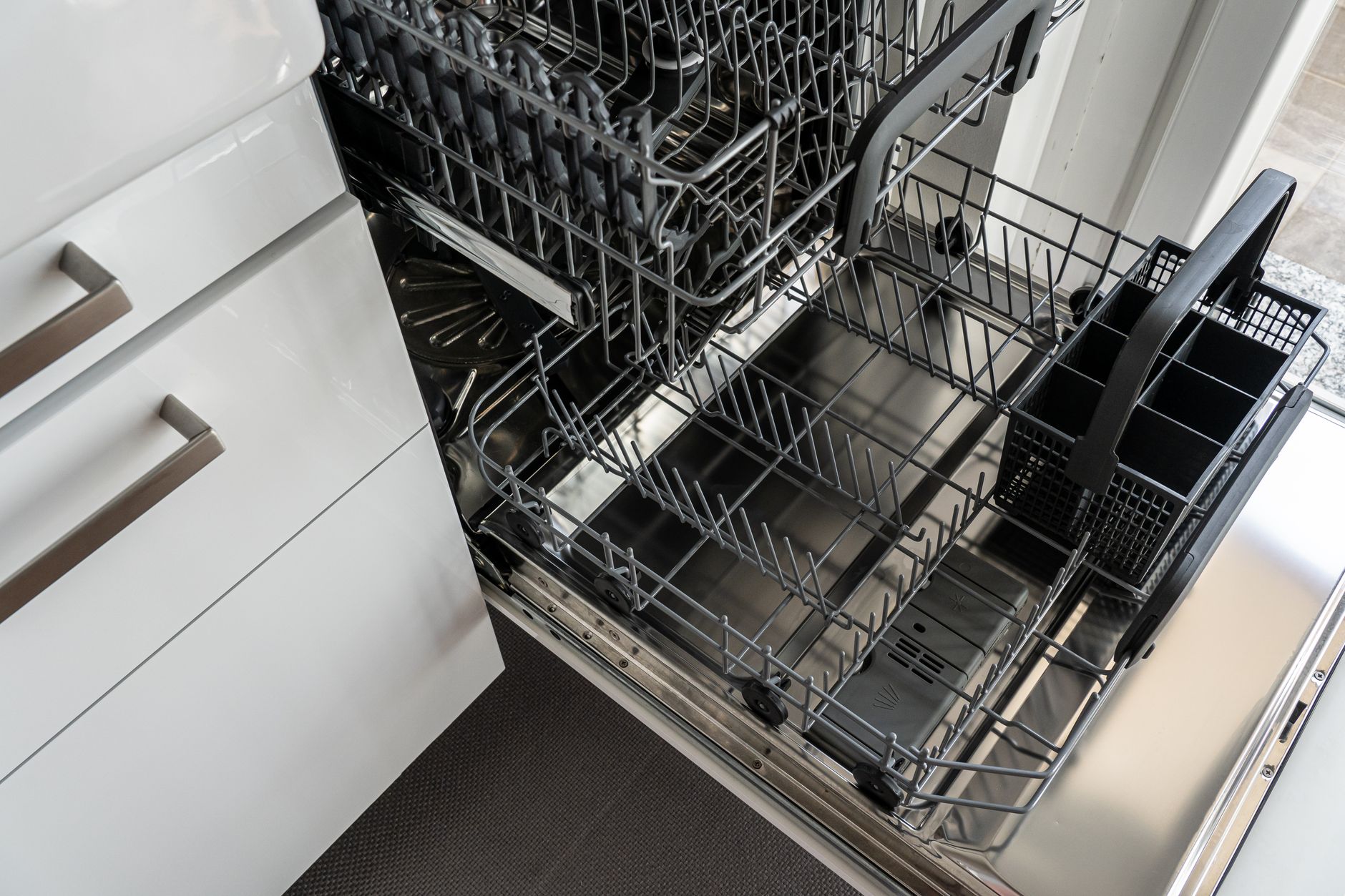
A modern, full-size dishwasher uses between 3 and 6 gallons of water per cycle and costs roughly $0.15 to $0.35 in electricity depending on your local utility rates. While hand-washing often feels economical, a full machine load typically consumes significantly less water and energy than washing the same number of dishes by hand.
⚡ In a Rush? Key Takeaways
- Modern dishwashers use 3-6 gallons per load, while hand-washing uses 15-27 gallons.
- Eco-cycle settings reduce energy consumption by 35-40% by lowering water temperatures.
- Using salt and rinse aid in hard water areas prevents scale buildup and heating failure.
- Skipping the heated dry cycle saves 0.5-1 kWh per full wash cycle every time.
- ✅ Best efficiency: Only run full loads using the eco-setting without heated drying.
Why Should You Choose a Dishwasher Over Hand-Washing?
Dishwashers save 12-20 gallons of water per load and reduce energy usage by 60% compared to traditional sink-based hand-washing methods.
How Does Water Consumption Compare?
Standard machines use about 3-5 gallons of water per full load, while manual scrubbing in a sink often requires 20 gallons or more.
The disparity in water usage is a matter of physics rather than marketing. A dishwasher recirculates a small amount of water through a heating element and spray arms repeatedly, whereas a tap runs continuously during manual rinsing. Even with frequent cycles, a high-performing modern dishwasher will win on total water volume every time.
How Do You Calculate the Energy Cost Per Cycle?
Calculating cost requires multiplying the kWh rating of your specific cycle by your local electricity rate, usually ranging from $0.15 to $0.30.
Most energy-efficient models draw between 0.8 and 1.5 kWh per standard wash. If your electricity costs $0.20 per kWh, a standard cycle costs roughly $0.20 to $0.30. Opting for eco-modes can drop this figure significantly, as heating the water to 140°F is the most power-hungry part of the process.
What Features Actually Improve Efficiency?
Features like soil sensors, eco-wash modes, and air-dry capabilities significantly reduce annual energy bills by optimizing resources used.
Are Soil Sensors Really Effective?
Soil sensors detect turbidity in the water to adjust cycle length and temperature, ensuring you only use the exact amount of energy needed.
These sensors eliminate the guesswork that leads to wasted energy. Instead of running a heavy-duty cycle for a lightly soiled load, the machine detects the lack of particles and shifts to a shorter, lower-temperature wash. This streamlining of kitchen workflow prevents unnecessary electricity drain.
Why Is The Eco-Mode Worth Using?
Eco-mode lowers the water temperature and extends the cycle time to achieve the same cleaning results with 30-40% less energy consumed.
It may take longer, but the electricity savings are tangible. By heating water more slowly and holding the temperature lower for longer, the machine achieves sanitization without the rapid, power-intensive temperature spikes of ‘Normal’ or ‘Heavy’ cycles.
Which Wash Cycles Should You Use for Different Loads?
Modern dishwashers offer several preset cycles (Normal, Heavy, Quick, Eco, Sanitize, Rinse‑Only) tailored to soil level and type of dishes.
Choosing the right cycle prevents over‑washing lightly soiled items and ensures tougher loads get the needed temperature and time. For everyday mixed loads, the Normal cycle balances cleaning performance and energy use; Heavy adds extra wash time and higher temperature for baked‑on food; Quick (or 1‑Hour) uses less water and energy for lightly soiled items but may not sanitize; Eco reduces temperature and extends time for maximum savings; Sanitize raises the final rinse to ≥150°F to kill bacteria, ideal for baby bottles or cutting boards; Rinse‑Only is useful for pre‑soaking or when you plan to hand‑wash later.
Matching the cycle to the load not only improves cleaning results but also optimizes water and electricity consumption, helping you get the most out of each run.
How Do You Maintain a Dishwasher for Longevity?
Regular maintenance, including filter cleaning and salt refilling, can extend the life of your appliance from 7 years to 15 years.
Is Dishwasher Salt Necessary in All Homes?
Salt is essential in hard water areas to regenerate the water softener, preventing scale from clogging spray arms and heating elements.
Without proper softening, scale acts as an insulator on the heating element. This forces the dishwasher to work harder to achieve target temperatures, spiking energy costs. If you notice cloudy glassware, your water is likely hard enough to require consistent salt use.
How Often Should Filters Be Cleaned?
Cleaning the mesh filter once every month prevents debris buildup, improves drain performance, and eliminates potential foul odours.
A clogged filter puts extra strain on the drain pump, which is one of the most common failure points. Rinsing this filter under hot water takes seconds and prevents the pump from burning out prematurely. This is a vital part of your home maintenance routine.
Frequently Asked Questions
Should I rinse dishes before loading them?
No, scraping solid food scraps is sufficient; modern sensors rely on residue to detect cycle needs, and rinsing wastes water.
Is air-drying better than heated-drying?
Yes, skipping the heated dry cycle saves 0.5-1 kWh per load, and air-drying is significantly better for the longevity of plastic items.
Why is my dishwasher leaving a white film?
White film usually indicates hard water scale or insufficient rinse aid usage, which can be corrected by adjusting your salt levels.
Does running half-loads save electricity?
Generally, no; a full load is always more efficient per dish, as half-loads use nearly the same amount of water and electricity.