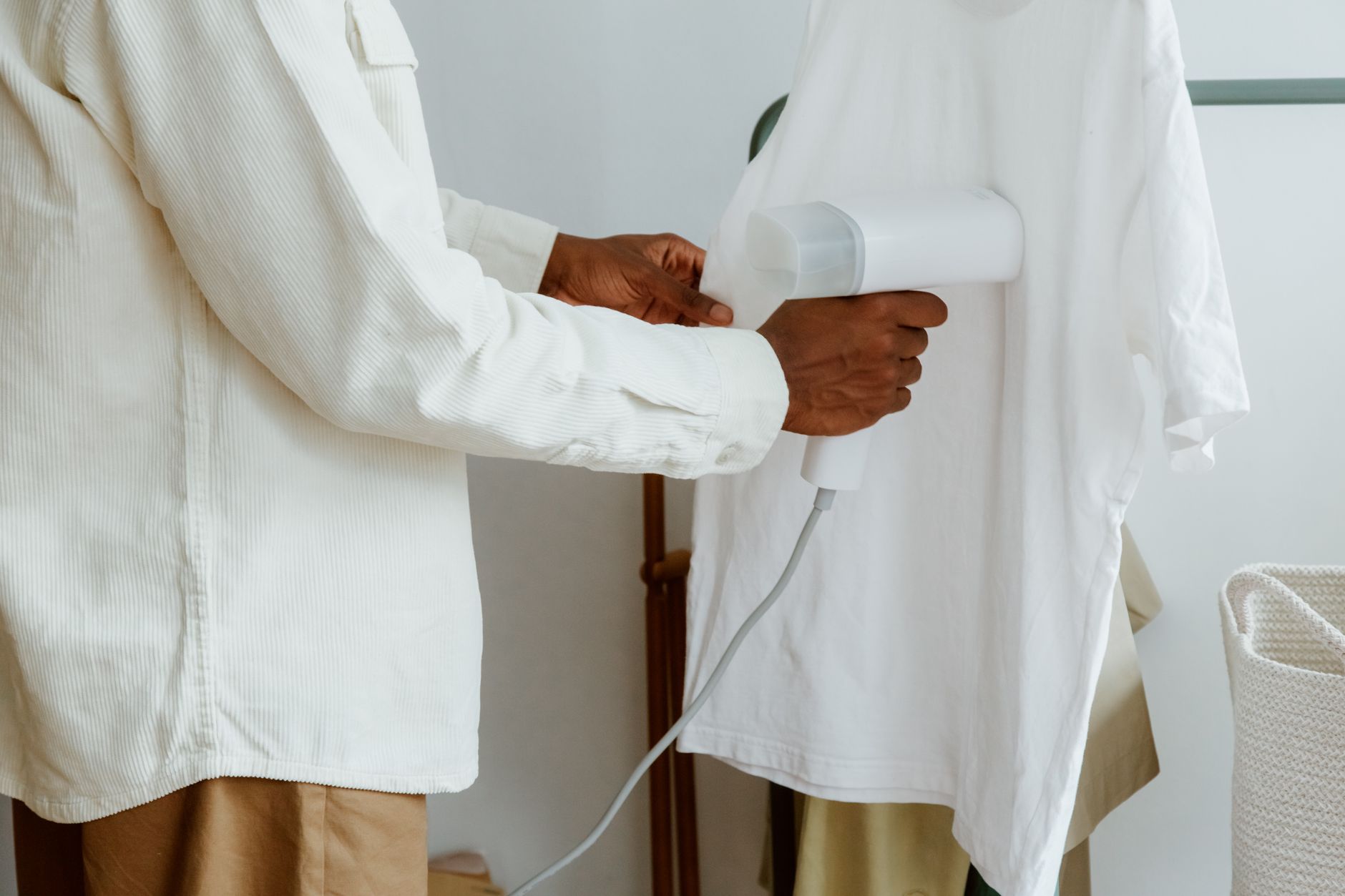
A garment steamer removes creases from most clothing fabrics 30% faster than a conventional steam iron while reducing the risk of heat-related fabric damage. These devices work by relaxing fibres with high-temperature steam rather than pressing them under a heated plate, making them ideal for delicate silks, wool coats, and complex pleats that are difficult to navigate on an ironing board.
⚡ In a Rush? Key Takeaways
- Steamers typically use 800-1500W, costing roughly $0.15 per hour of continuous use.
- Handheld models provide 10-15 minutes of steam; upright units offer 45-60 minutes.
- A vertical steamer cuts setup time by 75% compared to dragging out an ironing board.
- ✅ Use a vertical model for daily wardrobe maintenance and an iron for crisp cottons.
Is a Garment Steamer Actually Better Than an Iron?
Steamers excel at delicate fabrics and quick touch-ups, while irons are superior for achieving sharp creases and pressing heavy cottons.
Why should you choose a steamer over a traditional iron?
Steamers eliminate the need for a bulky ironing board and significantly reduce the likelihood of accidental burn marks on your clothing.
When I first moved my ironing setup to a steamer-only workflow, the biggest change was the speed of getting dressed. A traditional iron requires a flat surface and precision; a steamer simply requires a hanger and a few minutes of patience.
For everyday linen or polyester blouses, the time-saving is undeniable. You can remove the “closet crush” look from a hanging garment in less than two minutes. This is a massive improvement over the five-minute setup and breakdown process of a standard board.
- Steamers avoid the risk of ‘shine’ on dark synthetic trousers.
- There is no contact plate to clean or accidentally leave on a shirt.
- They act as a mild sanitiser, killing bacteria that cause odours.
- Easier to use on hanging curtains and upholstered furniture.
Where does the steamer fall short of an iron?
Irons provide the mechanical pressure required to set sharp edges on denim, heavy linens, and cotton collars for a crisp finish.
If you wear dress shirts that require a military-style crease, a steamer will disappoint you. Steam lacks the weight and heat-transfer mechanism needed to compress fabric fibres permanently into a sharp fold.
For these items, you still need a well-maintained iron to get the desired structure. I find a hybrid approach works best for most homes, keeping a small steamer for the daily wardrobe and an iron for weekly laundry loads.
How Do You Select the Right Steamer for Your Home?
Choose between handheld portability for travel or upright power for heavy fabrics and large volumes based on your weekly laundry load.
What are the primary differences between handheld and upright models?
Handheld steamers weigh under 2lbs and hold 200ml of water, while upright units feature larger 2L tanks for extended steam sessions.
Handheld steamers are perfect for the occasional freshen-up, but their smaller reservoirs mean you will be refilling them constantly if you have more than two garments. They are essentially designed for speed, not bulk.
Upright models, by contrast, offer a dedicated stand and a much larger water tank. This makes them far more efficient for households with large amounts of daily laundry. If you are aiming for a more organised home, an upright unit can serve as a permanent fixture in your dressing area.
What specifications should you look for in a quality unit?
Look for at least 30g/minute of steam output and a minimum 1200W heating element to ensure consistent performance on thicker items.
| Feature | Handheld | Upright |
|---|---|---|
| Warm-up Time | 30-45 seconds | 60-90 seconds |
| Water Capacity | 150-300ml | 1.5-2.5 litres |
| Steam Output | 15-25g/min | 30-50g/min |
| Storage Space | Very small | Requires floor space |
Frequently Asked Questions
-
Can a garment steamer be used on all fabric types?
Most garments are safe, but avoid steaming heat-sensitive plastics, waxed jackets, or leather as the steam may ruin the finish.
-
Does a steamer save money on energy bills?
Steamers typically use less energy than irons because they do not heat a heavy metal plate, but efficiency depends on your usage time.
-
How often does a steamer need descaling?
In hard water areas, descale your steamer every three months using a vinegar solution or the manufacturer-recommended cleaning agent.
-
Is distilled water necessary for my steamer?
Using distilled or demineralised water is strongly recommended to prevent mineral buildup and extend the life of your heating element.
-
Other Household Applications
Beyond clothing, a steamer can refresh curtains, upholstery, bedding, plush toys, and even car interiors.
Find answers to the most common concerns regarding garment steamer maintenance, safety, and fabric suitability for your home wardrobe.
For curtains and drapes, hold the steamer a few inches away and move slowly across the fabric; the steam relaxes wrinkles and can also lift light dust.
Upholstered sofas and chairs benefit from a quick pass over cushions to release odors and freshen fibers—always test a hidden spot first to ensure the fabric tolerates moisture.
For those looking to streamline their laundry, you might also be interested in my strategies for washing clothes less often, which preserves fabric integrity and saves significant electricity. Proper care of your garments is ultimately about both efficiency and longevity. — Greta Michaud, Home Appliance Efficiency Researcher