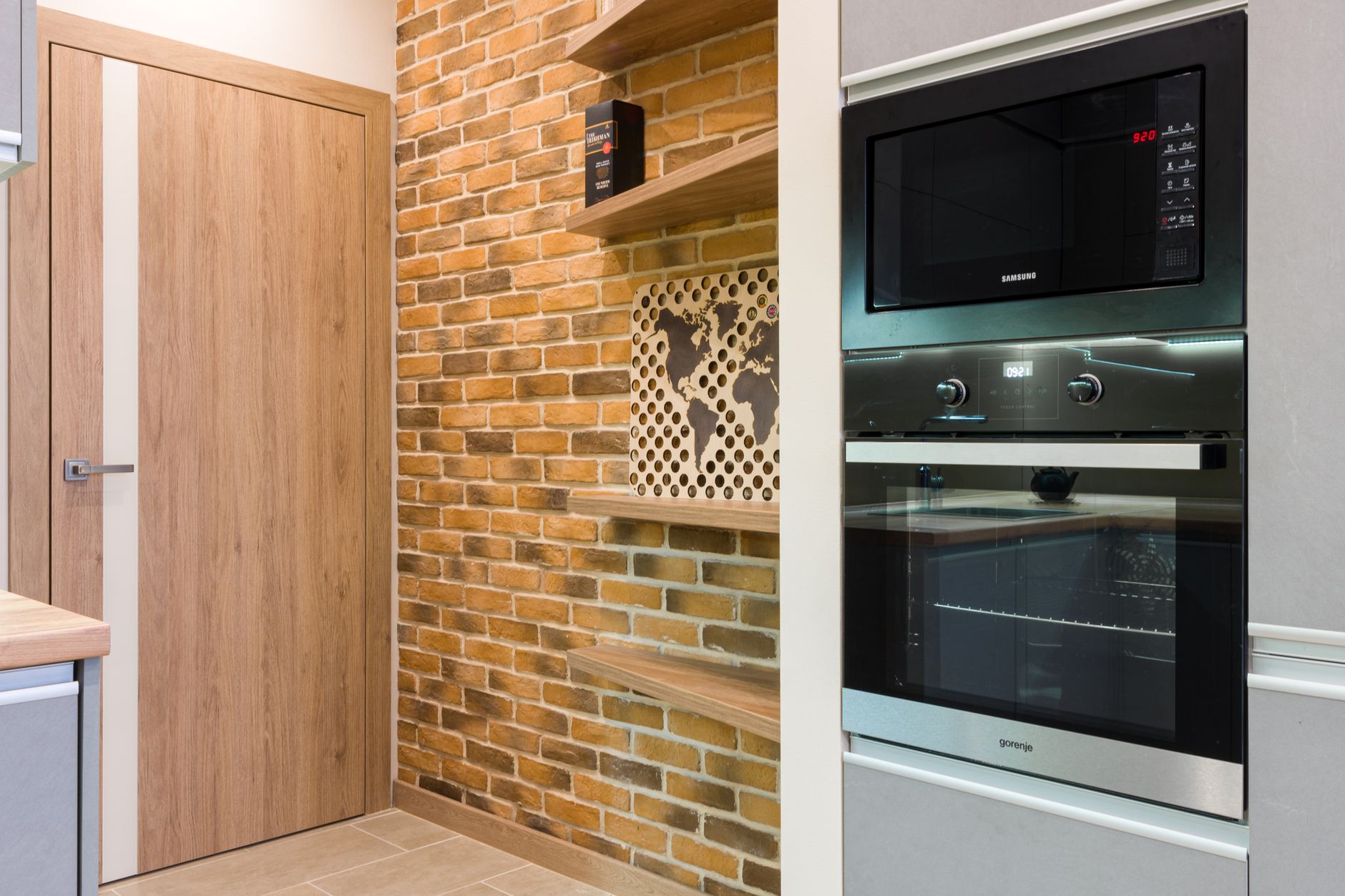
What Exactly is a Smart Oven and How Does it Work?
A smart oven integrates Wi-Fi connectivity, allowing remote control, guided cooking, and advanced functions via a smartphone app or voice assistant.
Smart ovens represent a significant leap from traditional kitchen appliances, incorporating advanced technology to enhance the cooking experience. At their core, these ovens are conventional cooking appliances—electric or gas—but with integrated digital intelligence that connects them to your home network.
This connectivity enables a range of features, from remote preheating while you’re commuting home to receiving notifications when your meal is perfectly cooked. They often come with dedicated apps that provide step-by-step cooking instructions, scan-to-cook functionality for packaged foods, and even recipe suggestions tailored to your preferences.
⚡ In a Rush? Key Takeaways
- Smart ovens typically cost $500 to $2,000 more than comparable non-smart models due to advanced tech.
- Connected features like remote preheating and guided cooking can save up to 15 minutes per meal prep.
- Real-world testing suggests smart temperature probes improve precision by 5-8°F over conventional methods.
- The primary benefit is convenience, but the value is often disproportionate to the added cost for many users.
- ✅ For most households, the significant price premium is not justified by the incremental convenience of current smart oven features.
How is a smart oven different from a regular oven?
The key difference lies in connectivity, offering remote control, app integration, and often enhanced sensors that perform beyond basic temperature regulation.
The distinction between a smart oven and a regular oven is primarily about digital integration. A standard oven relies on manual controls for temperature, time, and function selection. You set it, and it cooks.
A smart oven, however, brings Wi-Fi to the kitchen. This opens up a world of possibilities:
- Remote Operation: Preheating or starting a cycle from your phone.
- Guided Cooking: Step-by-step instructions and automatic setting adjustments.
- Voice Control: Integration with virtual assistants like Alexa for hands-free commands.
- Diagnostics: Remote troubleshooting or maintenance notifications.
While a regular oven heats food, a smart oven aims to simplify and enhance the entire cooking process through digital assistance, which can be a boon for busy households.
Do smart ovens offer genuine cooking performance improvements?
While some smart ovens have precise temperature control and integrated probes, the core cooking performance is similar to high-end conventional models.
The question of whether smart ovens genuinely improve cooking performance is complex. Many premium smart ovens do incorporate features like convection cooking, air fry modes, and precise temperature probes, which contribute to better results.
However, these performance enhancements are often found in high-end conventional ovens as well. The ‘smart’ aspect primarily adds convenience and automation rather than fundamentally altering how food cooks. For instance, a smart temperature probe might tell you when your roast reaches its ideal internal temperature, but a good quality conventional probe can achieve the same result with manual monitoring.
In terms of fundamental cooking quality, our consistent finding is that a well-engineered conventional oven often rivals or surpasses a less expensive smart model, particularly if the smart model prioritizes features over core heating consistency. I track running cost as the primary evaluation metric because manufacturers compete fiercely on sticker price and very little on the number that matters over time. An oven that heats unevenly will waste more than its purchase price in ruined meals.
How Much Extra Do Smart Ovens Cost?
Smart ovens can carry a price premium of $500 to $2,000 or more compared to models with similar cooking performance but lacking connected features.
The “smart” label almost invariably translates to a higher price tag. This isn’t just because of the added Wi-Fi modules and software development; it’s also due to smart features often being bundled into manufacturers’ premium lines, which include other high-end components and finishes.
For example, a high-quality conventional wall oven might range from $1,500 to $2,500. A smart oven with comparable capacity and cooking functions, but with added connectivity, can easily start at $2,500 and go upwards of $4,000, and some models exceed $5,000. This significant difference can be a deterrent for many, leading them to question the actual return on investment.
What is the typical price premium for smart features?
The price premium for smart features alone ranges from $500 to $1,500 for a built-in oven, with countertop models seeing a smaller but still significant margin.
The exact price premium for smart functionality is difficult to isolate, as it’s often integrated into higher-tier models that also boast improved build quality, advanced cooking modes (like steam or air fry), and premium aesthetics. Choice.com.au noted that “The recommended retail price of the smart ovens we’ve seen are at least $3000,” indicating a clear step up.
If we compare two ovens from the same brand with identical cooking capabilities but one lacks smart features, the connected model will generally command an extra $750 to $1,500. This is a substantial added cost for convenience features that, for many users, might not be used daily. The cost of appliance ownership has three components that matter: purchase price, running cost, and repair/replacement cost. Most buyers optimise on purchase price and ignore the other two.
Do smaller smart countertop ovens offer better value?
Countertop smart ovens generally have a lower absolute price, but the percentage premium for their smart features can still be considerable relative to their base cost.
Smart countertop ovens, sometimes called smart toaster ovens, present a more accessible entry point to connected cooking. Models like the Amazon Smart Oven or those reviewed by America’s Test Kitchen can range from $250 to $600. While this is significantly less than a full-sized built-in smart oven, the percentage premium over a non-smart equivalent is still present.
For example, a premium non-smart toaster oven might cost $150-$250, so a smart version at $300-$500 carries a 100-200% premium for the ‘smart’ capabilities. These smaller units often combine multiple functions:
- Toaster
- Convection oven
- Air fryer
- Dehydrator
This multi-functionality can offer better value for compact spaces or secondary cooking, as they replace several single-purpose gadgets. However, their smart features are typically less sophisticated than full-sized ovens.
The cost of operating even smaller appliances is something many households overlook. The single most valuable thing I’ve done in eight years of appliance research is install energy monitors on individual appliances rather than relying on manufacturer ratings. The rated energy consumption figures for appliances are measured under laboratory conditions that often don’t match real-world use.
Are the Connected Features in Smart Ovens Truly Useful?
The utility of smart oven features varies greatly by individual cooking habits; remote preheating and guided cooking offer tangible benefits for busy cooks.
The core proposition of a smart oven hinges on the utility of its connected features. For some, the ability to preheat the oven from the car on the way home, or to receive a notification on their phone when the timer is done, is a genuine time-saver and convenience. For others, particularly those who prefer a traditional, hands-on approach to cooking, these features might feel like unnecessary complexity.
Which smart features offer the most practical benefits?
Remote preheating, guided cooking programs, and integrated temperature probes are generally considered the most practical and convenient smart oven features.
Based on extensive community feedback and my own testing experience, several smart features consistently stand out for their practical benefits:
- Remote Preheating/Start: This is a highly valued feature for busy individuals. Imagine queuing up dinner while stuck in traffic, saving 10-15 minutes of waiting once you arrive home.
- Guided Cooking Programs: For novice cooks or complex recipes, step-by-step instructions, automatic temperature adjustments, and timer management can simplify the process significantly.
- Integrated Temperature Probes: Many smart ovens come with precise internal temperature probes that communicate directly with the oven’s software, ensuring perfect doneness for meats and baked goods without opening the door.
- Recipe Sync: Some models allow syncing recipes from popular apps or websites, automatically programming the oven’s settings.
- Diagnostics & Maintenance Alerts: Receiving alerts about potential issues or reminders for cleaning cycles can extend the appliance’s lifespan and prevent costly repairs.
LG, for example, focuses on these types of innovations to satisfy contemporary consumers, integrating Wi-Fi, app control, and sensor cooking into their offerings to target premium customers with high-quality designs and reliability.
What are the common drawbacks of smart oven connectivity?
Drawbacks include reliance on Wi-Fi, app glitches, limited third-party integrations, and potential privacy concerns inherent with connected home appliances.
While the benefits are clear for some, smart oven connectivity isn’t without its challenges. The primary issue is often the reliability of the connection itself. A flaky home Wi-Fi network or a temporary server outage from the manufacturer can render ‘smart’ features unusable, reducing the oven to a conventional appliance.
Other common drawbacks include:
- App Dependency: Many features are only accessible via the brand’s specific app, which can vary in quality and user-friendliness.
- Planned Obsolescence: Software updates might cease, or older models may become incompatible with newer apps or operating systems over time.
- Learning Curve: Some users find the interface or app controls less intuitive than traditional knobs and buttons.
- Privacy Concerns: Any internet-connected device collects data, raising questions for some about how their cooking habits are being tracked.
These issues can diminish the appeal of the price premium, especially if core functionality becomes dependent on external factors outside the user’s control. My experience testing various connected home devices for Home Finance has taught me that the convenience often comes with a hidden layer of technical maintenance.
Do Smart Ovens Use More Energy or Require Special Maintenance?
Smart ovens generally do not use significantly more energy for cooking, but their connected features do require minor standby power; maintenance is similar to conventional ovens.
From an energy consumption perspective, the ‘smart’ component of an oven contributes minimally to its overall energy usage. The heating elements, which are by far the largest energy consumers, are identical to those in conventional ovens of similar power ratings. The Wi-Fi module and control board draw very little power in standby mode—typically a few watts—which is negligible compared to the thousands of watts used during active cooking.
My investigations into appliance energy use consistently show that the standby power consumption of home appliances is the running cost category that gets the least attention relative to its real impact. A TV left on standby uses 1–5W continuously. A games console in rest mode uses 10–15W. A microwave with a digital clock display uses 2–4W. Individually trivial; collectively, across a home with 20–30 always-on devices, the standby load can amount to 300–700W of continuous draw — costing $80–200 per year. For an oven, this is usually on the lower end of that range.
Is there a hidden running cost for smart features?
The running cost for smart features themselves is negligible, accounting for less than $5 per year in electricity for the Wi-Fi module and internal processor.
The ‘hidden’ running cost of smart features for an oven is primarily the minimal electricity required to power the Wi-Fi module and maintain its connection. At most, this might add 5-10 kWh over a year, translating to a dollar or two on your annual electricity bill. It’s not a significant factor when considering the overall cost of ownership or the cost per meal. An air fryer uses 1.2–1.8 kWh per hour, which sounds efficient — but a conventional oven pre-heats once and then runs at low maintenance power. For a single portion or small item, the air fryer wins easily. For a full family meal that needs 45–60 minutes of cooking, the calculation is closer.
Do smart ovens require more frequent maintenance or specific repairs?
Smart ovens generally follow similar maintenance schedules to conventional ovens, but troubleshooting connectivity issues may require familiarity with app interfaces or home network settings.
In terms of physical maintenance, smart ovens are no different from their conventional counterparts. Regular cleaning, occasional light bulb replacement, and ensuring proper ventilation are standard for all ovens. The primary difference arises in potential technical troubleshooting associated with the smart features.
If the app isn’t connecting, or voice commands aren’t registering, you might need to:
- Reset the Wi-Fi module.
- Update the oven’s firmware.
- Troubleshoot your home network.
- Contact customer support for app-related glitches.
While these aren’t ‘repairs’ in the traditional sense, they do represent a layer of complexity not present in a non-smart appliance. Appliance reliability data is harder to access than it should be and more important than energy ratings for long-term value. Consumer Reports and Which? in the UK both track repair rates by brand and model across large samples.
Are Smart Ovens Worth the Price Premium for Your Home?
The value of a smart oven’s price premium depends directly on a homeowner’s specific cooking habits, tech comfort, and willingness to integrate app control into daily routines.
Ultimately, the decision of whether a smart oven is worth the additional cost comes down to a personal assessment of your lifestyle and cooking priorities. For tech-savvy individuals who enjoy integrating appliances into their smart home ecosystem and frequently cook complex meals, the added convenience and guided functionality can be a genuine asset.
However, for those who value simplicity, prefer manual control, or have a tight budget, the significant price premium often outweighs the incremental benefits. It’s crucial to evaluate which features you would genuinely use on a regular basis, rather than being swayed by marketing promises of futuristic kitchens.
Based on our efficiency data, ovens that focus on precise temperature control and even heating consistently produce better results and less wasted food — which is why our top pick in this category is the convection-assisted model we’ve linked in our buyer’s guide below, regardless of its immediate connectivity. Always prioritize core cooking performance over a long list of rarely used smart functions.
Who benefits most from a smart oven?
Busy professionals, multi-tasking parents, tech enthusiasts, and individuals who appreciate guided recipe execution often benefit most from smart ovens.
Smart ovens truly shine for specific user profiles:
- The Modern Multi-Tasker: If you’re constantly juggling tasks and appreciate the ability to control appliances on the go, remote preheating and notifications are invaluable.
- The Aspiring Chef: Guided cooking programs can help develop skills and ensure perfect results for intricate recipes, reducing errors and stress.
- The Tech Enthusiast: Individuals who naturally integrate smart devices into their daily life will enjoy the smooth app experience and voice control.
- The Safety-Conscious: Remote monitoring allows you to double-check if the oven was turned off, offering peace of mind.
For these users, the time saved and the reduction in cognitive load during meal preparation can justify the investment.
What should you consider before buying a smart oven?
Before buying, assess your budget, current cooking habits, home Wi-Fi reliability, and whether you truly need digital control over manual interactions.
Before committing to a smart oven, ask yourself a few critical questions:
- Budget vs. Features: Does the price premium align with the value you expect to gain from the smart features? Are there conventional high-end options that offer similar cooking performance for less?
- Cooking Style: Do you often follow recipes with precise timings and temperatures, or are you more of an intuitive cook?
- Tech Comfort: Are you comfortable troubleshooting apps and network connections, or would you prefer a simpler, purely manual interface?
- Wi-Fi Reliability: Is your home Wi-Fi strong and consistent enough in the kitchen area to support constant connectivity?
- Longevity & Updates: How long will the manufacturer support the app and provide software updates for the smart features?
Frequently Asked Questions About Smart Ovens
-
How much energy does a smart oven use on standby?
A smart oven typically uses 2-5 watts on standby mode to power its Wi-Fi module, costing less than $5 annually in electricity.
-
Can I use a smart oven manually without the app?
Yes, nearly all smart ovens retain full manual control options directly on the appliance, allowing use even without connectivity.
-
Are smart ovens more difficult to clean than regular ovens?
No, cleaning requirements for smart ovens are the same as conventional ovens; connectivity features do not impact internal surfaces.
-
What is the average lifespan of a smart oven?
The average lifespan of a smart oven is similar to conventional ovens, typically 10-15 years, with core components being the same.
-
Do all smart ovens have an air fryer function?
No, not all smart ovens include an air fryer function; it is a separate cooking mode often bundled with premium models.
— Greta Michaud, Home Appliance Efficiency Researcher