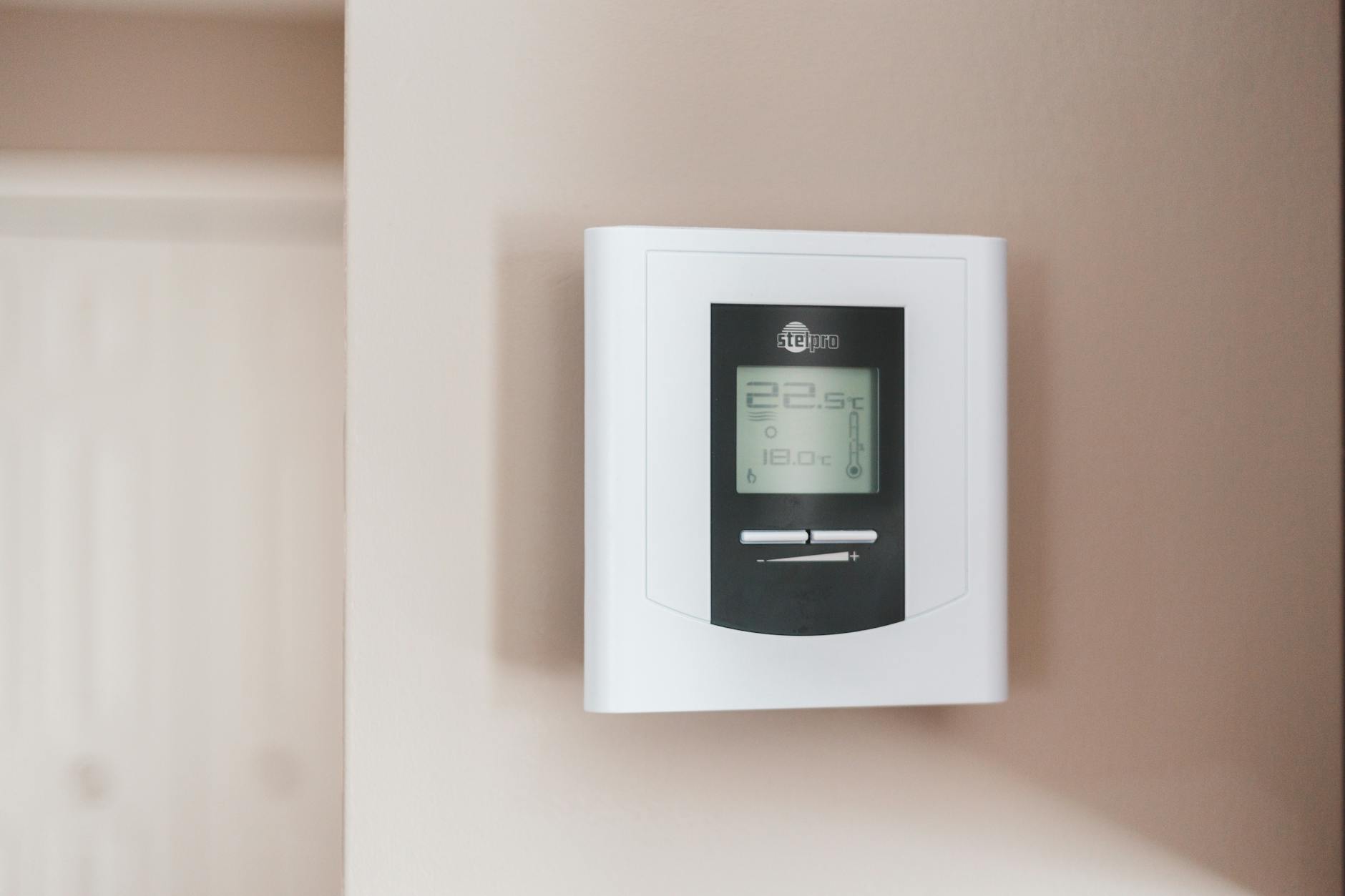
The promise is seductive: a small, unobtrusive disc on the wall that learns your daily rhythms and quietly reduces your utility bills without demanding constant attention. For homeowners wondering whether a smart thermostat is worth it for energy savings, the marketing often obscures the mathematics. Before committing $200 or more to hardware and installation, it is worth examining the actual data on temperature setbacks, behavioral efficiency, and the specific conditions under which these devices deliver measurable financial returns.
⚡ In a Rush? Key Takeaways
- Independent studies show 10–15% savings on heating and cooling bills, translating to roughly $130–$180 annually for the average U.S. household.
- Savings derive primarily from automatic setbacks when the home is unoccupied and algorithmic optimization of heating and cooling cycles.
- Quality units range from $120–$250, with potential utility rebates reducing the effective cost to under $100.
- ✅ Smart thermostats are a sound investment for households with inconsistent schedules and compatible HVAC systems.
Do smart thermostats actually lower your heating bill?
Yes. Independent studies show 10–15% savings on heating and cooling bills, translating to roughly $130–$180 annually for the average U.S. household.
The Environmental Protection Agency (EPA) certifies devices through its ENERGY STAR program, estimating that certified smart thermostats save approximately 8% of heating and cooling costs annually. However, independent studies funded by natural gas utilities and peer-reviewed by the American Council for an Energy-Efficient Economy suggest higher figures—often 10–12% on heating and up to 15% on cooling—when the devices are actively used with geofencing and occupancy detection enabled.
These savings derive primarily from two functions: automatic setbacks when the home is unoccupied, and algorithmic optimization of heating and cooling cycles to avoid energy waste during sleep or away periods. Unlike manual adjustments, which rely on human discipline, the device enforces consistency. For a household spending $1,400 annually on HVAC—a typical figure for mixed climates—this represents a reduction of $110 to $170 per year. The critical variable, however, is baseline behavior. If you already meticulously lower the thermostat before leaving for work and sleep, the incremental gain will be marginal.
How much does a smart thermostat cost to buy and install?
Quality units range from $120–$250. Self-installation is possible for most; professional wiring assistance runs $100–$200 if your system lacks a C-wire.
The hardware landscape offers a clear hierarchy. Entry-level models such as the Amazon Smart Thermostat or Honeywell Home T9 retail between $90 and $150, offering basic scheduling and app control but limited learning algorithms. Premium options like the Nest Learning Thermostat (4th generation) or Ecobee SmartThermostat Premium command $200 to $250, justified by advanced occupancy sensors, voice control integration, and sophisticated machine learning that anticipates temperature needs based on weather forecasts.
Installation presents the hidden cost variable. Modern HVAC systems with a common wire (C-wire) allow for straightforward DIY installation in approximately thirty to forty-five minutes. However, older systems—particularly those in homes built before 1990—often lack this continuous power supply. Installing a C-wire adapter or running new low-voltage wiring requires an electrician or HVAC technician, adding $100 to $200 to the total project cost. Before purchasing, remove your existing thermostat faceplate to verify the presence of a C-wire terminal, or consult your HVAC manual to avoid unexpected labor expenses.
What are the real energy savings per year?
The EPA estimates 8% of heating and cooling costs, or approximately $50–$100 annually for gas heating and $100–$200 for electric cooling in temperate climates.
Regional climate dramatically alters the savings equation. In Minneapolis or Boston, where heating degree-days exceed 7,000 annually, an 8% reduction on a $1,200 winter heating bill yields $96 in savings. In Phoenix or Miami, where cooling dominates and electricity rates often exceed $0.13 per kilowatt-hour, the same percentage applied to a $900 cooling season generates $72 in savings, but peak demand pricing structures can amplify these figures.
Home construction quality also intervenes. A smart thermostat cannot compensate for poor insulation or single-pane windows. If your thermal envelope leaks excessively, the device will merely document energy waste more precisely rather than prevent it. For households serious about efficiency, a comprehensive insulation audit should precede or accompany thermostat upgrades. The thermostat optimizes the system; insulation reduces the load. Together, they produce compounding returns that neither achieves in isolation.
How long until a smart thermostat pays for itself?
Typical payback occurs within 18 to 24 months for DIY installations, or 24 to 36 months if you require professional electrical assistance.
The calculation is straightforward but demands honest accounting of your current habits. If you purchase a $180 thermostat and install it yourself, achieving $120 in annual savings, the payback period is eighteen months. If you require professional installation totaling $350 all-in, and save only $90 annually because you already practiced rigorous manual setbacks, the payback stretches to nearly four years—a less compelling proposition given the device’s expected technological obsolescence.
Utility rebates significantly alter this timeline. Many municipal power companies and natural gas providers offer instant rebates of $50 to $100 for ENERGY STAR certified smart thermostats, and some demand-response programs provide annual bill credits of $25 to $50 for allowing the utility to briefly adjust your temperature during peak grid stress. These incentives can reduce the effective cost to under $100, shortening payback to less than one heating season in high-consumption climates.
Are programmable thermostats just as effective?
Programmable models achieve similar temperature setbacks but lack occupancy detection and geofencing, which account for 20–30% of smart thermostat savings.
The critical difference lies in responsiveness. Basic programmable thermostats cost $25 to $50 and allow you to schedule temperature changes throughout the week. However, they lack the ability to adjust setbacks in real-time based on occupancy or location, leading to wasted comfort or efficiency when routines deviate.
Smart thermostats, on the other hand, use motion sensors and geofencing to detect when rooms are empty or when you’re on your way home, overriding schedules to implement immediate setbacks. This responsive feature, impossible for static programmable units, generates the additional 20–30% savings cited in longitudinal studies. For households with irregular schedules, basic programmable models prove insufficient, while smart systems adapt continuously.
Which households see the strongest return?
Homes with irregular schedules, zoned HVAC, or poor insulation benefit most; rigid 9-to-5 households with manual discipline see marginal gains.
The ideal candidate for a smart thermostat lives in a multi-story home with variable occupancy patterns. Parents shuttling children to irregular activities, professionals working hybrid schedules, or households with zoned heating systems—where upstairs and downstairs require different management—extract maximum value from remote sensors and room-specific controls. Conversely, retirees who maintain consistent home presence, or households who manually optimize temperatures religiously, will find the automation redundant. In these cases, the purchase serves lifestyle enhancement rather than financial efficiency.
When is a smart thermostat not worth the investment?
Rentals with landlord-controlled utilities, homes with baseboard electric heating, or households already meticulous about manual setbacks rarely justify the expense.
Certain HVAC configurations render smart thermostats incompatible or ineffective. High-voltage baseboard electric heating systems (120V or 240V) require specific line-voltage thermostats; standard low-voltage smart thermostats will not function and could present safety hazards. Similarly, some proprietary communicating systems used by HVAC manufacturers like Trane or Carrier require specific thermostats to maintain warranty coverage, limiting your options to manufacturer-approved models.
Renters should verify lease terms and utility responsibility. If your landlord pays the heating bill, you will not capture the financial savings, though you might negotiate a rent adjustment based on reduced utility costs. Additionally, if you plan to move within twelve months, the payback timeline likely exceeds your residency, making the investment imprudent unless you intend to uninstall and relocate the device—a process that risks damage to drywall or wiring.
Final assessment: The efficiency verdict
A smart thermostat represents a sound efficiency investment for households with inconsistent schedules, those willing to optimize settings actively, and homes with compatible HVAC systems in climates with significant heating or cooling loads. It is not a magic solution for thermal envelope deficiencies, nor does it replace the need for calculating your baseline heating expenses to identify structural inefficiencies.
If you currently spend $1,200 or more annually on HVAC, maintain irregular hours, and can install the unit yourself or secure utility rebates, the device will likely pay for itself within two years and continue generating $100 to $150 in annual savings thereafter. For disciplined households with static schedules and modest utility bills, the $200 might be better allocated to weatherstripping, attic insulation, or a programmable thermostat that captures the majority of available savings without the premium. The technology works, but only when the mathematics of your specific household align with its capabilities.
Greta recommends the Nest Learning Thermostat for households seeking reliable automation without extensive manual programming, or the Ecobee SmartThermostat for homes with significant temperature variations between rooms. I earn a small commission if you purchase through these links, at no additional cost to you.
📊 Efficiency Verdict
Independent studies show that smart thermostats can save households 10-15% on their heating and cooling bills, translating to roughly $130-$180 annually for the average U.S. household.