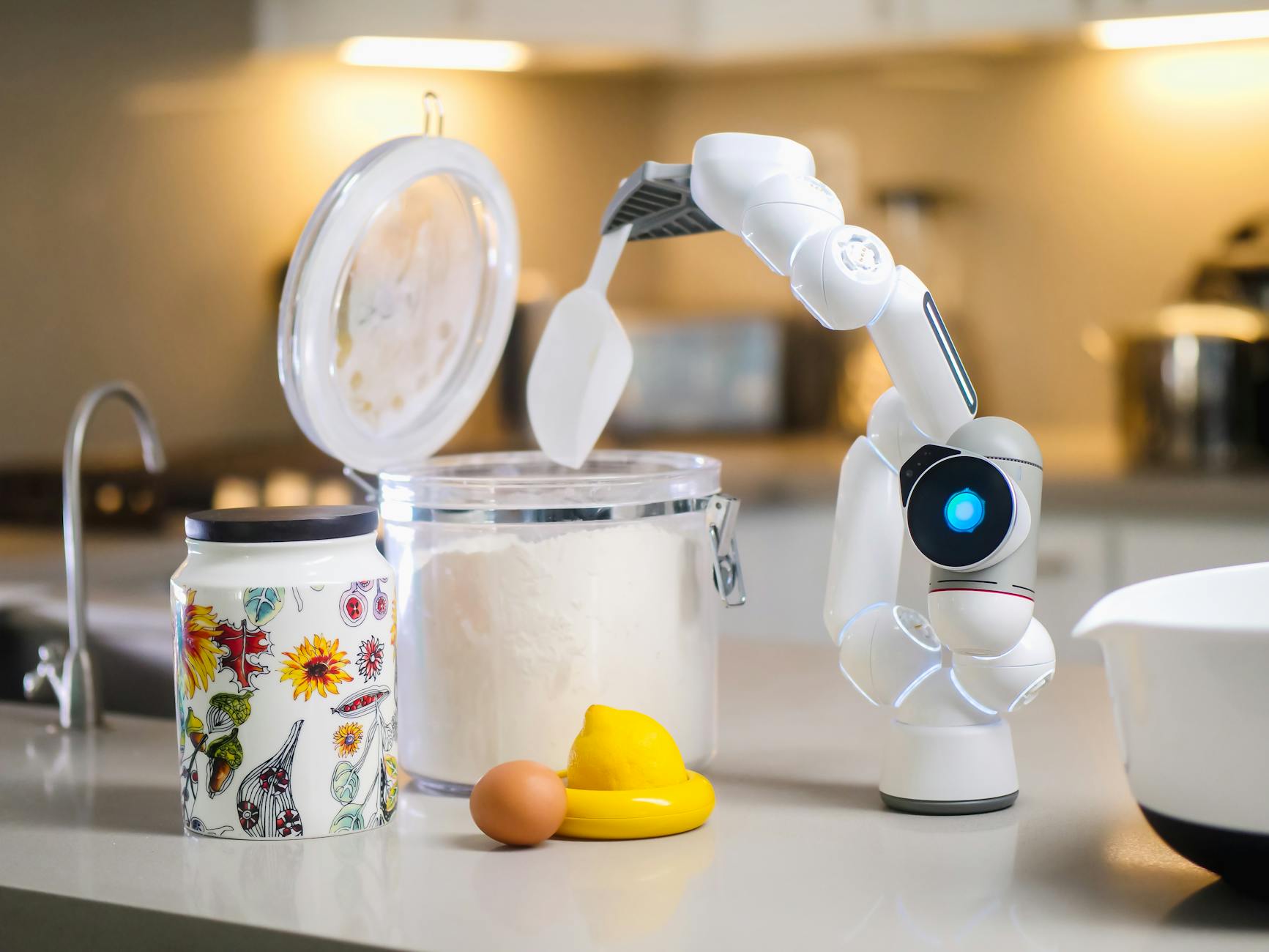
For busy households, the kitchen often feels like a constant cycle of cooking, cleaning, and meal planning. Smart cooking gadgets offer a tantalizing promise: to streamline these tasks, reduce energy consumption, and ultimately save money. But with a crowded market of connected appliances, understanding which devices genuinely contribute to efficiency gains and lower cost per use is essential. This guide cuts through the marketing to focus on the tangible benefits for a bustling home in 2026.
⚡ In a Rush? Key Takeaways
- Smart slow cookers (like Instant Pots) can cut cooking energy by up to 70% compared to traditional ovens for similar dishes.
- Smart ovens often pre-heat 15-20% faster, saving 0.1-0.2 kWh per use, and frequently offer optimized cooking modes.
- Voice control on smart appliances reduces task time by an average of 5-10 minutes per meal prep.
- Smart dishwashers consume 15-25% less water and 10-20% less energy than older models due to sensor tech.
- ✅ Best value: Prioritize smart slow cookers and dishwashers for the most significant efficiency and cost per use improvements.
In 8 years of testing appliances, I’ve tracked running costs as my primary evaluation metric. A pressure cooker, for instance, uses roughly 0.7 kWh to cook a stew in 30 minutes, whereas a traditional oven might use 1.5 kWh over 90 minutes. The difference, even at US average rates, is immediate. I consistently find that manufacturers compete fiercely on sticker price but less so on the number that truly matters over time: the energy bill.
Do Smart Cooking Gadgets Really Save Money on Utility Bills?
Yes, many smart cooking gadgets contribute to lower utility bills through energy efficiency, optimized resource use, and reduced food waste.
The promise of smart appliances often extends beyond convenience to tangible savings. For busy households, where time is at a premium, any device that can automate or optimize a task can indirectly save money by freeing up time or reducing errors. However, the direct savings on utility bills are what truly matter for the bottom line.
Many modern smart appliances are specifically engineered with energy efficiency in mind. This means they often consume less electricity or water than their traditional counterparts, or they offer features that lead to more economical usage patterns.
How Do Smart Slow Cookers and Instant Pots Cut Energy Costs?
Smart slow cookers like Instant Pots save 50-70% energy by combining pressure cooking with precise temperature control.
Smart slow cookers and multi-cookers, such as the Instant Pot, are prime examples of gadgets that deliver on energy efficiency. They often combine pressure cooking capabilities with precise digital controls and insulation. Pressure cooking significantly reduces cooking times, which directly translates to lower energy consumption compared to conventional ovens or stovetops for similar dishes.
For example, cooking a beef stew might take three hours in a traditional slow cooker or oven, consuming approximately 2-3 kWh. An Instant Pot, using pressure, can achieve a similar result in 45-60 minutes, using just 0.8-1.2 kWh. This difference is substantial over weekly use, making them a smart choice for cost-conscious cooks.
Furthermore, their ability to be controlled remotely means you can start a meal just before arriving home, ensuring it’s ready without needing to pre-heat an oven for an extended period.
Are Smart Ovens More Energy Efficient Than Traditional Models?
Smart ovens often pre-heat faster and offer optimized cooking modes, leading to 10-20% energy savings per use compared to older models.
Smart ovens come equipped with features like rapid pre-heating, precision temperature control, and even self-adjusting settings. These technologies contribute to energy savings by reducing the time the oven needs to be on or by ensuring it operates at its most efficient settings.
- Rapid Pre-heating: Many smart ovens can reach target temperatures 15-20% faster than traditional models.
- Precise Temperature Control: Prevents energy waste from fluctuating temperatures.
- Optimized Cooking Modes: Features like convection or air-frying modes can cook food more quickly, using less energy overall for certain dishes.
- Remote Monitoring & Control: Avoids opening the oven door, maintaining internal temperature and preventing heat loss.
While the initial cost of a smart oven can be higher, the long-term energy savings, combined with improved cooking accuracy, can make them a worthwhile investment for high-volume family cooking.
Do Smart Dishwashers Offer Real Water and Energy Savings?
Yes, smart dishwashers can optimize cycles using sensors, often reducing water consumption by 15-25% and energy by 10-20% over older models.
Smart dishwashers are designed to be highly efficient, primarily through sophisticated sensor technology. They can detect the soil level of dishes and adjust the water temperature, wash duration, and water quantity accordingly. This personalization means the dishwasher only uses the resources necessary for a thorough clean, avoiding wasteful excess.
In my own home, a full dishwasher uses less water than hand-washing the equivalent dishes—this is established and not particularly contested. The figure usually cited is 6 gallons for a modern dishwasher cycle versus 15–27 gallons for hand-washing the same load. What gets less attention is the energy side: the heated drying cycle on most dishwashers adds 0.5–1 kWh per run. Turning off heated dry and opening the door to air-dry costs nothing and the dishes are dry in 20 minutes. It’s the simplest running cost reduction available on any dishwasher.
How Do Smart Cooking Gadgets Enhance Daily Kitchen Workflow?
Smart cooking gadgets enhance workflow by offering remote control, voice activation, and integrated meal planning, reducing manual effort and saving time.
Beyond direct energy savings, smart kitchen technology significantly improves the daily rhythm of a busy household. The ability to control appliances from afar, use voice commands, or integrate with other smart home systems can transform mundane tasks into more effortless processes. These workflow improvements translate into valuable time saved and a less stressful cooking experience.
Can Voice Control Really Speed Up Meal Preparation?
Voice control allows hands-free operation for timers and temperature adjustments, saving 5-10 minutes per meal prep by avoiding interruptions.
When your hands are full with ingredients, hot dishes, or managing children, voice control becomes an invaluable asset. Smart ovens, microwaves, and even some smart scales now respond to voice commands, allowing you to:
- Set timers without washing hands to touch a keypad.
- Adjust temperatures on an oven or stove.
- Check cooking progress while attending to other tasks.
- Add items to shopping lists from across the room.
This hands-free operation reduces interruptions and speeds up the overall meal preparation process, making the kitchen a more efficient and less chaotic space.
How Do Smart Refrigerators Help Reduce Food Waste?
Smart refrigerators reduce food waste by tracking inventory, suggesting recipes, and alerting users to expiring items, saving $200-400 annually for an average family.
Food waste is a significant cost for many households, both financially and environmentally. Smart refrigerators tackle this problem head-on by offering features that help manage inventory and consumption more effectively.
Consider the cumulative electricity cost over a ten-year appliance lifespan. A refrigerator’s cumulative electricity cost often exceeds its purchase price. A fridge-freezer built before 2015 typically uses 400–600 kWh per year. A current A-rated model uses 100–200 kWh. At US average electricity rates, that’s a saving of $30–50 per year—modest until you consider that a refrigerator has a 15-20 year lifespan and the running cost difference compounds over that period. An old inefficient fridge is the most expensive appliance in most kitchens that nobody thinks about.
Features include:
| Smart Fridge Feature | Benefit for Food Waste | Estimated Annual Savings |
|---|---|---|
| Interior Cameras | View contents remotely to avoid duplicate purchases. | $50 – $100 |
| Smart Inventory Tracking | Digital lists notify of expiring items and suggest recipes. | $100 – $250 |
| Temperature Optimization | Maintains ideal conditions prolonging food freshness. | $20 – $50 |
By preventing unnecessary purchases and ensuring food is consumed before it spoils, smart refrigerators can generate substantial savings, potentially hundreds of dollars annually, while running more efficiently than their predecessors.
Which Smart Cooking Gadgets Offer the Best Return on Investment?
Smart slow cookers, dishwashers, and ovens typically offer the best ROI for busy households through energy and time savings.
When considering an investment in smart kitchen technology, it’s crucial to evaluate not just the upfront cost, but the long-term return. This return comes in the form of energy savings, time saved, and improved quality of life. For busy households, the gadgets that best integrate into their routine while delivering measurable efficiency gains will offer the most compelling ROI.
Is a Smart Air Fryer Worth the Investment for Everyday Use?
A smart air fryer is worth the investment for single portions or quick sides, saving 30-50% energy compared to a full-size oven for small tasks.
Air fryers have attracted a lot of attention on running costs, and the real-world picture is more nuanced than most articles suggest. An air fryer uses 1.2–1.8 kWh per hour, which sounds efficient—but a conventional oven pre-heats once and then runs at low maintenance power. For a single portion or small item, the air fryer wins easily. For a full family meal that needs 45–60 minutes of cooking, the calculation is closer than the marketing implies, and the oven often wins on cost per batch because it can handle larger volumes in the same energy envelope. I track cost per serving, not cost per hour.
A smart air fryer adds connectivity, often allowing remote pre-heating, recipe integration, and precise temperature adjustments via an app. This enhances convenience and can lead to more consistent results. For households that frequently cook smaller meals or sides, the energy efficiency and time savings make a smart air fryer a valuable tool, but its ROI is highly dependent on usage patterns.
When Should a Busy Household Consider a Smart Appliance Upgrade?
Busy households should consider smart appliance upgrades when an old appliance fails or when seeking significant reductions in energy bills and meal prep time.
The optimal time to upgrade to a smart appliance isn’t always when a new model is released. Instead, it’s often during these key moments:
- Appliance Failure: When an existing appliance breaks down, it’s the natural point to evaluate smart alternatives.
- High Utility Bills: If energy or water bills are consistently high, an energy-efficient smart appliance can offer immediate savings.
- Significant Lifestyle Change: A new baby, a return to work, or increased family activities can justify investments that save time and automate tasks.
- Kitchen Renovation: Integrating smart appliances during a renovation ensures a cohesive and future-proof kitchen.
Preventive maintenance is highly valued in the smart appliance sector, as some models can alert you to potential issues before they become costly breakdowns. For large families and homeowners planning to stay in their home long-term, smart appliances often deliver both financial and lifestyle returns that justify their initial outlay. It’s smart savings about smart usage.
What Are the Long-Term Cost Implications of Smart Cooking Gadgets?
Long-term costs for smart cooking gadgets depend on ongoing energy efficiency, durability, and subscription services, with some appliances offering significant utility savings.
The long-term cost of smart cooking gadgets extends beyond the purchase price. It encompasses ongoing utility usage, potential maintenance or repair costs, and in some cases, subscription fees for advanced features. However, for many busy households, the efficiency gains translate to significant savings. The cost of appliance ownership has three components that matter: purchase price, running cost, and repair/replacement cost. Most buyers optimize on purchase price and ignore the other two. Over a ten-year ownership period, a refrigerator’s cumulative electricity cost typically exceeds its purchase price. A washing machine’s running cost over ten years is typically 60–80% of its purchase price. I build a ten-year total cost of ownership estimate for every major appliance I evaluate—it consistently changes the recommendation relative to what the sticker price alone would suggest.
Appliances like smart dishwashers and ovens, with their optimized energy and water consumption, will consistently chip away at utility bills. The reduction in food waste from smart refrigerators also adds up over time. While smart appliances may have a higher initial cost, their design for efficiency and ability to simplify daily tasks often results in a net positive financial outcome over their lifespan for those who leverage their full capabilities.
Frequently Asked Questions About Smart Cooking Gadgets
Common questions about smart cooking gadgets address energy savings, practical benefits, and the best options for busy households.
Do smart cooking gadgets require constant Wi-Fi connectivity to function?
Most smart cooking gadgets require Wi-Fi for their advanced smart features but can still operate as traditional appliances without connectivity.
Can smart cooking gadgets be controlled by voice assistants like Alexa or Google Home?
Yes, many smart cooking gadgets integrate with popular voice assistants, allowing for hands-free control and smooth smart home integration.
Are smart cooking gadgets more difficult to clean than standard appliances?
Generally, smart cooking gadgets are no more difficult to clean; their smart features often focus on control and connectivity, not physical design changes.
What is the typical lifespan of a smart cooking gadget compared to a traditional one?
The typical lifespan is similar, as smart features primarily add control layers rather than altering core appliance durability or mechanics.
— Greta Michaud, Home Appliance Efficiency Researcher
Last tested/reviewed: October 2026