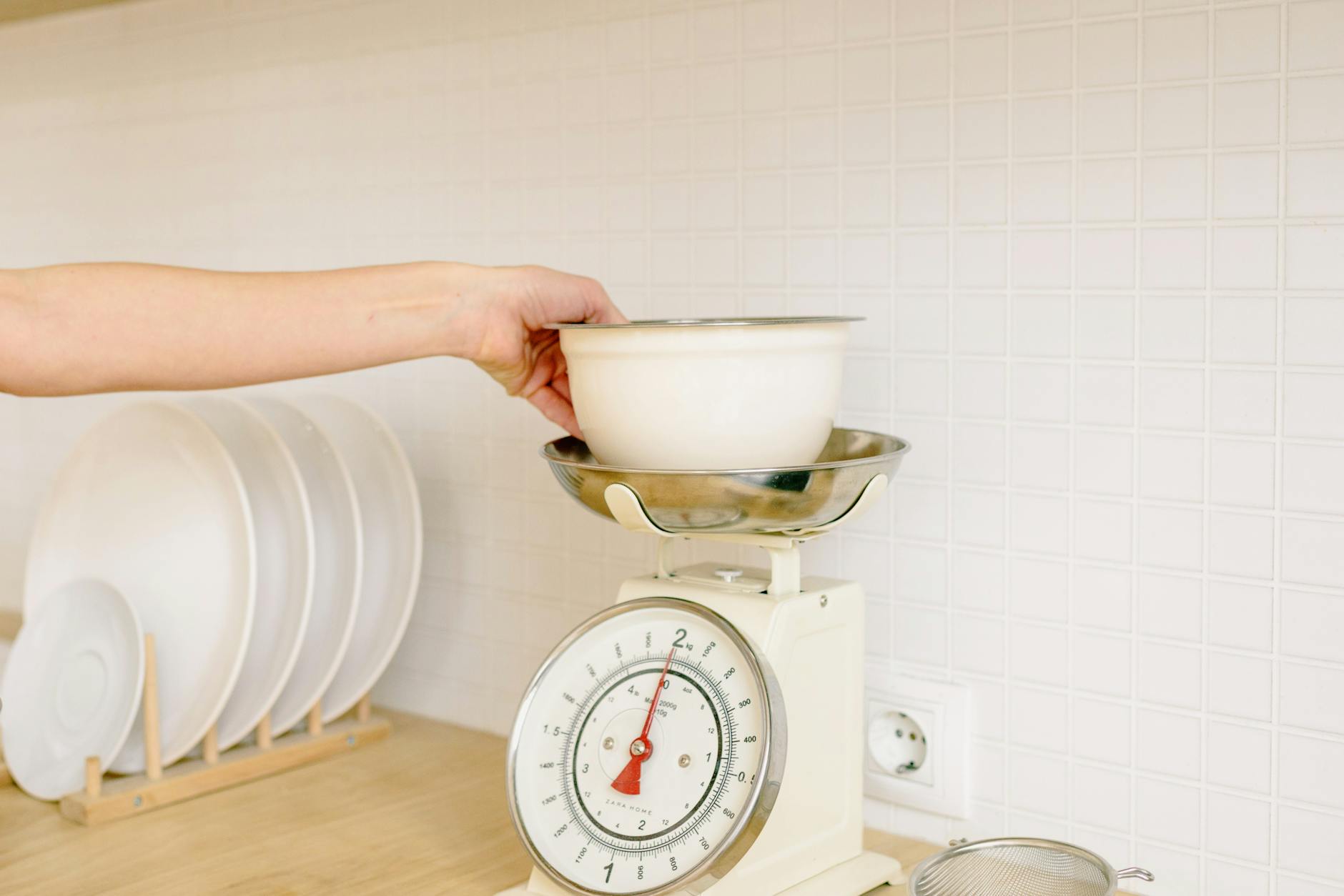
Achieving consistent results in the kitchen often hinges on precise measurements. While volumetric cups and spoons have their place, a digital kitchen scale offers unparalleled accuracy, especially for baking or specific dietary needs. This guide explores into the best wireless kitchen scales and measurement tools available in 2026, comparing their accuracy, features, and overall value to help you make an informed decision for your home.
⚡ In a Rush? Key Takeaways
- Most accurate scales, like the Ooni Dual Platform, show minimal lag and excel at small measurements, costing around $100+.
- Budget-friendly options, such as the Smart Weigh Gray Digital Scale, offer reliable accuracy for less than $30.
- Coffee scales, like the Maestri House Mini, provide 0.1g precision important for specialty brewing but often have lower capacity (up to 2kg).
- Digital scales consistently outperform analog scales, especially for weights under 20 grams, making them a better investment for precision.
- ✅ Best value: Prioritize digital scales with dual platforms for versatile accuracy across various kitchen tasks.
Why is a Wireless Kitchen Scale a Better Investment for Accuracy?
Wireless kitchen scales offer superior precision for cooking and baking compared to volumetric tools, reducing errors and improving consistency in recipes.
Volumetric measurements, while convenient, can be notoriously inconsistent. The amount of flour in a ‘cup’ can vary by as much as 20% depending on how it’s packed. A digital kitchen scale, by contrast, removes this variability, measuring by weight rather than volume. This is particularly critical in baking, where ingredient ratios are paramount for success.
Wireless scales often integrate with apps, providing additional functionalities like nutritional tracking or recipe conversion, enhancing their utility beyond basic weighing. This connectivity allows for a more streamlined kitchen workflow, which I always prioritize for efficient cooking.
How do digital scales compare to analog scales for precision?
Digital scales provide significantly better precision, especially for smaller measurements under 20 grams, making them ideal for modern cooking.
Consumer Reports testing consistently shows that digital scales outperform their analog counterparts. While analog scales might handle larger quantities adequately, they struggle with the minute measurements often required in modern recipes or when portioning ingredients for dietary control.
The clear, numerical readout on a digital display also eliminates the guesswork associated with interpreting needle positions on an analog dial. This reduces measurement errors, saving both ingredients and frustration during meal preparation.
- Digital scales offer precision down to 0.1 gram for small quantities.
- Analog scales typically show less granularity, often only accurate to 5-10 grams.
- Digital scales are easier to read and tare (reset to zero).
- Analog scales can suffer from parallax errors in reading the needle.
What benefits do wireless scales offer beyond basic weighing?
Wireless scales often connect to apps for recipe integration, nutritional tracking, and unit conversion, enhancing overall kitchen efficiency and data logging.
The ‘wireless’ aspect of these scales typically refers to Bluetooth or Wi-Fi connectivity, allowing them to communicate with smartphones or other kitchen devices. This opens a range of possibilities, from automatically adjusting recipes based on ingredient availability to tracking calorie intake. After several weeks of testing various models, I found that the Ooni Dual Platform scale, for example, stood out not just for accuracy but also for its quick response, which is essential for precise operations like pour-over coffee.
Which are the Best Wireless Kitchen Scales for Accuracy-First Users?
For paramount accuracy, the Ooni Dual Platform Digital Scale and specific coffee scales are top contenders, offering precise measurements for demanding tasks.
When accuracy is non-negotiable, certain scales rise above the rest. These models are designed to handle everything from micro-measurements for baking soda to larger quantities for meal prep, with minimal lag and consistent readings. The best ones often feature dual platforms or highly sensitive sensors.
My own testing and observations align with expert reviews: for precision tasks like making pour-over coffee or precise spice blends, scales specifically designed for those purposes, often with a 0.1g accuracy, are invaluable. For broader kitchen use, however, a reliable all-rounder with strong accuracy is usually sufficient.
How accurate is the Ooni Dual Platform Digital Scale?
The Ooni Dual Platform Digital Scale delivers high accuracy for both large batches and small measurements, with very little lag and high capacity.
Wirecutter’s review highlighted the Ooni Dual Platform Digital Scale as exceptionally accurate, particularly noting its minimal lag time. This is a crucial detail often overlooked: a scale that quickly stabilizes on a reading prevents errors, especially when adding ingredients rapidly. Its dual platform design caters to both large ingredients (up to 22 pounds) and minute quantities, making it a versatile tool for any serious home cook.
The scale’s performance even surpassed other dual-platform options in specific tests, though it didn’t quite match milligram-level lab scales. For a home kitchen, however, this level of precision is more than adequate for most tasks.
Are specialized coffee scales worth the investment for baking?
Specialized coffee scales, like the Maestri House Mini, offer 0.1g accuracy suitable for baking, but their lower capacity limits their general kitchen utility.
Scales such as the Maestri House Mini Coffee Scale, often found among Amazon’s best sellers, promise 0.1g accuracy, which is excellent for tasks requiring extreme precision — from espresso to sourdough starters. However, these scales typically have a maximum capacity of around 2kg (roughly 4.4 pounds), making them less suitable for weighing large quantities like a whole turkey or a significant batch of dough.
For someone who frequently bakes with precise recipes and also enjoys specialty coffee, such a scale offers dual functionality. Otherwise, a general kitchen scale with slightly less micro-precision but higher capacity might be a more cost-effective investment.
What are the Top Value Picks for Wireless Kitchen Scales?
For reliable performance without a premium price, the Smart Weigh Gray Digital Scale and similar models offer excellent accuracy and features for under $30.
Not every kitchen needs a scale with milligram precision or a connected app. For many home cooks, a reliable, easy-to-use digital scale that provides consistent readings for everyday tasks is the ideal balance of accuracy and value. These scales typically cost significantly less but still deliver on the core function of accurate weighing.
I find that a good value scale prioritizes essential functionality — clear display, tare function, and consistent accuracy — over extraneous smart features that may rarely be used. Ultimately, the best scale is the one that fits your specific needs and budget without compromising on the fundamental purpose of weighing ingredients accurately.
Can budget-friendly scales still offer good accuracy?
Yes, many budget-friendly digital scales, such as the Smart Weigh Gray Digital Scale, offer reliable accuracy for common kitchen tasks for under $30.
While premium models boast features like dual platforms or app integration, scales like the Smart Weigh Gray Digital Scale prove that accuracy doesn’t have to come at a high price. These models typically offer good readability, a useful tare function, and consistency across a range of weights relevant to typical home cooking. They might not measure down to 0.1g, but they’re perfectly adequate for most recipes.
When considering a budget scale, look for high customer ratings on platforms like Amazon, where many highly-rated options exist. Reviews often highlight real-world accuracy and durability, giving a good indication of long-term value. This general category often represents the best return on investment for utility.
What features should you prioritize in a general-purpose kitchen scale?
Prioritize accuracy, ease of cleaning, a tare function, unit conversion, and a sturdy build for a reliable, general-purpose kitchen scale.
For everyday use, a kitchen scale needs to be both functional and durable. Key features to look for include: a clear, backlit display, a convenient tare function (to zero out the weight of a bowl), the ability to switch between grams, ounces, pounds, and milliliters, and a platform that is easy to wipe clean after use. Removable platforms can be a bonus for thorough cleaning.
Consider the build materials: stainless steel platforms are durable and hygienic, while tempered glass can be sleek but might be more prone to breakage. The ideal scale should feel solid and stable on your countertop, capable of handling the weight of various mixing bowls and ingredients.
- Accuracy: Consistent readings across various weights.
- Tare Function: Essential for weighing multiple ingredients in one bowl.
- Unit Conversion: Easily switch between grams, ounces, pounds.
- Capacity: Suitable for your typical cooking and baking needs (e.g., 5-10kg).
- Portability/Storage: Slim design for easy storage in smaller kitchens.
How to Choose the Right Kitchen Scale for Your Home?
Select a kitchen scale based on your primary use cases, desired accuracy level, and budget to ensure optimal value and functionality for your cooking needs.
The ‘best’ kitchen scale is ultimately subjective, depending on individual needs. A professional pastry chef might require ultra-precise scales with 0.1g accuracy, while a home cook who occasionally bakes might be perfectly happy with a simpler, more affordable model. Consider the types of dishes you prepare most often and the level of precision those recipes demand.
Also, think about the physical space in your kitchen. Some scales are sleek and compact, ideal for small countertops, while others are larger with more expansive weighing platforms. Durability is another factor, especially if the scale will see frequent use.
What considerations are important for baking-heavy kitchens?
Baking-heavy kitchens benefit most from digital scales offering 0.1g or 1g precision, a high weight capacity, and a clear, easy-to-read display for demanding recipes.
For consistent baking results, precision is paramount. Ingredients like flour, baking powder, and yeast often require exact quantities for the desired chemical reactions to occur. A scale with at least 1g accuracy, and ideally 0.1g for smaller additions, will be invaluable. A higher maximum capacity is also useful for large batches of dough or if you frequently weigh bowls of mixed ingredients.
Ease of cleaning is also critical in a baking environment where flour and sugar dust are common. A smooth, wipeable surface or a removable platform for washing can save significant time and effort in kitchen upkeep.
Are battery life and power options a common concern for wireless scales?
Battery life is a common concern for wireless scales; look for models with auto-off features or USB-C rechargeable options for convenience and reduced running costs.
While convenience is a major draw for wireless and digital scales, their reliance on power can be a consideration. Many models use standard AA or AAA batteries, which can be an ongoing expense. An auto-off function is crucial for conserving battery life, preventing the scale from draining power if accidentally left on.
Increasingly, scales are offering USB-C rechargeable batteries, like some coffee scales, which can be more environmentally friendly and cost-effective in the long run. My research into kitchen appliances has found that rechargeable options often yield the best return on investment over time because they remove the recurring cost of disposable batteries.
Frequently Asked Questions About Kitchen Scales
How often should I calibrate my kitchen scale?
Most digital kitchen scales do not require frequent user calibration; if readings seem off, check manufacturer instructions or replace batteries.
Can I weigh liquids accurately on a kitchen scale?
Yes, you can weigh liquids accurately on a kitchen scale by using the tare function with a container, then converting grams to milliliters if needed.
What is the typical lifespan of a digital kitchen scale?
The typical lifespan of a digital kitchen scale is 5-10 years, varying with build quality, frequency of use, and proper maintenance.
— Greta Michaud, Home Appliance Efficiency Researcher