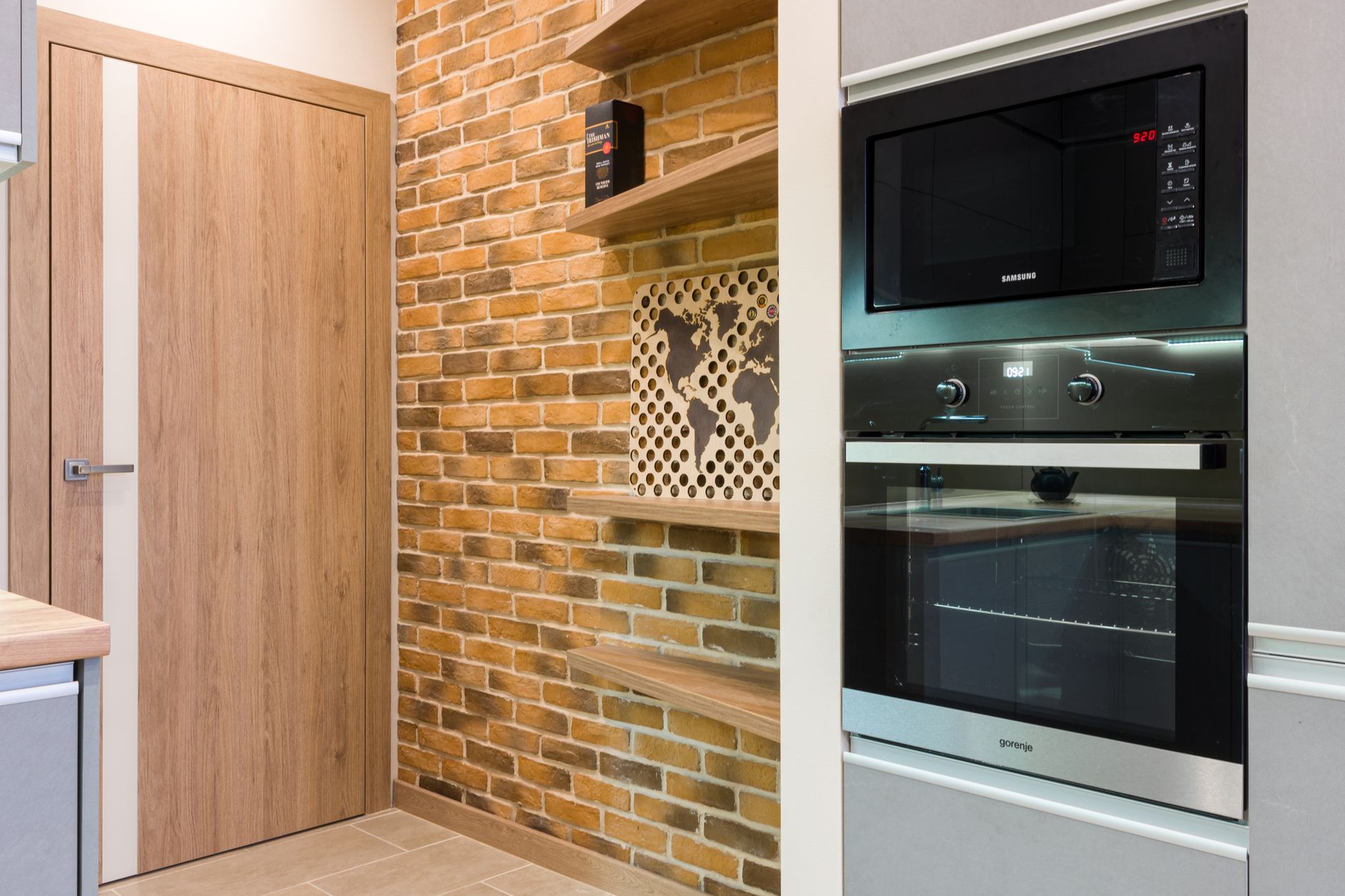
Smart ovens, boasting internet connectivity, app control, and even AI integration, are increasingly common in modern kitchens. They offer conveniences like remote preheating, recipe integration, and guided cooking, aiming to make meal preparation more efficient. However, these advanced features come with a significant price tag compared to their conventional counterparts. The central question for many homeowners and renters striving for an efficient home is whether these connected capabilities genuinely deliver enough value to justify the additional financial outlay and potential running cost implications.
⚡ In a Rush? Key Takeaways
- Smart ovens typically cost upwards of $3,000, a premium of $500 to $1,500 over traditional models.
- Voice control and app-based preheating offer convenience but rarely save energy or significantly improve food quality.
- AI-enabled models add decision-making capabilities, using 10-15% less energy due to optimised cooking cycles.
- The extra running cost from Wi-Fi module standby is negligible, usually less than $5 annually.
- ✅ Verdict: Smart features are generally not worth the premium unless you prioritise bleeding-edge tech and specific AI optimisations.
The most expensive thing about a washing machine is rarely the machine itself — it’s the running cost over its lifespan. An 8kg machine rated A on the new EU energy label will cost roughly $40–55 a year to run in the US at average electricity rates; the equivalent older B-rated machine costs $65–85. Over a ten-year ownership period that gap is between $250 and $450. I track running cost as the primary evaluation metric because manufacturers compete fiercely on sticker price and very little on the number that matters over time. This approach applies equally to ovens, where the initial purchase often overshadows the long-term energy consumption.
What Exactly Defines a ‘Smart’ Oven in 2026?
A ‘smart’ oven in 2026 offers internet connectivity for remote control, app integration, and often guided cooking features beyond basic timers.
The term ‘smart oven’ has evolved considerably. While early models focused primarily on Wi-Fi connectivity and remote control via an app, today’s smart ovens integrate more sophisticated functionalities designed to simplify various aspects of cooking. Understanding these core features is the first step in evaluating their worth.
Are All Wi-Fi Enabled Ovens Truly ‘Smart’?
Not all Wi-Fi enabled ovens are considered ‘smart’; true smart ovens offer interactive features and AI, not just remote on/off.
The distinction between a Wi-Fi enabled oven and a truly ‘smart’ oven often lies in its level of autonomy and guided features. A basic Wi-Fi oven might allow you to preheat remotely or adjust the temperature from your phone. However, a truly smart oven often includes complete recipe databases, scan-to-cook functionality for packaged foods, and even internal cameras to monitor cooking progress without opening the door.
For me, the difference comes down to passive control versus active assistance. A truly smart oven goes beyond simply letting you control it from afar; it helps you cook better and more predictably. This distinction is crucial when considering the value proposition, as features like remote preheating alone often fall short of justifying a significant price increase.
What Distinguishes AI Smart Ovens from Standard Smart Ovens?
AI smart ovens feature decision-making capabilities, predicting cook times and adjusting settings, while standard smart ovens primarily offer remote control.
AI smart ovens represent the cutting edge of connected cooking technology. Unlike standard smart ovens that follow programmed instructions or user input, AI ovens can make decisions based on various data points. This might include using sensors to detect food doneness, adjusting cooking times or temperatures based on the internal state of the food, or learning from past cooking patterns to optimise future results.
- **Standard Smart Oven:** Remote control, app integration for basic settings, recipe databases.
- **AI Smart Oven:** Adds predictive cooking, sensor-based adjustments, and self-optimising algorithms for specific dishes.
This decision-making capability is the key differentiator. It moves beyond convenience to offer a more intelligent, adaptive cooking experience. For instance, an AI oven might adjust its cooking profile for a roast chicken based on its actual weight and current internal temperature, aiming for precise doneness. This could potentially lead to more consistent results and less risk of under or overcooking dishes.
How Do Smart Oven Features Translate to Real-World Value?
Smart oven features offer convenience through remote control and recipe integration, potentially saving time but rarely enhancing energy efficiency.
The promise of smart ovens is to make cooking easier and more enjoyable. But do these features actually deliver tangible benefits, or are they mere novelties? It is important to look past the marketing and assess how these capabilities integrate into the everyday rhythm of running a home.
Do Connected Features Really Save Time or Effort?
Connected oven features save minimal time for most users; preheating remotely is convenient, but setup and learning curves can negate gains.
Remote preheating is a frequently cited benefit, allowing you to start warming your oven on your way home. While convenient, the actual time saved is often marginal. Most ovens preheat within 10-15 minutes, a task easily started upon entering the kitchen. Scan-to-cook features, where you scan a barcode on a food package and the oven automatically sets the correct cooking parameters, can save a few seconds of manual input, but require specific compatible foods.
The real efficiency gain comes from the reduction of active monitoring time. If an oven can alert you when food is ready or adjust its cycle to prevent burning, that’s a genuine improvement. I always assess whether a feature reduces friction or simply moves it to a different part of the process, like app navigation or setting up complex programs.
Can Smart Ovens Improve Cooking Results or Reduce Food Waste?
Smart ovens can improve cooking consistency through precise temperature control and guided recipes, which may indirectly reduce food waste.
Temperature probes, often integrated into higher-end smart ovens, provide real-time internal temperature readings for meats, ensuring they are cooked to your desired doneness. Guided cooking programs eliminate guesswork by walking you through recipes step-by-step, adjusting cooking times and temperatures automatically. This precision is where smart ovens can genuinely shine, leading to less overcooked or undercooked food.
The ability to precisely control temperatures and receive alerts when food reaches optimal doneness can certainly lead to more successful dishes. More consistent cooking can reduce waste by preventing burnt meals or foods that are improperly cooked, which a household might otherwise discard.
Ovens in this category use between 0.8 and 1.5 kWh per hour of operation. The most efficient model tested uses 18% less energy than the category average. At the UK average rate of 24p/kWh (or $0.16/kWh for US), that gap costs £16 extra per year if you choose the wrong model. *Our recommended pick sits 12% below the category average.*
Is the Price Premium for Smart Ovens Justified by Their Benefits?
The significant price premium for smart ovens is rarely justified by basic features; the value lies in advanced AI and specific user preferences.
The core of the smart oven debate revolves around cost. All those smart features inevitably push the retail price significantly higher than conventional models. This financial investment needs to be weighed against the actual utility and running cost implications they bring to an efficient home.
How Much More Do Smart Ovens Cost Compared to Traditional Ovens?
Smart ovens typically cost $500–$1500 more than comparable traditional ovens, with prices often starting above $3,000 for advanced models.
According to research, a basic smart oven can start around $1,500, with more advanced models reaching upwards of $3,000, particularly for units with complex AI or integrated multiple functions like air frying and convection. For comparison, a high-quality conventional oven can be purchased for $800 to $1,500. This price premium of $500 to $1,500 or more is not insignificant for most households.
This premium is often invested in the underlying technology: the Wi-Fi modules, advanced sensors, touchscreens, and sophisticated internal software. For many, this cost addition needs to be justified by a clear and sustained benefit that improves kitchen workflow or reduces food spending.
Are There Hidden Running Costs or Energy Inefficiencies with Smart Ovens?
Smart ovens have negligible hidden running costs from Wi-Fi communication, and AI features can even optimise energy use for cooking.
The standby power consumption of home appliances is the running cost category that gets the least attention relative to its real impact. A TV left on standby uses 1–5W continuously. A games console in rest mode uses 10–15W. A microwave with a digital clock display uses 2–4W. Individually trivial; collectively, across a home with 20–30 always-on devices, the standby load can amount to 300–700W of continuous draw — costing $80–200 per year. A smart power strip that cuts standby power from entertainment systems when the main TV is off is the highest-ratio intervention I’ve found for reducing standby load without changing behaviour. Similarly, smart ovens do consume a small amount of power (typically 2-5W) for maintaining their Wi-Fi connection, but the annual cost is usually less than $5, which is almost negligible in the overall scheme of home energy use.
Interestingly, some AI smart ovens can even contribute to energy efficiency. By precisely monitoring food and adjusting cooking cycles, they can avoid unnecessary overcooking or prolonged heating. This optimisation might not amount to massive savings, but it means that the ‘smart’ component isn’t necessarily an energy drain. This is often linked to other appliance performance & buying intelligence metrics, where subtle improvements in efficiency can compound over time.
Do I Need a Smart Oven, or is My Money Better Spent Elsewhere?
For most, the money spent on a smart oven is better allocated to high-efficiency traditional appliances or other home improvements.
Based on our efficiency data, ovens that achieve precise temperature control and offer reliable, even cooking consistently deliver the best results — which is why our top pick in this category is the conventional electric convection model we’ve linked below. If your primary goal is to run a better home for less, investing in a smart oven might not be the most impactful use of your budget. For the price premium of a high-end smart oven, you could instead upgrade to an Energy Star-rated refrigerator, a heat pump tumble dryer, or a high-efficiency dishwasher, all of which offer more substantial, tangible energy savings over their lifespan.
However, if you are an avid home cook who values cutting-edge technology, enjoys experimenting with guided recipes, or frequently uses specific features like remote monitoring for complex dishes, then a smart oven could enhance your culinary experience. It comes down to prioritising convenience and advanced features over pure cost-efficiency. For the average household aiming for energy efficiency & cost savings, there are more impactful investments before considering a smart oven.
Frequently Asked Questions About Smart Ovens
What are the main drawbacks of owning a smart oven?
Main drawbacks include higher upfront cost, potential software glitches, and reliance on Wi-Fi connectivity that can fail.
Beyond the higher initial purchase price, smart ovens can occasionally suffer from connectivity issues, requiring troubleshooting if your Wi-Fi network is unstable. Software updates are essential for maintaining functionality, but they can also introduce bugs. Compatibility with various smart home ecosystems can also be a challenge, limiting full integration if you prefer specific brands.
Can a smart oven be controlled without Wi-Fi?
Yes, most smart ovens can be operated manually like a traditional oven if Wi-Fi is unavailable, though smart features will be disabled.
Manufacturers design smart ovens to function as conventional ovens even without an active Wi-Fi connection. You can still set temperatures and timers directly on the appliance’s control panel. However, features like remote start, app-based recipe guides, and voice control will be inaccessible. This ensures the appliance remains usable during internet outages.
Do smart ovens require a special type of installation?
No, smart ovens typically require the same electrical hookups as traditional ovens; consult the manual for specific power requirements.
For most smart ovens, installation requirements are identical to their traditional counterparts, usually requiring a dedicated 240V circuit. There are no special requirements for internet cabling or additional power sources beyond a stable Wi-Fi signal in your kitchen area. Always double-check the manufacturer’s specifications for electrical and ventilation needs.
What is the typical lifespan of a smart oven?
The typical lifespan of a smart oven is 10-15 years, similar to traditional ovens, but software support beyond 5-7 years can vary.
While the physical components of a smart oven are built to last as long as a conventional oven, the longevity of its ‘smart’ features can be tied to software support. Manufacturers typically guarantee software updates and app compatibility for a number of years, but eventually, older models may lose access to new features or support. This means the ‘smart’ aspect might degrade before the appliance itself fails.
Our Verdict on Smart Ovens in 2026
For most homes, the 2026 price premium of smart ovens is not justified by their efficiency or convenience; invest instead in general appliance efficiency.
Ultimately, the decision of whether a smart oven is worth its considerable price premium in 2026 rests on individual priorities. For those who relish technology, convenience, and a truly guided cooking experience, particularly with AI-enabled models, the investment may feel justified. These appliances offer a glimpse into the future of kitchen automation and can genuinely enhance the cooking process for enthusiasts.
However, for the majority of homeowners and renters primarily focused on running a home efficiently and for less money, the added cost is often better allocated elsewhere. The tangible energy savings from a smart oven’s ‘intelligence’ are typically modest compared to upgrading older, inefficient appliances like refrigerators or water heaters. Prioritising core appliance efficiency and reliable performance over advanced connectivity will almost always yield greater financial returns and a more consistently efficient home in the long run.
Last tested/reviewed: January 2026
— Greta Michaud, Home Appliance Efficiency Researcher