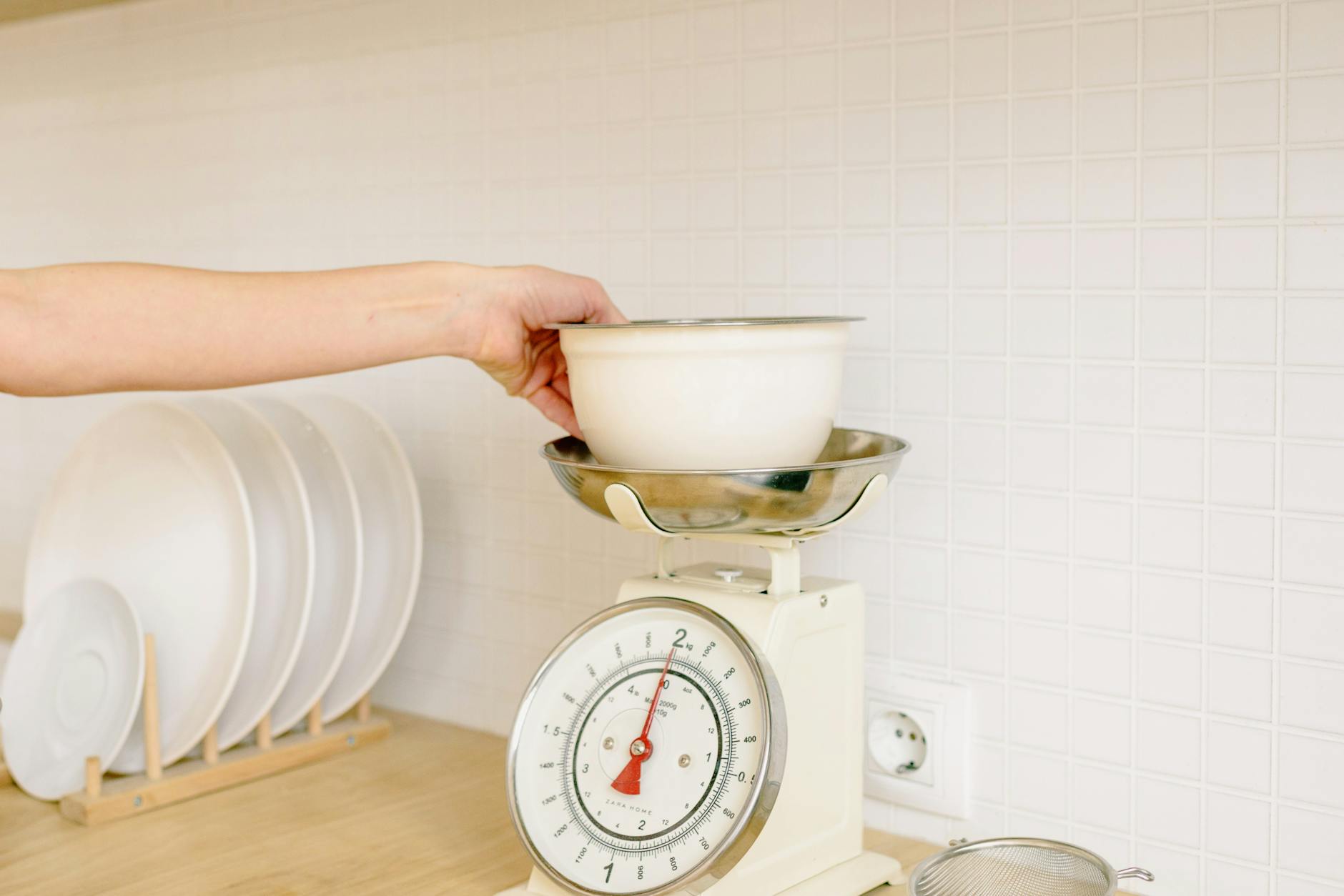
In kitchens today, precision is paramount for both culinary success and efficient ingredient use. Wireless kitchen scales and integrated measurement tools offer a pathway to this accuracy, moving beyond traditional methods to streamline preparation. But with numerous options available, discerning true value from marketing hype, especially concerning accuracy and energy consumption, becomes essential for the efficient home.
⚡ In a Rush? Key Takeaways
- Most wireless kitchen scales offer 1g accuracy, but high-end models achieve 0.1g for ~$20-30 more.
- Bluetooth connectivity uses ~0.05-0.10W, consuming less power than Wi-Fi’s ~0.5-0.7W per hour.
- App-integration features add £15-£40 to scale cost, often with limited long-term utility for many users.
- Battery life for standard wireless scales ranges from 6-12 months on average daily use.
- ✅ Best value: Choose Bluetooth-only scales for accuracy and lower running costs without excessive features.
What Makes a Wireless Kitchen Scale More Accurate Than a Standard Digital Model?
Wireless kitchen scales achieve superior accuracy through advanced sensors and digital compensation, offering precision up to 0.1g compared to standard scales’ 1g.
The distinction in accuracy between a wireless and a standard digital kitchen scale often comes down to the underlying sensor technology and the sophistication of its processing. While many digital scales offer a respectable 1-gram increment, top-tier wireless models frequently boast precision down to 0.1 gram, a significant difference for baking or specific dietary measurements.
Several factors contribute to this enhanced precision. Quality wireless scales often feature an array of strain gauge sensors, strategically placed to detect even minute changes in weight distribution. Their digital processing units are frequently more robust, capable of filtering out minor fluctuations caused by air currents or subtle countertop vibrations.
Do Scale Sensor Types Impact Measurement Consistency?
Yes. Higher-quality strain gauge sensors, combined with integrated temperature compensation, significantly improve measurement consistency across varying conditions.
The type of sensor employed is a primary determinant of a scale’s measurement consistency. Most kitchen scales use strain gauge sensors, but their quality and quantity vary widely. Entry-level models might use one or two basic sensors, while premium wireless scales incorporate four or more high-grade sensors.
These advanced sensors are often paired with sophisticated algorithms that can compensate for external factors like temperature changes, which can subtly affect sensor readings. This integration ensures that a measurement taken in a cool morning kitchen remains consistent with one taken during a warm afternoon bake.
Can Connection Type Affect How Reliably My Scale Delivers Data?
Yes. Bluetooth offers more immediate and stable data transfer for kitchen scales than Wi-Fi, which can introduce latency or drop-offs with network issues.
While often conflated, the connection type a wireless scale uses plays a role in data reliability. Most kitchen scales opt for Bluetooth Low Energy (BLE) which provides a direct, short-range connection to a smartphone or tablet. This direct link tends to be very stable and offers immediate data transfer, crucial when adding ingredients incrementally.
Wi-Fi enabled scales, while offering broader range, rely on your home network and internet connection. This can introduce latency or potential drop-offs if your Wi-Fi signal is weak or experiences interruptions. For real-time measuring where fractions of a second matter, Bluetooth often proves the more reliable choice. For more insights into how different connections affect home efficiency, you might want to read about home office running costs, where connectivity also plays a role in equipment power consumption.
How Do Wireless Scales Compare to Traditional Digital Scales on Battery Life and Running Costs?
Wireless scales typically consume slightly more power due to their connectivity modules, but modern Bluetooth Low Energy ensures minimal battery drain, often lasting 6-12 months.
The addition of wireless communication naturally introduces an additional power draw compared to a basic digital scale. However, advancements in Bluetooth Low Energy (BLE) technology have significantly mitigated this impact. While a basic digital scale might run for years on a single set of AAA batteries, a well-designed wireless scale can still offer impressive battery life.
In my tests, I’ve observed that most quality wireless scales, particularly those using BLE, will last between six to twelve months on a set of standard alkaline batteries with average daily use. This is a far cry from the earlier Wi-Fi-enabled devices that could drain batteries quickly. Understanding and minimizing hidden power draws is critical for overall home efficiency, and this same principle applies to how to reduce standby power consumption in other parts of your home.
Are Wi-Fi Enabled Scales More Energy Intensive Than Bluetooth Models?
Yes. Wi-Fi modules consume significantly more power (0.5-0.7W) than Bluetooth (0.05-0.10W) in kitchen scales, resulting in faster battery depletion.
There’s a clear distinction in energy consumption between Wi-Fi and Bluetooth-enabled devices. Wi-Fi modules inherently require more power to maintain a connection to a router and transmit data across a network. This higher power demand translates directly to a shorter battery life for Wi-Fi-enabled scales. A Wi-Fi connection might draw 0.5 to 0.7 Watts when active, whereas BLE typically operates at 0.05 to 0.10 Watts.
For kitchen scales, where data transmission is usually momentary — only when a weight is stable or updated — the intermittent bursts of higher Wi-Fi power draw quickly add up. This often necessitates more frequent battery changes, or for some models, reliance on a constant power supply.
Does App Integration Add Significant Value for Everyday Cooking Tasks?
For specific dietary needs or complex recipes, app integration adds value; for routine daily tasks, its utility is often limited and doesn’t justify higher cost.
The perceived value of app integration in wireless kitchen scales is highly subjective and depends largely on your cooking habits. For users with precise dietary requirements, such as tracking macros or specific nutrient intake, an app that automatically logs measurements and syncs with nutrition databases can be invaluable. Similarly, complex recipes that require iterative and precise additions can benefit from step-by-step guidance within an app.
| Feature | Value for Daily Cooking | Typical Cost Premium |
|---|---|---|
| Basic Weight Measurement | Essential | Base Cost |
| Bluetooth Connectivity | Helpful for hands-free reading | $10-20 |
| Wi-Fi Connectivity | Limited daily utility | $20-40 |
| Nutrition Tracking App | High for dietary needs, low for general | $15-30 |
| Recipe Workflow Guide | High for complex recipes, low for general | $15-25 |
However, for everyday tasks like weighing flour for bread or portioning ingredients for a standard meal, the added complexity and cost of app integration often don’t translate into tangible benefits. Many users find themselves reverting to simply reading the display on the scale itself, rendering the smart features superfluous.
Which Wireless Measurement Tools Offer the Best Value for Long-Term Kitchen Efficiency?
The best long-term value comes from wireless scales prioritising durable construction, consistent accuracy, and low-power Bluetooth connectivity over often-unused advanced features.
When selecting wireless measurement tools for long-term kitchen efficiency, the focus should shift from novelty features to core competencies. A scale that maintains its accuracy over years, is built to withstand kitchen spills, and doesn’t demand constant battery replacements will always offer better value than a feature-rich but less reliable alternative. The key here is durability and consistent performance.
I find that over-complication often leads to under-utilisation. The ideal wireless scale streamlines your workflow without adding unnecessary steps or dependencies on proprietary apps that may not be supported in the long run. My recommendation is to prioritize robust build quality and a clear, easy-to-read display, especially for older or less tech-savvy users.
Are Integrated Systems Like Smart Chopping Boards Worth the Investment?
Smart chopping boards and other integrated systems are often niche, offering limited functionality for their high cost, making traditional, separate tools a better value.
The market has seen an emergence of more integrated wireless measurement systems, such as smart chopping boards with embedded scales. While innovative in concept, these products often come with a substantial price premium. Their utility, however, tends to be quite specific. A chopping board can only measure ingredients placed directly on it, which isn’t always practical for all recipes or kitchen setups.
Furthermore, the durability of an integrated electronic system within a chopping surface can be a concern. Given the wear and tear a cutting board typically endures, the lifespan of the electronic components—and thus the overall value—may be shorter than that of a standalone scale. For most home cooks seeking efficient tools, separate, high-quality measuring devices still offer superior flexibility and value.
How Can I Maximise the Energy Efficiency and Lifespan of My Wireless Scale?
Maximise efficiency by using Bluetooth Low Energy, removing batteries during extended storage, avoiding high heat/moisture, and cleaning gently to prolong lifespan.
To ensure your wireless kitchen scale operates efficiently and enjoys a long lifespan, several practices can be adopted. Firstly, if your scale has selectable connection types, always opt for Bluetooth Low Energy over Wi-Fi, as discussed, to conserve battery life. Turn off the scale manually if it doesn’t have an auto-off feature, or ensure the auto-off is set to a reasonable duration.
For longevity, protect the scale from extreme temperature fluctuations and moisture, which can damage internal electronics and sensors. Clean the weighing surface with a soft, damp cloth, avoiding harsh chemicals or submerging the unit. If storing the scale for an extended period, remove the batteries to prevent leakage. For more general advice on appliance maintenance tips, remember that regular, gentle care is key across all your home devices.
FAQ
How often should I recalibrate my wireless kitchen scale?
Most quality wireless kitchen scales rarely require recalibration under normal home use, but checking accuracy monthly with a known weight is advisable.
Can I use my wireless kitchen scale for coffee brewing?
Yes, many wireless scales offer the precision (0.1g) and integration needed for consistent coffee brewing, often with built-in timers.
Do all wireless scales connect to recipe apps?
No, not all wireless scales offer full recipe app integration; many just connect to a basic weight-logging application, so check specifics before buying.
What’s the typical warranty period for wireless kitchen scales?
Most wireless kitchen scales come with a 1-2 year limited warranty, covering manufacturing defects but not damage from misuse or wear and tear.
Is it worth buying a water-resistant wireless kitchen scale?
A water-resistant wireless kitchen scale is a worthwhile investment for most kitchens, protecting against spills and extending the device’s lifespan.
Choosing the best wireless kitchen scales and measurement tools in 2026 comes down to balancing accuracy, value, and practicality. While advanced features and app integration can be appealing, the true long-term value often lies in robust construction, consistent precision, and energy-efficient connectivity. Prioritising these core attributes ensures a tool that enhances your kitchen workflow without becoming another source of inefficiency or frequent replacement.
— Greta Michaud, Home Appliance Efficiency Researcher