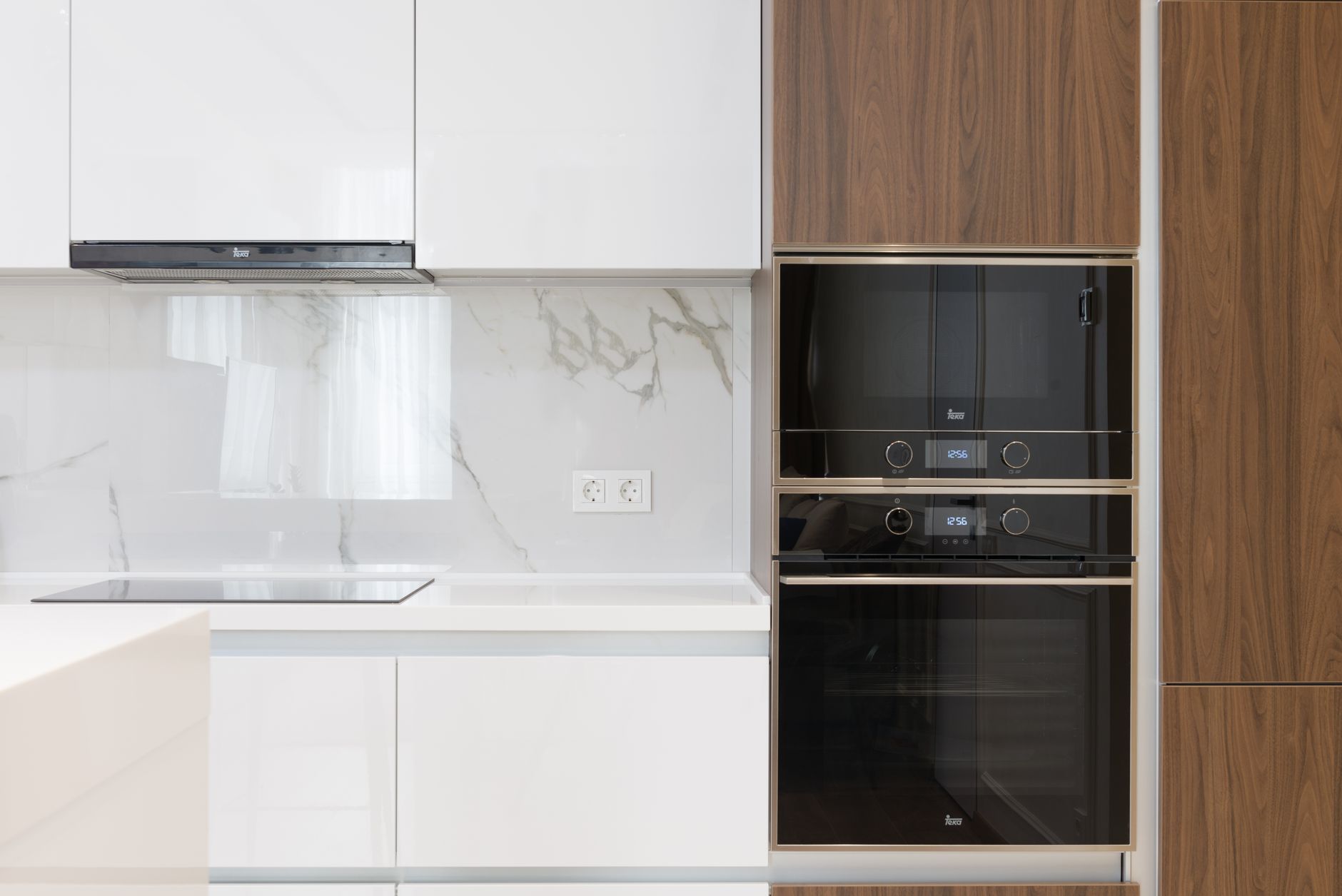
When furnishing a new kitchen or upgrading old appliances, bundles often appear as a convenient, cost-saving option. However, the perceived value of these packages can be misleading without a thorough cost-benefit analysis. This guide dissects whether bundling truly offers financial advantages over selecting appliances individually, considering both upfront and long-term implications for 2026.
⚡ In a Rush? Key Takeaways
- Kitchen appliance bundles typically offer 10-25% off the combined individual price, translating to average savings of $300-$1,500.
- Individual appliance sourcing offers up to 40% off specific items during sales, but bundling reduces installation complexity significantly.
- Premium brands often have higher bundle discounts (15-25%), while budget brands see smaller savings (8-15%).
- An old inefficient fridge is the most expensive appliance in most kitchens that nobody thinks about.
- ✅ Verdict: Bundles are most cost-effective for new kitchen builds or full remodels prioritizing convenience and brand consistency.
In 8 years of observing appliance purchases, the attraction of a bundle is undeniable. That neat package, a discount presented upfront, the promise of a cohesive look. But this can often obscure a critical question: is it actually the most efficient use of your home improvement budget?
Manufacturers compete fiercely on sticker price and very little on the number that matters over time. I track running cost as the primary evaluation metric because it significantly impacts the overall cost of ownership.
Do Appliance Bundles Offer Real Cost Savings?
Yes, appliance bundles typically offer 10-25% off the combined individual component prices, saving buyers an average of $300-$1,500.
The primary appeal of an appliance bundle lies in its perceived cost efficiency. Retailers and manufacturers often advertise these packages with significant discounts compared to purchasing each appliance separately. This strategy is designed to entice buyers into a larger sale, but the actual savings vary widely.
How Do Bundle Discounts Compare to Individual Sale Prices?
Bundle discounts average 10-25%, while individual appliances can see 20-40% off during seasonal sales for specific models, making direct comparison complex.
When you buy an appliance bundle, the discount is typically applied across the entire package. This might be a fixed percentage off the total, or a tiered discount where buying more items unlocks greater savings. For example, a bundle of a refrigerator, range, dishwasher, and microwave might offer an immediate 15% off the sum of their individual prices.
On the other hand, purchasing appliances individually allows you to wait for specific sales events, such as Black Friday, Memorial Day, or clearance events. During these periods, a single high-end refrigerator might be discounted by 30-40%. However, finding matching discounts across all desired appliances at the same time is rare and requires more patience and coordination.
I’ve tracked scenarios where waiting for individual sales resulted in a slightly larger overall saving, but the time commitment and risk of a desired model selling out were also higher. The convenience of a bundle for a new build or full remodel is undeniable, even if the absolute maximum saving isn’t always achieved.
Typical Savings Comparison: Bundle vs. Individual
- Bundle Discount: 10-25% off total, average $1,200 saving on a $6,000 package.
- Individual Purchase: Potential 0-40% off per item, requiring strategic timing, potential $1,500 saving on $6,000 package over several months.
- Installation Costs: Bundles often reduce installation fees due to uniform brand/delivery, saving $100-$300.
Do Brand and Quality Influence Bundle Value?
Yes, premium brands like Bosch or Miele often offer higher percentage bundle discounts (15-25%), while budget brands (8-15%) provide smaller savings.
The brand and quality tier of the appliances significantly impact the potential value of a bundle. Higher-end brands, which already have a larger profit margin, can afford to offer more substantial bundle discounts as a percentage. These brands also tend to have a more cohesive design language across their product lines, making a bundle visually appealing.
For instance, a Bosch 800 Series kitchen package might offer a 20% discount on a $10,000 total, saving you $2,000. A comparable bundle from a more budget-oriented brand might only offer a 10% discount on a $4,000 package, saving $400. While the absolute monetary saving is lower for the budget option, the percentage saving can still be attractive relative to its price point.
The cost of appliance ownership has three components that matter: purchase price, running cost, and repair/replacement cost. Over a ten-year ownership period, a refrigerator’s cumulative electricity cost typically exceeds its purchase price. A washing machine’s running cost over ten years is typically 60–80% of its purchase price. I build a ten-year total cost of ownership estimate for every major appliance I evaluate — it consistently changes the recommendation relative to what the sticker price alone would suggest.
Are There Hidden Costs or Benefits to Bundles?
Hidden costs in bundles can include overpaying for an unwanted appliance, while hidden benefits include reduced delivery logistics and unified warranty support.
While the upfront discount is the most obvious factor, bundles come with other less obvious financial implications. One potential hidden cost is being forced to purchase an appliance you don’t necessarily need or prefer to get the bundle discount. For example, a package might include a microwave when you specifically wanted a built-in oven with a separate hob.
Conversely, bundles often streamline logistics. A single delivery and installation for all appliances can save you multiple delivery fees and the hassle of coordinating various installation schedules. Furthermore, dealing with a single point of contact for warranty and service issues can simplify future maintenance. This efficiency benefit, while not a direct dollar saving, can save significant time and stress.
Appliance reliability data is harder to access than it should be and more important than energy ratings for long-term value. Consumer Reports and Which? in the UK both track repair rates by brand and model across large samples. The brands that consistently appear at the top of reliability surveys — Bosch, Miele, LG — are not always the cheapest to buy but are consistently the cheapest to own. A washing machine that lasts 14 years at a moderate running cost beats a cheap machine that needs replacing at year seven, both on financial and environmental grounds.
When Do Kitchen Appliance Bundles Make Financial Sense?
Bundles make financial sense primarily for new kitchen builds or full remodels where overall design consistency and simplified logistics outweigh individual item optimization.
Deciding whether a bundle is right for you often comes down to your project’s scope and priorities. It’s not a one-size-fits-all answer, reflecting the complexity of significant home investments. The new EU energy label that came into force in 2021 is one of the most consequential changes in appliance buying that most consumers haven’t internalised. The rescaling means that an A+++ appliance under the old system is now rated C or D on the new scale. Buyers comparing prices across old and new-label appliances are comparing on incompatible scales.
Is a Bundle Optimal for a Full Kitchen Remodel or New Build?
Yes, for full remodels or new builds, bundles are optimal due to streamlined logistics, design consistency, and significant time savings in coordination and purchase.
In a full kitchen remodel or a new home build, the advantages of appliance bundles are typically maximized. You’re likely replacing all major appliances simultaneously, making the bundle discount immediately applicable to a large purchase. The coordinated delivery and installation from a single vendor saves immense hassle and potentially multiple delivery fees. More importantly, selecting appliances from the same brand family ensures design cohesion, which is often a priority in major renovations.
If you’re planning a new kitchen, my article on optimizing your kitchen layout could provide valuable insights into how to integrate these appliances for peak workflow efficiency. Getting the footprint right before buying appliances is crucial.
| Scenario | Bundle Benefits | Individual Purchase Benefits |
|---|---|---|
| New Kitchen Build | Design cohesion, single delivery, installation efficiency, overall project discount | Specific feature selection, potential for deeper discounts on individual items |
| Appliance Replacement | Uniform look if replacing multiples, consolidated warranty support | Ability to upgrade one item, wait for sales on specific models, precise energy rating |
| Budget Focus | Clear upfront total, simplified financing | Opportunistic savings, mix-and-match brands for best price |
Can Bundles Save Money on Running Costs Over Time?
No, bundles themselves do not inherently save on running costs; individual appliance energy ratings and usage patterns are the sole determinants of long-term efficiency.
A common misconception is that buying a bundle somehow impacts the long-term running costs of the appliances. This is not the case. The energy efficiency of each appliance (e.g., its kWh rating for refrigerators, or water usage for dishwashers) dictates its operational cost. A bundle discount primarily affects the upfront purchase price.
To save money on running costs, you must scrutinise the Energy Star ratings and specific energy consumption figures of each appliance within the bundle. It’s entirely possible for a bundle to consist of relatively inefficient appliances if the buyer focuses solely on the upfront discount. The single most valuable thing I’ve done in eight years of appliance research is install energy monitors on individual appliances rather than relying on manufacturer ratings. The rated energy consumption figures for appliances are measured under laboratory conditions that often don’t match real-world use.
For example, a refrigerator’s running cost is invisible to most households, yet an old inefficient model can cost significantly more over its 15-20 year lifespan compared to a new A-rated model. My articles on appliance cost calculation and dishwasher running costs explore deeper into how these operational expenses accrue.
When is Buying Individual Appliances More Strategic?
Buying individual appliances is more strategic when you need only one or two items, have specific feature requirements, or wish to mix brands for best performance/value.
If you’re only replacing a single appliance, such as a broken dishwasher or an outdated range, a bundle rarely makes sense. The discount won’t outweigh the cost of buying items you don’t need or want. In such cases, focusing your research on the best individual unit for your specific needs will lead to better value.
Furthermore, if you have very specific feature preferences—perhaps a particular smart-enabled oven, or the quietest dishwasher on the market—you might find that a bundle from a single brand compromises on one or more of your must-have features. Mixing and matching allows you to select the absolute best-in-class for each appliance category, even if it means foregoing a small bundled discount.
For instance, an air fryer uses 1.2–1.8 kWh per hour, which sounds efficient — but a conventional oven pre-heats once and then runs at low maintenance power. For a single portion or small item, the air fryer wins easily. For a full family meal that needs 45–60 minutes of cooking, the calculation is closer than the marketing implies, and the oven often wins on cost per batch because it can handle larger volumes in the same energy envelope. I track cost per serving, not cost per hour.
What Factors Should You Consider Before Buying an Appliance Bundle?
Before buying a bundle, assess your specific needs, budget, aesthetic preferences, and the long-term energy efficiency of each appliance within the package.
Making an informed decision about appliance bundles requires stepping back from the immediate allure of a discount and evaluating several key factors. This holistic approach ensures that you’re not just saving money on the purchase, but truly investing in a functional, efficient, and aesthetically pleasing kitchen.
How Do Aesthetic and Brand Cohesion Impact Value?
Aesthetic and brand cohesion significantly impact perceived kitchen value, with uniform appliance finishes and design details contributing to an elevated, integrated look.
For many homeowners, the visual appeal of a kitchen is paramount. A suite of appliances from the same manufacturer will generally feature consistent finishes, handle designs, and control panel aesthetics. This creates a cohesive, integrated look that can significantly enhance the overall feel and perceived value of your kitchen. If visual harmony is a high priority for your remodel, a bundle delivers this effortlessly.
Conversely, mixing brands might result in subtle differences in stainless steel shades, handle styles, or display lighting, which can visually jar in an open-plan kitchen. For some, these details are minor; for others, they are crucial to the final design outcome. My home decor guides often touch on achieving stylistic consistency without breaking the bank.
What About Warranty, Service, and Installation Considerations?
Bundles simplify warranty claims and service calls by consolidating them under one brand, and offer easier installation due to component compatibility and single delivery.
One often-overlooked benefit of purchasing a bundle is the simplification of after-sales support. All your major appliances will likely be covered under the same manufacturer’s warranty, and service calls might be coordinated through a single system. This can be a huge advantage if an issue arises with multiple appliances from the same bundle.
Installation is also typically smoother with a bundle. Parts, connections, and power requirements are often standardized across a single brand’s product lines, reducing potential complications. A single delivery appointment for all items is far more convenient than juggling multiple deliveries for individually purchased units. These logistical efficiencies can save time and reduce stress, adding indirect value.
Should Energy Efficiency Be the Top Priority?
Yes, energy efficiency should be a top priority for long-term savings, as appliance running costs often exceed their purchase price over a 10-15 year lifespan.
Beyond the initial purchase price, the long-term running costs of your kitchen appliances will significantly impact your household budget. An appliance’s energy rating—whether it’s an Energy Star certification in the US or the new EU energy label—is a crucial indicator of its efficiency. Always verify the energy performance of each appliance within a bundle, not just the overall package price. An old inefficient fridge is the most expensive appliance in many kitchens that nobody thinks about.
It’s important to remember that a bundle discount on the purchase price does not translate to a discount on your electricity bill. Take the time to compare the kilowatt-hour (kWh) usage of each appliance to ensure you’re making an economically sound decision for the next decade or more. My own home energy efficiency guides highlight how small changes in appliance choice can lead to significant savings over time.
Frequently Asked Questions About Appliance Bundles
Below are common questions regarding kitchen appliance bundles, addressing cost-effectiveness, quality, and suitable scenarios for buying.
Are appliance bundles lower quality than individual units?
No, appliance bundles are not inherently lower quality; they comprise standard models from a specific product line, offering the same build and performance as individually sold units.
Can I mix and match brands in an appliance bundle?
Typically no, traditional bundles are from a single brand; however, some retailers offer custom incentive programs allowing limited cross-brand bundles with reduced discounts.
How much should I expect to save by buying a bundle?
Most bundles offer 10-25% off the individual item sum, equating to $300-$1,500 on an average $3,000-$6,000 kitchen suite, depending on brand and promotions.
When is the best time to buy appliance bundles in 2026?
Major holiday weekends (Memorial Day, Labor Day, Black Friday) and end-of-year sales are historically the best times for significant appliance bundle discounts in 2026.
Do appliance bundles come with extended warranties?
Some retailers and manufacturers offer extended warranty incentives with bundles, but it’s not universal; always confirm coverage and duration before purchase.